Smart Pool 2026: Guide to Automating Water Care, Filtration and Cleaning
Ondilo ICO Pool V2 and iopool EcO pool analyzers, Zodiac eXO iQ salt chlorine generator, Dolphin S300i and Beatbot AquaSense 2 Pro robots, variable-speed pump and cover: how to build a smart pool in 2026, and where to start.

Quick answer
What equipment should you choose for a smart pool in 2026?
- View on Amazon →
Best overall
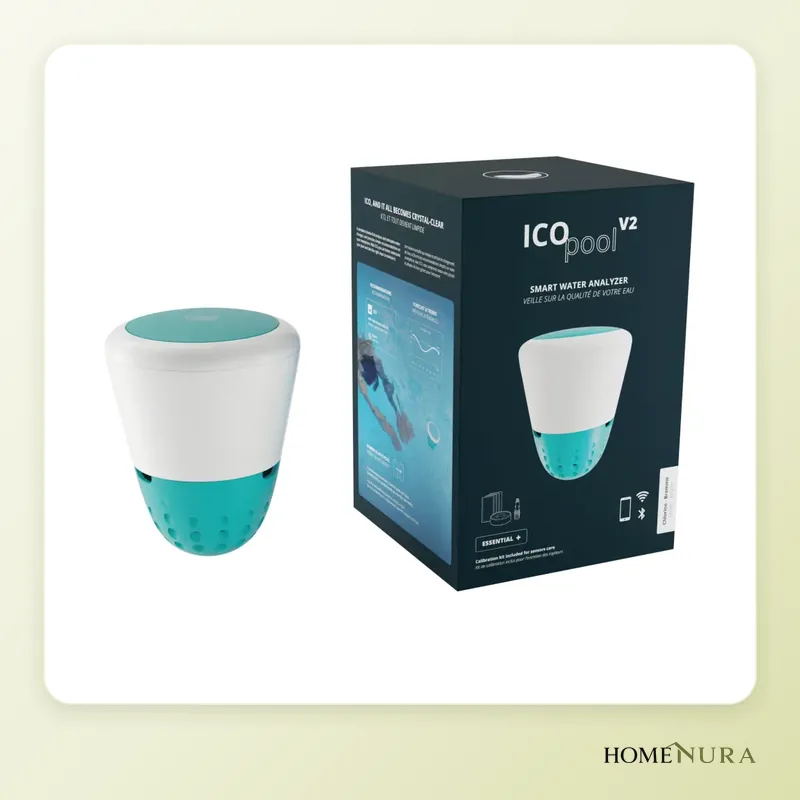
Ondilo ICO Pool V2
Floating analyzer measuring pH, ORP and temperature every hour, with a dedicated saltwater-pool version and dosing advice.
Photo: © Ondilo
- View on Amazon →
Best value
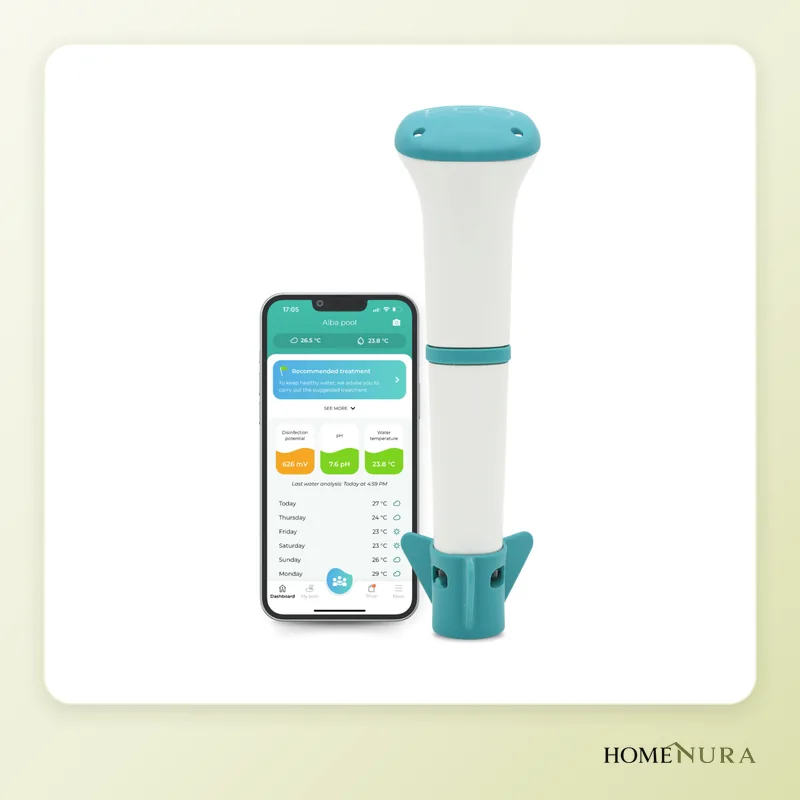
iopool EcO
pH, ORP and temperature sensor with no charging or calibration for about two years, plus a Wi-Fi gateway and subscription-free app.
Photo: © iopool
- View on Amazon →
Best for automated cleaning
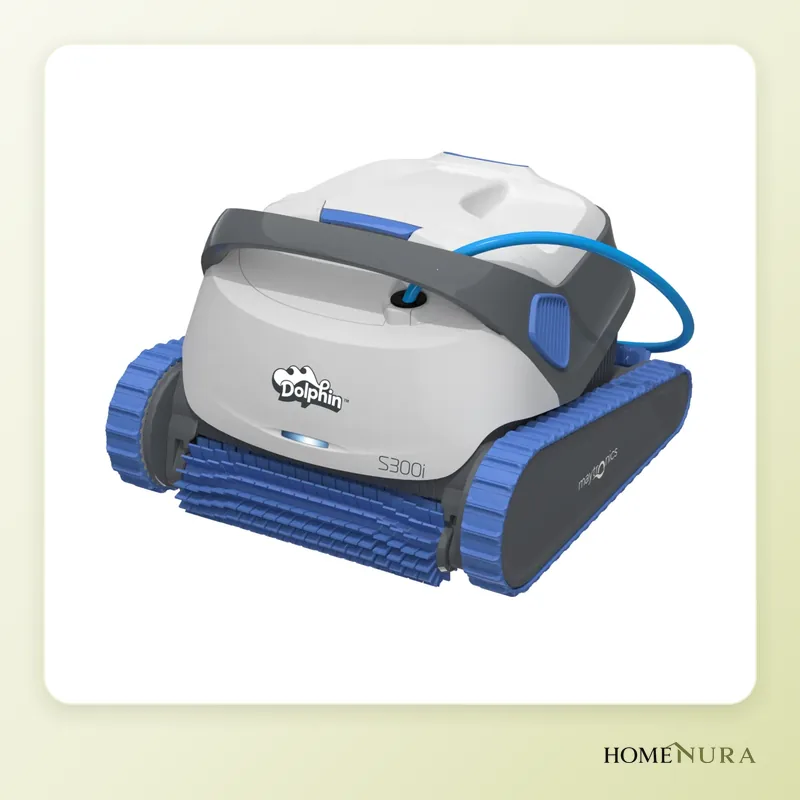
Dolphin S300i
Corded robot for pools up to 12 m: floor, walls and waterline, top-access filter and scheduling via MyDolphin Plus.
Photo: © Maytronics


As an Amazon Associate I earn from qualifying purchases. Amazon affiliate links: commission at no extra cost to you.
A smart pool in 2026 starts with a floating pool analyzer that measures pH, sanitizing power (ORP) and temperature and tells you what to add, followed by a programmable robot and, if you want to go further, a salt chlorine generator or variable-speed pump you can control from your phone. To get started, the Ondilo ICO Pool V2 is the most complete analyzer, the iopool EcO the easiest to live with, and the Dolphin S300i the most balanced robot for a family pool.
This guide is based on manufacturer specifications, specialist press reviews and verified owner reviews. It covers each building block (water, treatment, filtration, cleaning, cover and safety) and shows where to start depending on your pool. For robots in detail, see our pool cleaning robot comparison.
What a smart pool actually automates
Water monitoring
Healthy water depends on a simple balance: pH usually kept between 7.2 and 7.6, enough active sanitizer and filtration matched to the water temperature. A smart analyzer measures these parameters several times a day and warns you before the water goes off balance. It replaces most test strips, but an occasional manual check is still worthwhile.
Automatic treatment
A salt chlorine generator produces chlorine directly from the lightly salted pool water. Combined with pH control and a redox (ORP) probe, it adjusts its output to actual demand. Smart models show readings on your phone and let you change settings remotely.
Filtration
The pool pump is the biggest electricity user in a pool. A variable-speed pump runs longer but slower, which cuts consumption significantly compared with a single-speed pump. Wi-Fi versions are scheduled from an app.
Cleaning
A programmable robot cleans the floor, walls and waterline on a schedule. You use the app to start a cycle, choose a mode and find out when the filter needs emptying.
Cover and lighting
A motorized cover reduces evaporation, heat loss overnight and leaf debris. Controllable LED lighting completes the setup for evening swims.
Models mentioned in this guide
- Zodiac eXO iQView on Amazon →

Photos: © Ondilo, © iopool, © Maytronics, © Beatbot
As an Amazon Associate I earn from qualifying purchases. Amazon affiliate links: we earn a commission at no extra cost to you.
How to choose
Your pool’s treatment
Chlorine, bromine or salt: check compatibility first. Ondilo offers a chlorine/bromine version and a salt version of its ICO Pool V2; iopool states compatibility with chlorine, bromine, active oxygen and UV treatment. A salt chlorine generator, of course, only applies to saltwater pools.
Wi-Fi at the poolside
Home Wi-Fi often struggles to reach the back of the yard. Some analyzers use a gateway placed between the house and the pool (iopool), while others connect directly over 2.4 GHz Wi-Fi with Bluetooth as a backup (Ondilo). Check the signal at the water’s edge before buying, or plan for an outdoor range extender.
Probes and battery
pH and ORP probes wear out over time: check whether they can be replaced and how the device is powered. The ICO Pool V2 is recharged over USB at the start of the season and its probes are removable; the iopool EcO runs on a non-rechargeable battery designed to last about two years, after which you replace the module.
Quality of the recommendations
An analyzer is only as useful as its advice: which product to add, how much, and when to run the pump longer. Also check whether the app is free or whether some features cost extra. iopool highlights an app with no subscription.
Ecosystem
If you’re starting from scratch, sticking with one lineup (salt system, pump and robot from the same manufacturer) lets you control everything from a single app. If your pool equipment is already in place, you can add a floating analyzer with no work at all.
Recommended equipment for 2026
1. Ondilo ICO Pool V2: the most complete analyzer
The Ondilo ICO Pool V2 is a floating analyzer designed by a French company. It measures pH, ORP and water temperature every hour; the salt version also tracks conductivity, which helps monitor salt levels. Its probes are removable for maintenance, it connects over 2.4 GHz Wi-Fi and Bluetooth Low Energy, and its rechargeable lithium-ion battery is designed to last the season. The housing is rated IP68, with a 2-year warranty that includes the probes. The app anticipates changes in the water and only suggests adding chemicals when it’s needed.
Strengths: personalized recommendations, dedicated saltwater version, no gateway to install. Limitations: the most premium analyzer here; Wi-Fi has to reach the pool. Best for: owners who want precise monitoring, including with a salt chlorine generator.
2. iopool EcO: the easiest to live with
The iopool EcO is a floating puck about 22 cm long. Three sensors measure temperature, pH and ORP, and data is sent roughly every 15 minutes through a Wi-Fi gateway placed between the house and the pool. The battery isn’t rechargeable: it’s designed to last about two years without charging or calibration, after which you replace the module. The free app, with no subscription, calculates how much product to add.
Strengths: no charging or calibration, a gateway that improves range, broad compatibility. Limitations: module to replace after about two years; no salt-level tracking. Best for: a first step into smart pool care, with the best value.
3. Zodiac eXO iQ: automated salt treatment
The Zodiac eXO iQ is a salt chlorine generator with built-in Wi-Fi, designed for pools of up to 160 m³ depending on the version. With the optional pH Link or Dual Link modules, it automatically regulates pH and chlorine output based on the redox reading. From the manufacturer’s app, you can follow water quality and control other compatible equipment such as the pool pump, heater or lighting. Zodiac states a 3-year warranty on the electrode, and an eXO iQ LS version is designed for low-salinity water.
Strengths: genuinely automated treatment, central control of your equipment, widely supported by pool professionals. Limitations: saltwater pools only; plumbed into the pool’s circulation system, ideally by a professional. Best for: saltwater pools, or owners ready to switch to salt and stop adding chlorine by hand.
4. Dolphin S300i: the benchmark corded robot
The Dolphin S300i by Maytronics cleans the floor, walls and waterline of pools up to 12 m (about 40 ft) long, with two active brushes and a multi-layer filter that opens from the top. Its 18 m cable has an anti-tangle swivel, the default cycle lasts 2 hours and the MyDolphin Plus app starts and schedules cycles. Maytronics states a 3-year warranty.
Strengths: no battery to manage, easy-to-empty filter, wide dealer network. Limitations: a cable to lay out and store, no surface skimming. Best for: standard in-ground pools cleaned several times a week.
5. Beatbot AquaSense 2 Pro: the most complete cordless robot
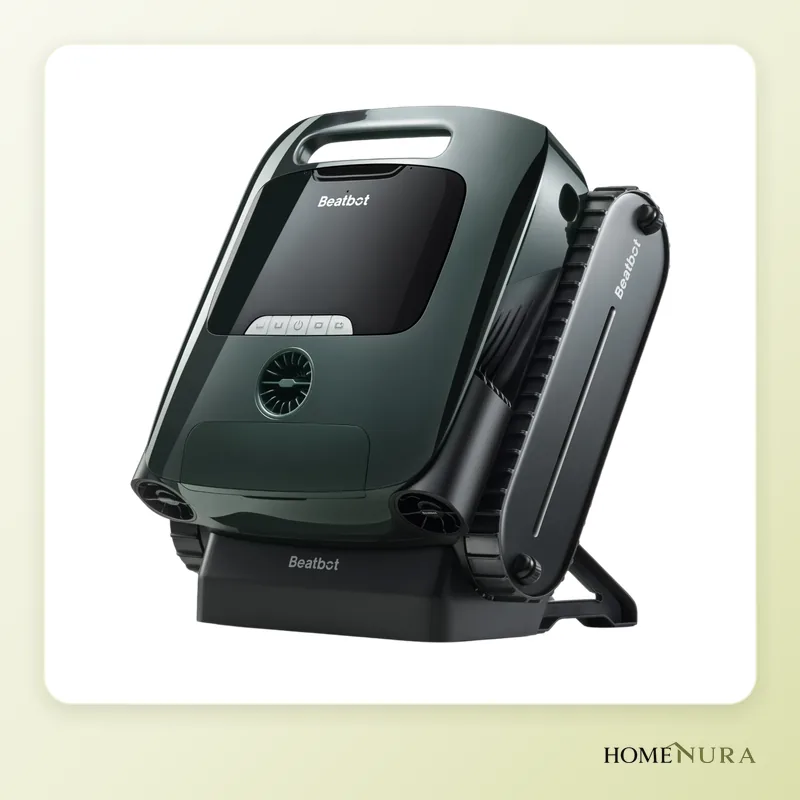
The Beatbot AquaSense 2 Pro cleans the floor, walls and waterline, skims the surface and can clarify the water with a natural agent that clumps fine particles together. Its battery is rated for up to 5 hours on the floor and walls, it covers up to 360 m² (about 3,900 sq. ft.), navigates with ultrasonic sensors and is controlled over Wi-Fi or Bluetooth.
Strengths: no cable, surface skimming, long battery life. Limitations: premium model, heavy to lift out, clarifier refills to buy. Best for: large pools surrounded by trees. Other cordless options are covered in our pool cleaning robot comparison.
Variable-speed pump: smarter filtration
The pump runs several hours a day all season long, so it weighs the most on the electricity bill. A variable-speed pump lets you filter for longer at low speed, switch to high speed for backwashing or a robot cycle, and run more quietly. Smart models such as the Zodiac FloPro e30iQ with built-in Wi-Fi are scheduled from an app.
Replacing a pump involves the pool’s plumbing and the electrical panel: have it done by a pool professional or a licensed electrician, and check compatibility with your filter and plumbing. If you keep your current pump, a programmable pump timer or controller installed by a professional already lets you match run time to the water temperature.
Cover, alarm and safety
In France, every private in-ground or semi-in-ground pool must have at least one standardized safety device: a barrier (NF P90-306), an alarm (NF P90-307), a cover (NF P90-308) or an enclosure (NF P90-309). Rules differ in Canada; check with your municipality. Under the French rules, a compliant automatic cover can serve as the required safety device, provided it’s closed and locked whenever the pool is unsupervised. Some motorized covers can be operated remotely or integrated into a home automation system, but always keep the pool in sight while the cover opens or closes.
No equipment replaces adult supervision: keep children within sight near the water, even with an alarm or a cover. On the maintenance side, a cover reduces evaporation, keeps heat in overnight and limits leaves and insects, and therefore chemical use.
Comparison table
| Equipment | Role | Readings or areas | Connectivity | Best for |
|---|---|---|---|---|
| Ondilo ICO Pool V2 | Floating analyzer | pH, ORP, temperature (+ conductivity on salt version) | 2.4 GHz Wi-Fi, Bluetooth | Precise monitoring, saltwater pools |
| iopool EcO | Floating analyzer | pH, ORP, temperature | Wi-Fi gateway | First device, no charging |
| Zodiac eXO iQ | Salt chlorine generator | Chlorine production; pH and ORP with modules | Built-in Wi-Fi | Automated treatment |
| Dolphin S300i | Corded robot | Floor, walls, waterline | MyDolphin Plus | Pools up to 12 m |
| Beatbot AquaSense 2 Pro | Cordless robot | Floor, walls, waterline, surface | Wi-Fi, Bluetooth | Large pools near trees |
Browse the available models in our robotic pool cleaners category.
Where to start
- A pool analyzer: the device that changes day-to-day care the most, with no installation work. It does away with most test strips and guesswork dosing.
- A programmable robot: it takes care of the most frequent chore.
- Filtration: a variable-speed pump or temperature-based scheduling, best planned when the pump is due for replacement.
- Automatic treatment: a salt chlorine generator and pH control if your pool is already on salt or you’re ready to switch.
- Cover and lighting: a bigger project, often done during a renovation.
Mistakes to avoid
- Buying an analyzer that doesn’t match your treatment: with some brands, the salt and chlorine versions aren’t interchangeable.
- Ignoring Wi-Fi at the poolside: without a stable connection, alerts never arrive.
- Relying on ORP alone: it indicates sanitizing power, not an exact chlorine level. An occasional manual check (free chlorine, stabilizer, total alkalinity) is still useful.
- Forgetting the probes in winter: take the analyzer out when you close the pool for the season and store it as the manufacturer recommends.
- Confusing automation with safety: an app replaces neither a proper safety barrier or cover nor keeping an eye on children.
Installation and electrical safety
Anything plugged in near water must be on a circuit with ground-fault protection (a GFCI outlet or breaker; Europe uses a 30 mA residual current device for the same purpose). A robot’s power supply should sit away from the pool, sheltered from splashes, at the distance given in the manual. Salt systems, pumps, pump controllers and underwater lights are wired at the pool equipment pad: have this work done by a licensed electrician or a pool professional, since electrical work rules are set by each province and territory. Never swim while a robot is running.
To equip the rest of your outdoor space, see our smart backyard guide.
Verdict
To make a pool smart without any construction work, start with a pool analyzer: the Ondilo ICO Pool V2 for the most complete monitoring, especially in a saltwater pool, or the iopool EcO for the simplicity of a sensor that needs no charging for about two years. Add a programmable robot such as the Dolphin S300i, or the Beatbot AquaSense 2 Pro if you want cordless cleaning and surface skimming. Finally, if your pool runs on salt, the Zodiac eXO iQ automates treatment and brings equipment control into one place.
Frequently Asked Questions
Does a smart pool analyzer replace test strips and test kits?
Ondilo ICO Pool V2 or iopool EcO: which should I choose?
How many hours a day should a pool pump run?
Do I need a salt chlorine generator to have a smart pool?
Which pool safety devices are mandatory in France?
What should I do with the smart pool analyzer in winter?
Article from our comprehensive guide
Smart Yard & Outdoors →Our recommendations
- Zodiac eXO iQView on Amazon →
Photos: © Ondilo, © iopool, © Maytronics, © Beatbot
As an Amazon Associate I earn from qualifying purchases. Amazon affiliate links: we earn a commission at no extra cost to you.


