Complete Smart Backyard Guide 2026: Robot Mowers, Smart Irrigation and More
Everything you need to know to turn your backyard into a smart outdoor space in 2026: wire-free robot mowers, smart sprinkler controllers, outdoor lighting, pool robots, BBQ thermometers and Matter compatibility.

Quick answer
What is the best robot mower for a smart backyard in 2026?
- View on Amazon →
Best for sloped lawns
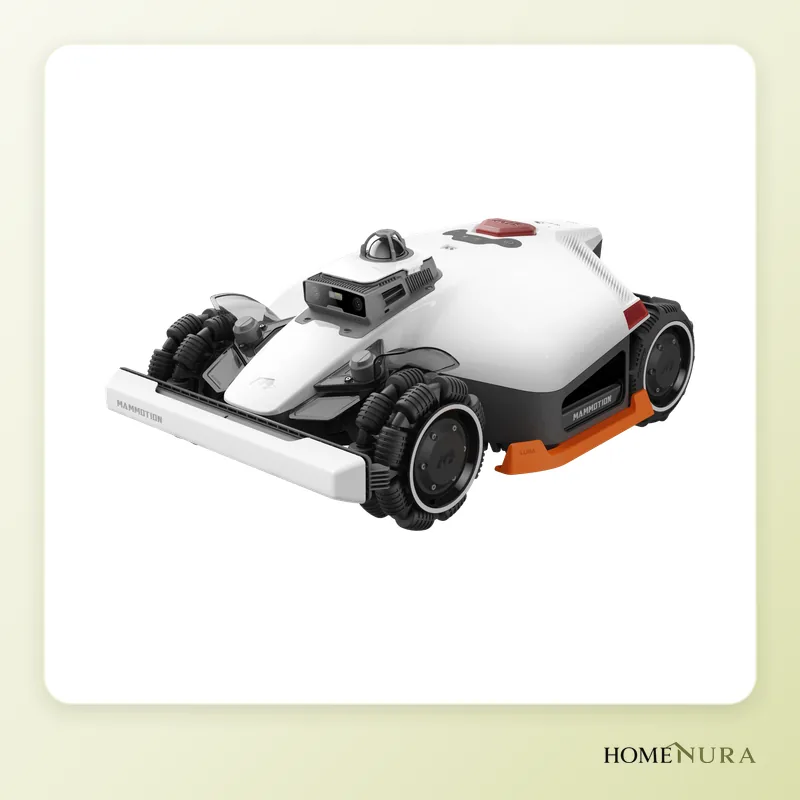
Mammotion LUBA 3 AWD 5000
All-wheel drive, slopes rated up to 80% and LiDAR, network RTK and vision navigation for lawns up to 5,000 m².
Photo: © Mammotion
- View on Amazon →
Premium pick
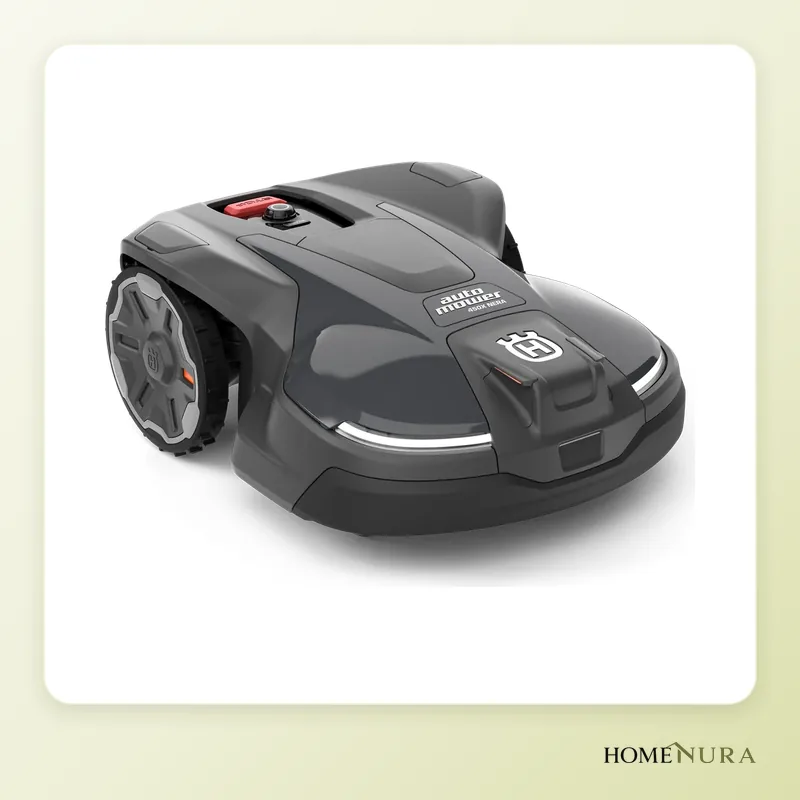
Husqvarna Automower 450X NERA
Husqvarna's flagship works with a boundary wire or wire-free with the EPOS kit, covering 5,000 m² and 50% slopes, but it is the priciest pick.
Photo: © Husqvarna
- View on Amazon →
Best for small yards
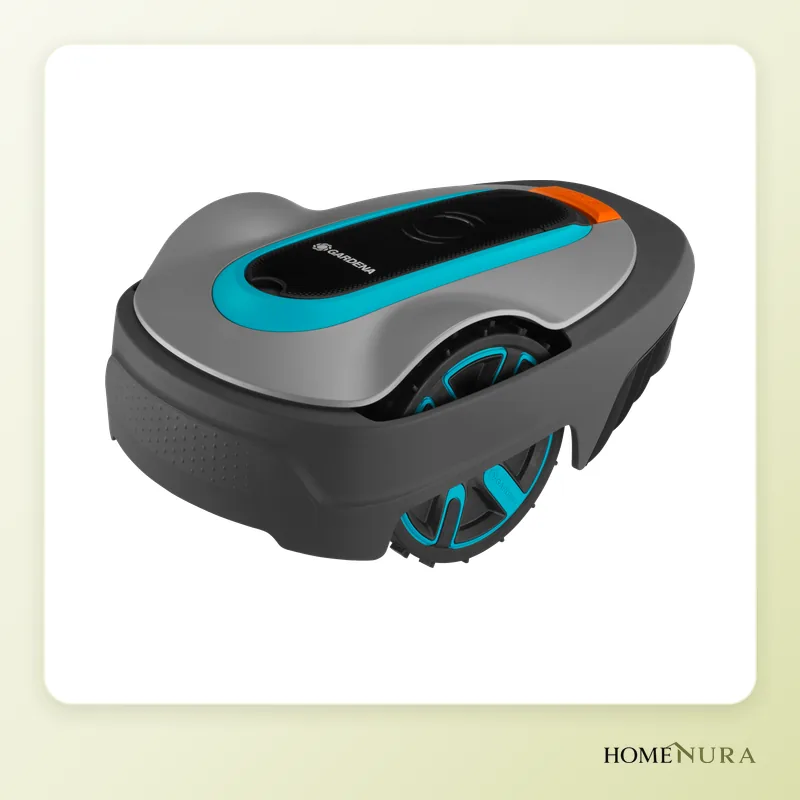
Gardena SILENO City 600
With its perimeter wire and a maximum area of 600 m², it is the most affordable option in the selection for a small, simple yard.
Photo: © GARDENA


As an Amazon Associate I earn from qualifying purchases. Amazon affiliate links: commission at no extra cost to you.
The smart backyard in 2026: what has really changed
A smart backyard today comes down to three building blocks: a robot mower, weather-based watering and outdoor lighting you can control from your phone. The big shift in 2026 is that wire-free robot mowers, which find their way using RTK, LiDAR or cameras, have gone mainstream, while the Matter protocol keeps bringing more devices together in a single app.
Whether you have a small 100 m² (about 1,100 sq. ft.) city yard or a 5,000 m² (1.25-acre) lot, this guide helps you pick the right equipment for your outdoor space. It covers five categories: robot mowers, smart irrigation, outdoor lighting, pool robots and smart BBQ thermometers. The information is based on manufacturer specifications, independent reviews and verified buyer reviews.
For in-depth coverage, see our dedicated guides: best wire-free robot mowers and smart irrigation guide.
Models mentioned in this guide
- Segway Navimow i208 AWDView on Amazon →
- ECOVACS GOAT O600 RTKView on Amazon →
Photos: © Mammotion, © Husqvarna, © GARDENA
As an Amazon Associate I earn from qualifying purchases. Amazon affiliate links: we earn a commission at no extra cost to you.
Robot mowers: boundary wire or wire-free navigation
Two different approaches
A traditional robot mower follows a boundary wire buried or staked around the lawn. Laying it takes time, and the wire can get cut when you're working in the yard. Wire-free models define the mowing area virtually in the app, using RTK (corrected satellite positioning accurate to a few centimetres), LiDAR or cameras with image recognition. Depending on the brand, these technologies are combined.
The benefits are clear: faster installation, mowing zones you can change in a few taps, and easy no-go zones for flower beds or the vegetable garden. There are limits too: RTK needs a clear view of the sky or a network correction, and vision alone can struggle in low light or with poorly defined lawn edges.
Key models in 2026
| Brand | Model | Navigation | Max area | Max slope | Best for |
|---|---|---|---|---|---|
| Husqvarna | Automower 450X NERA | Wire or EPOS (optional wire-free kit) | 5,000 m² (1.25 acres) | 50% | Large, complex yards |
| Mammotion | LUBA 3 AWD 5000 | 360° LiDAR + network RTK + vision | 5,000 m² (1.25 acres) | 80% | Very steep lawns |
| Segway | Navimow i208 AWD | Network RTK + vision | 800 m² (8,600 sq. ft.) | 45% | Mid-size, hilly yards |
| ECOVACS | GOAT O600 RTK | RTK + vision | 600 m² (6,500 sq. ft.) | 45% | Small yards with obstacles |
| Gardena | SILENO City 600 | Boundary wire | 600 m² (6,500 sq. ft.) | 25% | Small, simple yards |
| Worx | Landroid Vision L1600 | Camera + AI | 1,600 m² (17,000 sq. ft.) | 30% | Lawns with clear edges |
Areas and slopes are the figures stated by the manufacturers. Our complete wire-free robot mower comparison covers each model's strengths and limitations, installation and troubleshooting.
Key selection criteria
- Lawn size: for a small, simple yard (under 600 m², about 6,500 sq. ft.), a boundary wire model is still a reliable, affordable choice. Above 1,000 m² (about 10,800 sq. ft.) or for a yard split into several sections, wire-free is much more practical.
- Slope: if your lawn is steeper than 25%, choose a model rated for more, ideally all-wheel drive like the Mammotion LUBA 3 AWD (80%) or the Navimow i208 AWD (45%).
- Multiple zones: some models handle several lawns separated by a path or a narrow passage.
- Satellite coverage: with tall trees or high walls, choose a model that combines RTK with LiDAR or vision.
- Noise and wildlife: robot mowers are far quieter than gas mowers, but avoid scheduling them at night: small wildlife is active at dusk and after dark and can be injured.
Smart irrigation systems
Water only when it's needed
A smart controller adjusts watering duration and frequency based on weather forecasts, temperature and, with a sensor, the actual soil moisture. It skips watering just before rain or when the soil is still wet. How much water you save depends on your starting point: the gain is clear if you used to water at fixed times regardless of the weather, and smaller if you already adjusted by hand.
What's on the market
- Gardena smart system: a complete ecosystem with controllers (smart Water Control for a single outdoor faucet, smart Irrigation Control for several valves), the smart Sensor and the smart Gateway, all managed in the Gardena smart app. Widely available across Europe.
- Hunter Hydrawise (HC, Pro-HC): Wi-Fi controllers for multi-zone in-ground sprinkler systems, available in 230 V European versions. Predictive watering adapts to local weather, and rain, freeze and soil moisture sensors are supported.
- Eve Aqua: a Matter over Thread hose timer, managed from Apple Home or any Matter-compatible app. Ideal for a hose or a simple drip line.
Models and versions sold in Canada can differ from the European ones: check that the listing is for a 120 V North American model. See our complete smart irrigation guide for a detailed comparison.
Soil moisture sensors
A sensor such as the Gardena smart Sensor measures soil moisture and temperature, and can block watering while the ground is still wet. Place it in a representative spot, away from downspouts and constant shade. Note that a weather station such as Eve Weather measures temperature, air humidity and pressure, but not soil moisture.
Smart outdoor lighting
Solar or low voltage
Smart solar path lights need no wiring, but their runtime depends on sunshine and drops sharply in winter. For reliable lighting all year round, low-voltage systems such as Philips Hue Outdoor (24 V power supply) connect to a power unit and can be controlled by app, voice or automation. Govee and LEDVANCE SMART+ also offer smart outdoor lines.
Smart floodlights
The Philips Hue Discover is a colour floodlight for lighting up the front of your house or a tree, while Hue Lily spotlights are designed for accent lighting in flower beds. If security comes first, the Ring Floodlight Cam combines a floodlight, motion detection and a security camera.
Outdoor LED strips and string lights
Outdoor LED strips (IP65 minimum) from Govee, Philips Hue or LIFX set the mood on decks, patios and pergolas. They're app-controlled and work with Alexa and Google Home; some of these lines are also Matter-compatible.
Smart robotic pool cleaners
Two benchmark models
Smart robotic pool cleaners clean the floor, walls and waterline on their own:
- Dolphin S300i (Maytronics): controlled through the MyDolphin Plus app (scheduling, cycle selection, spot cleaning). Cycles of 1.5 to 2.5 hours covering the floor, walls and waterline, for pools up to 12 m (about 40 ft) long.
- Zodiac CNX 40 iQ: tracks and twin drive motors, gyroscope and accelerometer sensors to cover the whole pool, dual filtration and control through the iAquaLink app. Designed for pools up to 12 × 6 m (about 40 × 20 ft).
There are also cordless, battery-powered pool robots such as the Aiper Seagull Pro, which do away with the power cable. They're handy for small pools, but not all of them offer app control.
Selection criteria
- Pool type: flat bottom, gentle slopes, freeform: check compatibility
- Pool size: stay within the maximum length stated by the manufacturer
- Surface: liner, tile, concrete: the brushes must be suitable
- Connectivity: app, remote scheduling, diagnostics
Smart BBQ thermometers and accessories
MEATER 2 Plus: the wireless probe
The MEATER 2 Plus is a fully wireless probe that goes straight into the meat. It measures internal and ambient temperature and talks to your phone over Bluetooth. To follow the cook from farther away, the app can use a second device left within range as a Wi-Fi bridge (the MEATER Link feature). Guided cooking shows an estimate of the time remaining.
Inkbird and Weber Connect
Inkbird IBBQ-4BW: 4 wired probes, 2.4 GHz Wi-Fi and Bluetooth, an app with temperature alerts. Well suited to long cooks (low and slow).
Weber Connect Smart Grilling Hub: a smart hub that works with any grill and takes up to 4 probes. The app tells you when to flip and when to serve, and includes Weber recipes.
Where to start, depending on your yard
Small yard (under 600 m², about 6,500 sq. ft.)
- A smart hose timer (Eve Aqua or Gardena smart Water Control)
- The boundary wire Gardena SILENO City 600 for a simple yard, or the ECOVACS GOAT O600 RTK to skip the wire
- A few solar path lights or a small low-voltage lighting kit
Medium yard (600 to 1,600 m², about 6,500 to 17,000 sq. ft.)
- Segway Navimow i208 AWD (up to 800 m², 45% slopes) or Worx Landroid Vision L1600 (up to 1,600 m²)
- Gardena smart system with a soil moisture sensor
- Philips Hue Outdoor low-voltage lighting
- A smart BBQ thermometer (Inkbird IBBQ-4BW or MEATER 2 Plus)
Large or sloped lot
- Husqvarna Automower 450X NERA (up to 5,000 m², wire or EPOS) or Mammotion LUBA 3 AWD 5000 (slopes up to 80%)
- A multi-zone in-ground sprinkler system with a Hunter Hydrawise controller
- A Dolphin S300i or Zodiac CNX 40 iQ pool robot if you have a pool
Matter compatibility in the backyard
The Matter protocol is reaching the backyard too, even if not every category is covered yet:
- Eve Aqua: native Matter hose timer (Thread)
- Philips Hue Outdoor: Matter-compatible through the Hue Bridge
- Eve Weather: Matter over Thread version for outdoor temperature and humidity
- Robot mowers: no Matter support so far; they run in the manufacturer's app, and some, such as the Mammotion LUBA, work with Alexa and Google Assistant
The advantage of Matter is unified control from Apple Home, Google Home, Amazon Alexa or SmartThings, with local operation for many functions. Thread devices need a Thread border router (some recent smart speakers and hubs fill this role).
Conclusion: where to start?
If you're new to the smart backyard, start with smart irrigation: it's a modest investment whose effects show from the first summer. Then choose a robot mower based on three criteria: area, slope and how open the sky is. Smart outdoor lighting adds comfort and security, while smart BBQ thermometers make weekend grilling easier.
Explore our dedicated guides for a deeper look at each category: wire-free robot mowers and smart irrigation systems.
Frequently Asked Questions
Is a robot mower worth it?
How does wire-free navigation work?
How much water does a smart irrigation system save?
Can smart outdoor devices work offline?
When is the best time to set up a smart backyard?
Are there solar-powered options for a smart backyard?
How noisy are robot mowers?
Article from our comprehensive guide
Smart Yard & Outdoors →Our recommendations
- Segway Navimow i208 AWDView on Amazon →
- ECOVACS GOAT O600 RTKView on Amazon →
Photos: © Mammotion, © Husqvarna, © GARDENA
As an Amazon Associate I earn from qualifying purchases. Amazon affiliate links: we earn a commission at no extra cost to you.

