Solar and Smart Outdoor Lights 2026: How to Choose the Right Ones
Standalone solar or smart low-voltage lighting? How to choose outdoor lights in 2026, comparing the eufy S120, Govee, Philips Hue Lily and Calla, and Steinel XSolar on use, brightness and connectivity.

Quick answer
What is the best smart solar outdoor lighting in 2026?
- View on Amazon →
Best overall
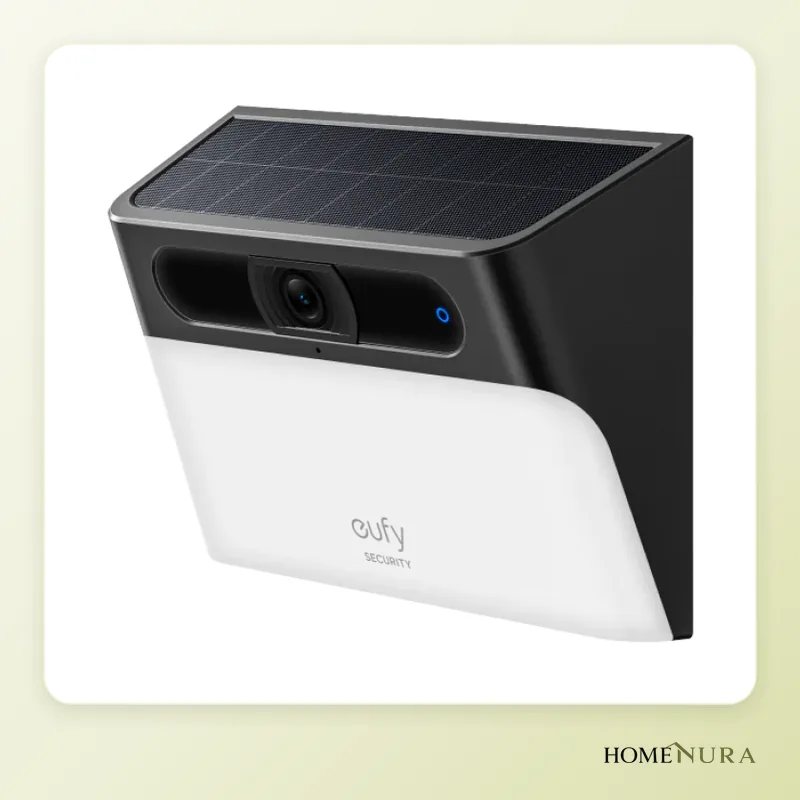
eufy Solar Wall Light Cam S120
A 300-lumen solar wall light with a 2K camera, motion sensor and Wi-Fi alerts, rated IP65, with no cable to run.
Photo: © eufy (Anker Innovations)
- View on Amazon →
Controllable solar ambience
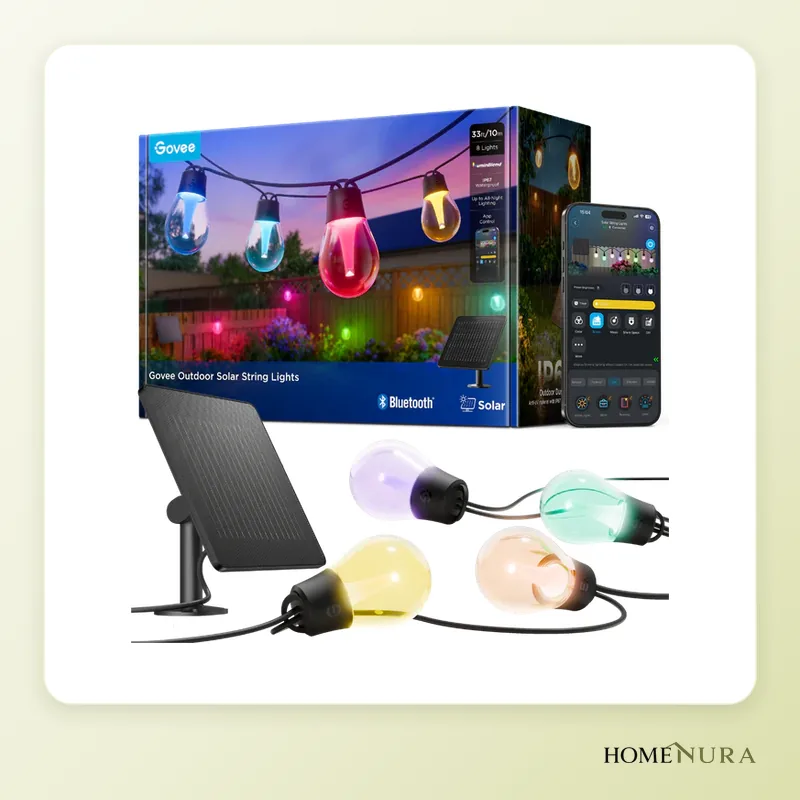
Govee Outdoor Solar String Lights
A 10 m solar string with RGBICW bulbs, controlled over Bluetooth with scenes and schedules, for a patio with no outlet.
Photo: © Govee
- View on Amazon →
Premium landscape lighting (wired)
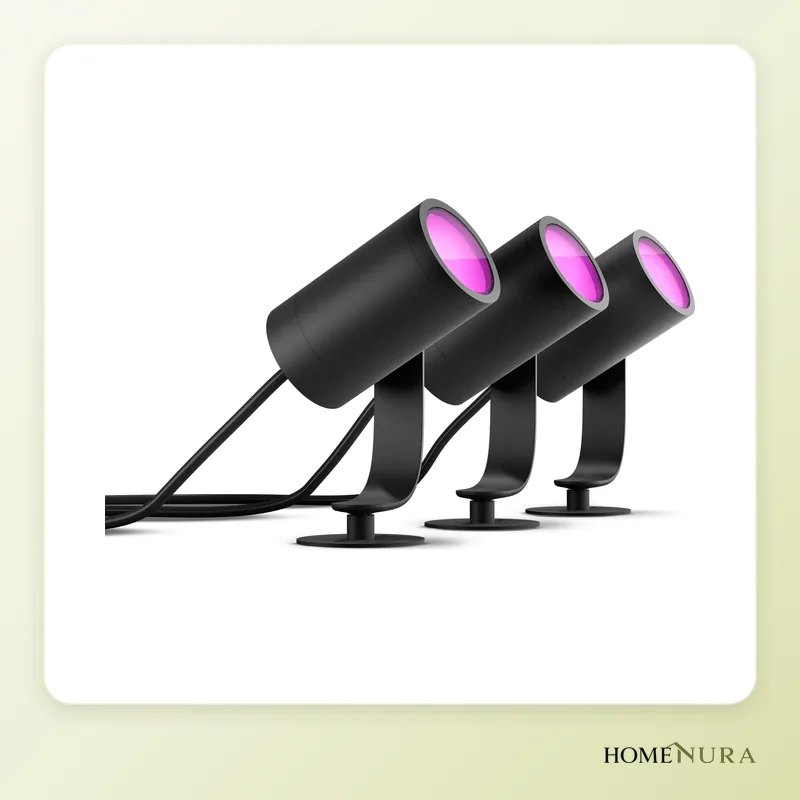
Philips Hue Lily Outdoor Spot Base Kit
Three 24 V colour spotlights of 600 lumens each, IP65, controlled via the Hue Bridge with Alexa, Google Home, Apple Home and Home Assistant.
Photo: © Philips Hue


As an Amazon Associate I earn from qualifying purchases. Amazon affiliate links: commission at no extra cost to you.
For outdoor lighting that's both solar and smart, the best combination in 2026 is a solar wall light with a camera, such as the eufy Solar Wall Light Cam S120, for security, plus an app-controlled solar string such as the Govee Outdoor Solar String Lights for ambience. If you want bright, colourful, programmable light every night of the year, a smart low-voltage system like Philips Hue Lily is still the benchmark, but it needs an outdoor outlet and a cable.
This guide compares the two main families, standalone solar and wired smart lighting, based on manufacturer specifications, published independent reviews and verified buyer feedback. For the bigger picture, see our smart backyard guide 2026, and browse the full selection in the smart outdoor lighting category.
Solar or wired smart lighting: the real question
A solar light stores the energy it collects during the day in a battery and releases it at night. It goes up in minutes, with no trench and no electrician, and adds nothing to your electricity bill. The trade-off is limited brightness, set by the size of the panel and battery, and noticeably shorter runtimes in winter, when days are short and the sun stays low.
Wired smart lighting, whether on household current (120 V) or 24 V low voltage, gives steady light all year, more power, millions of colours and deep integration with Alexa, Google Home, Apple Home or Home Assistant. In return, it needs an outdoor power source and, depending on the job, an electrician.
| Criterion | Standalone solar | Wired smart (24 V or 120 V) |
|---|---|---|
| Installation | No cable, done in minutes | Outdoor outlet, cable, sometimes an electrician |
| Energy use | None from the grid | Low with LEDs |
| Brightness | Modest to medium | Medium to high |
| Winter reliability | Reduced | Constant |
| Connectivity | Rare (Bluetooth or Wi-Fi on some models) | Zigbee, Wi-Fi, Bluetooth, Matter depending on brand |
| Colours | Often warm white only | Tunable white and colour |
Models mentioned in this guide
- Philips Hue Calla Outdoor PedestalView on Amazon →
- Steinel XSolar L-S ONEView on Amazon →
Photos: © eufy (Anker Innovations), © Govee, © Philips Hue
As an Amazon Associate I earn from qualifying purchases. Amazon affiliate links: we earn a commission at no extra cost to you.
How to choose
Purpose: security, path lighting or ambience
Start with what the light is for. For security, you need a motion sensor and a clear white light that comes on decisively, ideally with a phone notification. For marking a path or steps, a low but steady glow is enough. For ambience on a patio or deck, you want colours, scenes and sunset scheduling.
Brightness in lumens
A few dozen lumens are enough to mark a path. An entrance wall light sits around 150 to 300 lumens. A spotlight aimed at a tree or the front of the house works best above 500 lumens. Be wary of the very high figures claimed by some entry-level solar floodlights: independent reviews often find a big gap between the claim and reality.
IP rating
The IP rating describes resistance to dust and water. IP44 protects against splashes and suits a sheltered wall. IP65 withstands water jets and handles direct rain. IP67 survives temporary immersion, which helps for ground-level lights in areas that can flood.
Connectivity and ecosystem
A Bluetooth model is controlled from your phone when you're nearby. A Wi-Fi model can be reached remotely and sends alerts. A Zigbee system such as Philips Hue goes through a bridge, but it's very stable and works with almost every smart home platform. If you already have Hue bulbs indoors, staying in the same ecosystem makes life easier.
Battery and solar panel
With solar lights, battery quality matters more than LED count. Lithium iron phosphate (LiFePO4) batteries cope better with cold and repeated charge cycles. A separate panel on a cable lets you put the light in the shade and the panel in full sun, which is a real advantage on a north-facing wall.
Models worth knowing in 2026
eufy Solar Wall Light Cam S120: smart solar security
The eufy S120 combines a 300-lumen wall light, a 2K camera with colour night vision, a PIR motion sensor and a siren, all powered by a built-in solar panel and a 5,200 mAh battery. It connects over 2.4 GHz Wi-Fi, sends notifications to your phone and works with Alexa and Google Assistant. It's rated IP65.
Strengths: no wiring at all, light and camera in one device, a full-featured eufy Security app. Limitations: bright enough for a doorway but not for a large yard, and charging depends heavily on sun exposure. Best for: securing a door, shed or driveway without any construction work.
Govee Outdoor Solar String Lights: app-controlled solar ambience
This 10-metre solar string carries 8 RGBICW bulbs that can show several colours at once, plus warm to cool whites. It's controlled over Bluetooth in the Govee Home app, with preset scenes, music sync, schedules and battery level. The solar panel is separate and the bulbs are rated IP67.
Strengths: a rare solar string that's genuinely controllable, attractive colour effects, instant setup on a pergola or fence. Limitations: Bluetooth means you have to be nearby to control it, and the light is decorative. Best for: a patio or balcony with no outdoor outlet.
Philips Hue Lily Outdoor Spot (base kit): the premium wired benchmark
The Hue Lily base kit includes three 600-lumen spotlights with tunable white from 2,000 to 6,500 K and 16 million colours, plus their 24 V power supply. The spots are rated IP65 and can be staked into the lawn or mounted on a wall. Full control runs through the Hue Bridge, which works with Alexa, Google Home, Apple Home and Home Assistant. For a tree or the front of the house, the Lily XL reaches 1,050 lumens.
Strengths: widely praised light quality, sunset automations, a very broad and stable ecosystem. Limitations: needs an outdoor outlet and the Hue Bridge, and costs considerably more than solar. Best for: anyone already using Hue indoors or planning long-term landscape lighting.
Philips Hue Calla Outdoor Pedestal: smart path lighting
The small Calla pedestal connects to the same 24 V low-voltage system as the Lily spots. It casts white or coloured light downward, ideal for marking a path or the edge of a patio, and uses the same scenes and automations as the rest of your Hue setup. It's rated IP65.
Strengths: matches the Lily design, central control. Limitations: depends on the Hue power kit and the available cable length. Best for: extending a Lily installation along a path.
Steinel XSolar L-S ONE: no app, but dependable solar
German manufacturer Steinel's XSolar L-S ONE is a 150-lumen warm white (3,000 K) solar wall light with a 140° infrared sensor and an 8-metre range. Its monocrystalline panel is separate from the light and its lithium iron phosphate battery is designed to handle low temperatures. A basic light function gives a dim glow in the early and late hours of the night. It's rated IP44.
Strengths: solid build, remote panel, robust battery. Limitations: no connectivity, and brightness suited to an entrance rather than a large area. Best for: automatic lighting with no app or account to set up.
Comparison table
| Model | Type | Power | Brightness | Connectivity | Motion | IP | Best for |
|---|---|---|---|---|---|---|---|
| eufy Solar Wall Light Cam S120 | Wall light + camera | Solar + battery | 300 lm | 2.4 GHz Wi-Fi | Yes (PIR) | IP65 | Securing an entrance |
| Govee Outdoor Solar String Lights | 10 m string | Solar + battery | Decorative | Bluetooth | No | IP67 (bulbs) | Patio ambience |
| Philips Hue Lily (base kit) | 3 spotlights | 24 V | 600 lm per spot | Zigbee (Hue Bridge) | Via Hue sensor | IP65 | Landscape lighting |
| Philips Hue Calla Outdoor Pedestal | Pedestal | 24 V | Path marking | Zigbee (Hue Bridge) | Via Hue sensor | IP65 | Smart path lighting |
| Steinel XSolar L-S ONE | Wall light | Solar + battery | 150 lm | None | Yes (140°, 8 m) | IP44 | App-free entrance light |
Mistakes to avoid
- Putting the panel in the shade: a tree, an overhang or a north-facing wall can slash runtime. Choose a model with a remote panel if the light has to stay in the shade.
- Trusting lumen claims on unbranded solar floodlights: real-world figures are often far lower. Buyer feedback and independent reviews are more reliable than the product listing.
- Forgetting about winter: solar is fine for summer ambience, but an entrance has to stay lit all year. For critical areas, add a wired solution.
- Choosing Bluetooth for remote use: if you want to turn on the backyard lights from work or get alerts, you need Wi-Fi or a bridge.
- Aiming light at the neighbours or the street: warm white light pointed downward lights better, bothers people less and disturbs wildlife less.
Installation and safety
Solar lights are DIY-friendly: two screws for a wall light, a stake for a path light. Clean the panel a few times a year, since dust and pollen reduce charging, and brush off snow after a snowfall in winter. Batteries lose some capacity in deep cold and recover when it warms up.
Low-voltage systems such as Hue Lily plug into a protected outdoor outlet. The 24 V cable can be buried shallowly or hidden along garden beds, within the maximum length specified by the manufacturer. Any new outdoor outlet or connection to your home's wiring should be handled by a licensed electrician, with suitable ground-fault (GFCI) protection. Electrical work rules are set by each province and territory, so check what applies where you live.
If you combine lighting and surveillance, aim cameras at your own property only. For more on that, read our outdoor security camera comparison.
Our verdict
| Need | Our pick | Why |
|---|---|---|
| Smart solar security | eufy Solar Wall Light Cam S120 | Light, 2K camera and Wi-Fi alerts with no cable at all |
| Controllable solar ambience | Govee Outdoor Solar String Lights | Colours, scenes and schedules without an outlet |
| Premium landscape lighting | Philips Hue Lily (base kit) | Light quality, colours and a very complete ecosystem |
| Smart path lighting | Philips Hue Calla Outdoor Pedestal | Fits into an existing Lily setup |
| Simple solar, no app | Steinel XSolar L-S ONE | Remote panel, robust battery, reliable detection |
In short, solar is hard to beat for quickly equipping an entrance, shed or patio with no construction work. As soon as you want strong, steady light in every season, a wired smart system is the better fit. Many yards benefit from a mix of both.
Frequently Asked Questions
Does solar outdoor lighting work in winter?
Are there solar lights that are genuinely smart?
Which IP rating do outdoor lights need?
Can you control outdoor lighting with Alexa or Google Home?
Do you need an electrician to install smart outdoor lighting?
Article from our comprehensive guide
Smart Yard & Outdoors →Our recommendations
- Philips Hue Calla Outdoor PedestalView on Amazon →
- Steinel XSolar L-S ONEView on Amazon →
Photos: © eufy (Anker Innovations), © Govee, © Philips Hue
As an Amazon Associate I earn from qualifying purchases. Amazon affiliate links: we earn a commission at no extra cost to you.


