Smart Home Energy Savings Guide 2026: Where Automation Really Cuts Energy Use
Smart heating control, energy monitoring, smart plugs and presence detection: what really reduces your kWh, which devices to choose (tado X, Netatmo, Shelly, Tapo, Aqara) and the mistakes to avoid.

Quick answer
What is the best smart home equipment to save energy in 2026?
- View on Amazon →
Best overall
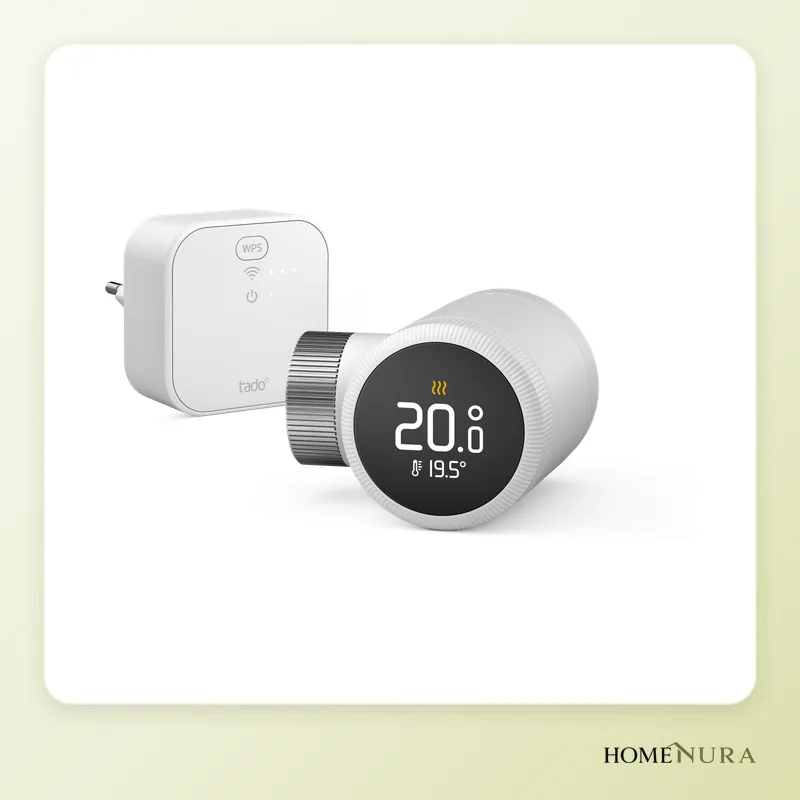
tado Smart Radiator Thermostat X Starter Kit
It targets heating, usually the biggest energy user: room-by-room control, Thread and Matter via the Bridge X, tool-free installation.
Photo: © tado
- View on Amazon →
Best value
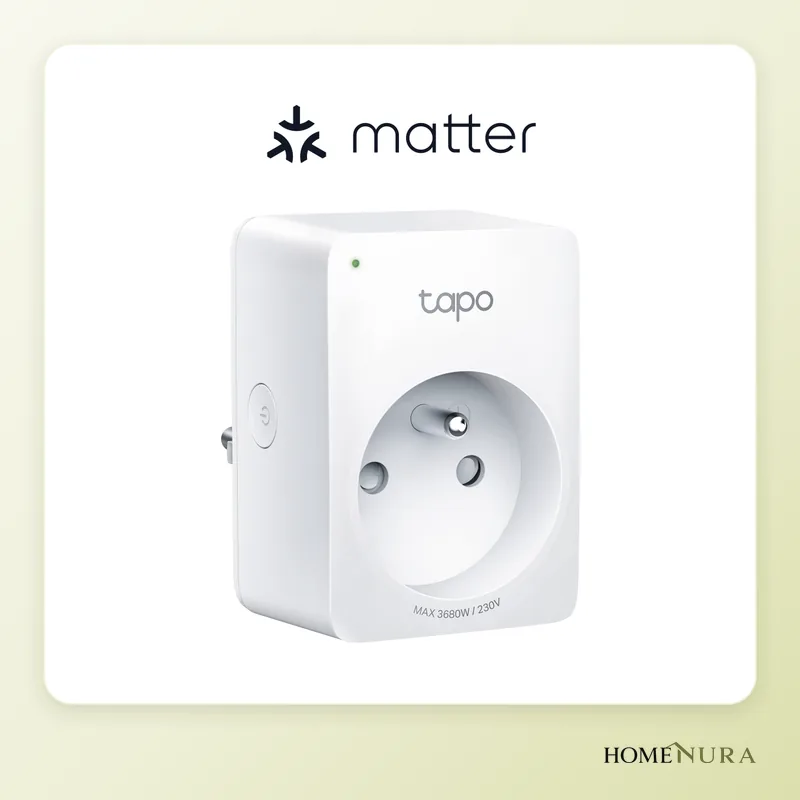
TP-Link Tapo P110M
A Matter-certified Wi-Fi plug that meters each appliance in kWh: the simplest way to find where energy is wasted.
Photo: © TP-Link
- View on Amazon →
Best for whole-home monitoring
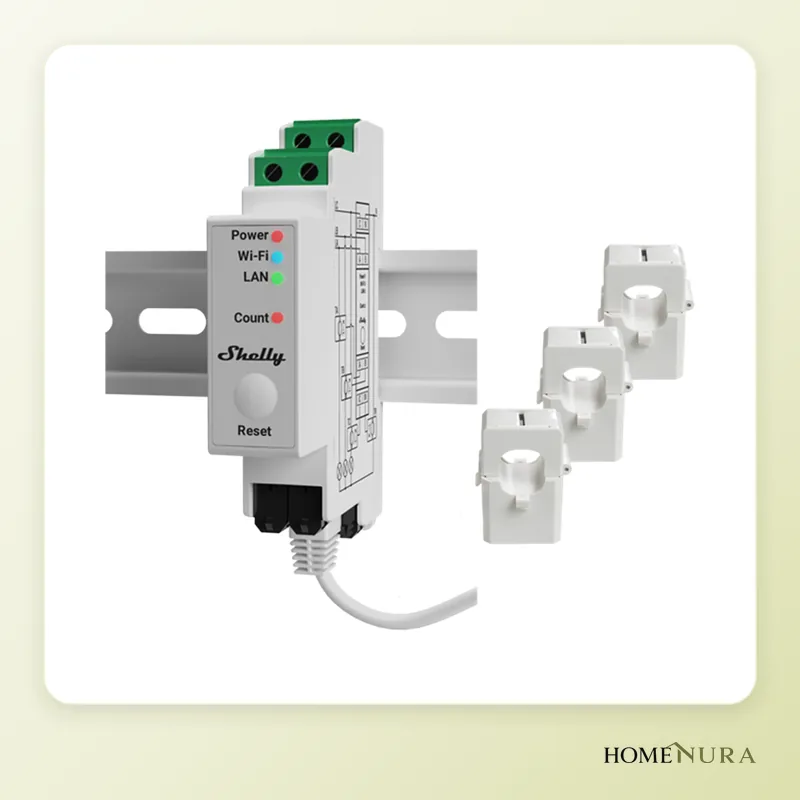
Shelly Pro 3EM
Single- or three-phase DIN-rail meter with two-way metering, useful with solar; installation by a licensed electrician.
Photo: © Shelly (Allterco Robotics)


As an Amazon Associate I earn from qualifying purchases. Amazon affiliate links: commission at no extra cost to you.
A smart home genuinely cuts energy use when it tackles heating first: a smart thermostat or room-by-room smart radiator valves such as the tado X act on the biggest item on your bill. Next comes measurement (smart plugs and energy monitors) to find waste, then a few simple automations; gadgets that control neither heating nor power-hungry appliances save almost nothing.
This guide is not based on in-house testing: it compares devices using manufacturer specifications, independent reviews and verified buyer reviews. Savings always depend on your home, its insulation, your heating system and your habits, so the figures below are ballpark figures, never promises.
Where a home’s energy goes
According to Eurostat, space heating accounts for roughly two-thirds of the final energy used by households in the European Union. Hot water comes a long way behind, followed by lighting and appliances. That split sets the priorities: a device that controls heating better will almost always do more than a smart bulb.
France’s energy agency, ADEME, estimates that lowering your heating setpoint by 1°C cuts heating consumption by about 7%. That’s exactly what a good smart thermostat does: it lowers the temperature when nobody is home, at night or in empty rooms, without you having to think about it. Devices on standby use little power individually, but they draw it around the clock, which is why it pays to measure them before switching them off.
Models mentioned in this guide
- Netatmo Smart ThermostatView on Amazon →
- Shelly Plug S Gen3View on Amazon →
Photos: © tado, © TP-Link, © Shelly (Allterco Robotics)
As an Amazon Associate I earn from qualifying purchases. Amazon affiliate links: we earn a commission at no extra cost to you.
How to choose
Compatibility with your heating
Check this first. A wired thermostat connects to a furnace, boiler or heat pump (on/off dry contact or a modulating protocol, depending on the model); smart radiator valves screw onto the valves of hot-water radiators; electric heaters are either smart models themselves or, in France, usually controlled through a pilot wire (fil pilote). Use the manufacturer’s compatibility checker before you buy.
Protocol: Matter, Thread, Wi-Fi or Zigbee
Matter lets devices from different brands work together in Apple Home, Google Home, Amazon Alexa or SmartThings. Thread is a low-power mesh network suited to battery-powered devices. Wi-Fi needs no bridge, but it puts more load on your home network as devices multiply. Our Matter and Thread guide explains these choices in detail.
Energy measurement
A plug that measures instantaneous power and totals the kWh tells you what an appliance really costs to run. A monitor installed in your electrical panel gives you the whole-home picture, including any solar production.
Local control and subscriptions
Check whether automations run without the manufacturer’s cloud and whether some features require a subscription. It matters for reliability as much as for long-term cost.
The devices to prioritize in 2026
tado Smart Radiator Thermostat X Starter Kit: best overall
The tado X starter kit pairs a smart radiator thermostat with the Bridge X, which acts as a Thread border router. The thermostat is Matter compatible, fits most radiator valves thanks to the supplied adapters and runs on a rechargeable battery. Everything can be controlled from the tado app or from Apple Home, Google Home and Alexa.
Strengths: room-by-room control, tool-free installation on hot-water radiators, a complete ecosystem (wired thermostat, sensors, extra valves). Limitations: the X range isn’t compatible with older tado V3+ products, and some advanced automations, such as automatic geofencing, are part of the optional Auto-Assist subscription. Who it’s for: homes with hot-water radiators that want to stop heating empty rooms.
Netatmo Smart Thermostat: the safe choice for a boiler
The Netatmo thermostat replaces a standard room thermostat and switches the boiler through a relay. Its Auto-Adapt feature anticipates when to start heating based on your home’s insulation and the outdoor temperature, and the app sends a monthly energy report. It works with Apple HomeKit, Alexa and Google Assistant.
Strengths: simple settings, regular reports, discreet design. Limitations: a single heating zone unless you add smart valves, and on/off control that doesn’t suit every heat pump. Who it’s for: houses and apartments with their own boiler and one central thermostat.
TP-Link Tapo P110M: the easiest energy-monitoring plug to start with
The Tapo P110M is a Matter-certified Wi-Fi plug that measures the consumption of whatever is plugged into it. The app shows your kWh history and lets you enter your electricity rate to estimate the cost. It works with Apple Home, Alexa, Google Home and SmartThings, and its compact shape leaves the neighbouring outlet free.
Strengths: native Matter, quick setup, ideal for auditing power-hungry appliances. Limitations: 2.4 GHz Wi-Fi only, fewer advanced features than Shelly. Who it’s for: anyone who wants to measure several appliances on a modest budget.
Shelly Plug S Gen3: the plug for advanced users
The Shelly Plug S Gen3 meters power, handles loads up to 2,500 W, is Matter certified and needs no hub. It stands out for its local API and its popular Home Assistant integration, which lets you trigger automations on a power threshold (for example, a notification when the washer is done).
Strengths: local control, lots of automation options, Wi-Fi range extender function. Limitations: more technical settings, and the 2,500 W limit rules out large space heaters. Also check that the version you buy has the right plug for your outlets. Who it’s for: Home Assistant users and anyone who wants fine-grained automations.
Shelly Pro 3EM: the whole-home view
The Shelly Pro 3EM is a DIN-rail energy meter with current clamps that works on single-phase and three-phase supplies. It measures in both directions, consumption and production, which makes it useful with solar panels. It comes in 120 A and 400 A versions, with a stated accuracy of 1%, and connects over Wi-Fi or Ethernet, locally or through the cloud.
Strengths: a complete view of the home, solar self-consumption tracking, history stored on the device. Limitations: it’s installed in the electrical panel, a job for a licensed electrician. Who it’s for: homes with solar panels, a heat pump or an EV charger. Our home energy monitor comparison also covers options that need no wiring work.
Aqara Presence Sensor FP2: heat and light only occupied rooms
The FP2 uses millimetre-wave radar that detects people even when they’re sitting still, unlike conventional infrared motion sensors. It covers up to 40 m² (about 430 sq. ft.), can split a room into 30 zones, tracks several people and runs on 2.4 GHz Wi-Fi without an Aqara hub, with Apple Home, Alexa, Google Home and Home Assistant.
Strengths: reliable detection of someone reading or working, customizable zones. Limitations: it’s powered by a USB cable, and setting up zones takes some care. Who it’s for: anyone who wants lights and heating off in rooms that are genuinely empty.
Comparison table
| Device | Role | Connectivity | Best for |
|---|---|---|---|
| tado Smart Radiator Thermostat X Starter Kit | Room-by-room control | Thread, Matter (Bridge X) | Hot-water radiators |
| Netatmo Smart Thermostat | Boiler thermostat | Wi-Fi, HomeKit | Homes with their own boiler |
| TP-Link Tapo P110M | Per-appliance metering | Wi-Fi, Matter | Tracking energy use |
| Shelly Plug S Gen3 | Metering and automation | Wi-Fi, Matter, Bluetooth | Home Assistant |
| Shelly Pro 3EM | Whole-home monitor | Wi-Fi, Ethernet | Solar, heat pump |
| Aqara Presence Sensor FP2 | Presence detection | 2.4 GHz Wi-Fi | Rooms used on and off |
See our full selection of smart thermostats and home energy monitors in the catalogue.
A worked example in kWh
A device drawing 10 W around the clock, such as a cable box or speaker left on standby, uses 10 W × 8,760 hours, or about 88 kWh a year. At an example rate of 10¢ per kWh, that’s about $9 a year for a single device (your rate depends on your province and utility, so check your bill). A smart plug that cuts power to these devices at night and while you’re out removes a good share of that.
The same logic applies to heating: if your home uses 10,000 kWh a year for heating, lowering the average temperature by 1°C works out, using ADEME’s rule of thumb, to about 700 kWh less. Heating control that lowers the setpoint in empty rooms and at night works on exactly this lever.
Automations that really save energy
- Night and away schedule: lower the heating setpoint at night and during the day when nobody’s home.
- Open-window detection: turn the heat off while a window is open to air out the room.
- Everything off: a “Leaving home” routine that turns off the lights and the plugs of standby devices.
- Room-by-room presence: switch off lights and supplementary heating when the sensor no longer detects anyone.
- Solar: start a programmable appliance when production exceeds consumption, if you have balcony solar panels or a rooftop system.
Mistakes to avoid
- Starting with lighting: LEDs already use little power; the real gains are in heating.
- Buying without checking compatibility: your furnace or boiler, heat pump, radiator valves and plug type must all be compatible.
- Plugging a space heater into a small smart plug: respect the maximum load stated by the manufacturer.
- Collecting apps: favour Matter or a central hub to manage everything in one place.
- Believing in guaranteed savings: advertised percentages depend on the home; measure before and after.
Installation and safety
Smart plugs and radiator valves install without tools. A wired thermostat connected to your furnace or boiler, or a monitor installed in your electrical panel, does mean working on your electrical system: turn off the power at the breaker and, if you have any doubt, hire a licensed electrician. Electrical work rules are set by each province and territory. Never plug in an appliance whose power draw exceeds the smart plug’s rating, and avoid daisy-chaining extension cords or power bars.
Our verdict
For most homes heated by hot-water radiators, the tado Smart Radiator Thermostat X Starter Kit is the most effective starting point because it targets the biggest source of consumption. With a boiler and a single central thermostat, the Netatmo Smart Thermostat remains a simple, reliable choice. For metering on a budget, the Tapo P110M is the easiest to start with, the Shelly Plug S Gen3 the most flexible, and the Shelly Pro 3EM gives the complete picture, especially with solar. To go further on heating, read our smart thermostat and heat pump guide.
Frequently Asked Questions
Which smart home device saves the most energy?
Does a smart plug use electricity itself?
Do I need an electrician to install these devices?
Is Matter essential for saving energy?
How can I tell how much I am really saving?
Article from our comprehensive guide
Energy & Smart Home →Our recommendations
- Netatmo Smart ThermostatView on Amazon →
- Shelly Plug S Gen3View on Amazon →
Photos: © tado, © TP-Link, © Shelly (Allterco Robotics)
As an Amazon Associate I earn from qualifying purchases. Amazon affiliate links: we earn a commission at no extra cost to you.


