Balcony Solar Panels 2026: Plug-In Solar Rules, Output and Best Kits
How a balcony solar panel works, what the rules say in 2026 (800 W in Germany, Enedis declaration in France), how much it produces and which micro-inverter or battery system to choose: Hoymiles, Anker SOLIX, EcoFlow, Zendure.

Quick answer
What is the best balcony solar kit in 2026?
- View on Amazon →
Best overall
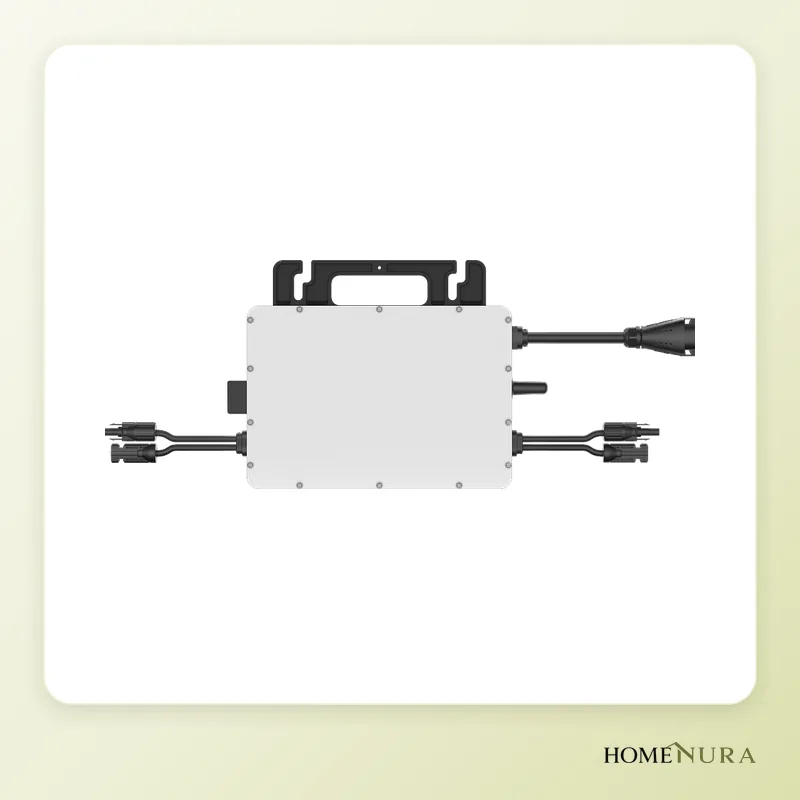
Hoymiles HMS-800W-2T
An 800 VA micro-inverter with two MPPT inputs and built-in Wi-Fi at the heart of many kits: the simplest option for households at home by day.
Photo: © Hoymiles
- View on Amazon →
Best with battery
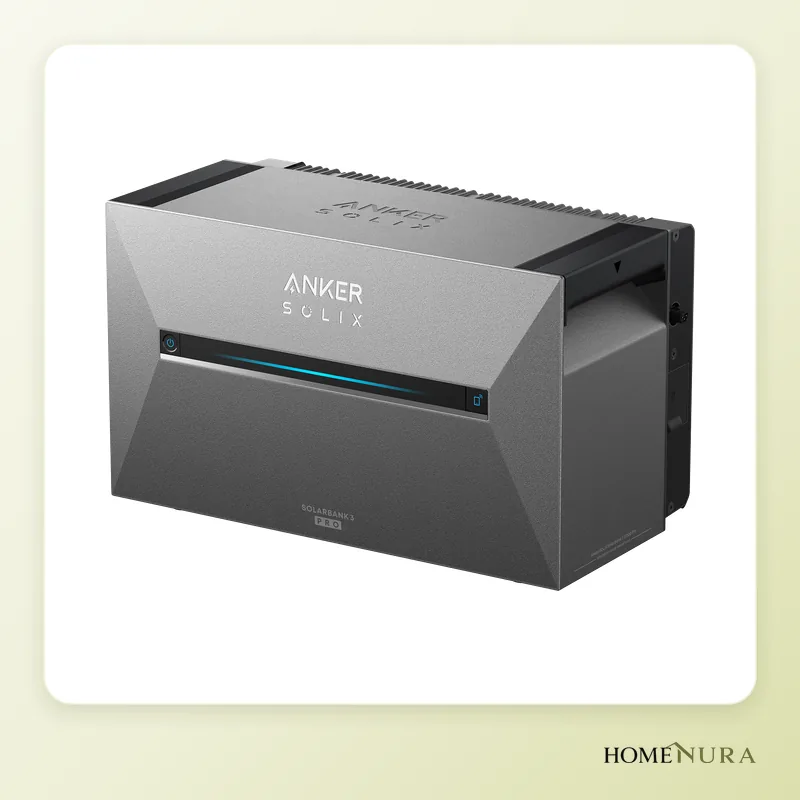
Anker SOLIX Solarbank 3 E2700 Pro
2.688 kWh expandable storage, four MPPT inputs and 800 W output through an outlet: ideal if you use most of your power in the evening.
Photo: © Anker SOLIX
- View on Amazon →
Best for small balconies
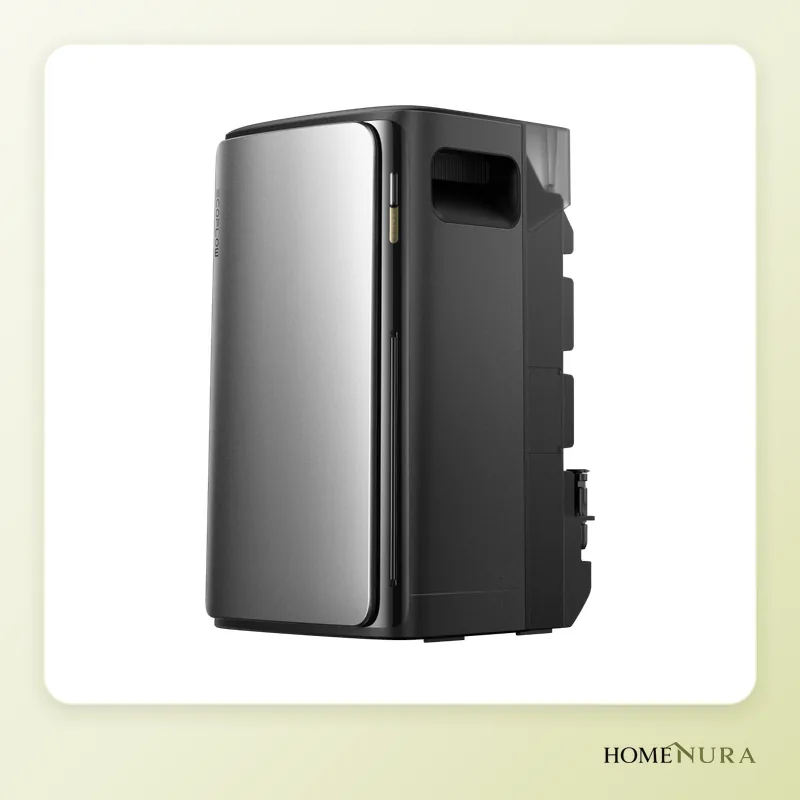
EcoFlow STREAM Ultra
A compact IP65 all-in-one with a 1.92 kWh LiFePO4 battery, four MPPT inputs and 800 W into the home grid.
Photo: © EcoFlow


As an Amazon Associate I earn from qualifying purchases. Amazon affiliate links: commission at no extra cost to you.
A balcony solar panel, also called a plug-in solar kit (Balkonkraftwerk in German), is a small photovoltaic kit made of one or two panels and a micro-inverter, usually limited to 800 W in Europe, that powers the appliances in your home directly and cuts the amount of electricity you buy. In 2026 the best starting point for most households is still a simple two-panel kit with an 800 VA micro-inverter such as the Hoymiles HMS-800W-2T; if nobody is home during the day, a battery system like the Anker SOLIX Solarbank 3 E2700 Pro or the EcoFlow STREAM Ultra lets you use midday solar power in the evening.
This guide is based on manufacturer specifications, published independent reviews and verified owner reviews. It explains how these kits work, the rules in the main European countries, the buying criteria and the most common mistakes. You’ll find every kit we cover in our balcony solar category.
How a Balcony Solar Panel Works
A balcony kit has three parts: one or two photovoltaic panels (often 400 to 500 Wp each), a micro-inverter that turns the panels' direct current into alternating current synchronized with the grid (230 V on these European models), and a connection cable to your home's wiring. A mounting system for a railing, wall, flat roof or the ground completes the kit.
The principle is self-consumption: the electricity produced flows into your home circuit and is used first by whatever is running (fridge, router, standby loads, washer). Anything you don’t use at that moment flows into the grid, usually without payment. The micro-inverter shuts down automatically during a power outage so that it never energizes a line being repaired.
Two figures matter: the peak power of the panels (Wp), their maximum output in full sun, and the inverter output (W or VA), which caps what is fed into the home. Pairing 900 Wp of panels with an 800 VA inverter is common: the inverter clips a few hours a year in midsummer, but output in the morning, in the evening and on grey days goes up.
Models mentioned in this guide
- Anker SOLIX MI80View on Amazon →
- Zendure SolarFlow 800 Pro 2View on Amazon →
Photos: © Hoymiles, © Anker SOLIX, © EcoFlow
As an Amazon Associate I earn from qualifying purchases. Amazon affiliate links: we earn a commission at no extra cost to you.
2026 Rules: What Is Established, Country by Country
Rules change quickly and differ between countries. Below are the points that are well established in Europe at the time of this update; always check with your grid operator before buying. These kits are designed for European grids, and rules for plug-in solar differ by country and utility: in Canada, check with your utility and your provincial electrical safety authority before connecting anything.
Germany
Since Germany’s Solarpaket I came into force in May 2024, a Balkonkraftwerk may have an inverter of up to 800 VA and up to 2,000 Wp of panels. The only formality is a free registration in the Marktstammdatenregister of the Federal Network Agency; separate notification of the grid operator has been dropped. An old meter without a backstop may stay in place until the grid operator replaces it. The DIN VDE V 0126-95 product standard, published at the end of 2025, covers connection through a Schuko plug under certain panel-power conditions; above them, a dedicated feed-in connector is required. Since October 2024, German tenants and condo owners can also ask to install such a system, and the landlord or owners’ association may refuse only for a serious reason, while keeping a say in how it’s installed.
France
Installation is legal but must be declared to Enedis, France’s grid operator (or the local grid operator), through a self-consumption agreement without feed-in (CACSI), a free online procedure, whatever the power. Any surplus fed into the grid isn’t paid for. France’s NF C 15-100 wiring standard governs the connection: plugging into an ordinary outlet shared with other appliances or into a power bar should be avoided, and a dedicated, protected circuit checked by an electrician is the recommended approach. A visible panel on a façade or railing may require a planning declaration at the town hall, and in a condominium building the co-owners’ meeting usually has to approve it. Tenants need written consent from the landlord.
Other Countries
- Netherlands: plug-in kits are common and must be reported to the grid operator. Net metering (saldering) ends on January 1, 2027, after which direct self-consumption becomes more valuable than feeding power into the grid.
- Belgium, Spain, Italy: small systems are allowed with a simplified declaration to the grid operator, with procedures specific to each country or region. Check before you buy.
- United Kingdom: the government opened the way for plug-in kits in 2026, with output limited to 800 VA and kits that meet a dedicated product specification.
Buying Criteria
Simple Micro-Inverter or Battery System
A kit without a battery is the simplest option and pays for itself fastest: everything produced during the day and used on the spot is a saving. A battery system (DC-coupled between the panels and the inverter) stores the midday surplus and releases it in the evening. It mainly makes sense if nobody is home during the day. For more on this choice, read our home battery comparison for solar.
Number of MPPT Inputs
Each MPPT input optimizes one panel independently. Two inputs are enough for two panels; four inputs let you spread four panels across different orientations (east and west, for example), within the panel-power limit that applies where you live.
Panels and Mounting
Monocrystalline panels of 400 to 500 Wp are the norm. Bifacial glass-glass models also capture reflected light and age better. Check the weight (often over 20 kg, or 44 lb, per panel), the strength of the railing and the quality of the brackets: a poorly secured panel exposed to wind is the main risk with a balcony kit.
App and Consumption Monitoring
An app that shows real-time production helps you shift loads (washer, dishwasher) to sunny hours. With a battery, a meter or a smart plug with energy monitoring lets the system match its output to actual consumption, so stored energy isn’t given away to the grid.
Warranty and Compliance
Choose an inverter that meets the grid-connection standards that apply where you live (European standards for the models below), including anti-islanding protection, with at least a ten-year warranty, and panels with a performance warranty of 25 years or more. In Canada, look for a recognized certification mark such as CSA, cUL or cETL.
The Reference Models in 2026
Hoymiles HMS-800W-2T: The Reference Micro-Inverter for a Simple Kit
The HMS-800W-2T powers a large share of the balcony kits sold in Europe. It delivers 800 VA, takes two panels on two independent MPPT inputs and has built-in Wi-Fi, so you don’t need an extra gateway. Monitoring runs through the S-Miles Cloud app. IP67 housing, fanless passive cooling.
Strengths: proven reliability, wide compatibility with panels from 320 to over 500 Wp, many complete kits built around it. Limitations: no storage; the app is more technical than consumer brands’ apps. Best for: households where someone is home during the day and who want the simplest, most cost-effective setup.
Anker SOLIX MI80: The Consumer-Friendly Alternative
The MI80 is the micro-inverter in Anker's balcony kits. You can set its output to 600 or 800 W in the app, and it has two MPPT inputs, Wi-Fi and Bluetooth, an IP67 housing and a ten-year warranty.
Strengths: clear Anker app, guided setup. Limitations: the detailed history is less complete than on the brand’s battery systems. Best for: buyers who prefer a consumer ecosystem and a brand’s customer service.
Anker SOLIX Solarbank 3 E2700 Pro: The Best System with Storage
The Solarbank 3 E2700 Pro combines battery, charge controllers and inverter in one unit. It stores 2.688 kWh, accepts up to 3,600 Wp of panels on four MPPT inputs and delivers 800 W to the home through a plug-in connection. You can expand capacity with add-on batteries, and it can use a smart meter to follow the home’s consumption.
Strengths: large base capacity, expandable, advanced control. Limitations: bulky and heavy; in Germany the connected panel power must stay within the 2,000 Wp limit. Best for: households that are out during the day and use most of their power in the evening.
EcoFlow STREAM Ultra: The Compact All-in-One
The STREAM Ultra integrates a 1.92 kWh LiFePO4 battery, four 500 W MPPT inputs (2,000 W in total) and an inverter that feeds 800 W into the home’s wiring, with an off-grid output of up to 1,200 W. IP65 outdoor housing, Wi-Fi and Bluetooth, ten-year warranty.
Strengths: compact enough for a balcony, capacity can grow with additional STREAM batteries. Limitations: lower base capacity than the Solarbank 3. Best for: small balconies and anyone who wants a discreet, scalable system.
Zendure SolarFlow 800 Pro 2: The Most Expandable Option
The more compact, lighter successor to the SolarFlow 800 Pro keeps a 1.92 kWh battery expandable to 11.52 kWh, four MPPT inputs (up to 2,640 Wp) and a bidirectional inverter with 800 W on-grid and 1,000 W backup output.
Strengths: very large possible capacity, can charge from the grid. Limitations: lots of settings, best for users who enjoy fine-tuning. Best for: starting small and adding storage later.
Comparison Table
| Model | Type | Key Spec | Connectivity | Best For |
|---|---|---|---|---|
| Hoymiles HMS-800W-2T | Micro-inverter | 800 VA, 2 MPPT, IP67 | Built-in Wi-Fi | Simple kit, someone home by day |
| Anker SOLIX MI80 | Micro-inverter | 600/800 W adjustable, 2 MPPT | Wi-Fi, Bluetooth | Consumer ecosystem |
| Anker SOLIX Solarbank 3 E2700 Pro | Battery system | 2.688 kWh, 4 MPPT, expandable | Wi-Fi, Bluetooth | Evening-heavy consumption |
| EcoFlow STREAM Ultra | Battery system | 1.92 kWh, 4 MPPT, IP65 | Wi-Fi, Bluetooth | Small balcony, compact format |
| Zendure SolarFlow 800 Pro 2 | Battery system | 1.92 kWh, expandable to 11.52 kWh | Wi-Fi, Bluetooth | Scalable storage |
How Much Does a Balcony Solar Panel Produce?
Output depends mainly on orientation, tilt, shade and region. As a rough guide, a kit of about 800 to 900 Wp facing due south at around 30° commonly produces 700 to 900 kWh a year in northern France, Belgium, Germany or southern England, and more in southern Europe. The same kit mounted vertically on a railing produces noticeably less, often around a third less. An east or west orientation is still worthwhile, with output spread more evenly through the day.
To estimate your own case, the European Commission’s free PVGIS tool calculates expected output from your address, orientation and tilt. Without a battery, the share you actually use yourself depends on when you’re home: high if someone is home during the day, lower otherwise. The saving is then simple to work out: the kWh you use yourself multiplied by your rate per kWh.
Most production happens between April and September; in winter, short days and a low sun cut it sharply.
Mistakes to Avoid
- Plugging the kit into a power bar or extension cord: this risks overheating. Use a wall outlet, ideally on a dedicated circuit checked by a licensed electrician.
- Skimping on mounting: wind puts heavy loads on a panel. Use suitable brackets and check the railing’s strength.
- Forgetting to register: with Enedis in France, the Marktstammdatenregister in Germany, and the grid operator or utility elsewhere.
- Oversizing the battery: a battery too large for your production sits half empty much of the year.
- Ignoring shade: a tree or a neighbouring balcony shading the panel at midday can cut output sharply.
Installation and Safety
Panels connect to the inverter with waterproof MC4 connectors. Mount the inverter out of direct sun, behind a panel or under the railing. Before plugging in, have a licensed electrician confirm that the circuit is protected by a suitable breaker and ground-fault protection (a 30 mA RCD on European installations), and that it isn’t already loaded by power-hungry appliances. Never handle panel cables with open connectors in sunlight: they’re live as soon as light hits the panel. To cut your bills further, see our smart home energy saving guide.
Our Verdict
If someone is home during the day, a two-panel kit with an 800 VA micro-inverter such as the Hoymiles HMS-800W-2T offers the best balance of simplicity, reliability and savings. The Anker SOLIX MI80 is a solid alternative if you prefer a consumer app. If you use most of your power in the evening, the Anker SOLIX Solarbank 3 E2700 Pro is the most complete battery system; the EcoFlow STREAM Ultra is a better fit for small balconies, and the Zendure SolarFlow 800 Pro 2 suits buyers who want to expand storage step by step. In every case, register the installation where required and have the connection checked.
Frequently Asked Questions
Are balcony solar panels legal in 2026?
What is the maximum power for a balcony solar kit?
How much electricity does a balcony solar panel produce?
Do you need a battery with a balcony solar panel?
Can you plug a balcony solar panel into a regular outlet?
Do balcony solar panels work in winter?
Article from our comprehensive guide
Energy & Smart Home →Our recommendations
- Anker SOLIX MI80View on Amazon →
- Zendure SolarFlow 800 Pro 2View on Amazon →
Photos: © Hoymiles, © Anker SOLIX, © EcoFlow
As an Amazon Associate I earn from qualifying purchases. Amazon affiliate links: we earn a commission at no extra cost to you.


