Smart Thermostat for a Heat Pump 2026: Guide and Best Models
tado Heat Pump Optimizer X, tado Smart Thermostat X, Netatmo Thermostat Original or Honeywell Home T6: which smart thermostat suits an air-to-water heat pump? On/off contact, OpenTherm, heating curve and mistakes to avoid.

Quick answer
What is the best smart thermostat for a heat pump in 2026?
- View on Amazon →
Best for heat pumps
tado Heat Pump Optimizer X
It connects to the heat pump itself (Daikin, Atlantic, Vaillant, Saunier Duval, Fujitsu, Panasonic) and adjusts its output to room temperatures.
Photo: © tado
- View on Amazon →
Best value
Netatmo Thermostat Original
Easy to install, works with most on/off air-to-water heat pumps, with Auto-Adapt, Eco-Assist and Matter via the Thermo Hub.
Photo: © Netatmo
- View on Amazon →
Best for OpenTherm without a hub
Honeywell Home T6
Compatible with on/off and OpenTherm systems, including heat pumps, it connects straight to Wi-Fi and is controlled from the Resideo app.
Photo: © Resideo / Honeywell Home


As an Amazon Associate I earn from qualifying purchases. Amazon affiliate links: commission at no extra cost to you.
For an air-to-water heat pump (one that heats water for radiators or in-floor heating), the best smart thermostat in 2026 is one that talks to the heat pump rather than simply switching it on and off: the tado Heat Pump Optimizer X is currently the most complete solution for compatible brands (Daikin, Atlantic, Vaillant, Saunier Duval, Fujitsu, Panasonic). If your heat pump only accepts an on/off contact, a simple, well-set thermostat such as the Netatmo Thermostat Original is enough, and the Honeywell Home T6 remains a safe choice when the heat pump supports OpenTherm.
This guide is based on manufacturer specifications, independent reviews and verified buyer feedback. It only includes models currently sold in Europe. Models and versions sold in Canada can differ from the European ones, so check that the listing is for a North American version. You’ll find the full selection in our smart thermostats catalogue.
Heat pumps and thermostats: what you need to know
A gas boiler or furnace handles frequent starts and stops well. A heat pump, much less so. Its efficiency (the COP) is best when it runs for long periods at reduced output, with the coolest possible heating water. Modern inverter heat pumps modulate their output and follow a weather compensation curve (also called an outdoor reset curve, or heating curve): the milder it is outside, the lower the supply water temperature.
The wrong thermostat can undermine this logic. If it switches the heat pump off and on again as soon as the room overshoots the setpoint by a few tenths of a degree, it causes short cycling: the compressor starts more often, wears faster and efficiency drops. The right thermostat for a heat pump either lets the unit modulate or controls that modulation directly.
Three ways to connect a thermostat to a heat pump
- Dry (volt-free) on/off contact: the most common option. The thermostat opens or closes a contact on the heat pump’s room thermostat input. Simple and universal, but the heat pump only receives an on or off command.
- OpenTherm: a two-way communication protocol. The thermostat can ask for a higher or lower supply water temperature depending on what the room needs. Not every heat pump supports it, so check the manual or the installed control module.
- Manufacturer-specific interface: some solutions plug into the heat pump brand’s own communication bus. This is how the tado Heat Pump Optimizer X works, giving it access to more settings than a simple contact.
Models mentioned in this guide
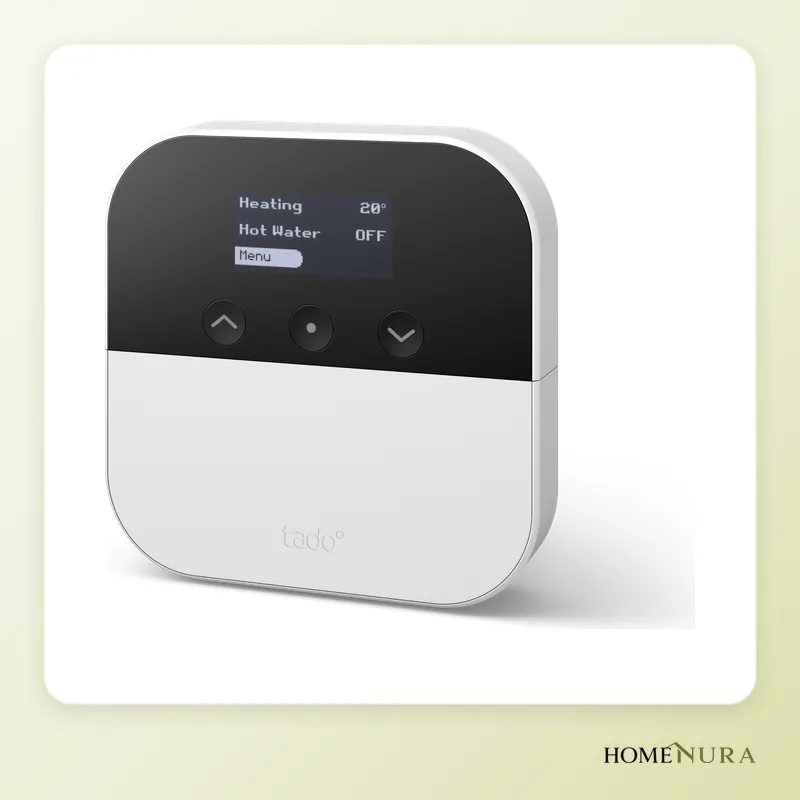
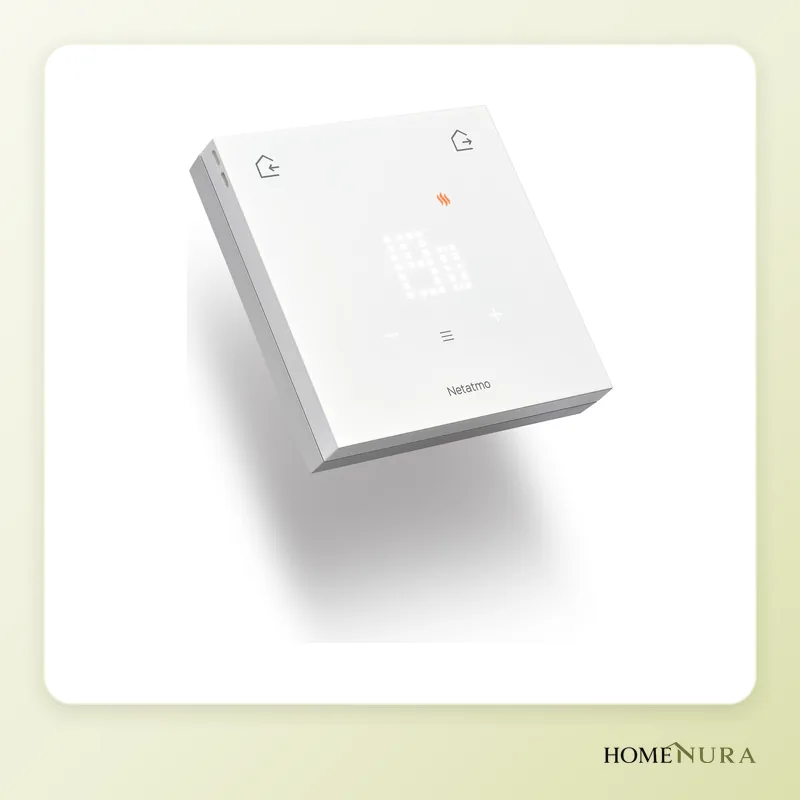
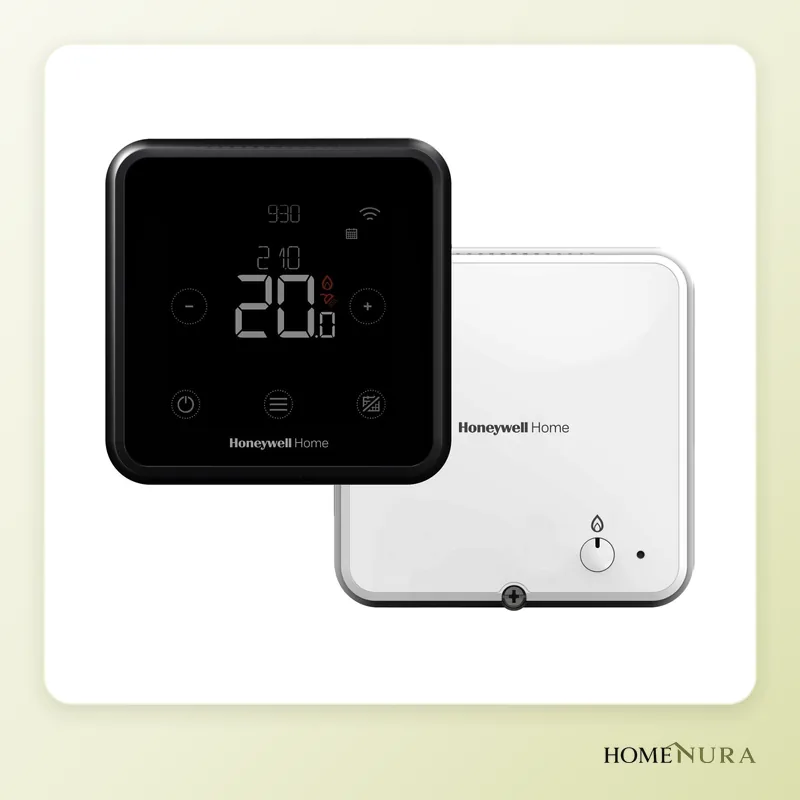
- tado Smart Thermostat XView on Amazon →
Photos: © tado, © Netatmo, © Resideo / Honeywell Home
As an Amazon Associate I earn from qualifying purchases. Amazon affiliate links: we earn a commission at no extra cost to you.
How to choose
- Compatibility with your heat pump: the number one criterion. Note the brand and exact model of the indoor unit, then run them through the thermostat maker’s compatibility checker.
- Control type: on/off, OpenTherm or manufacturer interface. The richer the communication, the better the thermostat can preserve the heat pump’s modulation.
- Heat distribution: in-floor heating has high thermal mass, so a thermostat that anticipates (learning, weather forecasts) is more useful than aggressive scheduling.
- Domestic hot water: if your heat pump also heats your water, check that the thermostat or module can schedule it.
- Smart home ecosystem: Matter, Apple Home, Google Home, Amazon Alexa. Recent ranges use Matter, which makes integration easier.
- Subscriptions: some advanced features (dynamic electricity pricing, automations) are paid. Check what’s included before you buy.
The best smart thermostats for heat pumps in 2026
1. tado Heat Pump Optimizer X: best choice for a compatible heat pump
The Heat Pump Optimizer X isn’t a classic room thermostat but a module that connects to the heat pump. It works with air-to-water, water-to-water and brine-to-water heat pumps from several major brands sold in Europe: Daikin, Atlantic, Vaillant, Saunier Duval, Fujitsu and Panasonic, according to tado’s published list. It uses room temperatures measured by tado X thermostats and radiator thermostats to reduce the heat pump’s output, or put it on standby when rooms are warm, instead of switching it off abruptly.
Strengths: control of heating and hot water in the tado app, energy tracking, an installation guide tailored to the brand and model, a built-in Thread border router (no Bridge X needed) and Matter support. tado claims an average 22% efficiency gain; this is a manufacturer figure and should be read as a rough indication.
Limitations: the list of compatible heat pumps is still limited, you need tado X thermostats or radiator thermostats for room-by-room control, and dynamic pricing features require the optional tado Balance subscription.
Best for: owners of a heat pump from a compatible brand who want the most advanced optimization.
2. tado Smart Thermostat X: the versatile room thermostat
The Smart Thermostat X (wired version) replaces an existing room thermostat. It works over an on/off contact or OpenTherm, depending on what the heat pump accepts, and also suits hydronic in-floor heating. It uses Thread and works with Apple Home, Google Home and Alexa through Matter.
Strengths: smart scheduling, geofencing, open-window detection, a very complete app, and room-by-room expansion with Smart Radiator Thermostat X heads.
Limitations: it needs a tado Bridge X or another Thread border router, and some automations are part of paid options.
Best for: heat pumps outside the Optimizer X list, or households that want a modern, expandable room thermostat.
3. Netatmo Thermostat Original: simplest and best value
Launched in early 2026, the Original range replaces Netatmo’s previous thermostat. It comes in a wired version (Thermo Hub included) and a wireless version (Thermo Link receiver and Thermo Hub included). Netatmo states it’s compatible with most individual boilers and air-to-water heat pumps.
Strengths: guided installation, Auto-Adapt to anticipate heating based on the weather and insulation, Eco-Assist when you’re away, monthly reports, Matter support via the Thermo Hub, and the Home + Control app.
Limitations: the Original range isn’t compatible with older Netatmo accessories, so first-generation Netatmo radiator valves have to be replaced.
Best for: heat pumps controlled by a simple on/off contact, and households that want a clean solution without a complex setup.
4. Honeywell Home T6: the dependable OpenTherm option
The T6 (wired) and its T6R variant (wireless) are compatible with 24–230 V on/off and OpenTherm appliances, including heat pumps. They connect directly to Wi-Fi with no extra hub.
Strengths: clear touchscreen, geofencing, scheduling in the Honeywell Home (Resideo) app, and wide availability through installers.
Limitations: the design and app feel less modern than tado or Netatmo, and room-by-room control is less integrated.
Best for: OpenTherm-compatible heat pumps and users who want a proven thermostat without being tied to an ecosystem.
What about the Google Nest Learning Thermostat?
In Europe, Google has announced that it will no longer launch new Nest thermostats. The 4th-generation Nest Learning Thermostat isn’t sold there, and the 3rd-generation model is only available while stocks last. For a new purchase in that market that’s meant to last, the models above are a better bet. Availability differs by region, so check what’s currently sold where you live.
What about the heat pump maker’s own controls?
Daikin, Vaillant, Atlantic and Panasonic offer their own thermostats and apps. They know the unit inside out but often integrate less well with the rest of the smart home. They’re worth considering, especially if your installer has already planned for them.
Comparison table
| Model | Heat pump control | Connectivity | Best for |
|---|---|---|---|
| tado Heat Pump Optimizer X | Dedicated interface for compatible brands | Wi-Fi, Thread (built-in border router), Matter | Daikin, Atlantic, Vaillant, Saunier Duval, Fujitsu, Panasonic heat pumps |
| tado Smart Thermostat X | On/off or OpenTherm | Thread, Matter (Bridge X required) | Expandable room thermostat |
| Netatmo Thermostat Original | On/off contact | Wi-Fi, Matter via Thermo Hub | Simplicity on a sensible budget |
| Honeywell Home T6 | On/off or OpenTherm | Direct Wi-Fi | OpenTherm heat pumps, no hub |
Mistakes to avoid
- Buying without checking compatibility: a heat pump without a thermostat input, or with locked controls, won’t work with just any model.
- Scheduling deep night setbacks: with a heat pump, especially on in-floor heating, setbacks of 4 to 5°C force the unit to work hard in the morning, often using the electric backup heat. Keep setbacks modest.
- Setting the switching differential too tight: it multiplies short cycles.
- Forgetting the weather compensation curve: a smart thermostat complements a well-set heating curve; it doesn’t replace it. Ask your installer to fine-tune it.
- Putting the thermostat in the wrong place: near a window, a fireplace or in direct sun, it reads the wrong temperature.
Installation and safety
Always turn off the power to the heat pump at the breaker before working on it. Replacing a wired thermostat on a dry contact or OpenTherm is a job a careful DIYer can handle by following the app’s guide. However, connecting a module to the heat pump’s control board, or any work on an installation under warranty, should be left to the installer or a licensed electrician: a wiring mistake can damage the electronics and affect the warranty. Electrical work rules are set by each province and territory, so check yours before you start.
Mount the thermostat in the main living area, on an interior wall, about 1.5 m (5 ft) above the floor, away from heat sources and drafts. Also check Wi-Fi or Thread coverage at that spot.
Rebates and incentives
Whether a smart thermostat bought on its own qualifies for a rebate depends on where you live, and controls can also be included in the quote for a heat pump installation that qualifies for support. Programs and rebates change often, so check current federal, provincial and utility programs before you buy or sign a quote. To go further, read our smart home energy savings guide and our comparison of home energy monitors, handy for tracking the heat pump’s real consumption.
Our verdict
If your heat pump is on the compatibility list, the tado Heat Pump Optimizer X is the most complete solution: it controls the heat pump itself, not just a contact. For an on/off heat pump, the Netatmo Thermostat Original offers the best balance of simplicity and features. The tado Smart Thermostat X and the Honeywell Home T6 are the right picks to make use of OpenTherm. Either way, have your heat pump’s weather compensation curve checked first: it drives most of the efficiency.
Frequently Asked Questions
Can any smart thermostat be used with a heat pump?
What is OpenTherm and do I need a compatible heat pump?
Does a smart thermostat really save energy with a heat pump?
Should I lower the heating at night with a heat pump?
Can I install a smart thermostat on a heat pump myself?
Is Google Nest still a good choice for a heat pump?
Article from our comprehensive guide
Energy & Smart Home →Our recommendations
- tado Smart Thermostat XView on Amazon →
Photos: © tado, © Netatmo, © Resideo / Honeywell Home
As an Amazon Associate I earn from qualifying purchases. Amazon affiliate links: we earn a commission at no extra cost to you.


