Best Smart Thermostats for Heat Pumps (2026): Buying Guide
tado Heat Pump Optimizer X, tado Smart Thermostat X, Netatmo Thermostat Original or Honeywell Home T6: which smart thermostat fits an air-to-water heat pump? Dry contact vs. OpenTherm, heating curves and mistakes to avoid.

Quick answer
What is the best smart thermostat for a heat pump in 2026?
- View on Amazon →
Best for heat pumps
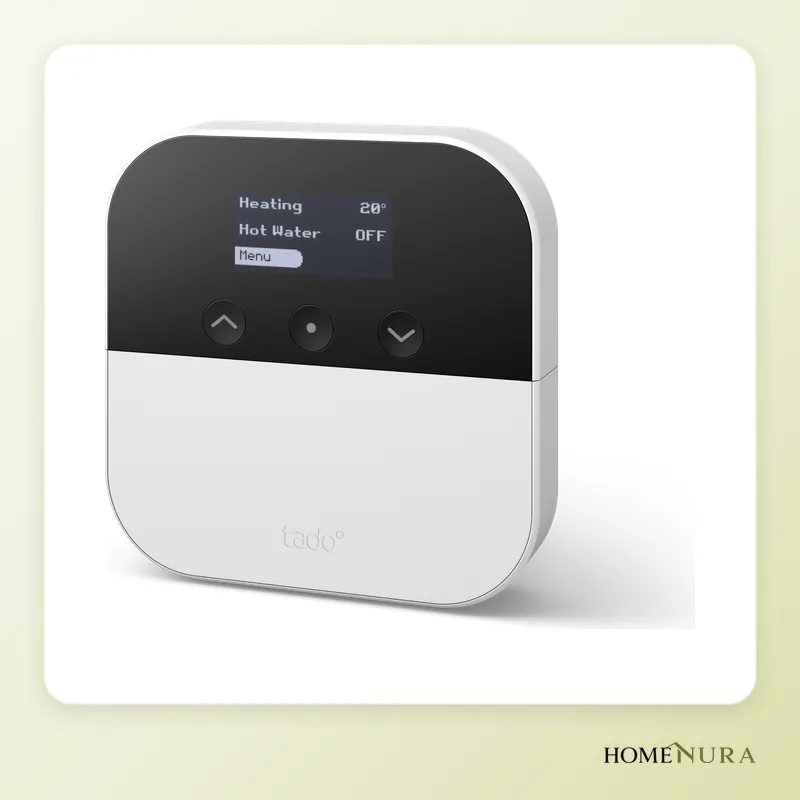
tado Heat Pump Optimizer X
It connects to the heat pump itself (Daikin, Atlantic, Vaillant, Saunier Duval, Fujitsu, Panasonic) and adjusts its output to room temperatures.
Photo: © tado
- View on Amazon →
Best value
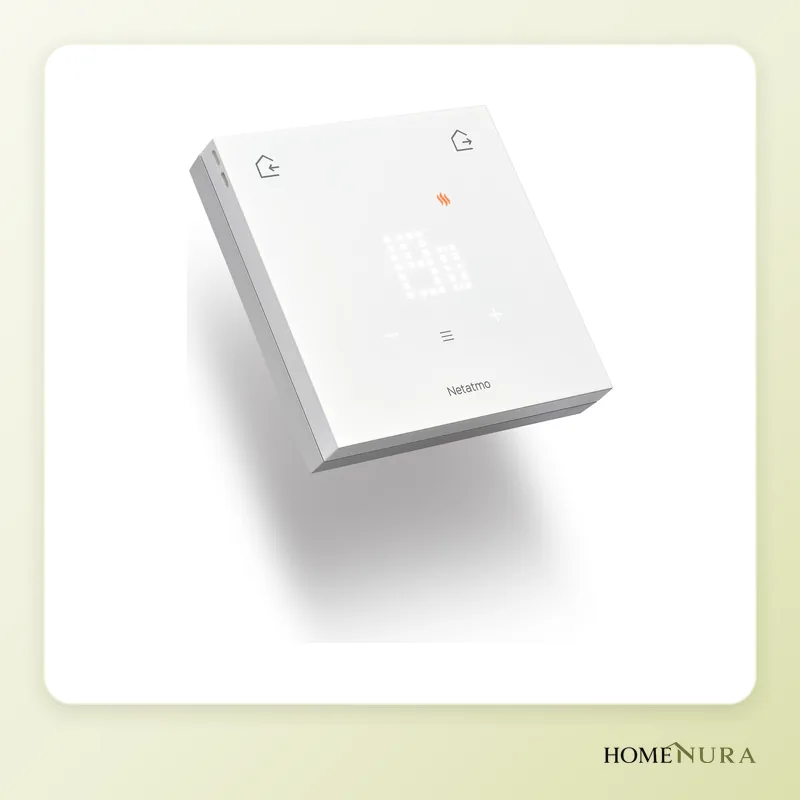
Netatmo Thermostat Original
Easy to install, works with most on/off air-to-water heat pumps, with Auto-Adapt, Eco-Assist and Matter via the Thermo Hub.
Photo: © Netatmo
- View on Amazon →
Best for OpenTherm without a hub
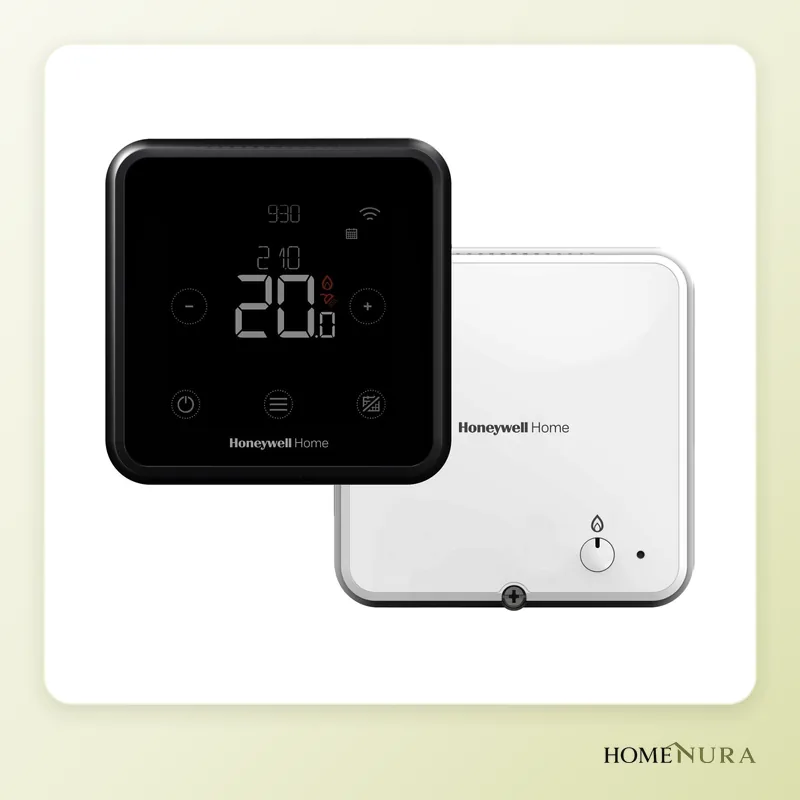
Honeywell Home T6
Compatible with on/off and OpenTherm systems, including heat pumps, it connects straight to Wi-Fi and is controlled from the Resideo app.
Photo: © Resideo / Honeywell Home


As an Amazon Associate I earn from qualifying purchases. Amazon affiliate links: we earn a commission at no extra cost to you.
For an air-to-water heat pump, the best smart thermostat in 2026 is one that actually talks to the heat pump instead of just switching it on and off: the tado Heat Pump Optimizer X is currently the most complete option for compatible brands (Daikin, Atlantic, Vaillant, Saunier Duval, Fujitsu, Panasonic). If your heat pump only accepts a simple on/off signal, a well-configured basic thermostat such as the Netatmo Thermostat Original is enough, and the Honeywell Home T6 is still a safe bet when the heat pump supports OpenTherm.
This guide draws on manufacturer specs, independent reviews and verified owner feedback. It only covers models currently sold in Europe, which are designed for the hydronic (water-based) heating systems common there; if you have a ducted air-source heat pump, check the thermostat maker’s compatibility checker before you buy. You’ll find our full lineup in our smart thermostats catalog.
Heat pumps and thermostats: what you need to know
A gas furnace or boiler handles frequent starts and stops just fine. A heat pump, much less so. Its efficiency (the COP, or coefficient of performance) is best when it runs for long stretches at low output, with the water in the heating loop kept as cool as possible. Modern inverter heat pumps modulate their output and follow a heating curve (weather compensation, known as outdoor reset in North America): the milder it is outside, the lower the supply water temperature.
The wrong thermostat can undo all of that. If it shuts the heat pump off and turns it back on as soon as the room overshoots the set point by a few tenths of a degree, it causes short cycling: the compressor starts more often, wears out faster and efficiency drops. The right thermostat for a heat pump either lets the unit modulate or controls that modulation directly.
Three ways to connect a thermostat to a heat pump
- Dry (on/off) contact: the most common setup. The thermostat opens or closes a contact on the heat pump’s room thermostat input. It’s simple and universal, but the heat pump only ever gets an on or off command.
- OpenTherm: a two-way communication protocol. The thermostat can ask for a higher or lower supply water temperature depending on what the room needs. Not every heat pump supports it, so check the manual or the installed control module.
- Manufacturer-specific interface: some products plug into the heat pump brand’s own communication bus. That’s how the tado Heat Pump Optimizer X works, which gives it access to more settings than a simple contact.
Models mentioned in this guide
- tado Smart Thermostat XView on Amazon →
Photos: © tado, © Netatmo, © Resideo / Honeywell Home
As an Amazon Associate I earn from qualifying purchases. Amazon affiliate links: we earn a commission at no extra cost to you.
How to choose
- Compatibility with your heat pump: the number one factor. Write down the brand and exact model number of the indoor unit, then run them through the thermostat maker’s compatibility checker.
- Control type: on/off, OpenTherm or a manufacturer interface. The richer the communication, the better the thermostat can preserve the heat pump’s modulation.
- Radiators or radiant floors: radiant floor heating has a lot of thermal mass, so a thermostat that plans ahead (learning, weather forecasts) is more useful than aggressive scheduling.
- Hot water: if your heat pump also heats your domestic hot water, check that the thermostat or module can schedule it.
- Smart home ecosystem: Matter, Apple Home, Google Home, Amazon Alexa. Newer lineups use Matter, which makes it easier to tie everything together.
- Subscriptions: some advanced features (dynamic electricity rates, automations) cost extra. Check what’s included before you buy.
The best smart thermostats for heat pumps in 2026
1. tado Heat Pump Optimizer X: best for a compatible heat pump
The Heat Pump Optimizer X isn’t a traditional room thermostat but a module that connects to the heat pump itself. It works with air-to-water, water-to-water and brine-to-water (ground-source) heat pumps from several major European brands: Daikin, Atlantic, Vaillant, Saunier Duval, Fujitsu and Panasonic, according to tado’s published list. It uses room temperatures measured by tado X thermostats and smart radiator valves to dial back the heat pump’s output, or put it on standby once rooms are up to temperature, instead of shutting it off abruptly.
Pros: heating and hot water control in the tado app, energy tracking, an installation guide tailored to your brand and model, a built-in Thread border router (no Bridge X needed) and Matter support. tado claims an average 22% efficiency gain; that’s the manufacturer’s figure, so treat it as a ballpark.
Cons: the list of compatible heat pumps is still short, you need tado X thermostats or smart radiator valves for room-by-room control, and dynamic rate features require the optional tado Balance subscription.
Best for: owners of a heat pump from a compatible brand who want the most advanced optimization.
2. tado Smart Thermostat X: the versatile room thermostat
The Smart Thermostat X (wired version) replaces an existing room thermostat. It works over an on/off contact or OpenTherm, depending on what the heat pump accepts, and also suits hydronic radiant floor heating. It runs on Thread and works with Apple Home, Google Home and Alexa through Matter.
Pros: smart scheduling, geofencing, open-window detection, a very complete app, and room-by-room expansion with Smart Radiator Thermostat X valves.
Cons: it needs a tado Bridge X or another Thread border router, and some automations are part of paid add-ons.
Best for: heat pumps that aren’t on the Optimizer X list, or households that want a modern room thermostat they can build on.
3. Netatmo Thermostat Original: simplest and best value
Launched in early 2026, the Original lineup replaces Netatmo’s previous thermostat. It comes in a wired version (Thermo Hub included) and a wireless version (Thermo Link receiver and Thermo Hub included). Netatmo says it works with most home boilers and air-to-water heat pumps.
Pros: guided installation; Auto-Adapt, which starts heating early based on the weather and your home’s insulation; Eco-Assist when you’re away; monthly reports; Matter support via the Thermo Hub; and the Home + Control app.
Cons: the Original lineup doesn’t work with older Netatmo accessories, so first-generation Netatmo radiator valves have to be replaced.
Best for: heat pumps controlled by a simple on/off contact, and households that want a clean, no-fuss setup.
4. Honeywell Home T6: the dependable OpenTherm pick
The T6 sold in Europe (wired) and its T6R variant (wireless) work with 24–230 V on/off and OpenTherm heating equipment, including heat pumps. They connect directly to Wi-Fi, with no extra hub.
Pros: an easy-to-read touchscreen, geofencing, scheduling in the Honeywell Home (Resideo) app, and wide availability through installers.
Cons: the design and app feel less modern than tado’s or Netatmo’s, and room-by-room control isn’t as tightly integrated.
Best for: OpenTherm-compatible heat pumps and anyone who wants a proven thermostat without being locked into an ecosystem.
What about the Google Nest Learning Thermostat?
Google has announced that it won’t launch any new Nest thermostats in Europe. The 4th-generation Nest Learning Thermostat isn’t sold there, and the 3rd-generation model is only available while supplies last. For a new purchase in Europe that you want to last, the models above are a better bet.
What about the heat pump maker’s own controls?
Daikin, Vaillant, Atlantic and Panasonic offer their own thermostats and apps. They know the equipment inside out but often don’t play as nicely with the rest of your smart home. They’re worth considering, especially if your installer has already planned for them.
Comparison table
| Model | Heat pump control | Connectivity | Best for |
|---|---|---|---|
| tado Heat Pump Optimizer X | Dedicated interface for compatible brands | Wi-Fi, Thread (built-in border router), Matter | Daikin, Atlantic, Vaillant, Saunier Duval, Fujitsu, Panasonic heat pumps |
| tado Smart Thermostat X | On/off or OpenTherm | Thread, Matter (Bridge X required) | An expandable room thermostat |
| Netatmo Thermostat Original | On/off contact | Wi-Fi, Matter via Thermo Hub | Simplicity on a modest budget |
| Honeywell Home T6 | On/off or OpenTherm | Direct Wi-Fi | OpenTherm heat pumps, no hub |
Mistakes to avoid
- Buying without checking compatibility: a heat pump with no thermostat input, or with locked controls, won’t work with just any model.
- Scheduling deep setbacks at night: with a heat pump, especially on radiant floor heating, setbacks of 7 to 9°F (4 to 5°C) force the unit to work hard in the morning, often with the electric backup heat kicking in. Keep setbacks modest.
- Setting the differential too tight: it multiplies short cycles.
- Forgetting the heating curve: a smart thermostat complements a well-tuned heating curve; it doesn’t replace it. Have your installer fine-tune it.
- Putting the thermostat in the wrong spot: near a window, a fireplace or in direct sun, it reads the wrong temperature.
Installation and safety
Always shut off power to the heat pump before you start. Swapping out a wired thermostat on a dry contact or OpenTherm connection is doable for a careful DIYer who follows the app’s guide. Connecting a module to the heat pump’s control board, though, or doing any work on a system still under warranty, is a job for your installer or a licensed electrician: a wiring mistake can damage the electronics and put your warranty at risk.
Mount the thermostat in the main living area, on an interior wall, about 5 ft (1.5 m) off the floor, away from heat sources and drafts. Also check the Wi-Fi or Thread coverage in that spot.
Incentives
In France, a smart thermostat bought on its own rarely qualifies for a subsidy, but controls can be included in the quote for a heat pump installation that qualifies for public aid (France Rénov’ is the official source there). Elsewhere, incentives vary by country, state and utility, and the rules change often, so check official sources or ask your utility before you sign a quote. To go further, read our smart home energy savings guide and our comparison of home energy monitors, which are handy for tracking how much electricity your heat pump actually uses.
The bottom line
If your heat pump is on the compatibility list, the tado Heat Pump Optimizer X is the most complete option: it controls the heat pump itself, not just a contact. For an on/off heat pump, the Netatmo Thermostat Original strikes the best balance of simplicity and features. The tado Smart Thermostat X and the Honeywell Home T6 are the right picks if you want to take advantage of OpenTherm. Either way, have your heat pump’s heating curve checked first: it accounts for most of the efficiency.
Frequently asked questions
Can any smart thermostat be used with a heat pump?
What is OpenTherm and do I need a compatible heat pump?
Does a smart thermostat really save energy with a heat pump?
Should I turn down the heat at night with a heat pump?
Can I install a smart thermostat on a heat pump myself?
Is a Google Nest thermostat still a good choice for a heat pump in Europe?
From our complete guide
Energy & Smart Home →Our recommendations
- tado Smart Thermostat XView on Amazon →
Photos: © tado, © Netatmo, © Resideo / Honeywell Home
As an Amazon Associate I earn from qualifying purchases. Amazon affiliate links: we earn a commission at no extra cost to you.


