Smart Electric Heaters 2026: Buying Guide and 5 Models to Know
Smart electric heaters in 2026: fluid-filled, cast-iron, aluminum or portable oil-filled, built-in Wi-Fi or a gateway, France's pilot-wire control, open-window detection. The Thermor Equateur 4, Atlantic Oniris, Sauter Orosi 2, Rointe Kyros WiFi and Mill Gentle Air WiFi, compared.

Quick answer
What is the best smart electric heater in 2026?
- View on Amazon →
Best overall
Thermor Equateur 4
A thermal-mass electric heater with a cast-iron core and a heated front panel, open-window and presence detection, and control through the Cozytouch app.
- View on Amazon →
Best value
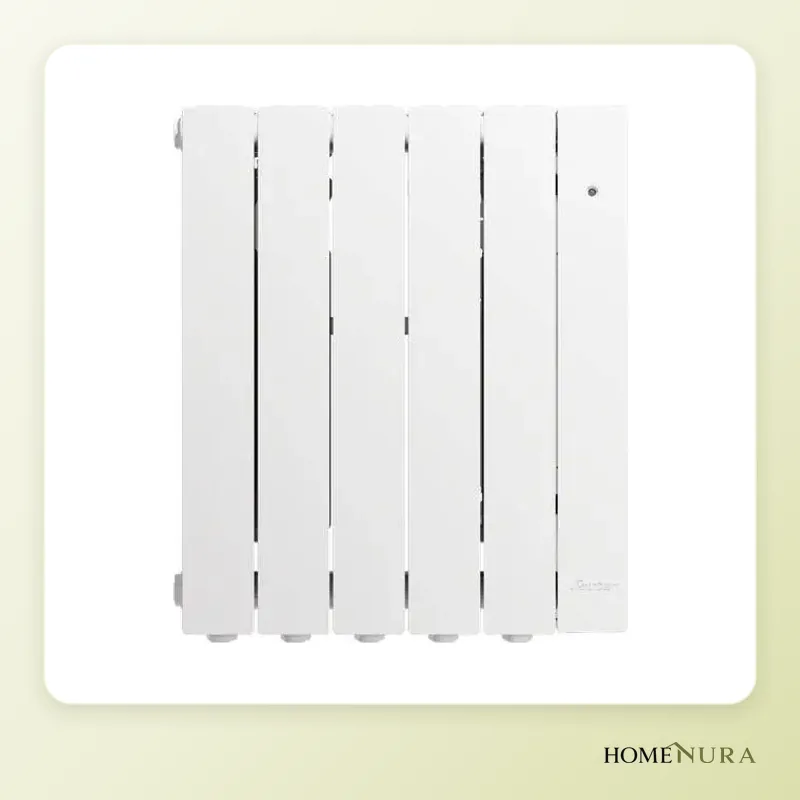
Sauter Orosi 2
A fluid-filled thermal-mass heater with presence and open-window detection, and remote control through a Cozytouch bridge, at an entry-level budget.
Photo: © Sauter
- View on Amazon →
Best with no installation needed
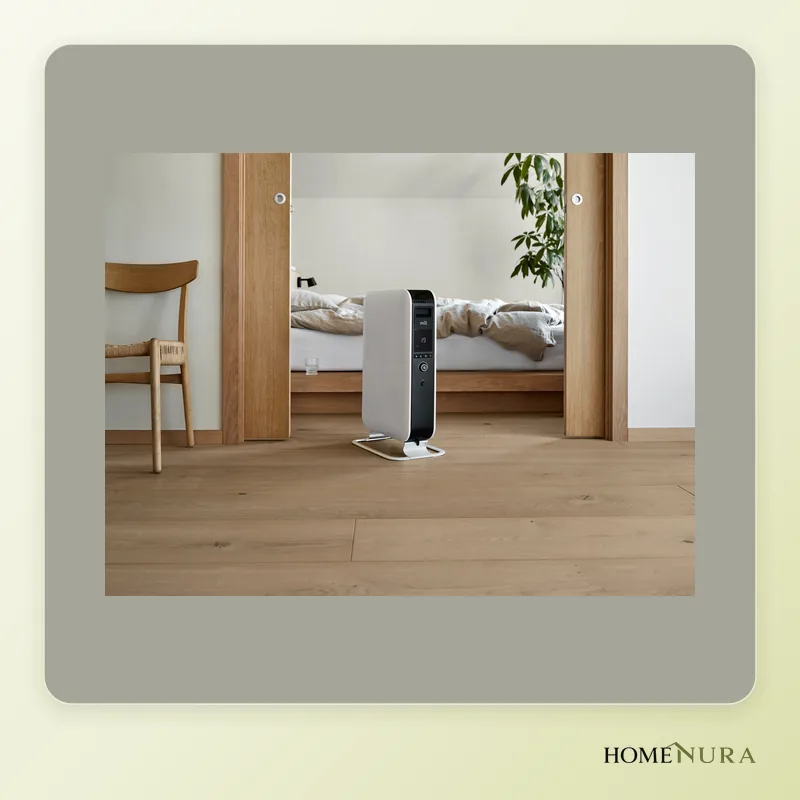
Mill Gentle Air WiFi
A portable plug-in oil-filled radiator heater with built-in Wi-Fi and the Millheat app, an open-window function and tip-over protection.
Photo: © Mill International AS


As an Amazon Associate I earn from qualifying purchases. Amazon affiliate links: we earn a commission at no extra cost to you.
Which smart electric heater should you buy in 2026?
For a permanent, hardwired installation, the Thermor Equateur 4 is the most complete pick: a dual heating element with a cast-iron core, open-window and occupancy detection, and control through the Cozytouch app. If you’d rather plug in a portable unit and skip the electrician, the Mill Gentle Air WiFi oil-filled radiator heater pairs a polished app with an open-window feature.
In between, the Atlantic Oniris bets on design and fast response, the Sauter Orosi 2 on fluid-filled heat at an entry-level budget, and the Rointe Kyros WiFi on built-in Wi-Fi that needs no bridge. This guide draws on manufacturer specs, published independent reviews and verified owner reviews. For related devices, see our smart space heaters page.
Models mentioned in this guide
- Thermor Equateur 4View on Amazon →
- Atlantic OnirisView on Amazon →
- Rointe Kyros WiFiView on Amazon →
Photos: © Sauter, © Mill International AS
As an Amazon Associate I earn from qualifying purchases. Amazon affiliate links: we earn a commission at no extra cost to you.
What really matters
Type of heating core
“Thermal mass” (European spec sheets call it “inertia”) covers several technologies, and marketing copy often blurs them:
- Fluid-filled: an element heats a sealed thermal fluid inside the body. The heat is gentle and even, and warm-up time is reasonable. That’s how the Sauter Orosi 2 and Rointe Kyros WiFi work.
- Cast-iron core: a cast-iron block stores heat and releases it slowly. Paired with a fast-reacting heated front panel, it’s sold as “dual technology,” as on the Thermor Equateur 4.
- Aluminum body with a heated front panel: less heat storage, faster response. That’s the Atlantic Oniris design.
- Dry stone or ceramic core: refractory bricks hold heat longer. Best for rooms that are heated for long stretches.
- Glass front: lines such as Campa’s Campaver pair a thick radiant glass panel with heating elements in the back. The main draw is the look, not heat stored in stone.
- Portable oil-filled: a freestanding oil-filled radiator heater that plugs into a wall outlet. It’s supplemental heat with no installation, like the Mill Gentle Air WiFi.
The more thermal mass, the longer the room stays warm after the heater shuts off, but the slower it reacts when you change the target temperature. High thermal mass suits rooms you use all day; fast response matters more in rooms you only use now and then.
Built-in Wi-Fi or a bridge
This is the most misunderstood point. Thermor, Atlantic and Sauter heaters (all part of Groupe Atlantic) are controlled through the Cozytouch app, but depending on the model you also need a bridge (the Cozytouch bridge) plugged into your router. The Rointe Kyros WiFi and Mill Gentle Air WiFi have Wi-Fi built in, so the app is all you need. Check this before you buy: it changes both the total cost and how easy setup is.
Pilot wire
The pilot wire (fil pilote) is a French-only system: a dedicated conductor sends commands (Comfort, Eco, Freeze Protection, Off, plus Comfort -1 and Comfort -2 on six-command versions) from a central heating controller or energy manager. If your home is wired for it, which in practice means a home in France, choose a compatible heater so you keep centralized scheduling. Plug-in portable heaters don’t need it.
Automatic detection
Two features make a real difference day to day. Open-window detection cuts or lowers the heat when the temperature drops suddenly while you air out the room. Occupancy detection lowers the target temperature when the room is empty. The hardwired models in this guide offer both on most versions; the Mill Gentle Air WiFi has the open-window feature and predictive start.
Wattage
A common rule of thumb is about 10 W per square foot (100 W per m²) in a home with average insulation, less in a newer, well-insulated home and more in an older one. For accurate sizing, an HVAC contractor or energy auditor will factor in room volume, sun exposure and actual heat loss.
5 models worth knowing
Thermor Equateur 4: the most complete
The Equateur 4 combines a cast-iron heating core with a heated front panel. It comes in baseboard, horizontal and vertical formats from 750 to 2,000 W, and it’s made in France. It has open-window and occupancy detection, and you control it remotely through Cozytouch, with energy monitoring and voice control via Google Assistant.
Pros: gentle cast-iron heat, responsive front panel, a very wide choice of formats, mature app.
Cons: hardwired heater that needs professional installation, Cozytouch bridge required for remote control, premium price tier.
Best for: homeowners replacing old convection heaters who want long-lasting equipment for their living spaces.
Atlantic Oniris: responsive design
The Oniris uses an aluminum heating core and a heated front panel that warms up quickly. Its digital touch controls and ultra-slim front are made for contemporary interiors. It offers open-window and occupancy detection and works with Cozytouch (optional bridge), including voice control with Google Assistant.
Pros: refined look, fast response, same ecosystem as Thermor.
Cons: stores less heat than a cast-iron or stone model, bridge needed for remote control.
Best for: living rooms where looks matter as much as performance.
Sauter Orosi 2: affordable fluid-filled heat
The Orosi 2 is a fluid-filled heater with a digital thermostat, occupancy and vacancy detection, open-window detection and a PIN lock for the settings. Remote control runs through a connection module from the Cozytouch ecosystem. It carries France’s NF Électricité certification.
Pros: even heat, a full set of automatic features, entry-level pricing among French brands.
Cons: connectivity depends on a separate module, more conventional design.
Best for: households outfitting several rooms who want the best balance of features and budget.
Rointe Kyros WiFi: built-in Wi-Fi, no bridge
The Kyros WiFi from Spanish manufacturer Rointe is a wall-mounted, thermal-fluid radiator heater with a recycled aluminum body. The Wi-Fi module is built in: you set it up and schedule it directly in the Rointe app, with energy monitoring, open-window detection and early start. It comes in 600, 1,200 and 1,800 W versions, among others.
Pros: no bridge to buy, built-in energy monitoring, available from several online retailers.
Cons: pilot wire support isn’t highlighted, smaller dealer network in France than the Groupe Atlantic brands.
Best for: anyone who wants a hardwired smart heater that’s easy to set up, with no extra hub.
Mill Gentle Air WiFi: portable, no installation
The Gentle Air WiFi from Norwegian brand Mill is a freestanding oil-filled radiator heater with an enclosed design. The 1,500 W version has three heat settings (600, 900 and 1,500 W) and is meant for rooms of roughly 195 to 235 sq ft (18 to 22 m²); a 2,000 W version also exists. It connects over Wi-Fi (set up via Bluetooth) to the Millheat app, with scheduling, an open-window feature and predictive heating. It has tip-over and overheat protection.
Pros: no installation, clear app, easy to move from room to room.
Cons: supplemental rather than primary heat, takes up floor space, no pilot wire.
Best for: renters, home offices, guest rooms or rooms that never get warm enough.
Comparison table
| Model | Technology | Connectivity | Installation | Best for |
|---|---|---|---|---|
| Thermor Equateur 4 | Cast iron + heated front | Cozytouch (bridge) | Hardwired, by a pro | Living spaces, lasting comfort |
| Atlantic Oniris | Aluminum + heated front | Cozytouch (optional bridge) | Hardwired, by a pro | Design-focused rooms, fast response |
| Sauter Orosi 2 | Fluid-filled | Cozytouch module | Hardwired, by a pro | Outfitting several rooms |
| Rointe Kyros WiFi | Thermal fluid, aluminum | Built-in Wi-Fi, Rointe app | Hardwired, by a pro | No bridge needed |
| Mill Gentle Air WiFi | Portable oil-filled | Built-in Wi-Fi, Millheat app | Plugs into an outlet | Supplemental heat, renters |
Mistakes to avoid
- Forgetting the bridge: a “smart-ready” heater isn’t always connected out of the box. Check whether you need a bridge or a module.
- Going for maximum thermal mass everywhere: in a guest room or an office used a few hours a day, a fast-response model is a better fit.
- Undersizing the wattage: an underpowered heater runs nonstop and never reaches the target temperature.
- Plugging a portable heater into a power strip or an undersized smart plug: use a wall outlet, and only a smart plug explicitly rated for the heater’s wattage.
- Buying from an unknown brand: without a reliable company behind the app, the smart features may stop working after a few years.
Installation and safety
Have a licensed electrician hardwire a fixed heater on a circuit sized for its wattage, following your local building code, and check whether a permit is needed (in France, the NF C 15-100 wiring standard also sets bathroom safety zones). Never cover a heater, and keep the clearance the manufacturer recommends. Set portable models on a stable surface, away from curtains and laundry, and make sure they have tip-over protection. Models sold in Europe are built for 230 V; check that the version on your Amazon store is rated for 120 V.
On the regulatory side, the EU ecodesign Regulation (EU) 2015/1188 has set efficiency requirements for local space heaters since 2018, which made electronic thermostats and weekly scheduling standard on models sold in the EU. For whole-home heating control, read our smart home energy-saving guide and our article on pairing a smart thermostat with a heat pump.
The bottom line
To replace old convection heaters in a home you own, the Thermor Equateur 4 is still the most complete choice. To outfit several rooms on a tighter budget, the Sauter Orosi 2 covers the key automatic features. If you can’t do any installation work, the Mill Gentle Air WiFi is the simplest smart plug-in heater. The Atlantic Oniris and Rointe Kyros WiFi round out the field for design-focused interiors and for anyone who wants to skip the bridge.
Frequently asked questions
Do you need a hub or gateway to control a smart heater?
Fluid-filled, cast-iron or stone core: which heater should you choose?
Can a smart oil-filled heater be your main heat source?
What size heater do you need for a room?
Can you plug a space heater into a smart plug?
Who should install a hardwired electric heater?
From our complete guide
Energy & Smart Home →Our recommendations
- Thermor Equateur 4View on Amazon →
- Atlantic OnirisView on Amazon →
- Rointe Kyros WiFiView on Amazon →
Photos: © Sauter, © Mill International AS
As an Amazon Associate I earn from qualifying purchases. Amazon affiliate links: we earn a commission at no extra cost to you.


