Indoor Air Quality Monitor 2026: Why and How to Measure at Home
CO2, fine particles, VOCs, radon: which pollutants to measure at home and which monitor to choose in 2026. Comparing the Airthings View Plus, Netatmo, Aranet4 Home, Awair Element and Airthings Wave Plus.

Quick answer
What is the best indoor air quality monitor in 2026?
- View on Amazon →
Best overall
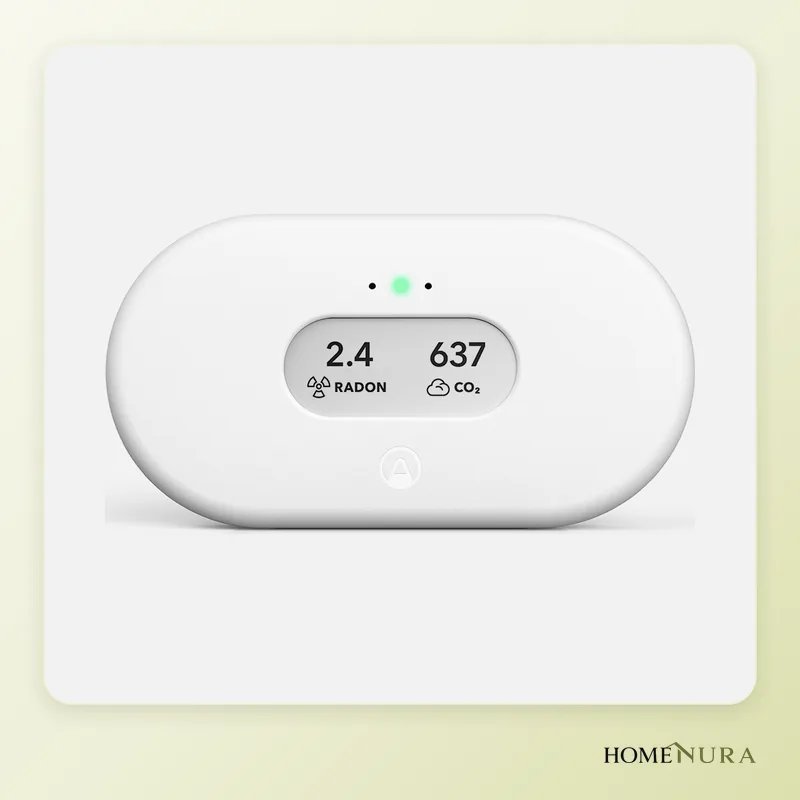
Airthings View Plus
It combines radon, PM1, PM2.5, CO2, VOCs, humidity, temperature and pressure on battery or plug-in power: the most complete pick here.
Photo: © Airthings
- View on Amazon →
Best value
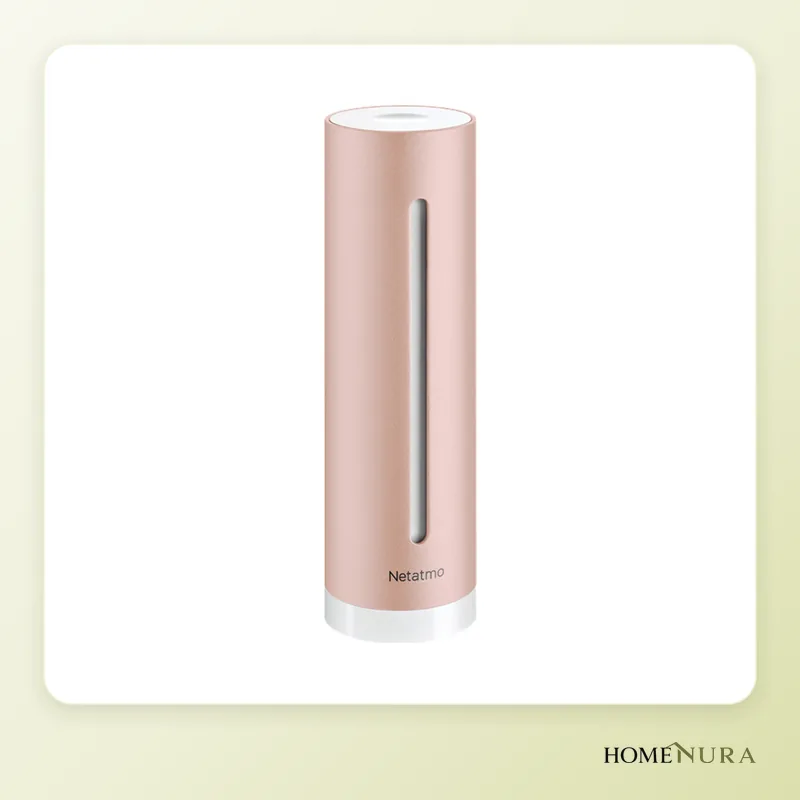
Netatmo Smart Indoor Air Quality Monitor
It tracks CO2, humidity, temperature and noise over Wi-Fi, with no subscription and Apple HomeKit support, so you simply know when to ventilate.
Photo: © Netatmo
- View on Amazon →
Best for reliable, portable CO2
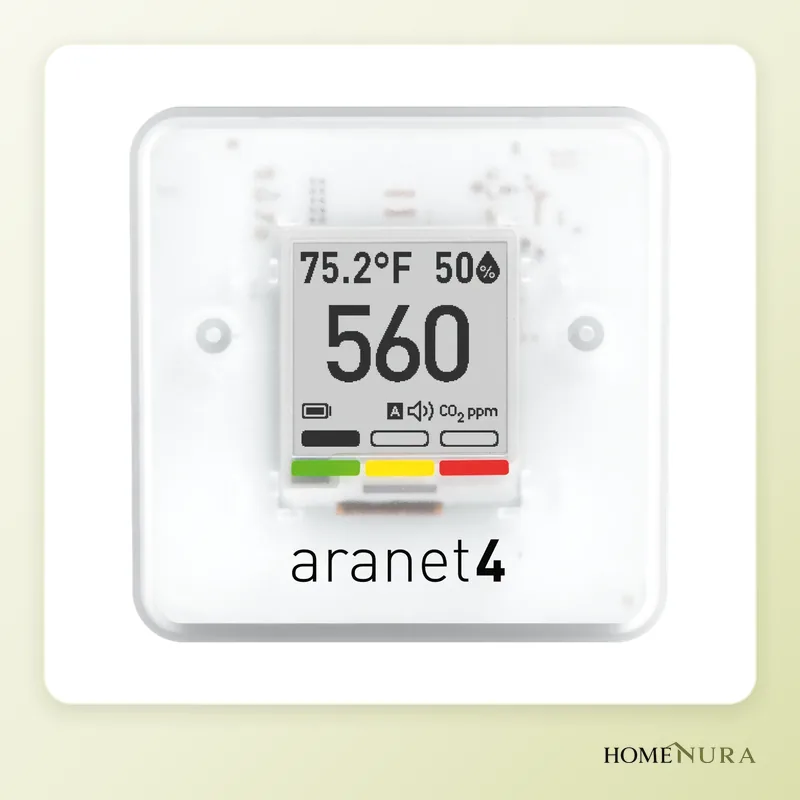
Aranet4 Home
Its NDIR sensor and battery-powered e-ink screen show CO2 at a glance for years, and it moves easily from room to room.
Photo: © Aranet


As an Amazon Associate I earn from qualifying purchases. Amazon affiliate links: commission at no extra cost to you.
An indoor air quality monitor tells you when to ventilate, purify or dehumidify by measuring CO2, PM2.5 fine particles, volatile organic compounds (VOCs) and, on some models, radon. For most homes, a device with a genuine NDIR CO2 sensor is enough; if you live in an area with high radon levels, an Airthings monitor that measures radon should come first.
We spend most of our day indoors, and the air gets refreshed less often than we think: cooking, candles, new furniture, cleaning products and simply breathing all load up the air without us noticing. This guide explains which pollutants matter and how to choose a monitor, and compares five models actually sold in Europe in 2026, based on manufacturer specifications, published independent reviews and verified owner reviews. You'll find every model in the category on our air quality monitors page.
The pollutants worth tracking at home
CO2: the best indicator of fresh air
At the levels found in a home, CO2 isn't toxic. It is, however, the best proxy for ventilation: the higher it climbs, the more the air in the room has already been breathed, and the more humidity and other pollutants build up. A closed bedroom occupied all night or a home office with the window shut are typical examples. Manufacturers and ventilation guides generally use these reference points:
| Measured CO2 | What it means | What to do |
|---|---|---|
| Below 800 ppm | Well-ventilated air | Nothing in particular |
| 800 to 1,000 ppm | Acceptable ventilation | Plan to air out the room soon |
| 1,000 to 1,400 ppm | Insufficient ventilation | Open a window for a few minutes |
| Above 1,400 ppm | Stale air | Ventilate now and review the room's ventilation |
One key point: only an NDIR (non-dispersive infrared) sensor actually measures CO2. Some devices display an "eCO2" value calculated from their VOC sensor; that's an estimate and can be far from reality. Every model in this guide uses an NDIR sensor.
PM2.5: fine particles
PM2.5 particles, smaller than 2.5 micrometres, travel deep into the airways. In 2021, the WHO lowered its annual guideline to 5 µg/m³. Indoors, spikes mostly come from cooking (especially high-heat frying), candles and incense, wood stoves and fireplaces, and smoking. Measuring PM2.5 is worthwhile if someone at home has asthma or allergies, if you live near a busy road, or if you want to run an air purifier based on real data.
VOCs: volatile organic compounds
VOCs are released by paints, varnishes, adhesives, particleboard furniture, cleaning products and air fresheners. Formaldehyde, one of the most common, is classified as carcinogenic to humans by the International Agency for Research on Cancer. Consumer sensors measure total VOCs: they reliably flag a rise after painting or heavy cleaning, but they don't tell you which compound is responsible, or the formaldehyde level specifically. Treat them as an alert, not a diagnosis. Choosing low-emission paints and furniture is the most effective way to cut VOCs at the source.
Radon: the invisible gas from the ground
Radon is a naturally occurring radioactive gas that rises from the ground, particularly in areas with granite and some other types of rock. It gets in through cracks and openings around pipes and collects mostly in basements and on main floors. The WHO considers it one of the leading causes of lung cancer after smoking. Reference levels are set country by country (France uses 300 Bq/m³ as an annual average, for example, and the UK an action level of 200 Bq/m³), and public health authorities publish maps of the areas most affected, so check the official guidance where you live. Radon fluctuates a lot from day to day, so only an average over several weeks is meaningful; the reference method is still a passive long-term detector left in place for at least a few months during the heating season.
Humidity and temperature
Relative humidity between 40% and 60% is generally considered comfortable. Below that, your nose and throat dry out; above 60% to 70% for long periods, dust mites and mould thrive. If your monitor regularly shows high readings, see our smart dehumidifier guide.
Models mentioned in this guide
- Awair ElementView on Amazon →
- Airthings Wave PlusView on Amazon →
Photos: © Airthings, © Netatmo, © Aranet
As an Amazon Associate I earn from qualifying purchases. Amazon affiliate links: we earn a commission at no extra cost to you.
How to choose
- Sensors on board: an NDIR CO2 sensor first; PM2.5 if you cook a lot, use a wood stove or run a purifier; radon if your area has high radon levels or you live in a house with a basement or in a bungalow.
- Power: battery models can go anywhere and move easily; plug-in models can refresh readings more often and stay on Wi-Fi all the time.
- Connectivity: Wi-Fi lets you check readings remotely and get alerts. A Bluetooth-only model syncs when your phone is nearby, or through a hub from the same brand.
- Ecosystem: check compatibility with what you already use (Apple Home, Amazon Alexa, Google Home, Home Assistant) if you want to trigger ventilation or a purifier automatically.
- Display: an on-device screen lets you read values at a glance without reaching for your phone, which matters day to day.
- Number of rooms: a monitor only measures the room it sits in. The bedroom and the main living area are the two priority spots.
The 5 monitors worth considering in 2026
Airthings View Plus: the most complete
The Airthings View Plus is now Airthings' flagship. It measures radon, PM1 and PM2.5 particles, CO2, VOCs, humidity, temperature and air pressure. Its e-paper screen shows the readings you choose, with a green, yellow or red glow ring. It runs on six AA batteries, with a stated battery life of about two years, or on USB power; when plugged in, it also acts as a Wi-Fi hub for other Airthings monitors in the home. The app and online dashboard show history and alerts, and it works with Amazon Alexa, Google Assistant and IFTTT.
Strengths: radon and fine particles in one device, NDIR CO2, battery or plug-in power. Limitations: it's a premium device, and radon takes several days before showing a useful average. Best for: homes in high-radon areas and anyone who wants one device that covers everything.
Netatmo Smart Indoor Air Quality Monitor: the easiest way to track CO2
The Netatmo Smart Indoor Air Quality Monitor, also known as the Healthy Home Coach, focuses on the essentials: CO2, humidity, temperature and noise level. It plugs in over USB, connects over Wi-Fi and works with the Netatmo app with no subscription. Profiles for a baby, a person with asthma or general use adjust the alert thresholds and advice. It's compatible with Apple HomeKit, so its readings can appear in the Home app and in automations.
Strengths: understated design, very easy setup, HomeKit support, clear alerts telling you when to ventilate. Limitations: no fine particle, VOC or radon measurement, and no numeric screen on the device. Best for: a bedroom or nursery, in a household that mainly wants to know when to open the windows.
Aranet4 Home: the benchmark battery CO2 monitor
Made in Latvia, the Aranet4 Home is a compact CO2 monitor known for its NDIR sensor and always-on e-ink display. It also measures temperature, relative humidity and air pressure. Thanks to the e-ink screen, the manufacturer quotes several years of battery life on two AA batteries, depending on the measurement interval and Bluetooth use. It sends data over Bluetooth to the Aranet app, which keeps the history.
Strengths: CO2 readings with a strong reputation for reliability, exceptional battery life, easy to carry from room to room, readable at a glance. Limitations: no fine particles, VOCs or radon; no built-in Wi-Fi, so no remote alerts without a base station. Best for: home offices, bedrooms and anyone who wants a serious CO2 reading they can take anywhere.
Awair Element: fine particles and smart home integration
The Awair Element measures CO2, VOCs, PM2.5, temperature and humidity, and sums them up in an air quality score from 0 to 100 shown on the front. It connects over Wi-Fi and works with Amazon Alexa and Google Assistant. Its main draw for smart home fans is a local API, supported by the official Home Assistant integration, which lets you control a purifier or ventilation without going through the cloud.
Strengths: CO2, PM2.5 and VOCs together, an easy-to-read score, local API. Limitations: no radon, plug-in power only, and availability can be patchy depending on the country and retailer. Best for: households with someone who has asthma or allergies, home offices and Home Assistant users.
Airthings Wave Plus: battery radon monitoring, no screen
The Airthings Wave Plus measures radon, CO2, VOCs, humidity, temperature and air pressure. It runs on batteries and uses Bluetooth; a wave of the hand in front of it lights up a coloured ring that summarizes air quality. To view readings remotely, you need an Airthings hub or a plugged-in View Plus. Airthings now puts the View Plus first, but the Wave Plus is still sold by many retailers.
Strengths: radon and CO2 combined, battery powered, discreet. Limitations: no fine particles, no numeric display, Bluetooth only without a hub. Best for: a second room in a high-radon area alongside a View Plus, or a bedroom where you want no screen at all.
Comparison table
| Model | Measures | Radon | Power | Connectivity | Best for |
|---|---|---|---|---|---|
| Airthings View Plus | CO2, PM1, PM2.5, VOC, humidity, temperature, pressure | Yes | Batteries or USB | Wi-Fi (acts as hub) | High-radon homes, complete monitoring |
| Netatmo Smart Indoor Air Quality Monitor | CO2, humidity, temperature, noise | No | USB, plug-in | Wi-Fi, Apple HomeKit | Bedrooms, knowing when to ventilate |
| Aranet4 Home | CO2, humidity, temperature, pressure | No | Batteries | Bluetooth | Reliable, portable CO2, home office |
| Awair Element | CO2, PM2.5, VOC, humidity, temperature | No | USB, plug-in | Wi-Fi, local API | Asthma, allergies, Home Assistant |
| Airthings Wave Plus | CO2, VOC, humidity, temperature, pressure | Yes | Batteries | Bluetooth (optional hub) | Second room in a radon area |
Mistakes to avoid
- Buying a particle sensor thinking it measures CO2. Some entry-level monitors only measure PM2.5, temperature and humidity; the Govee H5106 is one example. They help with cooking smoke but won't tell you when to air out a bedroom.
- Trusting an "eCO2" reading. A CO2 value estimated from a VOC sensor isn't a measurement. Look for NDIR in the specifications.
- Judging radon on a single day. Daily swings are large: wait for several weeks of data before drawing conclusions, and use a passive detector if you're unsure.
- Poor placement. Next to a window, above a heater or heating vent, in direct sun or beside the stove, readings won't reflect the air you breathe.
- Confusing measurement with action. A monitor cleans nothing: it tells you what to do. Plan the next step, whether that's airing out rooms, having your ventilation serviced or adding a purifier.
Setup and everyday use
Place the monitor at breathing height, roughly 1 to 1.5 m (3 to 5 ft) off the floor, at least 1 m (3 ft) away from windows, doors, vents and heat sources. In a bedroom, a night table or dresser works well as long as you're not breathing directly onto it. Give the device a few hours to settle after setup before trusting the readings.
Many NDIR CO2 sensors recalibrate automatically on the assumption that the room regularly gets fresh air, so ventilate at least once a day for this correction to work. For radon, put the monitor in the lowest occupied room of the house, which is often the basement. If the average stays above the reference level, check with the public health authorities where you live for guidance and hire a qualified radon mitigation contractor: fixes usually involve sealing entry points and improving ventilation under the floor.
A smart monitor is most useful when it's linked to your other devices: turning a purifier on when PM2.5 rises, or sending a notification when CO2 passes 1,000 ppm. To pick a purifier to pair it with, see our air purifier guide.
Our verdict
- Most complete: Airthings View Plus, the only model here that combines radon, fine particles, CO2 and VOCs.
- Best value: Netatmo Smart Indoor Air Quality Monitor, to know when to ventilate without fuss, with HomeKit.
- For reliable, portable CO2: Aranet4 Home, battery powered with an always-readable screen.
- For fine particles and smart home control: Awair Element, thanks to its local API.
- As a companion in a radon area: Airthings Wave Plus, battery powered and screen-free.
See every available model on our air quality monitors page.
Frequently Asked Questions
What is the difference between an air quality monitor and an air purifier?
At what CO2 level should I ventilate a bedroom?
How do I know if my home is affected by radon?
Are consumer air quality monitors accurate?
How many monitors do I need at home?
Does an air quality monitor need a subscription?
Article from our comprehensive guide
Comfort & Air Quality →Our recommendations
- Awair ElementView on Amazon →
- Airthings Wave PlusView on Amazon →
Photos: © Airthings, © Netatmo, © Aranet
As an Amazon Associate I earn from qualifying purchases. Amazon affiliate links: we earn a commission at no extra cost to you.

