Best Air Purifiers for Allergies 2026: 5 Models Compared
Levoit Core 400S, Levoit Core 300S, Philips AC2939/10, Blueair Blue Pure 411i Max and Xiaomi Smart Air Purifier 4: our 2026 comparison of air purifiers for allergy sufferers, based on manufacturer specs, independent reviews and buyer feedback.

Quick answer
What is the best air purifier for allergies in 2026?
- View on Amazon →
Best overall
Levoit Core 400S
HEPA filter, a claimed 400 m³/h CADR, a laser PM2.5 sensor and sleep mode: versatile enough for a living room by day and a bedroom at night.
Photo: © Levoit
- View on Amazon →
Best value
Levoit Core 300S
Compact, with a HEPA filter, a claimed 240 m³/h CADR, auto mode and about 22 dB in sleep mode: the essentials for a bedroom.
Photo: © Levoit
- View on Amazon →
Quietest for sleeping
Blueair Blue Pure 411i Max
A claimed 18 to 46 dB noise range, washable pre-filter, PM2.5 sensor and app: ideal for noise-sensitive sleepers.
Photo: © Blueair


As an Amazon Associate I earn from qualifying purchases. Amazon affiliate links: commission at no extra cost to you.
For most allergy sufferers, the best air purifier in 2026 is the Levoit Core 400S: a HEPA filter, a claimed CADR of 400 m³/h, a particle sensor that drives auto mode and a discreet sleep mode. For a single bedroom, the Levoit Core 300S covers the essentials in a compact body, and the Blueair Blue Pure 411i Max suits people who wake up at the slightest noise.
This comparison is based on manufacturer specifications, independent reviews and verified buyer feedback; it’s no substitute for advice from a doctor or allergist. An air purifier can reduce the amount of pollen, pet dander and fine particles floating in a room, but it doesn’t cure an allergy. You’ll find the full selection on our air purifiers page, and the technical basics in our complete air purifier guide.
What a purifier can (and can’t) do against allergens
A purifier draws in room air and pushes it through a filter. So it works on what’s floating in the air: pollen coming in through the windows, pet dander, mould spores, smoke and fine particles. These allergens are light and stay airborne for a long time, which is where the device is most useful.
Dust mite allergens are different: they’re heavier and quickly settle into bedding, rugs and sofas. A purifier only catches some of them, when they get stirred up (when you make the bed, for example). Against dust mites, it complements simple habits (mite-proof covers, washing sheets in hot water, a vacuum with a HEPA filter, airing out the room every day) but doesn’t replace them.
Finally, a purifier isn’t a treatment. If your symptoms are severe or getting worse, or if you have asthma, talk to your doctor.
Models mentioned in this guide


Photos: © Levoit, © Blueair, © Philips, © Xiaomi
As an Amazon Associate I earn from qualifying purchases. Amazon affiliate links: we earn a commission at no extra cost to you.
How to choose
- A genuine HEPA filter: this is the heart of the device. It traps the vast majority of fine particles, including pollen and dander. Be wary of vague wording such as "HEPA-type" or "HEPA-like".
- CADR (clean air delivery rate): expressed in m³/h, it tells you how much filtered air the unit delivers per hour. For allergies, a common rule of thumb is a CADR of at least 4 to 5 times the room volume. Example: a 15 m² (about 160 sq. ft.) bedroom with a 2.5 m (8 ft) ceiling holds about 37 m³, so aim for at least 150 to 190 m³/h.
- Claimed room sizes: "up to 80 or 100 m²" (860 or 1,100 sq. ft.) figures often assume just one air change per hour. For allergies, divide them by roughly three or four.
- Noise: allergy sufferers often run the device overnight. The noise level in sleep mode matters more than maximum power.
- A particle sensor and auto mode: the unit speeds up when air quality drops (pollen, cleaning, cooking) and then slows down again. That’s more effective and quieter than a fixed speed.
- Filter cost and availability: filters usually need replacing every 6 to 12 months, depending on use. Check that they’re easy to find before you buy.
- No ozone: avoid devices that produce ozone, which irritates the airways. All five models here rely on mechanical filtration.
The 5 best air purifiers for allergies in 2026
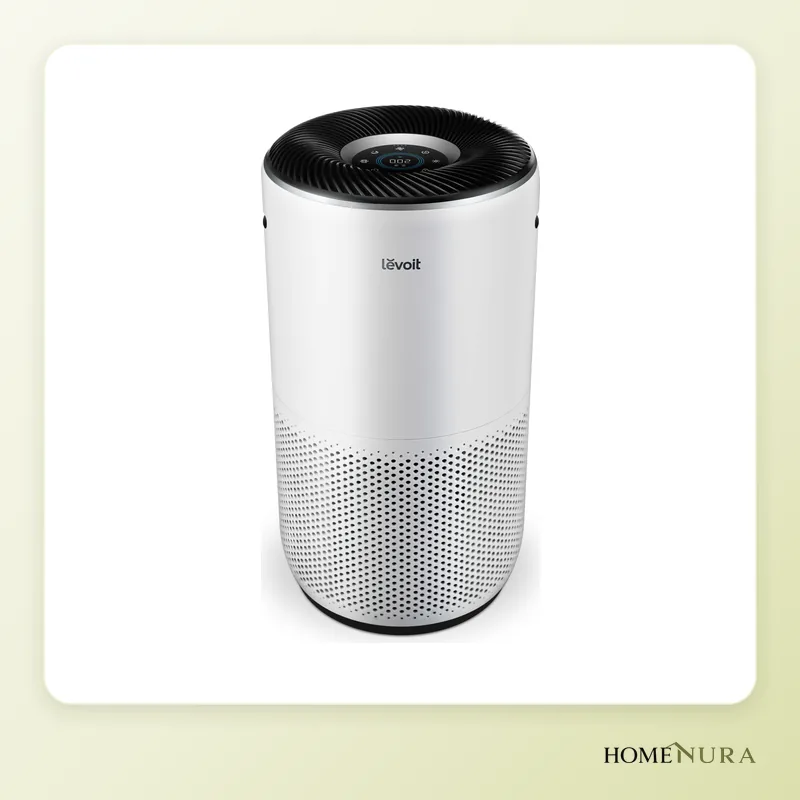
1. Levoit Core 400S: best overall
The Core 400S follows the Levoit formula with more airflow: a claimed CADR of 400 m³/h, a three-stage filter (pre-filter, HEPA filter, activated carbon) and a laser sensor that shows the PM2.5 level as a number. In auto mode, the fan speed adjusts to the measured air quality.
It’s controlled through the VeSync app (scheduling, air quality tracking, filter status) and works with Alexa and Google Assistant. Sleep mode turns off the display and lowers the noise to a bedroom-friendly level.
Strengths: enough airflow for a living room or large bedroom, a PM2.5 sensor with a numeric readout, a full-featured app and a good reputation among buyers.
Limitations: bulkier than a bedroom model, loud at top speed, and it needs the brand’s own filters.
Best for: allergy sufferers who want one versatile device that can handle a living room by day and a bedroom at night.
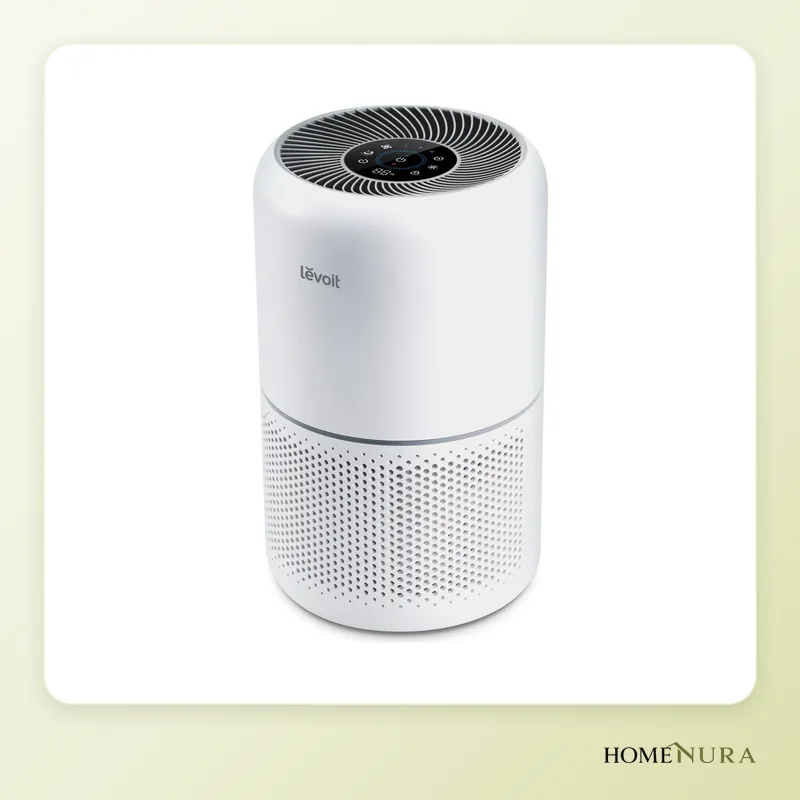
2. Levoit Core 300S: best value for the bedroom
More compact (about 22 × 22 × 36 cm, or 8¾ × 8¾ × 14 in.), the Core 300S claims a CADR of 240 m³/h, which is plenty for a typical bedroom. It also has a laser particle sensor and auto mode, with a coloured light ring that shows air quality.
Levoit quotes about 22 dB in sleep mode and 50 dB at maximum. The VeSync app and Alexa and Google Assistant support are included, as on the larger model.
Strengths: compact size, very quiet sleep mode, auto mode, filters that are easy to find.
Limitations: too small for a large living room, and air quality is shown by colour only.
Best for: the bedroom, where you spend the most uninterrupted hours, on an entry-level budget.
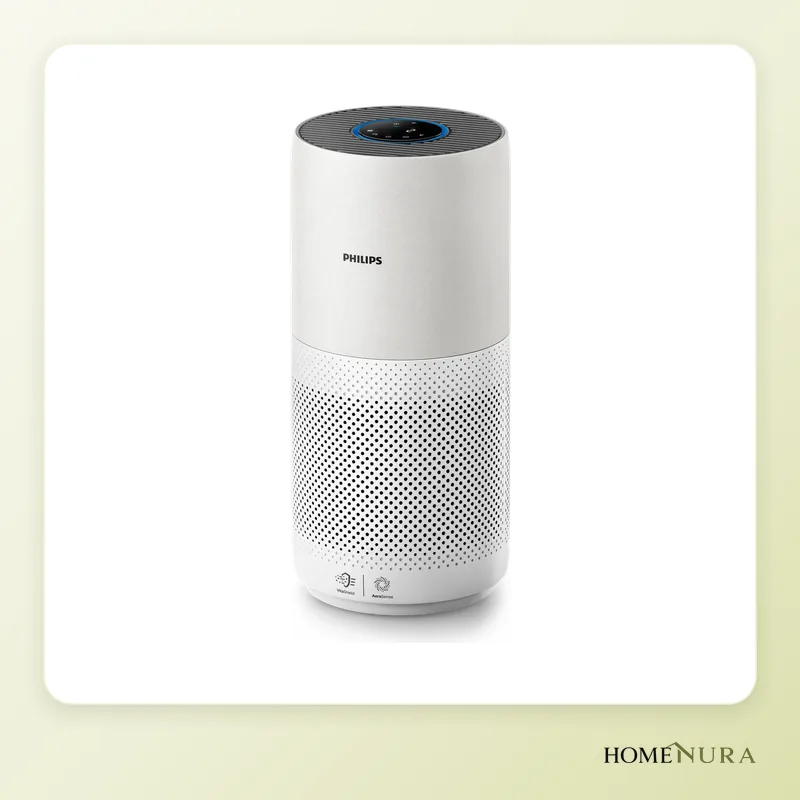
3. Philips AC2939/10 (2000i Series): for large rooms
The Philips AC2939/10 claims a CADR of 380 m³/h and coverage of up to 98 m² (about 1,100 sq. ft.), using the manufacturer’s method, which is based on one air change per hour. Its filtration combines a pre-filter, a NanoProtect HEPA filter and activated carbon.
Its sensors drive auto mode, and the Air+ app lets you monitor air quality and filter wear remotely. Philips quotes 15 dB in sleep mode and 54 dB in turbo, with Alexa and Google Home support.
Strengths: high airflow, very quiet sleep mode according to the manufacturer, a clear app and a well-established brand in Europe.
Limitations: a larger unit, a proprietary filter, and claimed room sizes that are optimistic for allergy use.
Best for: an open-concept living area or a large room, when you want one powerful device.
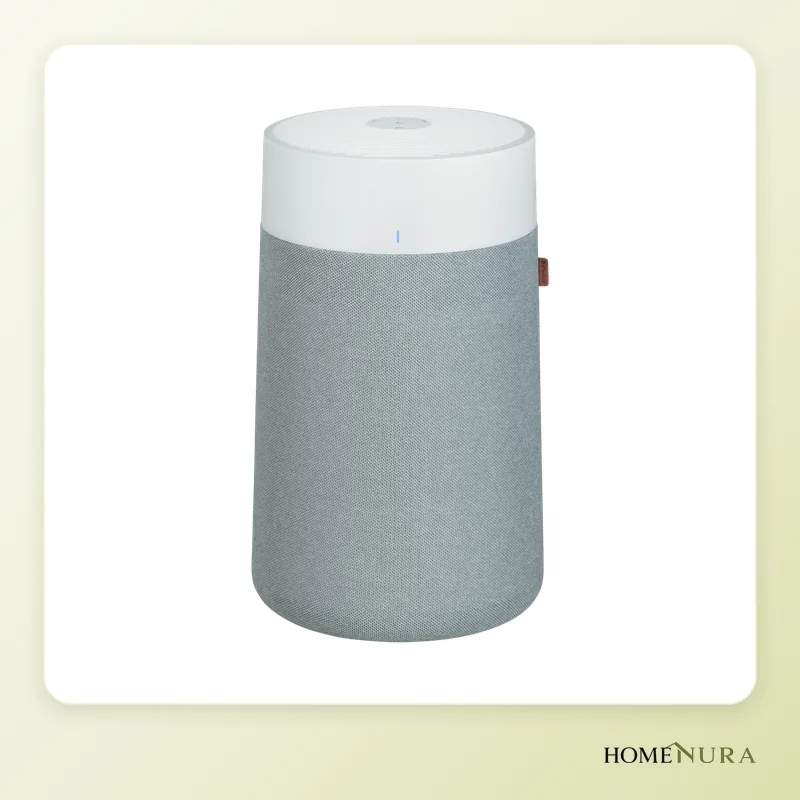
4. Blueair Blue Pure 411i Max: quietest for sleeping
The Blue Pure 411i Max is designed for smaller rooms. Blueair quotes around 180 cfm for pollen (roughly 306 m³/h) and a noise range of 18 to 46 dB, for a room of about 21 m² (230 sq. ft.) with close to five air changes per hour.
It combines a washable fabric pre-filter (available in several colours) with the brand’s HEPASilent filtration. A PM2.5 sensor drives auto mode, and the Blueair app provides remote control and filter tracking, with a stated filter life of 6 to 9 months.
Strengths: very quiet at low speed, washable pre-filter, modest power draw (about 20 W), discreet design.
Limitations: meant for a single medium-sized room, proprietary filters.
Best for: light sleepers who want to clean the bedroom air all night without being bothered by the airflow.
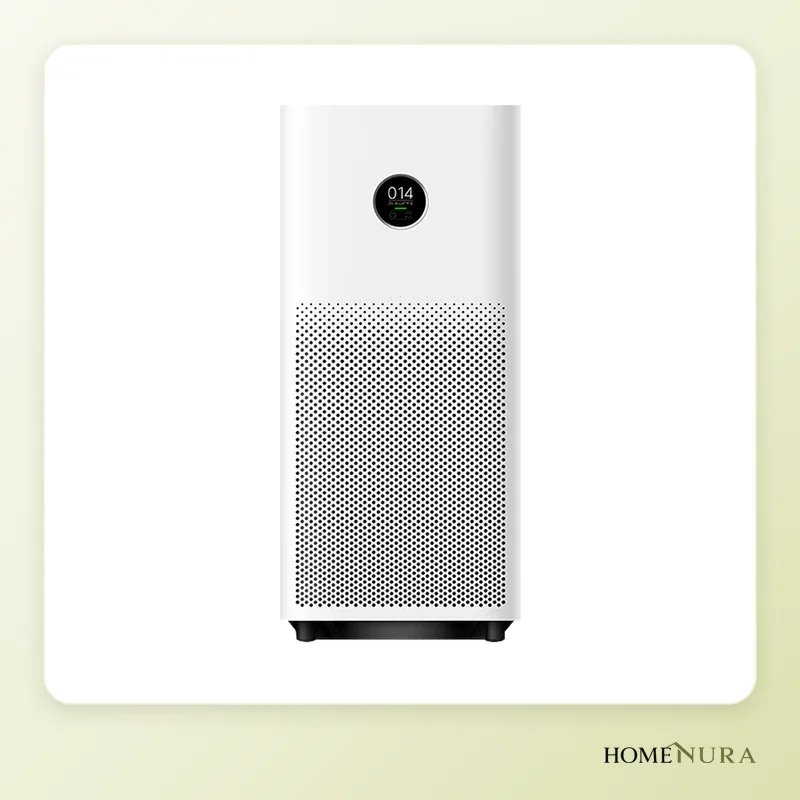
5. Xiaomi Smart Air Purifier 4: the versatile smart option
Xiaomi’s Smart Air Purifier 4 claims a CADR of 400 m³/h for an effective area of 28 to 48 m² (about 300 to 520 sq. ft.), a more realistic estimate than many rivals give. Its filter combines HEPA and activated carbon, with a maximum stated life of 12 months.
The display shows air quality in real time, and the unit is controlled through the Xiaomi Home app, with Alexa and Google Assistant. The stated maximum noise level reaches 64 dB, so you’ll rely on night mode in a bedroom.
Strengths: high airflow, clear display, smart home integration, long filter life.
Limitations: loud at full speed, and a tall unit (over 55 cm, or 22 in.).
Best for: households already using Xiaomi smart home devices that want a powerful smart purifier.
Comparison table
| Model | Claimed CADR | Sensor / auto mode | App | Best for |
|---|---|---|---|---|
| Levoit Core 400S | 400 m³/h | Laser PM2.5, numeric display | VeSync, Alexa, Google | Living room or large bedroom |
| Levoit Core 300S | 240 m³/h | Laser PM2.5, colour ring | VeSync, Alexa, Google | Bedroom |
| Philips AC2939/10 | 380 m³/h | Yes | Air+, Alexa, Google | Large living area |
| Blueair Blue Pure 411i Max | Approx. 306 m³/h (pollen) | PM2.5 | Blueair | Bedroom, light sleepers |
| Xiaomi Smart Air Purifier 4 | 400 m³/h | Yes, display | Xiaomi Home, Alexa, Google | Smart home |
Mistakes to avoid
- Choosing by claimed room size rather than CADR: for allergies, a unit rated for "80 m²" (860 sq. ft.) is often only right for a room of 20 to 30 m² (about 220 to 320 sq. ft.).
- Putting it in a corner or behind furniture: leave space around the air inlets and outlets, ideally between the bed and the window.
- Running it for only a few minutes: in pollen season, leave it in auto mode all the time, with the room’s doors and windows closed.
- Forgetting the pre-filter and filter: a clogged filter cuts airflow. Vacuum or wash the pre-filter as the manual says and replace the filter at the stated intervals.
- Relying only on the device against dust mites: bedding and room humidity matter more.
Day-to-day use
Put the purifier in the bedroom first: that’s where you spend the longest stretch of time. During pollen season, air out the room early in the morning or after rain, then close the windows and let the unit do its work. If you’re very sensitive, wear a mask when you change the filter, and do it outdoors if you can. To keep an eye on humidity and particles in the rest of your home, a sensor can help: see our article on indoor air quality and sensors.
Our verdict
The Levoit Core 400S is the most balanced choice for most allergy sufferers: high airflow, a precise sensor and a full-featured app. The Levoit Core 300S is enough for a bedroom and remains the most affordable. The Blueair Blue Pure 411i Max is the most pleasant at night for noise-sensitive sleepers. The Philips AC2939/10 and the Xiaomi Smart Air Purifier 4 suit large rooms, the latter especially if you already use the Xiaomi ecosystem.
Frequently Asked Questions
Does an air purifier help with pollen allergies?
What about dust mites?
What CADR do I need for a bedroom?
Should I leave the purifier on all night?
How often should the filter be changed?
Purifier or humidifier for allergies?
Article from our comprehensive guide
Comfort & Air Quality →Our recommendations
Photos: © Levoit, © Blueair, © Philips, © Xiaomi
As an Amazon Associate I earn from qualifying purchases. Amazon affiliate links: we earn a commission at no extra cost to you.

