Smart Water Leak Detector 2026: Comparison and Installation Guide
Which smart water leak detector should you choose in 2026? A comparison of the Aqara Water Leak Sensor T1, Shelly Flood Gen4 and Eve Water Guard, automatic shut-off with the Aqara Valve Controller T1, sensor placement and mistakes to avoid.

Quick answer
What is the best smart water leak detector in 2026?
- View on Amazon →
Best overall
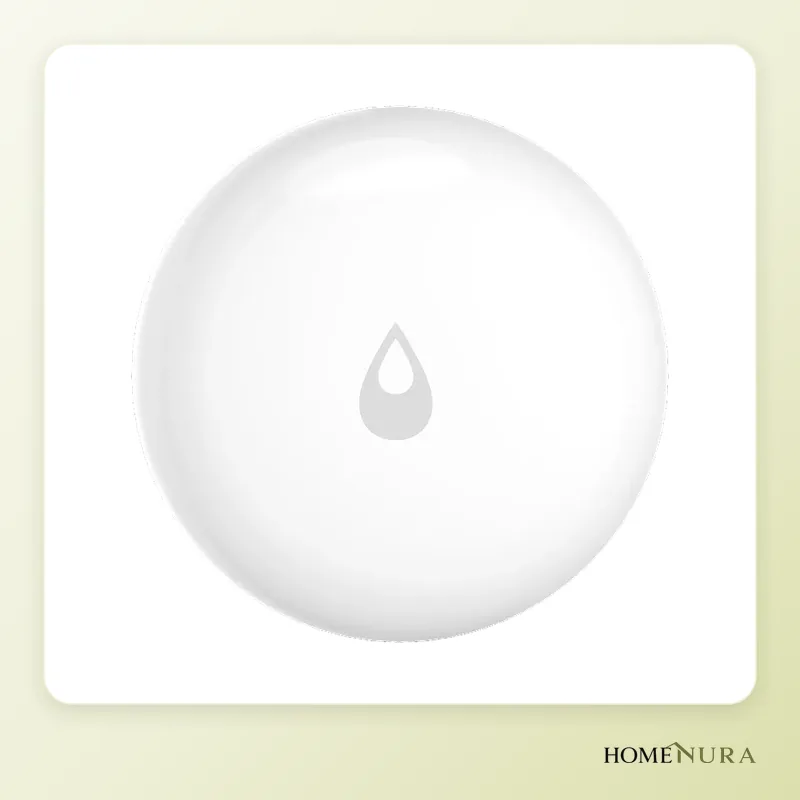
Aqara Water Leak Sensor T1
A compact IP67 Zigbee sensor to place under every at-risk appliance, with smartphone alerts and a CR2032 cell lasting around two years.
Photo: © Aqara
- View on Amazon →
Best without a hub
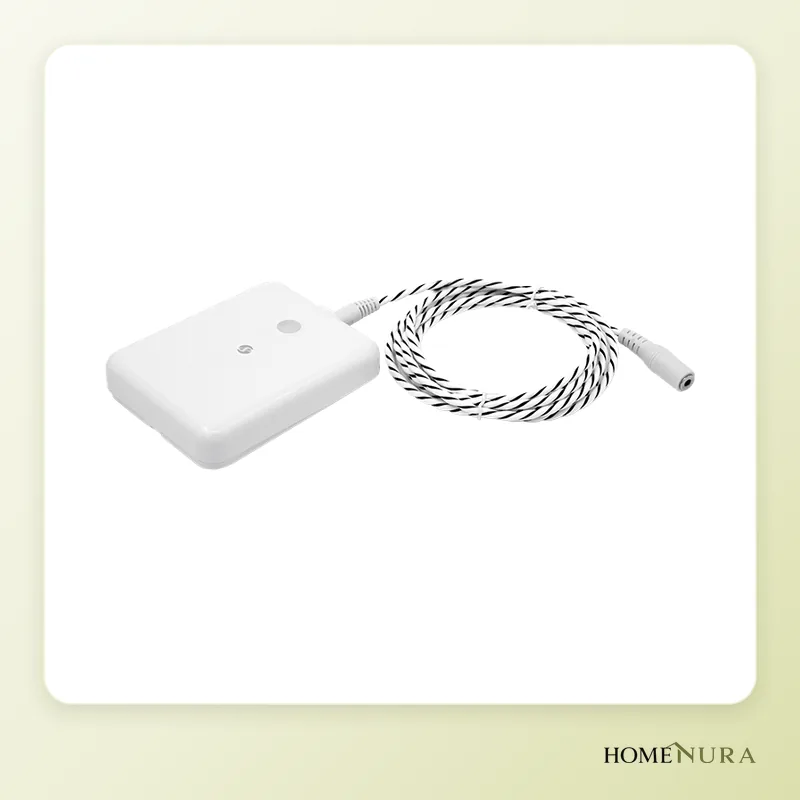
Shelly Flood Gen4
Works over Wi-Fi with no hub, supports Matter, and has a built-in buzzer plus an extendable 2 m sensing cable to cover a whole area.
Photo: © Shelly (Allterco Robotics)
- View on Amazon →
Best for automatic shut-off
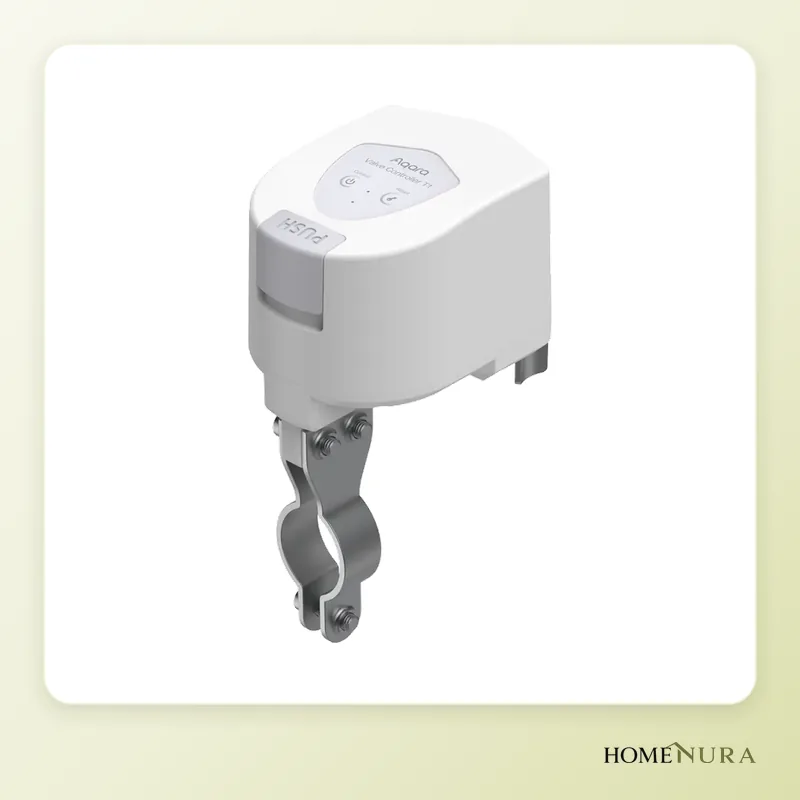
Aqara Valve Controller T1
Clamps onto an existing quarter-turn valve (DN15 to DN25, or ½ to 1 in.) and closes it automatically as soon as an Aqara sensor detects a leak.
Photo: © Aqara


As an Amazon Associate I earn from qualifying purchases. Amazon affiliate links: commission at no extra cost to you.
For most homes, the best smart water leak detector in 2026 is the Aqara Water Leak Sensor T1: a small Zigbee sensor you place under every at-risk appliance, which sends an alert to your phone the moment water touches it. If you also want the water shut off automatically, pair it with the Aqara Valve Controller T1, a motor that clamps onto your existing shut-off valve and closes it as soon as a leak is detected.
This guide compares the options actually available in Europe, based on manufacturer specifications, independent reviews and verified buyer feedback: spot sensors, cable detectors, automatic shut-off, placement and the mistakes to avoid. Models and versions sold in Canada can differ from the European ones: check that the listing is for a 120 V North American model. To browse the full selection, see our water leak detectors page.
Why install a smart water leak detector?
Water damage is one of the most common reasons for home insurance claims. The real problem is rarely the leak itself, but the time that passes before anyone notices it: a washer hose that bursts while you're at work, a water heater relief valve dripping inside a closet, a sink trap seal seeping for weeks under a cabinet. By the time you spot it, the floor has swollen, the drywall is soaked and, in an apartment or condo, the downstairs neighbour already has water coming through the ceiling.
A smart detector doesn't fix anything, but it cuts that delay to seconds. It notifies your phone wherever you are, can sound a siren in the home and, with a motorized valve, shut off the water without anyone lifting a finger. It's discreet, takes up almost no space and works with the main smart home ecosystems. It's a good complement to a subscription-free home alarm.
Models mentioned in this guide
- Eve Water GuardView on Amazon →
Photos: © Aqara, © Shelly (Allterco Robotics)
As an Amazon Associate I earn from qualifying purchases. Amazon affiliate links: we earn a commission at no extra cost to you.
How to choose: the criteria that matter
Spot sensor or sensing cable
Most sensors are small pucks placed on the floor that react when water bridges their contacts. They're ideal under a sink or behind a dishwasher. Some models use a sensing cable that monitors its entire length instead: handy along a row of appliances, around a water heater or in a laundry room, where water could show up in several places.
Protocol and hub
Zigbee sensors (such as Aqara's) use very little power and last a long time on a coin cell, but they need a hub. Wi-Fi models connect straight to your router, at the cost of higher power consumption. Thread models rely on a border router (HomePod mini, a recent Apple TV or a compatible hub). If you already have an ecosystem, choose a sensor that fits into it rather than adding yet another app.
Power supply
CR2032 coin cell, AA batteries or a wall outlet: each has its constraints. A plug-in model never runs out of battery but needs an outlet nearby. A battery model goes anywhere, as long as you keep an eye on the battery level in the app.
Local alarm
A notification is useless if your phone is on silent or the internet is down. Look for a sensor with a built-in buzzer, or a hub that can sound an alarm inside the home.
Automatic shut-off
Detecting a leak is good; stopping the water is better. There are two approaches: a motorized actuator mounted on an existing quarter-turn valve and driven by an automation, or a safety device installed on the main water line by a plumber. The first is by far the easiest to set up yourself.
Ingress protection and location
A sensor on the floor will get wet sooner or later: a high protection rating (IP67, for example) means it keeps working after a flood. Also check the operating temperature range if you're equipping a basement, a garage or any space that goes unheated in winter.
The best smart water leak detectors in 2026
Aqara Water Leak Sensor T1: the best choice for most homes
The Aqara Water Leak Sensor T1 (model WL-S02D) is a compact Zigbee 3.0 sensor measuring 50 × 50 × 15 mm, powered by a CR2032 coin cell with a stated battery life of around two years. It's IP67-rated and triggers as soon as a thin film of water reaches its contacts. In the European range it replaces the E1 model, which is sold mainly in China.
Strengths: a discreet format that slides under furniture, very low power draw, compatibility with Apple Home, Google Home, Alexa and SmartThings through the Aqara hub, and well-established Home Assistant support (ZHA or Zigbee2MQTT). Thanks to the Matter bridge feature in recent Aqara hubs, it also shows up on Matter platforms.
Limitations: it requires an Aqara hub or a Zigbee gateway. The audible alarm sounds on the hub rather than on the sensor itself.
Who it's for: anyone who wants to cover lots of water points affordably, or who already has an Aqara hub or a Zigbee setup.
Shelly Flood Gen4: the most versatile option without a hub
The Shelly Flood Gen4 works over Wi-Fi, Zigbee and Bluetooth and supports Matter. It runs on four AA batteries (estimated life of about two years, depending on use) and has a built-in buzzer with several alarm levels. Its distinctive feature is a 2 m sensing cable, extendable up to 150 m, plus a rain detection mode alongside the flood mode.
Strengths: no hub required on Wi-Fi, a built-in local alarm, a cable that covers a whole area, and integration with Alexa, Google Home and Home Assistant.
Limitations: the housing is IP44 (the cable goes on the floor, the unit must stay dry), and it's bulkier than a puck. Shelly also offers the Flood S Gen4 in an IP67 housing without a cable if you prefer a spot sensor.
Who it's for: laundry rooms, furnace rooms and basements, or anyone who doesn't want a hub.
Eve Water Guard: the pick for Apple users
The Eve Water Guard plugs into a wall outlet and monitors a 2 m sensing cable, extendable up to 150 m with extensions. It communicates over Thread and Bluetooth and has a 100 dB siren with a flashing light.
Strengths: no batteries to replace, a loud siren, native integration with Apple's Home app and local operation over Thread.
Limitations: it needs an outlet nearby. Remote notifications and automations require an Apple home hub (HomePod mini, HomePod 2nd generation or a compatible Apple TV 4K). It's first and foremost a product for the Apple ecosystem.
Who it's for: Apple households that want to watch a water heater, washer or water riser without managing batteries.
Aqara Valve Controller T1: automatic shut-off without a plumber
The Aqara Valve Controller T1 isn't a detector but an actuator: it clamps onto an existing lever- or butterfly-handle shut-off valve in DN15, DN20 or DN25 (1/2", 3/4" or 1") and turns it with a motor. It uses Zigbee and four AA batteries, delivers up to 3.6 N·m of torque and closes the valve in 5 to 20 seconds, according to the manufacturer.
Strengths: no pipe cutting, and installation requires no plumbing tools if your valve is compatible. Paired with a Water Leak Sensor T1 through an Aqara automation, it shuts off the water as soon as a leak is detected. It also works with Apple Home, Alexa, Google Home, SmartThings, Home Assistant and Homey.
Limitations: an Aqara hub is mandatory, and the existing valve must be in good condition, not seized. Check your hub's compatibility on the manufacturer's page before buying.
Who it's for: homeowners and tenants who want automatic shut-off without any plumbing work.
What about systems installed on the main water line?
The Grohe Sense Guard, long cited as the benchmark flow controller with built-in shut-off, is no longer manufactured. Some leftover stock is still around, but we no longer recommend it. Other safety devices mounted directly on the main water line exist, often from water treatment specialists: they must be installed by a plumber and are best chosen with them, based on your plumbing.
Comparison table
| Model | Type | Connectivity | Power | Water shut-off | Best for |
|---|---|---|---|---|---|
| Aqara Water Leak Sensor T1 | IP67 spot sensor | Zigbee 3.0 (Aqara hub) | CR2032 coin cell | With Valve Controller T1 | Covering every water point |
| Shelly Flood Gen4 | Unit + 2 m cable | Wi-Fi, Zigbee, Bluetooth, Matter | 4 × AA | Via automation | Laundry room, basement, no hub |
| Eve Water Guard | Plug + 2 m cable | Thread, Bluetooth | Wall outlet | Via Apple automation | Apple ecosystem |
| Aqara Valve Controller T1 | Valve actuator | Zigbee (Aqara hub) | 4 × AA | Yes, closes the valve | Automatic shut-off, no plumbing work |
Where to place your sensors
Start with the appliances that are permanently connected to pressurized water or that drain it:
- Behind or under the washer: the inlet hose and drain hose are classic weak points.
- Under the dishwasher: drain pump and door seal.
- Inside the cabinet under the kitchen sink: faucet supply lines, trap and dishwasher connection.
- At the base of the water heater: relief valves often drip, and a failing tank releases a lot of water.
- Under the bathroom sink, near the shower or tub, and behind the toilet.
- Near the main shut-off valve and the water meter, and in the basement if you have one.
Lay the sensor flat, contacts facing down, at the lowest point where water would pool. Avoid places that get wet in normal use (shower bases, floors that get mopped heavily), or you'll get false alarms.
Setting up automatic shut-off: steps and precautions
- Locate your main shut-off valve and check that it's a quarter-turn valve with a lever or butterfly handle, in a compatible diameter.
- Turn it by hand several times. A seized valve should be replaced by a plumber before you put a motor on it.
- Install the hub, then add the sensors and the actuator in the app.
- Mount the actuator on the valve following the instructions, without straining the pipe.
- Create the automation "if a sensor detects water, close the valve and send a notification."
- Check that it works by lightly dampening a sensor with a wet cloth: the valve should close and the alert should reach your phone.
In an apartment or condo building, or in a rental, only work on your own unit's valve, never on a shared riser. If a valve needs replacing or the pipes need changing, have the job done by a licensed plumber.
Mistakes to avoid
- Relying on notifications alone: without a local alarm, a leak while you sleep can go unnoticed.
- Forgetting the batteries: turn on low-battery alerts and note the replacement date.
- Placing the sensor too far from the source: water follows the slope of the floor, so put the sensor where it will collect.
- Putting a motor on a seized valve: it may fail to close it on the day you need it.
- Juggling several apps: stay within one ecosystem so every alert arrives in the same place. Our guide to Matter and Thread helps you make that choice.
Home insurance: what you should know
A leak detector doesn't replace your insurance and doesn't relieve you of maintaining your plumbing and appliances. Some insurers value prevention devices, but terms vary from one policy to another: ask your own insurer directly before counting on any discount. If you do have to make a claim, the app's alert history can help you establish when the leak started.
Our verdict
For the vast majority of homes, the best strategy is to place Aqara Water Leak Sensor T1 units under every at-risk appliance. If you want to go further, the Aqara Valve Controller T1 turns that sensor network into a genuine automatic shut-off system, with no plumbing work. The Shelly Flood Gen4 suits anyone who doesn't want a hub or needs to watch a whole area with a cable, and the Eve Water Guard is the natural choice in an Apple home. Find every model on our water leak detectors page.
Frequently Asked Questions
Can a water leak detector shut off the water automatically?
Do I need a hub for a smart water leak detector?
How many sensors does an apartment need?
Is the Grohe Sense Guard still a good option?
What happens if the internet goes down?
Can tenants install automatic shut-off?
Article from our comprehensive guide
Energy & Smart Home →Our recommendations
- Eve Water GuardView on Amazon →
Photos: © Aqara, © Shelly (Allterco Robotics)
As an Amazon Associate I earn from qualifying purchases. Amazon affiliate links: we earn a commission at no extra cost to you.


