Smart Soil Moisture Sensor 2026: Buying Guide for Lawns and Gardens
Gardena smart Sensor, Ecowitt WH51, ThirdReality Gen2 and Xiaomi Mi Flora: how to choose a smart soil moisture sensor in 2026 based on your watering setup, yard and smart home.

Quick answer
What is the best smart soil moisture sensor in 2026?
- View on Amazon →
Best overall
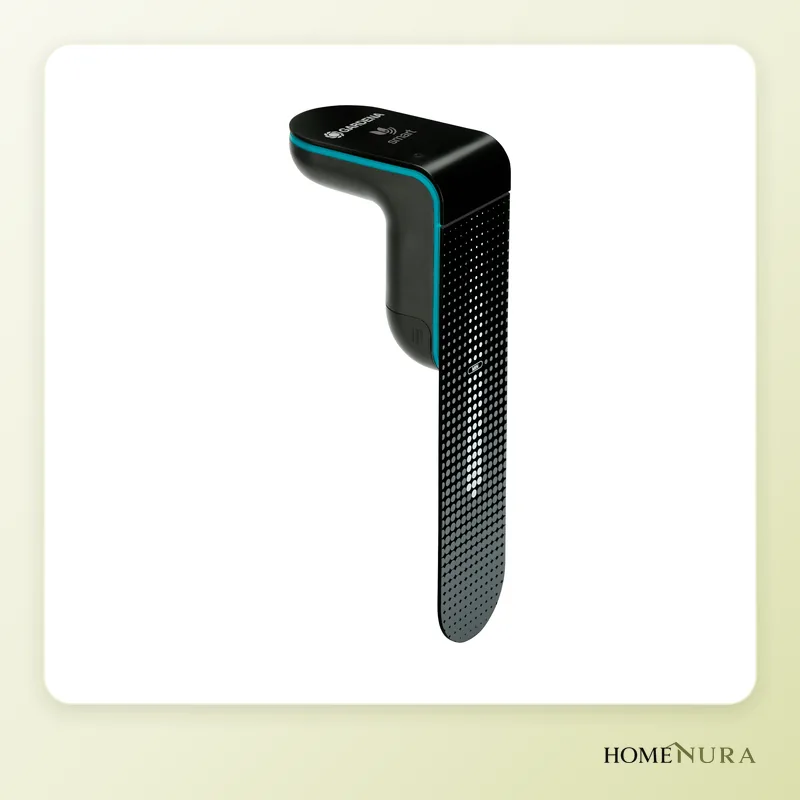
Gardena smart Sensor
It measures moisture at root level and holds back Gardena smart water timers while the soil is still damp.
Photo: © GARDENA (Husqvarna Group)
- View on Amazon →
Best value
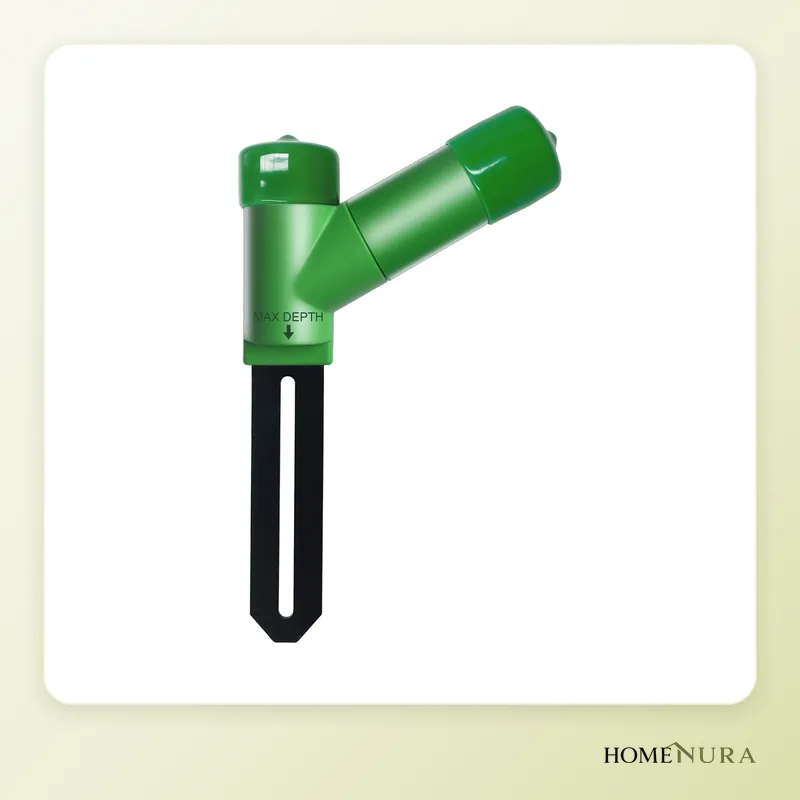
Ecowitt WH51
An IP66 radio sensor on one AA battery, up to 16 per Ecowitt gateway and Home Assistant compatible for multi-zone gardens.
Photo: © Ecowitt
- View on Amazon →
Best for Zigbee smart homes
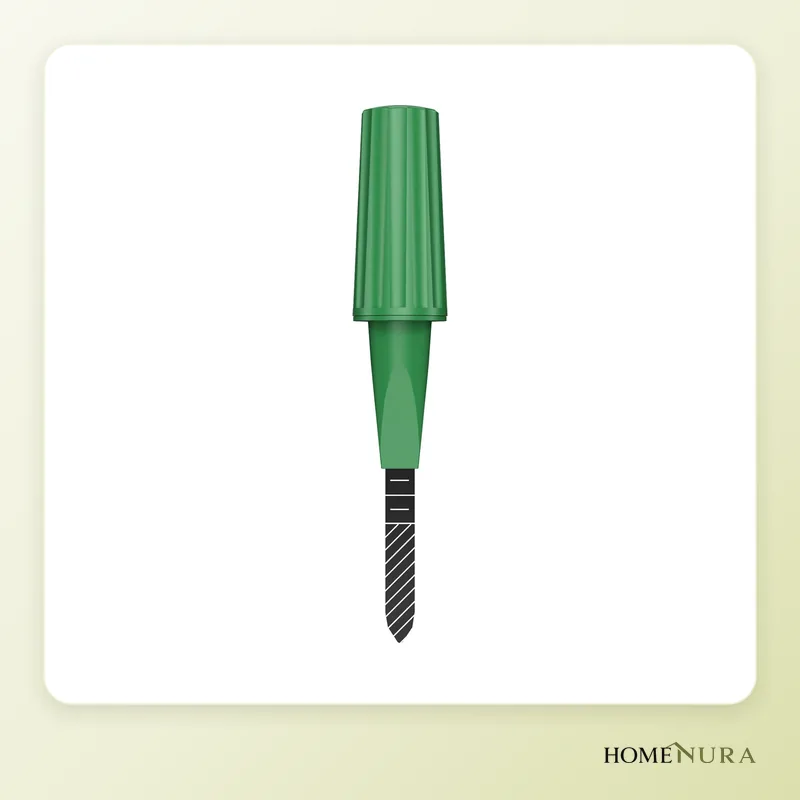
ThirdReality Smart Soil Moisture Sensor Gen2
A capacitive Zigbee 3.0 sensor (moisture and temperature) that joins Home Assistant, Hubitat, SmartThings or Homey without a dedicated app.
Photo: © ThirdReality


As an Amazon Associate I earn from qualifying purchases. Amazon affiliate links: commission at no extra cost to you.
The best smart soil moisture sensor in 2026 for a yard with automatic watering is the Gardena smart Sensor: it measures moisture at root level and holds back Gardena smart watering while the soil is still damp. If you want to monitor several zones on a reasonable budget, the Ecowitt WH51 is the most versatile, and if you already run a Zigbee smart home hub, the ThirdReality Smart Soil Moisture Sensor Gen2 connects straight to it.
This guide is based on manufacturer specifications, independent reviews and verified buyer reviews. It only covers models sold in Europe. Models and versions sold in Canada can differ from the European ones: check that the listing is for a North American model, since radio frequencies can differ by region. You’ll find compatible hose timers and sprinkler controllers on our smart irrigation page.
What does a soil moisture sensor do?
A standard hose timer runs on the clock: every other day at 6 a.m., whether it rained the night before or not. A soil moisture sensor adds what that setup lacks: a real measurement of the water available in the soil, where the roots are. You only water when the soil needs it.
The benefits are practical. You stop watering a soaked lawn after a storm, you spot a flower bed that dries out faster than the rest, and you avoid the overwatering that encourages root disease. During dry spells, when your municipality restricts lawn watering, knowing exactly when to water also helps you make the most of the permitted times. How much you save depends heavily on your starting point: a yard you already water carefully by hand will save less than one run by a simple timer.
For an overview of timers and valves, read our smart irrigation guide.
Models mentioned in this guide
- Xiaomi Mi FloraView on Amazon →
Photos: © GARDENA (Husqvarna Group), © Ecowitt, © ThirdReality
As an Amazon Associate I earn from qualifying purchases. Amazon affiliate links: we earn a commission at no extra cost to you.
Capacitive or resistive: the technology matters
Resistive sensors measure the current flowing between two metal electrodes pushed into the soil. They’re simple, but the electrodes oxidize over time and the readings drift. They’re poorly suited to staying in the ground permanently.
Capacitive sensors measure the soil’s permittivity, which changes with its water content, without direct electrical contact with the soil. They age better and are less affected by salts in the soil. Every model in this guide uses this approach or an equivalent measurement without bare electrodes. Keep in mind that no consumer sensor is a lab instrument: sandy and clay soils show different percentages for the same amount of water available to plants. Watch your plants for a few weeks and adjust your thresholds.
How to choose
- Link to watering: a sensor that only sends a notification still leaves you to turn on the water. A sensor paired with a same-brand hose timer, or with a smart home hub, can skip or start watering by itself.
- Connectivity: Bluetooth (short range, ideal for a balcony), long-range radio with a gateway (Ecowitt, Gardena) or Zigbee (hub required). A sensor at the far end of the yard needs a radio that can reach it.
- Measurements: soil moisture is the minimum. Soil temperature helps you hold off watering in cold weather. Light and conductivity (an indicator of nutrient salts) are mostly useful for potted plants.
- Weather resistance: a sensor that stays outside all year must be designed for outdoor use. Check the protection rating given by the manufacturer.
- Batteries: AA (easy to find, often rechargeable) or a CR2032 coin cell. Expect at least one change per season on some models.
- Number of zones: a lawn, a vegetable garden and a hedge have different needs. If you have several watering zones, plan one sensor per zone and a system that can handle several.
The 4 best smart soil moisture sensors in 2026
1. Gardena smart Sensor — best overall for automatic watering
The Gardena smart Sensor (item 19040-20) is part of the Gardena smart system. It measures soil moisture and near-ground temperature through a large measuring area pushed down to root level. Its flat housing sits only about 2 cm (¾ in.) above the ground, so it can stay on a lawn cut by a robot mower.
Integration is its strength. Paired with the Gardena smart Water Control (on an outdoor faucet) or the smart Irrigation Control (several valves), it lets you schedule watering that only starts if the soil is below the threshold set in the Gardena smart app. According to Gardena, two AA batteries keep it running for a gardening season.
Strengths: simple setup in a single app, a complete sensor-to-timer loop with no tinkering, a low profile that suits lawns cut by a robot mower.
Limitations: the Gardena smart Gateway is essential (it comes with smart system starter sets), and the sensor only really makes sense with a Gardena smart hose timer.
Who it’s for: yards already set up with Gardena, or anyone who wants ready-to-use automatic watering without a smart home hub.
2. Ecowitt WH51 — best value for multiple zones
The Ecowitt WH51 is a wireless soil moisture sensor, 868 MHz in its European version, that reports to an Ecowitt Wi-Fi gateway (GW1100, GW1200 or GW2000). Ecowitt also sells the GW1206 kit, which bundles the GW1200 gateway with one WH51. The sensor is IP66 rated, runs on a single AA battery and sends a new moisture reading (0 to 100%) roughly every 70 seconds.
Its main advantage is scalability: one gateway accepts up to 16 WH51 sensors, so you can follow the lawn, vegetable garden, planters and greenhouse in the same app. The gateway also works with Home Assistant through the Ecowitt integration, so you can control a smart valve based on measured moisture.
Strengths: long-range radio, affordable individual sensors, many sensors per gateway, open smart home integration.
Limitations: it only measures moisture (no soil temperature) and doesn’t control watering on its own: you need a smart home hub or automation to operate a valve.
Who it’s for: yards with several zones, owners of an Ecowitt weather station and Home Assistant users.
3. ThirdReality Smart Soil Moisture Sensor Gen2 — the Zigbee option for smart homes
The ThirdReality Smart Soil Moisture Sensor Gen2 (European model number 3RDZP1SMS1B-EU) is a capacitive Zigbee 3.0 sensor that measures soil moisture and temperature. It runs on one AA battery, with a claimed battery life of up to three years in typical use.
It connects to an existing Zigbee hub: Home Assistant (ZHA or Zigbee2MQTT), Hubitat, SmartThings, Homey or an Amazon Echo with a built-in Zigbee hub. You can then create a rule such as “if moisture drops below 30%, open the valve for 15 minutes” with any valve your hub supports.
Strengths: standard protocol, long battery life, temperature reading, no proprietary app required.
Limitations: a Zigbee hub is essential, and range depends on your network: at the far end of a large yard you may need an outdoor Zigbee repeater. Check the manual for outdoor use conditions before leaving it in the ground all year.
Who it’s for: homes already on Zigbee that want to bring the yard and garden into their automations.
4. Xiaomi Mi Flora — the most complete for potted plants
The Xiaomi Mi Flora, also sold as Flower Care, is a small Bluetooth sensor that measures four things: soil moisture, light, temperature and soil conductivity, an indicator of fertility. Its app compares these readings with each species’ needs using a plant database and tells you what’s lacking.
It runs on a CR2032 coin cell. Bluetooth limits range to a few metres, so it suits a balcony, a patio or houseplants. Home Assistant users can connect it through the Xiaomi BLE integration and a nearby Bluetooth proxy.
Strengths: four measurements in a small package, per-species advice, widely supported by smart home platforms.
Limitations: short range, no direct link to a hose timer, designed more for pots than for soil exposed to the elements all year. Availability varies between retailers.
Who it’s for: balcony gardeners, houseplant collections and patio containers.
Comparison table
| Model | Measurements | Connectivity | Power | Watering control | Best for |
|---|---|---|---|---|---|
| Gardena smart Sensor | Moisture, soil temperature | Gardena radio + smart Gateway | 2 × AA | Native with Gardena smart | Turnkey automatic watering |
| Ecowitt WH51 | Moisture | 868 MHz + Ecowitt Wi-Fi gateway | 1 × AA | Via Home Assistant | Multiple zones, weather station |
| ThirdReality Gen2 | Moisture, soil temperature | Zigbee 3.0 (hub required) | 1 × AA | Via your Zigbee hub | Zigbee smart homes |
| Xiaomi Mi Flora | Moisture, light, temperature, conductivity | Bluetooth | CR2032 | No (alerts only) | Pots, balcony, indoors |
Where and how to install the sensor
- In the root zone: about 10 cm (4 in.) for a lawn, 15 to 20 cm (about 6 to 8 in.) for a vegetable garden, deeper for shrubs. Push the measuring part in fully.
- In a representative spot: not at the foot of a wall, not under a tree that blocks the rain, not right under a dripper or in the direct spray of a sprinkler.
- One sensor per watering zone: if a sunny lawn and a shady flower bed share one sensor, one of them will be watered badly.
- Firm the soil around the probe: an air pocket skews the reading. Wait a day or two before setting your thresholds.
- Plan for winter: depending on the model and its manual, bring the sensor in before the ground freezes or remove the batteries if it stays outside unused.
Mistakes to avoid
- Buying a sensor without checking the gateway: the Gardena smart Sensor and Ecowitt WH51 don’t work on their own, and neither does the ThirdReality without a Zigbee hub.
- Trusting the raw percentage: 30% in clay and 30% in sand don’t mean the same thing. Set the threshold based on your plants, not on a generic figure.
- Choosing Bluetooth for the back of the yard: the range isn’t enough. Go for long-range radio.
- Forgetting the weather: a sensor tells you the soil is dry now, not that it will rain tomorrow. Where possible, pair it with a timer that uses the forecast.
- Ignoring local restrictions: a sensor doesn’t exempt you from watering restrictions. Check the rules set by your municipality.
Our verdict
For fully automatic watering without a complicated setup, the Gardena smart Sensor is the most logical choice, as long as you use a Gardena smart hose timer. To monitor several zones on a reasonable budget, the Ecowitt WH51 offers the best balance and works with Home Assistant. If your home already runs on Zigbee, the ThirdReality Smart Soil Moisture Sensor Gen2 slots into your automations without another app. For potted plants and balconies, the Xiaomi Mi Flora still gives you the most information. To go further, see our smart backyard guide 2026.
Frequently Asked Questions
How deep should a soil moisture sensor go?
Can a soil moisture sensor control watering automatically?
How many sensors does a yard need?
What is the difference between a capacitive and a resistive sensor?
Does a soil moisture sensor work in a pot?
Should the sensor be brought in for winter?
Article from our comprehensive guide
Smart Yard & Outdoors →Our recommendations
- Xiaomi Mi FloraView on Amazon →
Photos: © GARDENA (Husqvarna Group), © Ecowitt, © ThirdReality
As an Amazon Associate I earn from qualifying purchases. Amazon affiliate links: we earn a commission at no extra cost to you.


