Smart Home Trends 2026: What's Actually Changing
Matter for cameras and energy, Thread, generative AI assistants like Alexa+ and Gemini for Home, local control, no-subscription security and new EU rules: the smart home trends that matter in 2026, and the products behind them.

Quick answer
Which smart home devices are worth buying in 2026 to keep up with the trends?
- View on Amazon →
Best overall
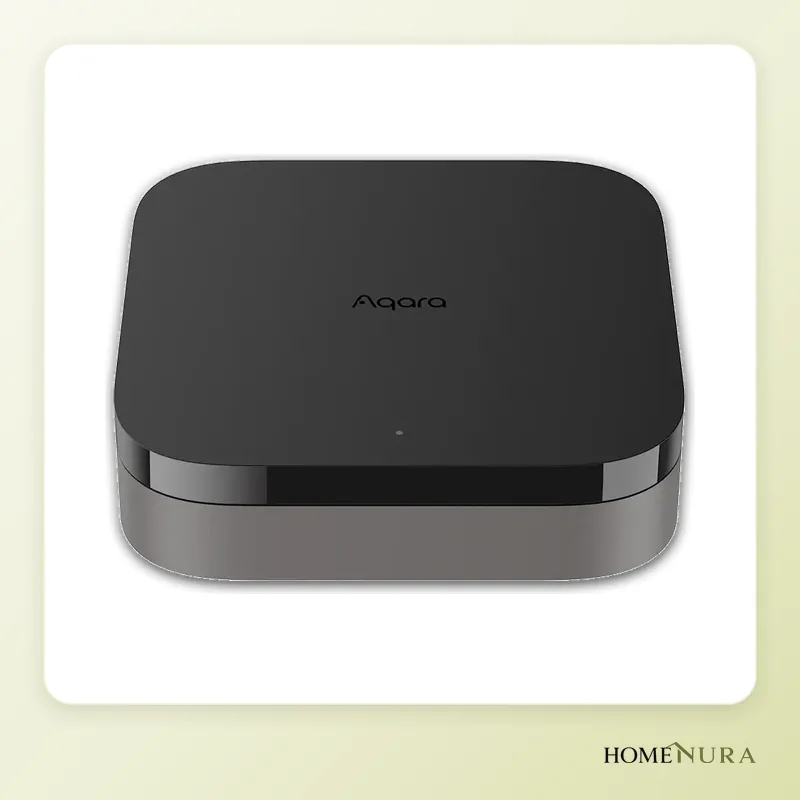
Aqara Hub M3
A Matter controller and Thread border router with Zigbee and IR that runs automations locally and controls several brands.
Photo: © Aqara
- View on Amazon →
Best for saving energy
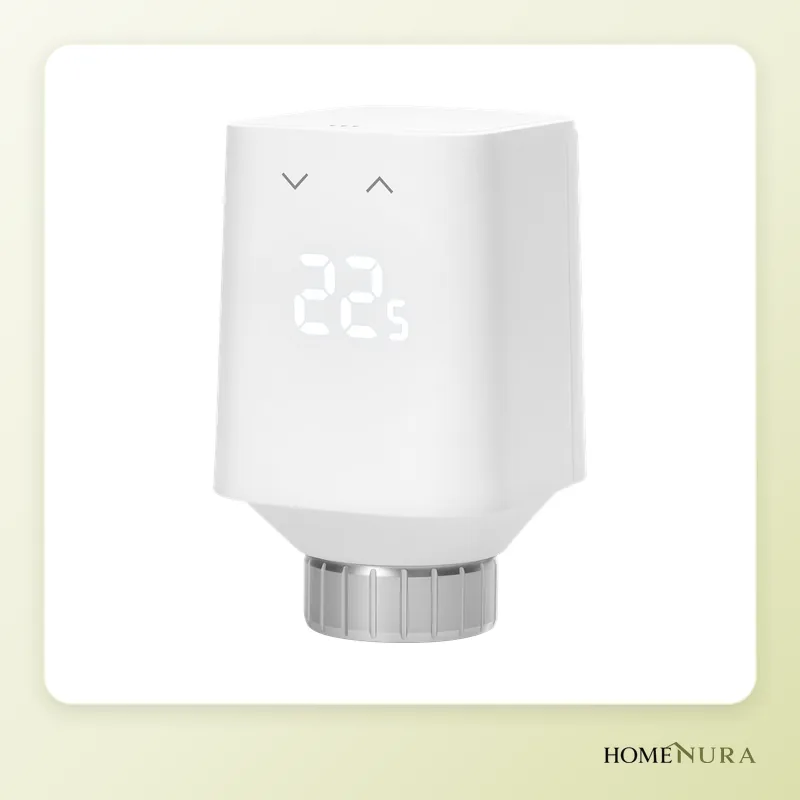
Eve Thermo
A Matter over Thread smart radiator valve that works with all major ecosystems, for room-by-room heating without a proprietary hub.
Photo: © Eve Systems
- View on Amazon →
Best security with no subscription
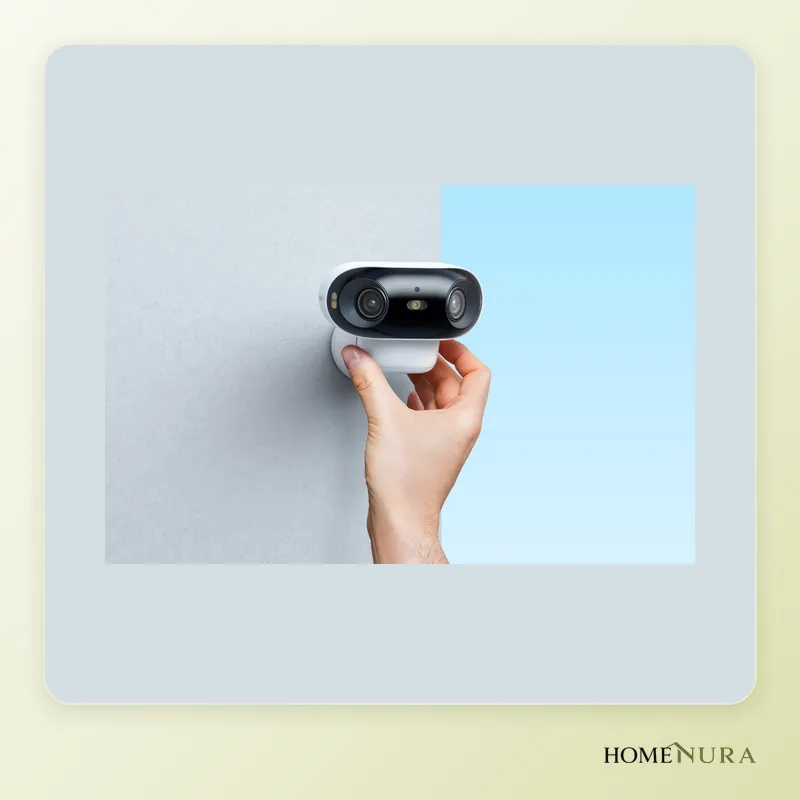
Reolink Argus 4 Pro
A 4K dual-lens (180°) battery camera with color night vision and microSD storage, with no subscription needed for detection.
Photo: © Reolink


As an Amazon Associate I earn from qualifying purchases. Amazon affiliate links: we earn a commission at no extra cost to you.
In 2026, the smart home is changing in three concrete ways: Matter finally covers cameras and energy management, voice assistants are moving to generative AI, and local control without the cloud has become a real reason to pick one product over another. Everything else (more capable robots, no-subscription security, new EU rules on cybersecurity and repair) grows out of those shifts.
This guide separates what actually exists and can be bought today from what is still just a trade-show announcement. It draws on specs published by manufacturers and the Connectivity Standards Alliance, independent reviews and verified owner feedback. For the technical basics, see our 2026 guide to Matter and Thread.
How to spot a real trend
Every tech show promises a smart home "revolution." Four simple questions are enough to cut through the hype before you buy:
- Can you actually buy it where you live? New products and features often launch in one country first and roll out market by market. A feature limited to another market doesn't help you yet.
- Is it built on an open standard? A Matter-compatible device can move between ecosystems (Apple Home, Google Home, Alexa, SmartThings, Home Assistant). A proprietary device is tied to a single app.
- Does it work without the cloud? Local control keeps running when your internet goes down and limits the data that leaves your home.
- Are the ongoing costs clear? Required subscriptions for video history, AI features that turn paid after a trial: read the fine print before you choose.
Models mentioned in this guide


Photos: © Aqara, © Eve Systems, © Reolink, © eufy, © Nabu Casa / Home Assistant
As an Amazon Associate I earn from qualifying purchases. Amazon affiliate links: we earn a commission at no extra cost to you.
The 8 smart home trends for 2026
1. Matter finally covers cameras and energy
Matter 1.4, released in November 2024, added device types for energy management: solar inverters, home batteries, heat pumps and water heaters. Matter 1.5, released on November 20, 2025, brought in cameras (indoor, outdoor and video doorbells) with WebRTC streaming, detection and privacy zones, and local or cloud recording; Matter 1.5.1 then fine-tuned those features. In practice, the standard is ready and certified products are arriving gradually. Always look for the Matter logo on the product listing instead of counting on a future update.
2. Thread goes mainstream, even in entry-level bulbs
Thread, the low-power mesh network Matter uses, is no longer reserved for premium brands. At CES 2026, IKEA unveiled a lineup of 21 Matter over Thread products, including KAJPLATS bulbs that replace the TRÅDFRI line. For heating, the fifth-generation Eve Thermo (late 2025) and tado X radiator thermostats also run on Thread. You need a Thread border router, and a recent speaker or hub (HomePod mini, recent Apple TV 4K, second-generation Nest Hub, Aqara Hub M3, some Echo models) fills that role.
3. Voice assistants switch to generative AI
This is the most visible change of 2026. After its US debut, Amazon's Alexa+ opened in early access in the UK in March 2026, then in Germany and France in May 2026. The assistant understands naturally phrased requests and can chain several actions together; Amazon says it will be included with Prime once early access ends. Google, meanwhile, is rolling out Gemini for Home on its Nest speakers and displays, with early access across many European countries, including France, Italy, Spain, Belgium and the Netherlands. These assistants still lean heavily on the cloud: controlling your devices gets more flexible, not more private.
4. Local control becomes a selling point
As a counterweight to these always-online assistants, some users are going local. Home Assistant, an open-source home automation platform, runs on a dedicated box such as Home Assistant Green and handles your automations inside your home. Its Voice Preview Edition speaker (late 2024) makes locally processed voice control possible, as long as your hardware is powerful enough for full speech recognition. Hubs such as the Aqara Hub M3 also run automations on the device itself, which cuts lag and reliance on the cloud.
5. No-subscription video security with on-device detection
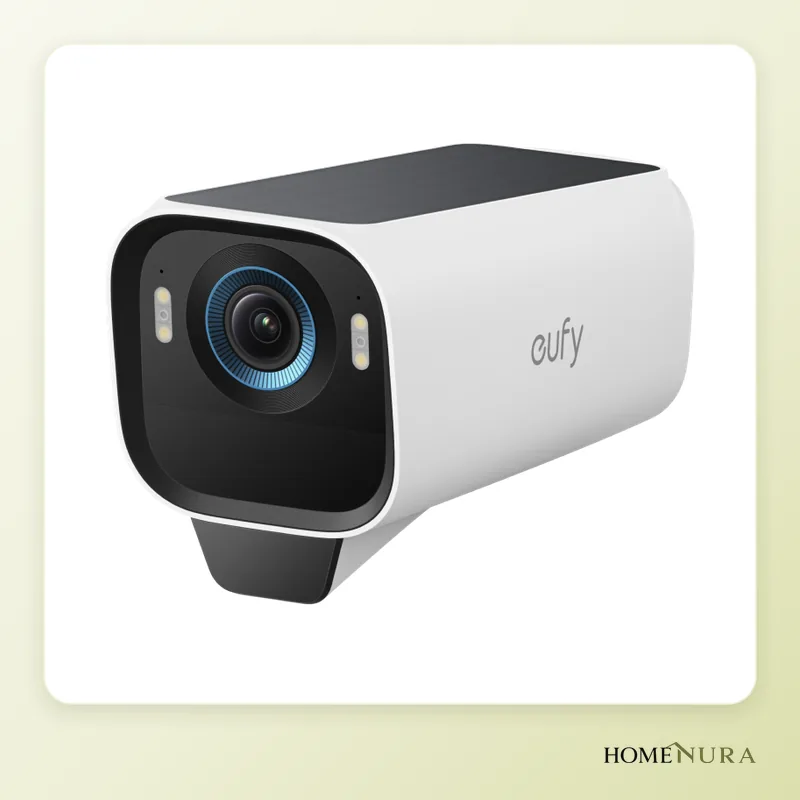
Cameras with local storage are becoming a real alternative to cloud plans. The eufyCam S3 Pro records to the HomeBase S380, which you can expand with a hard drive, with no subscription, and it combines radar and passive infrared (PIR) detection. The Reolink Argus 4 Pro records to a microSD card and offers a 180° panoramic view thanks to two lenses. In both cases, person and vehicle recognition works without a paid plan. With Matter 1.5, cameras like these could eventually slot into ecosystems more easily, but only if the manufacturer certifies the model.
6. Room-by-room energy control, and plug-in solar
Heating is the largest share of household energy use in Europe, which is why smart radiator thermostats, built for the hot-water radiators common in European homes, are so useful: they heat each room on a schedule and based on who's home. In Germany, balcony solar systems (Balkonkraftwerk) have been allowed to feed in up to 800 W since the 2024 rule changes, which has made plug-in solar and the small batteries that go with it popular. Rules for plug-in solar vary by state and utility: check with your utility before you connect a kit. To dig deeper, read our guide to saving energy with smart home tech.
7. More capable robots, indoors and out
Robot vacuum and mop combos keep getting more autonomous: the Roborock Saros Z70, sold in Europe since May 2025, has an articulated arm that can move small, light objects. In the yard, robot mowers with no boundary wire, such as the Mammotion LUBA 2 AWD, combine RTK positioning and cameras to find their way. These are still premium products, and their flashiest features have limits: a robotic arm won't tidy up a cluttered room.
8. New EU rules on cybersecurity and repair
Since August 1, 2025, connected radio devices sold in the European Union have had to meet the cybersecurity requirements of the Radio Equipment Directive's delegated act (Delegated Regulation 2022/30), with the harmonized EN 18031 standards covering network protection, personal data and fraud. Member states had until July 31, 2026, to transpose the EU right-to-repair directive (2024/1799) into national law. It targets specific product groups first (washing machines, refrigerators, smartphones and others), not every smart device. That's good news for buyers, but stay cautious: how long a smart device gets software updates still depends on its manufacturer.
The products behind these trends
Here are six devices currently sold in Europe that put the trends above into practice. You'll find more models in our smart home hubs category.
Aqara Hub M3: the multi-protocol Matter hub
Pros: a Matter controller and Thread border router, with Zigbee, Wi-Fi, Bluetooth and infrared; automations run locally; it also controls Matter devices from other brands.
Cons: you still need the Aqara app to use every feature, and a multi-ecosystem setup takes some planning.
Best for: anyone who wants a single, Matter-ready control center without depending on one tech giant.
Home Assistant Green: fully local home automation
Pros: a box that ships with Home Assistant preinstalled; thousands of integrations; automations, history and dashboards with no required cloud.
Cons: a real learning curve; you'll need to add a USB radio dongle for Zigbee or Thread; fully local speech recognition needs more powerful hardware.
Best for: tinkerers who put privacy and full control of their setup first.
Eve Thermo: the Matter over Thread radiator valve
Pros: a more compact, quieter fifth generation; M30 × 1.5 thread with Danfoss adapters included; works with Apple Home, Alexa, Google Home, SmartThings and Home Assistant; runs on AA batteries.
Cons: needs a Thread border router, and the advanced features live in the Eve app.
Best for: homes with hot-water radiators that want room-by-room heating without a proprietary hub.
tado Smart Radiator Thermostat X: app-driven heating
Pros: touch display, USB-C rechargeable battery (about a year of claimed runtime); Thread and Matter; a full-featured app for schedules and presence detection.
Cons: not compatible with older tado V3+ products; some advanced app features cost extra; requires Bridge X or a third-party border router.
Best for: anyone who wants a complete heating ecosystem and a very polished app.
eufyCam S3 Pro: no-subscription outdoor security
Pros: 4K video, color night vision, a built-in solar panel (SolarPlus 2.0); dual radar and passive infrared detection; expandable local storage on the HomeBase S380.
Cons: works only with the HomeBase S380, and it's a bulkier system than a standalone camera.
Best for: homes that want several outdoor cameras with no recurring fees.
Reolink Argus 4 Pro: the panoramic battery camera
Pros: two lenses for a 180° view in 4K, ColorX color night vision, Wi-Fi 6; microSD storage up to 512 GB; no subscription needed for smart detection.
Cons: battery life depends heavily on how many detections it logs, and the solar panel is recommended if you never want to recharge it.
Best for: yards and exterior walls with no outlet nearby.
Comparison table
| Model | Trend | Connectivity | Best for |
|---|---|---|---|
| Aqara Hub M3 | Matter, local control | Matter, Thread, Zigbee, Wi-Fi, Bluetooth, IR | Bringing several brands together |
| Home Assistant Green | Cloud-free automation | Ethernet, radios via USB dongles | Privacy and customization |
| Eve Thermo | Energy, Thread | Matter over Thread | Room-by-room heating across ecosystems |
| tado Smart Radiator Thermostat X | Energy, Thread | Thread, Matter | A complete heating app |
| eufyCam S3 Pro | No-subscription security | Wi-Fi to HomeBase S380 | Several outdoor cameras |
| Reolink Argus 4 Pro | No-subscription security | Wi-Fi 6, microSD | Spots with no outlet nearby |
Mistakes to avoid in 2026
- Buying on the promise of an update. "Planned" Matter support isn't real support. Buy what's certified when you buy it.
- Forgetting the Thread border router. Without one, a Matter over Thread device won't join your network.
- Collecting apps. Pick one main ecosystem and add compatible devices instead of juggling five competing apps.
- Ignoring ongoing costs. Video subscriptions and paid AI features add up: compare before you buy.
- Mistaking a trade-show demo for a product you can buy. Companion robots and futuristic demos mostly aren't consumer products yet.
Security, privacy and installation
Change default passwords, turn on two-factor authentication for your manufacturer accounts and install updates. Put smart devices on a guest Wi-Fi network if your router supports it. With cameras, respect the privacy of neighbors and passersby: avoid filming the street or neighboring properties. Hardwired installations (wired thermostats, home batteries, solar inverters) are a job for a licensed electrician, and plug-in solar kits must follow your local interconnection rules.
The bottom line
The real smart home trends of 2026 are less flashy than trade-show demos, but more useful: Matter is expanding to cameras and energy, Thread is reaching affordable products, voice assistants are becoming conversational and local control is gaining ground. To set up your home without regrets, the Aqara Hub M3 gives you an open, local foundation, the Eve Thermo is the most direct way to cut heating room by room, and the Reolink Argus 4 Pro delivers security with no subscription. To compare hubs in detail, see our smart home hub comparison.
Frequently asked questions
What's the biggest smart home trend of 2026?
Is Alexa+ available outside the US?
Should you wait to buy smart home devices?
What is a Thread border router?
Can you have a smart home without the cloud?
Are smart devices sold in the EU more secure now?
From our complete guide
Energy & Smart Home →Our recommendations
Photos: © Aqara, © Eve Systems, © Reolink, © eufy, © Nabu Casa / Home Assistant
As an Amazon Associate I earn from qualifying purchases. Amazon affiliate links: we earn a commission at no extra cost to you.

