Best Window Cleaning Robots of 2026: 6 Models Compared
Ecovacs Winbot W2 Omni and W2S Omni, Winbot W1 Pro, Hobot 2S, Cecotec Conga WinDroid 1090 and Mamibot W120-T compared: suction, safety tether, backup battery, spraying, frameless glass and cleaning the outside of your windows.

Quick answer
What is the best window cleaning robot in 2026?
- View on Amazon →
Best overall
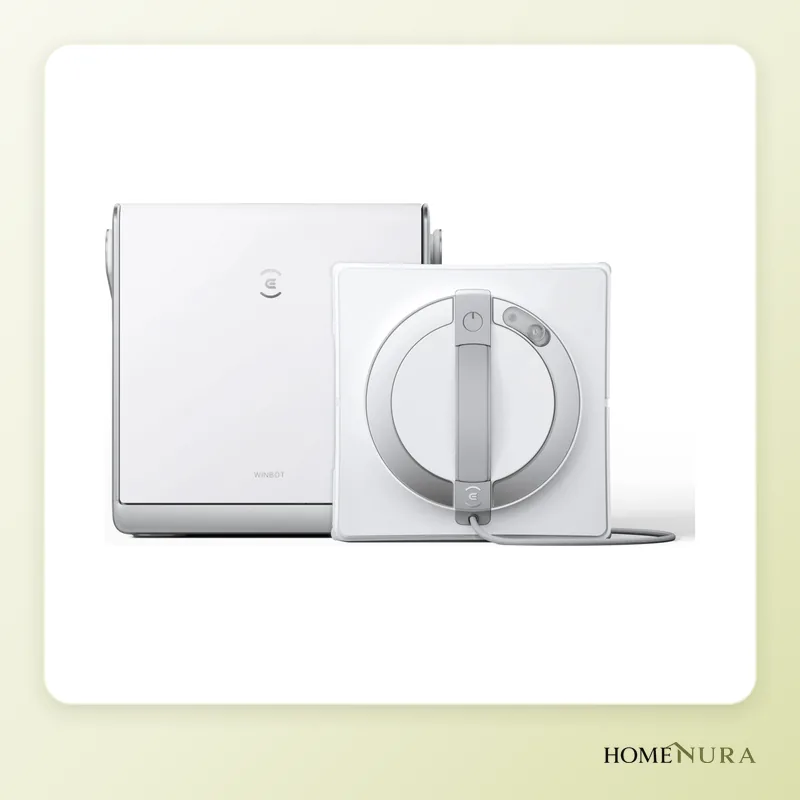
Ecovacs Winbot W2 Omni
Portable battery station, self-winding safety cable, three-nozzle spraying and edge detection for frameless glass.
Photo: © ECOVACS
- View on Amazon →
Best value
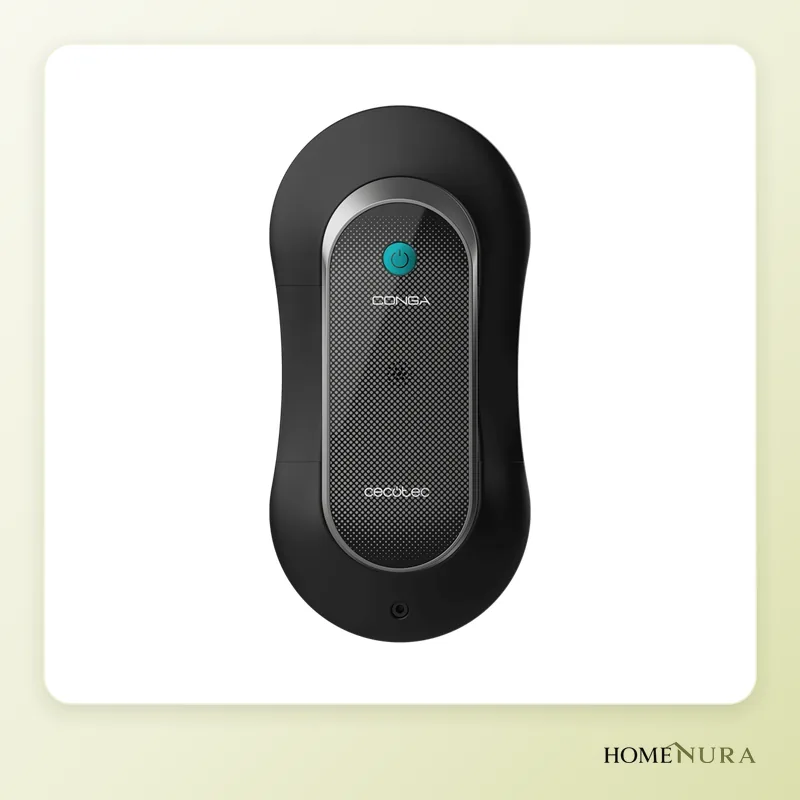
Cecotec Conga WinDroid 1090 Double Spray Connected
Dual spray, 8 modes, app and remote control, a safety rope and a backup battery that lasts roughly 30 minutes in a power outage.
Photo: © Cecotec
- View on Amazon →
Best for frameless glass
Hobot 2S
Compact and light, two ultrasonic nozzles, edge sensor, a 15 ft (4.5 m) safety rope and a backup battery that lasts up to 20 minutes.


As an Amazon Associate I earn from qualifying purchases. Amazon affiliate links: we earn a commission at no extra cost to you.
In 2026, the most complete window cleaning robot is the Ecovacs Winbot W2 Omni (or its successor, the W2S Omni), thanks to a battery-powered station that frees you from the wall outlet and a safety cable that reels itself in. On a tighter budget, the Cecotec Conga WinDroid 1090 Double Spray Connected gives you dual spraying and a backup battery, while the Hobot 2S remains the compact go-to for frameless glass, with its ultrasonic nozzles.
A window cleaning robot won’t completely replace cleaning by hand: it shines on large sliding glass doors, sunrooms and hard-to-reach windows, but it takes a little prep and proper safety precautions, especially on the outside. This comparison is based on manufacturer specs, reviews published by specialist outlets and verified owner feedback. You’ll find the full lineup in our window cleaning robots section.
How to choose a window cleaning robot: what matters
Suction or magnets: two very different technologies
Almost every robot on the market today stays on the glass by suction: a motor creates a vacuum underneath, pressing the unit against the pane as it moves across one side. The models here often claim around 2,800 Pa of suction. The upside: they work on single-pane or double-pane windows of any thickness, and they also clean mirrors and smooth tile.
Magnetic systems come in two parts, one inside and one outside, held together through the glass by magnets. They clean both sides at once, but the glass thickness has to match the strength of the magnets, so thick double- or triple-pane windows may not work. They’re still a niche product and mostly manual; for a self-driving robot, suction is the standard.
Safety tether and backup battery (UPS)
A suction robot depends on its power supply: if the power goes out, it can come off the glass. Two safeguards are essential. First, the safety tether, tied to a fixed point indoors, which catches the unit if it falls. Second, the backup battery (often called a UPS), which keeps the suction running for several minutes after a power outage, giving you time to retrieve the robot. Manufacturers claim, for example, up to 20 minutes on the Hobot 2S and Mamibot W120-T, and around 30 minutes on the Cecotec WinDroid 1090.
Automatic spraying
A robot without a sprayer works with a pad you dampen by hand, which dries out quickly and leaves streaks on large windows. Recent models have a small tank and one or more nozzles: ultrasonic nozzles that create a very fine mist (Hobot 2S), two-way cross spraying (Winbot W1 Pro), three-nozzle wide-angle spraying (Winbot W2 Omni) or a double spray (Cecotec 1090). Use only water or the cleaning solution the manufacturer recommends, so the nozzles don’t clog.
Frameless glass and edge detection
On a standard window, the robot finds the frame by bumping into it. On a glass shower door, a glass railing or a frameless pane, it has to sense the edge with a sensor: the Winbot W1 Pro, W2 Omni and Hobot 2S all claim edge detection that works on frameless glass. Without it, the robot can reach the edge, lose suction and fall.
Square or round
Square robots, on tracks or wheels, follow a Z- or N-shaped path and get into corners better: every model here uses that design. Round or oval robots with two spinning pads “walk” across the glass on their pads; they handle uneven surfaces well but are more likely to miss a corner. For standard windows, square is the most versatile choice.
Minimum pane size and runtime
A robot needs room to maneuver: plan on a pane of at least about 16 × 16 in (40 × 40 cm) for the Hobot 2S, and roughly 12 × 12 in (30 × 30 cm) for the Winbot W2 Omni, according to published reviews. Small divided panes, like windows with grilles, are still a job for cleaning by hand.
Models mentioned in this guide
- Hobot 2SView on Amazon →
- Ecovacs Winbot W2S OmniView on Amazon →
- Ecovacs Winbot W1 ProView on Amazon →
Photos: © ECOVACS, © Cecotec
As an Amazon Associate I earn from qualifying purchases. Amazon affiliate links: we earn a commission at no extra cost to you.
The 6 window cleaning robots worth knowing in 2026
1. Ecovacs Winbot W2 Omni: the most complete
The Winbot W2 Omni stands out for its portable station: it holds a high-capacity battery that powers the robot while it cleans, so you don’t have to hunt for an outlet next to every window. The safety tether and power cable are combined into a single cord about 18 ft (5.5 m) long, which the station reels in automatically. On the cleaning side: a claimed 2,800 Pa of suction, three-nozzle wide-angle spraying, WIN-SLAM 4.0 path planning and edge detection for frameless glass, all controlled from the ECOVACS HOME app.
Cons: it’s a premium model, the station is bulky and published reviews note that the pads get dirty fast on very grimy glass.
Best for: homes with several large glass doors or a sunroom.
2. Ecovacs Winbot W2S Omni: the successor with cleaner edges
Launched in Europe in 2025, the Winbot W2S Omni keeps the W2 Omni’s station concept and adds TrueEdge technology: small scrubbers on the outer wheels drop down when they reach an edge, then lift back up, to clean better along the window seals. It runs on battery or plugged into an outlet, and its station attaches with suction cups and retracts the cable automatically.
Cons: priced even higher than the W2 Omni; how much TrueEdge helps depends on how dirty your window seals get.
Best for: anyone who wants the latest Ecovacs model and spotless edges.
3. Hobot 2S: the compact ultrasonic pick
The Hobot 2S is a square robot measuring 9.4 × 9.4 in (24 × 24 cm) and weighing about 2.9 lb (1.3 kg), with two ultrasonic nozzles that spray a very fine mist. Its 15 ft (4.5 m) safety tether is rated for 440 lb (200 kg) of pulling force, and its backup battery keeps it on the glass for up to 20 minutes after a power outage. An air-leak sensor detects the edges of frameless glass. The manufacturer claims about 22 minutes per 100 sq ft (2.4 minutes per square meter).
Cons: it has to stay plugged in while it cleans, and it needs a pane of at least 16 × 16 in (40 × 40 cm).
Best for: glass shower doors, glass railings and frameless windows, and anyone who wants a lightweight robot.
4. Ecovacs Winbot W1 Pro: the safe bet
Older than the W2 lineup, the Winbot W1 Pro is still a benchmark: a claimed 2,800 Pa of suction, two-way cross spraying with a 2 fl oz (60 ml) tank, a fast-reacting edge sensor for frameless windows, a safety tether and power-outage protection. It doesn’t have the battery-powered station of the Omni models.
Cons: it has to be plugged into an outlet, and you manage the cable yourself.
Best for: anyone who wants Ecovacs technology without the station.
5. Cecotec Conga WinDroid 1090 Double Spray Connected: best value
Cecotec’s Conga WinDroid 1090 Double Spray Connected sprays from both sides of the unit with its double spray, offers 8 cleaning modes (dry or wet) and works with an app or a remote. Its tank holds about 2.5 fl oz (75 ml), it comes with a safety tether and its battery, rated for about 30 minutes, keeps it on the glass during a power outage. The cord gives it a reach of about 25 ft (7.5 m).
Cons: owner reviews say the build quality and navigation are less polished than on the Ecovacs models.
Best for: a first window cleaning robot with a sprayer, on a sensible budget.
6. Mamibot W120-T: simple and proven
The Mamibot W120-T keeps things simple: 3 lb (1.35 kg), a claimed 2,800 Pa of suction, Z- and N-shaped cleaning paths, a gyroscope to return to its starting point, and control by app, remote or the buttons on the unit itself. Its UPS battery holds it in place for up to 20 minutes after a power outage, and the robot alerts you when that happens.
Cons: no automatic spraying listed, and it’s an older model.
Best for: occasional use on standard windows.
Comparison table
| Model | Key strength | Spraying | Safety | Best for |
|---|---|---|---|---|
| Ecovacs Winbot W2 Omni | Portable battery station | 3 wide-angle nozzles | 18 ft (5.5 m) self-reeling cable, fall protection | Large glass doors, sunrooms |
| Ecovacs Winbot W2S Omni | TrueEdge for edges | Automatic | Suction-cup station, auto-retracting cable | Flawless finish |
| Hobot 2S | Compact, 2.9 lb (1.3 kg) | 2 ultrasonic nozzles | 15 ft (4.5 m) tether, 20 min UPS | Frameless glass, showers |
| Ecovacs Winbot W1 Pro | Fast-reacting edge sensor | Two-way cross spray | Tether, power-outage protection | Regular use without a station |
| Cecotec Conga WinDroid 1090 | 8 modes, remote | Double spray | Tether, 30 min battery | Sensible budget |
| Mamibot W120-T | Simplicity, gyroscope | No | 20 min UPS with alert | Occasional use |
Cleaning the outside of your windows safely
A suction robot only cleans one side at a time. For the outside, you set it on the exterior face with the window open or cracked, then close the window on the tether if the model allows it. A few ground rules:
- Always tie the tether to a solid fixed point indoors, never to the handle of a window that could swing open.
- Never leave the robot unattended on an upper-floor window, and keep kids and pets away from the area below.
- Skip rainy, windy or freezing days: moisture and cold hurt both grip and electronics.
- Dust off very dirty glass first (pollen, cobwebs), or the pad will be saturated within minutes.
- Don’t use the robot on cracked glass, frosted or textured glass, or on a pane that’s too small.
Mistakes to avoid
- Buying a model without a backup battery: without a UPS, a power outage or a yanked cable is all it takes to make the robot fall.
- Ignoring the minimum pane size: on small panes, the robot goes around in circles and wastes time.
- Putting regular glass cleaner in the tank: some products clog the nozzles. Follow the manufacturer’s instructions.
- Reusing a dirty pad: swap it out as soon as it turns gray, or the robot just smears the dirt around. Keep several washable pads on hand.
- Expecting the robot to clean the frames: it washes the glass, not the seals or the tracks.
The manual alternative: a Kärcher window vac
If your windows are small or divided into lots of panes, a cordless window vac such as the Kärcher WV 6 Plus can get the job done faster: you spray, wipe, then the squeegee vacuums up the dirty water with no drips. Kärcher claims about 100 minutes of runtime, with a display that shows the time remaining. You have to do the work yourself, but it also handles mirrors, tile and shower doors, and it’s the ideal sidekick to a robot for touch-ups. For floors, see our steam cleaner guide.
The bottom line
For most homes with large expanses of glass, the Ecovacs Winbot W2 Omni is the most convenient choice: a battery-powered station, a self-reeling cable and effective spraying. The W2S Omni is worth it if you want perfectly clean edges. The Cecotec Conga WinDroid 1090 is the most sensible way in, with a double spray and a backup battery, and the Hobot 2S remains the frameless-glass specialist. Whatever the model, a tied-off tether and supervision are a must on upper-floor windows. To automate your floors too, check out our robot vacuum and mop combo comparison.
Frequently asked questions
Can a window cleaning robot fall off the window?
Does a window cleaning robot clean both sides at once?
Can you use a window cleaning robot on frameless glass?
What should you put in a window robot’s tank?
Window cleaning robot or Kärcher window vac: which should you choose?
Do you need an outlet near every window?
From our complete guide
Cleaning & Home Care →Our recommendations
- Hobot 2SView on Amazon →
- Ecovacs Winbot W2S OmniView on Amazon →
- Ecovacs Winbot W1 ProView on Amazon →
Photos: © ECOVACS, © Cecotec
As an Amazon Associate I earn from qualifying purchases. Amazon affiliate links: we earn a commission at no extra cost to you.


