Robot Vacuum Buying Guide 2026: How to Choose and the 5 Best Models
Suction, LiDAR navigation, mopping, the dock and height: what to look for in a robot vacuum in 2026, plus 5 recent models compared, from the Roborock Qrevo Curv to the Dreame X50 Ultra Complete.

Quick answer
What is the best robot vacuum in 2026?
- View on Amazon →
Best overall
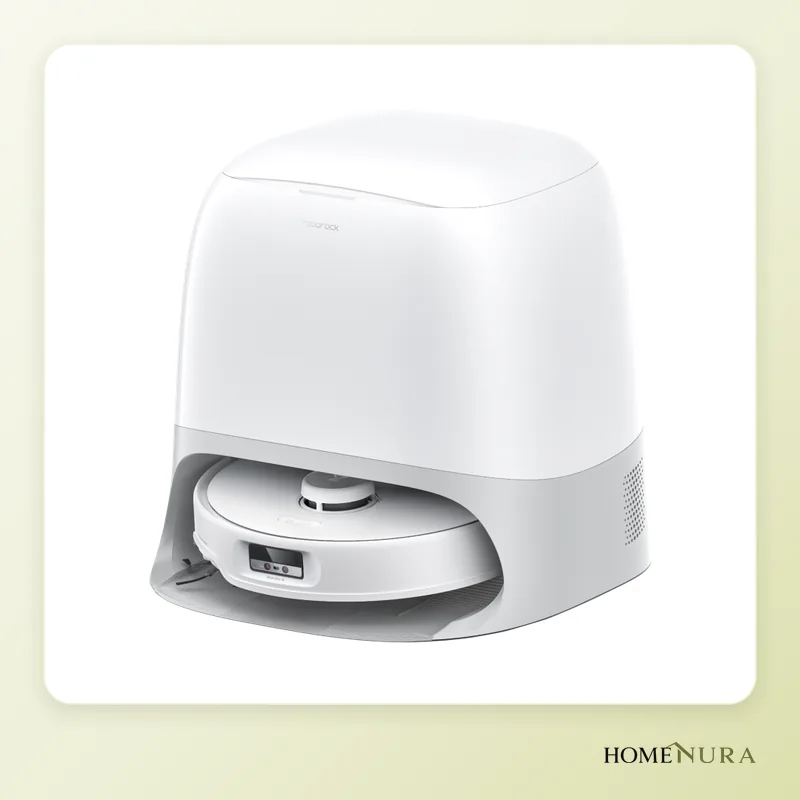
Roborock Qrevo Curv
Rated at 18,500 Pa, with LiDAR, spinning mops that reach right to the baseboards and a dock that empties the bin, washes the mops in hot water and dries them.
Photo: © Roborock
- View on Amazon →
Best value
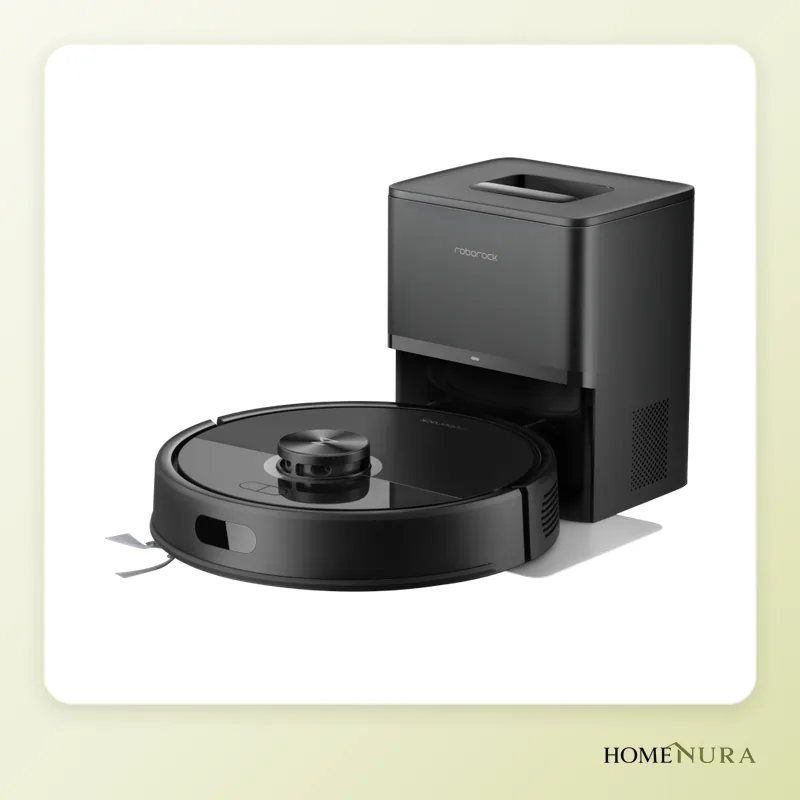
Roborock Q7 M5+
The essentials at entry level: LiDAR navigation, a quoted 10,000 Pa, an anti-tangle brush and self-emptying into a 2.7 L bag.
Photo: © Roborock
- View on Amazon →
Best for pets and thresholds
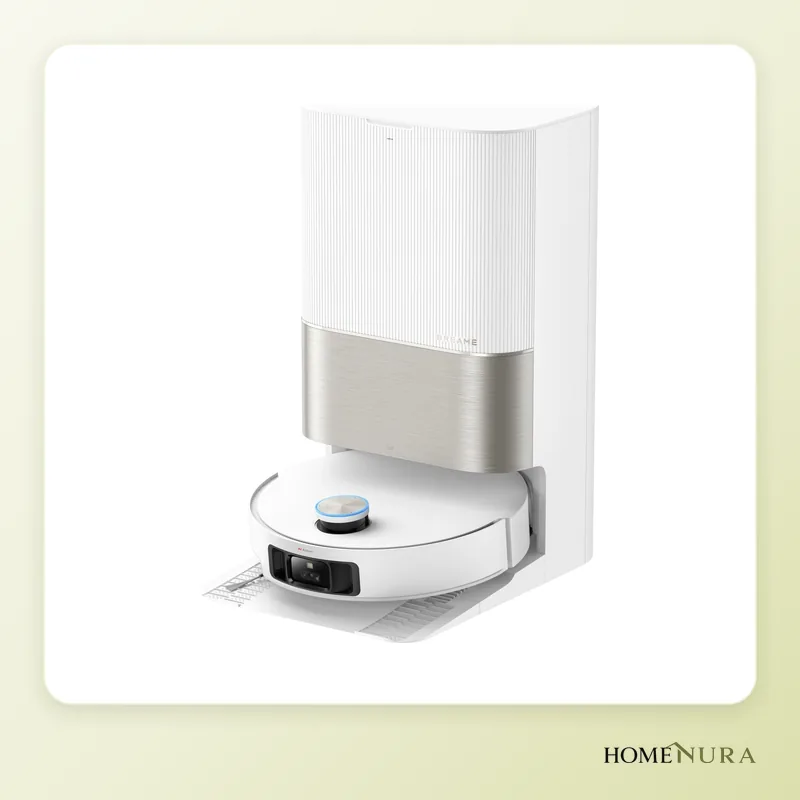
Dreame X50 Ultra Complete
Rated at 20,000 Pa, with an anti-tangle twin brush and a ProLeap system that climbs obstacles up to 2.4 in (6 cm), according to the manufacturer.
Photo: © Dreame


As an Amazon Associate I earn from qualifying purchases. Amazon affiliate links: we earn a commission at no extra cost to you.
The best robot vacuum of 2026 for most homes is the Roborock Qrevo Curv: strong suction, reliable LiDAR navigation, spinning mop pads that reach all the way to the baseboards and a dock that empties the bin and washes and dries the pads on its own. On a tighter budget, the Roborock Q7 M5+ covers the essentials (LiDAR and a self-emptying dock), and if you have pets or door thresholds to climb, the Dreame X50 Ultra Complete is the best fit.
This guide is based on manufacturer specifications, independent reviews and verified owner feedback. It only includes recent models sold in Europe. You’ll find the full lineup on our robot vacuums page.
How to choose a robot vacuum: the specs that matter
Suction power (in pascals)
Manufacturers rate suction in pascals (Pa). In 2026, a decent entry-level model is rated at around 6,000 to 10,000 Pa, and high-end models go past 15,000 Pa. The number helps you place a robot in the lineup, but it doesn’t tell the whole story: each brand measures it its own way, and the brush roll, how well the airflow path is sealed and repeated passes over carpet matter just as much. For hard floors and a few thin rugs, 6,000 to 10,000 Pa is plenty. For thick carpet or lots of pet hair, aim higher.
Navigation: LiDAR and obstacle avoidance
LiDAR navigation (a laser sensor that maps your home) is now standard. It cleans methodically, room by room, and works in the dark. Skip robots that rely on gyroscope navigation alone: they move less systematically and miss spots. To steer clear of cords, socks and pet accidents, recent models add a camera and structured-light sensors. Some, like the Roborock Saros 10R, swap the LiDAR turret for a sensor built into the body to save height.
Mopping
There are three approaches. A static mop pad dragged across the floor freshens up tile but won’t lift dried-on stains. Spinning mop pads, which rotate while pressing down, work far better. The best models swing a pad outward to reach edges and furniture legs, and lift it automatically when they hit a rug. For more detail, see our robot vacuum and mop combo comparison.
The dock: emptying, washing and drying
A self-emptying dock sucks the contents of the robot’s bin into a bag that holds several liters, so instead of emptying the robot after every run, you just swap the bag every so often. All-in-one docks add two water tanks (clean and dirty), wash the mop pads, sometimes with hot water, then dry them with warm air to keep odors down. They take up more space, so measure the spot you have in mind.
Height and climbing ability
Most robots stand about 4 in (10 cm) tall with their LiDAR turret. If your couch or beds sit low, look for a model under 3.3 in (8.5 cm). For homes with door thresholds or sliding-door tracks, check the rated climbing height: the newest models raise themselves on their wheels to get over taller obstacles.
Hair and pet hair
Anti-tangle brush rolls (rubber, dual brushes, a built-in comb) cut down on the time you spend snipping wrapped hair. That matters if you have pets or long hair: read our guide to robot vacuums for pet hair.
The app
Look for multi-floor maps, no-go zones, room-by-room cleaning and support for your voice assistant (Alexa, Google Assistant). Matter support varies by model and firmware update, so check the product listing if it matters to you.
Models mentioned in this guide
- Ecovacs Deebot T50 OmniView on Amazon →
- Roborock Saros 10RView on Amazon →
Photos: © Roborock, © Dreame
As an Amazon Associate I earn from qualifying purchases. Amazon affiliate links: we earn a commission at no extra cost to you.
The 5 best robot vacuums of 2026
1. Roborock Qrevo Curv: best overall
The Qrevo Curv is rated at 18,500 Pa, with LiDAR navigation and spinning mop pads. Its FlexiArm extends the side brush and a mop pad into corners and along baseboards. Its AdaptiLift chassis can raise itself to get over thresholds and thick rugs. The dock empties the bin, washes the pads with hot water and dries them with warm air.
Pros: careful edge cleaning, a very good balance between vacuuming and mopping, and a full-featured Roborock app with a reputation for reliability.
Cons: a bulky dock; a high-end model; the LiDAR turret keeps it out from under very low furniture.
Best for: most apartments and houses with a mix of hard floors and rugs, where you want to hand off nearly all the floor cleaning.
2. Roborock Q7 M5+: best value
The Q7 M5+ sticks to the essentials: LiDAR navigation with multi-floor maps, a rated 10,000 Pa, an anti-tangle brush roll with a built-in comb and a self-emptying dock with a 2.7-liter bag. It also has a basic mopping module.
Pros: the brand’s navigation and app on an entry-level model; weeks without emptying the robot; a compact footprint.
Cons: the mop pad only freshens floors; the dock doesn’t wash or dry the pad; obstacle avoidance isn’t as advanced as on high-end models.
Best for: a first robot vacuum, an apartment with mostly hard floors, or a tight budget.
3. Dreame X50 Ultra Complete: best for pets and thresholds
The X50 Ultra Complete is rated at 20,000 Pa, with a HyperStream anti-tangle dual brush roll and up to 220 minutes of runtime. Its ProLeap system lifts the robot over obstacles up to 2.4 in (6 cm) high, according to the manufacturer. Its LiDAR turret retracts so it can slip under some furniture. Obstacle avoidance pairs a camera with 3D structured light, and the dock empties the robot into a 3.2-liter bag, then washes and dries the mop pads.
Pros: handles pet hair and rugs very well; climbs thresholds and small steps; long runtime for large homes.
Cons: a heavy robot and a large dock; premium pricing; still loud at full power.
Best for: homes with a dog or cat, houses with thresholds and large floor plans.
4. Ecovacs Deebot T50 Omni: slimmest for low furniture
At 3.2 in (81 mm) tall, the Deebot T50 Omni gets into spots where many robots get stuck. It’s rated at 15,000 Pa and has a dToF LiDAR built into the body, backed up by a camera and 3D structured light. Its mop pad extends toward edges (TruEdge) and lifts 0.35 in (9 mm) on rugs. The dock washes the pads at 165°F (75°C) and dries them at 115°F (45°C).
Pros: ideal under couches and low beds; hot-water pad washing; good edge coverage.
Cons: suction a step behind the most powerful models in this guide; owners rate the Ecovacs app below Roborock’s.
Best for: homes with low furniture, and anyone who wants thorough mopping without paying for the very top tier.
5. Roborock Saros 10R: the ultra-slim premium pick
The Saros 10R stands just 3.1 in (7.98 cm) tall thanks to StarSight 2.0, a solid-state LiDAR built into the body and paired with 3D ToF sensors. It’s rated at 19,000 Pa and uses spinning mop pads. Its all-in-one dock empties the bin and washes and dries the pads.
Pros: fits under the lowest furniture; precise navigation without a turret; a very complete package.
Cons: a very high-end model; a bulky dock, like every all-in-one robot.
Best for: anyone who wants every feature and a robot that cleans under all their furniture.
Comparison table
| Model | Rated suction | Navigation | Mopping | Dock | Best for |
|---|---|---|---|---|---|
| Roborock Qrevo Curv | 18,500 Pa | LiDAR | Spinning pads, FlexiArm | Emptying, hot-water washing, drying | Most homes |
| Roborock Q7 M5+ | 10,000 Pa | LiDAR | Basic pad | Self-emptying (2.7 L bag) | Tight budgets, hard floors |
| Dreame X50 Ultra Complete | 20,000 Pa | Retractable LiDAR, camera, 3D light | Spinning pads | Emptying (3.2 L bag), washing, drying | Pets, thresholds, large homes |
| Ecovacs Deebot T50 Omni | 15,000 Pa | Built-in dToF LiDAR, camera, 3D light | TruEdge extending pad | Emptying, 165°F washing, 115°F drying | Low furniture (3.2 in) |
| Roborock Saros 10R | 19,000 Pa | StarSight 2.0 (built-in LiDAR, 3D ToF) | Spinning pads | Emptying, washing, drying | Ultra-slim premium (3.1 in) |
Mistakes to avoid
- Buying on the pascal number alone: brands don’t measure it the same way. Navigation, the brush roll and the dock often make a bigger difference.
- Forgetting to measure the clearance under your furniture and the spot for the dock, which needs open space in front and on both sides.
- Buying a mopping robot for wall-to-wall carpet: the mop does nothing for carpet, and a model without automatic pad lifting can leave it damp.
- Overlooking replacement parts: dock bags, filters, brushes and mop pads need replacing regularly. Make sure they’re easy to find for your model.
- Not picking up first: even with good obstacle avoidance, thin cords, shoelaces and small objects are still the main reasons a robot gets stuck.
Setup, use and safety
Put the dock on a flat, hard floor against a wall, near an outlet, with enough clearance in front and on both sides (follow the manufacturer’s instructions). Run the first mapping with all the doors open, then divide the map into rooms and set no-go zones (pet bowls, rugs with fringe, the corner full of cords). On hardwood floors, turn down the water flow.
Every week, pull the hair off the brush roll and wheels, and empty the dirty-water tank if your dock has one. Every month, wipe the sensors with a dry cloth and clean the filter as the manufacturer recommends. The robot runs on a lithium-ion battery: use only the original charger and dock, and don’t leave the robot in a damp room or in direct sunlight. Models with a camera film your home to recognize obstacles, so review the app’s privacy settings and turn off remote video features if you don’t use them.
Still deciding between a robot and a regular vacuum? Read our article on robot vacuums vs. stick vacuums.
The bottom line
For most homes, the Roborock Qrevo Curv is the most well-rounded choice: it has strong suction, cleans edges well and handles emptying, washing and drying on its own. The Roborock Q7 M5+ is the best way to get started, with LiDAR navigation and a self-emptying dock. With pets, thresholds or a large house, the Dreame X50 Ultra Complete is the best fit. If your furniture sits low, look at the Ecovacs Deebot T50 Omni or, at the very top of the lineup, the Roborock Saros 10R.
Frequently asked questions
How many pascals does a robot vacuum need?
Do you really need a self-emptying dock?
Can a robot vacuum and mop combo replace mopping by hand?
Which robot vacuum is best for low furniture?
Is a robot vacuum with a camera a privacy risk?
How much maintenance does a robot vacuum need?
From our complete guide
Cleaning & Home Care →Our recommendations
- Ecovacs Deebot T50 OmniView on Amazon →
- Roborock Saros 10RView on Amazon →
Photos: © Roborock, © Dreame
As an Amazon Associate I earn from qualifying purchases. Amazon affiliate links: we earn a commission at no extra cost to you.

