Most Energy-Efficient Air Conditioners of 2026: 5 Mini-Splits Compared
Which energy-efficient air conditioner should you buy in 2026? The EU A+++ class, SEER, SCOP, inverter technology and sizing explained, with 5 ductless mini-splits from Mitsubishi Electric, Haier, Daikin and LG compared on official data.

Quick answer
What is the most energy-efficient air conditioner in 2026?
- View on Amazon →
Best overall
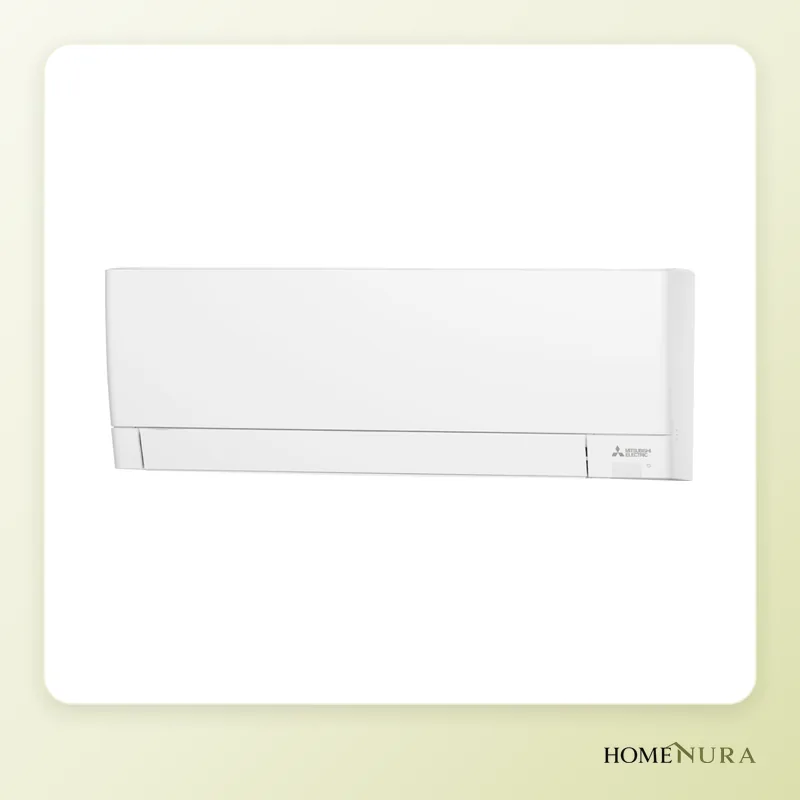
Mitsubishi Electric MSZ-AY35VGK
An inverter mini-split rated A+++ for cooling on the EU label, with a European SEER of 8.7, very quiet (18 dB(A)) and known for reliability under heavy summer use.
Photo: © Mitsubishi Electric
- View on Amazon →
Best value
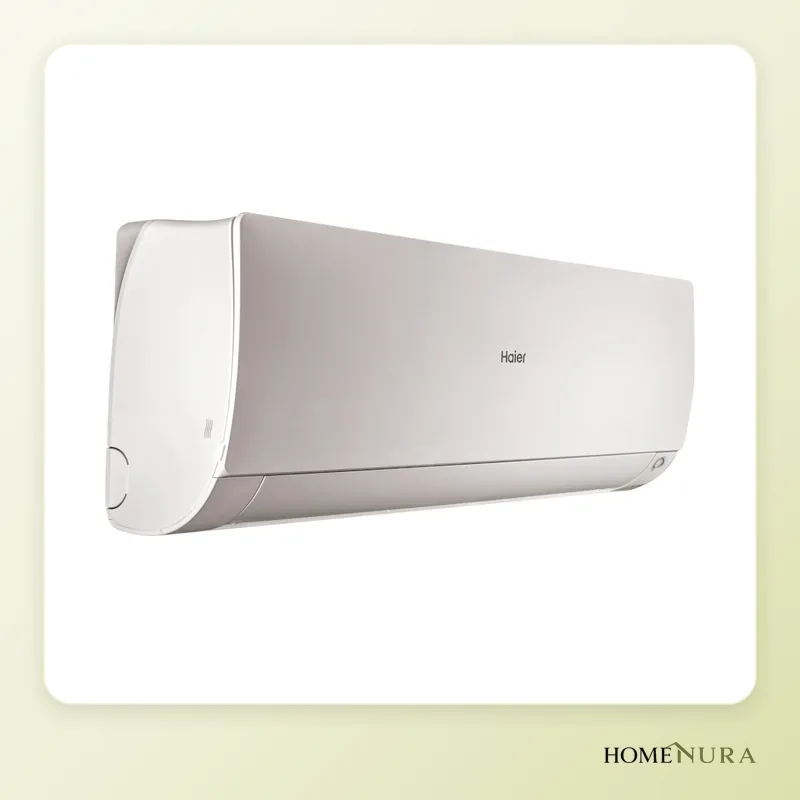
Haier Flexis Plus 3,5 kW
It delivers A+++ cooling on the EU label (European SEER 8.5) and built-in Wi-Fi at a midrange price.
Photo: © Haier
- View on Amazon →
Best for year-round heating
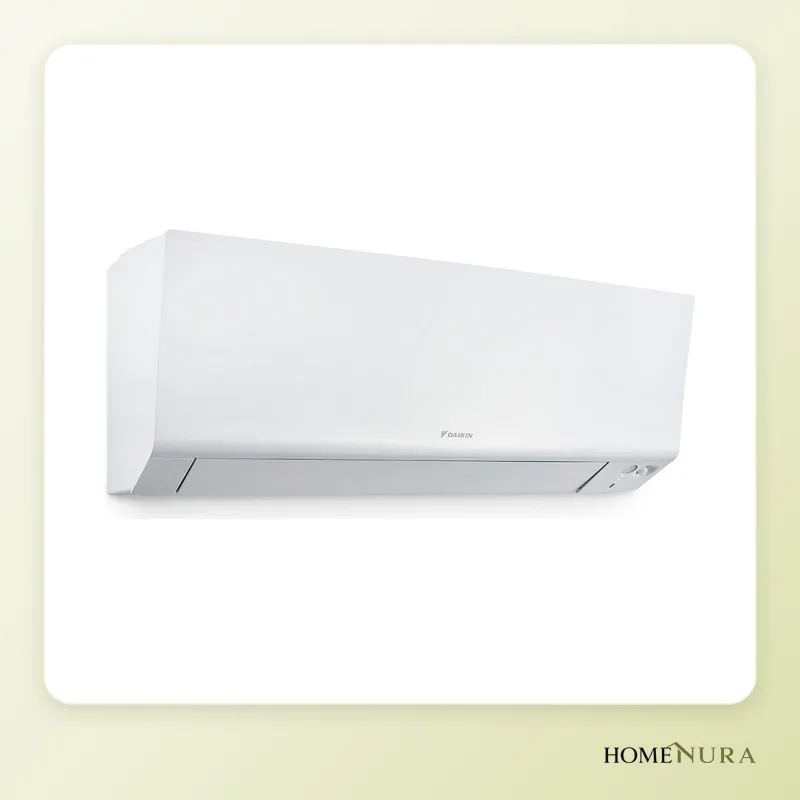
Daikin Perfera FTXM35R
The only model here rated A+++ for both cooling and heating on the EU label (SEER 8.65, SCOP 5.10), with heating down to −4°F (−20°C).
Photo: © Daikin


As an Amazon Associate I earn from qualifying purchases. Amazon affiliate links: we earn a commission at no extra cost to you.
The most energy-efficient air conditioner you can buy in 2026 is a wall-mounted inverter mini-split rated A+++ for cooling on the European energy label, with a SEER of 8.5 or higher, such as the Mitsubishi Electric MSZ-AY35VGK, the Haier Flexis Plus or the Daikin Perfera FTXM35R. If you also plan to heat with it in winter, check the SCOP: the Daikin Perfera is the only model in this roundup rated A+++ for heating too.
This comparison is based on manufacturers’ official spec sheets and energy labels, published independent reviews and verified owner feedback. We don’t take our own measurements: every efficiency figure quoted comes from manufacturer documentation or Eurovent certification. We focus on units of about 3.5 kW (12,000 BTU/h, or 1 ton), the most common size for a living room or a large bedroom.
How to spot an energy-efficient air conditioner
No air conditioner cools for free: moving heat from inside to outside always takes electricity. What sets an energy-efficient air conditioner apart is how little electricity it needs to deliver the same amount of cooling. Four things sum it up.
The energy label: one class for cooling, one for heating
For mini-splits up to 12 kW, the European energy label shows two separate classes, because a unit performs differently when cooling and when heating:
- Cooling class, based on SEER. A+++ requires a SEER of at least 8.5; A++ covers 6.1 to 8.5.
- Heating class, based on SCOP in the average climate zone. A+++ requires a SCOP of at least 5.1; A++ covers 4.6 to 5.1; A+ covers 4.0 to 4.6.
A common mistake is looking only at the cooling class. If the unit is a heat pump and you’ll use it in winter, the heating class matters just as much for your bill, often more, because heating hours usually far outnumber cooling hours. In the US, look for the yellow EnergyGuide label or Energy Star certification instead.
SEER and SCOP: efficiency over a whole season
SEER (Seasonal Energy Efficiency Ratio) tells you how much cooling the unit delivers per kWh of electricity over a typical summer. SCOP does the same for heating in winter. A SEER of 8.5 means the unit delivers, on average, 8.5 kWh of cooling for every kWh of electricity. Going from a SEER of 6.5 to 8.7 cuts cooling consumption by roughly a quarter for the same comfort. Keep in mind that these are European figures, a straight kWh-to-kWh ratio: they aren’t on the same scale as the SEER ratings on US spec sheets, which are expressed in BTU per watt-hour, so don’t compare the two directly.
Inverter technology: a must
An old single-speed unit runs the compressor at full power, shuts off once the room reaches the set temperature, then kicks back on at full blast. Inverter technology varies the compressor speed continuously: once the room is at temperature, the compressor slows down instead of stopping. The result is fewer power spikes, a steadier temperature and less noise. Every quality mini-split today uses an inverter, including all five in this comparison.
R-32 refrigerant
Current mini-splits use R-32, which has a global warming potential (GWP) of 675, versus 2,088 for the older R-410A. It transfers heat more effectively and needs a smaller charge. Every model in this roundup uses it.
Models mentioned in this guide
- LG DUALCOOL AI Air 3,5 kWView on Amazon →
- Daikin Sensira FTXF35EView on Amazon →
Photos: © Mitsubishi Electric, © Haier, © Daikin
As an Amazon Associate I earn from qualifying purchases. Amazon affiliate links: we earn a commission at no extra cost to you.
Mini-split or portable: the mini-split uses far less energy
For the same room, a ductless mini-split (a wall-mounted indoor unit with the compressor outside) is far more efficient than a single-hose portable unit. A portable keeps its compressor in the room, and its exhaust hose creates negative pressure that pulls warm outdoor air back in, so it needs considerably more electricity for the same cooling. Its label also uses a different scale, so a portable’s “A+++” isn’t comparable with a mini-split’s.
If you rent or can’t drill through an exterior wall, a portable is still a sensible option: the best ones are in our roundup of smart portable air conditioners, and if you’re not sure you need air conditioning at all, read our portable air conditioner vs. fan guide.
Choosing the right capacity: not too big, not too small
The wrong capacity wipes out much of the savings. An oversized unit spends most of its time at minimum output with short cycles; an undersized one runs flat out without ever reaching the set point. As a rough guide, plan on about 30 BTU/h of cooling per square foot (100 W per m²), with extra margin for a very sunny room, an attic room or large windows.
| Room size | Cooling capacity | Approximate equivalent |
|---|---|---|
| Bedroom: 110–160 sq ft (10–15 m²) | 2.5 kW | 9,000 BTU/h |
| Small living room: 160–270 sq ft (15–25 m²) | 3.5 kW | 12,000 BTU/h |
| Large living room: 270–375 sq ft (25–35 m²) | 5.0 kW | 18,000 BTU/h |
| Open-concept space: 375–540 sq ft (35–50 m²) | 7.0 kW | 24,000 BTU/h |
All five lines in this comparison come in several sizes; the figures given are for the roughly 3.5 kW version.
The 5 best energy-efficient air conditioners of 2026
1. Mitsubishi Electric MSZ-AY35VGK: best overall
Mitsubishi Electric’s AY line is a benchmark for efficiency in its class. The 3.5 kW version is rated at a SEER of 8.7 (A+++) and a SCOP of 4.7 (A++), uses R-32 and can heat at outdoor temperatures down to −4°F (−20°C). The indoor unit runs as quietly as 18 dB(A) on its lowest fan speed, very discreet for a bedroom. The “VGK” version includes the Wi-Fi interface for control through the MELCloud app.
- Pros: cooling efficiency among the highest on the market, quiet operation, a reputation for reliability and a wide installer network.
- Cons: only A++ for heating; priced at the premium end of the market.
- Best for: anyone who wants the biggest summer savings and a durable unit for heavy daily use.
2. Haier Flexis Plus 3.5 kW: A+++ for less
The Haier Flexis Plus (indoor unit AS35S2SF1FA) reaches a SEER of 8.5 (A+++) and a SCOP of 4.6 (A++) according to the manufacturer’s data, with an annual cooling consumption of 144 kWh on the label. It runs on R-32, has built-in Wi-Fi with the hOn app and stands out for its flat design in white, matte black or silver.
- Pros: A+++ cooling at a midrange price, attractive design, Wi-Fi as standard.
- Cons: SCOP slightly behind the Daikin Perfera; a smaller service network than the Japanese brands.
- Best for: buyers looking for the best balance of efficiency and price to cool a living room.
3. Daikin Perfera FTXM35R: best if you also heat with it
The Daikin Perfera (FTXM35R with the RXM35R9 outdoor unit) is the only model in this roundup rated A+++ for both cooling and heating: Eurovent certifies a SEER of 8.65 and a SCOP of 5.10, with 137 kWh a year for cooling, and it can heat with outdoor temperatures down to −4°F (−20°C). It’s controlled through Daikin’s Onecta app and includes the brand’s Flash Streamer air-purification technology.
- Pros: the best heating efficiency in this comparison, ideal as a room’s main heat pump; a leading air conditioning brand.
- Cons: the most expensive of the group; its edge over the Mitsubishi only really shows with heavy winter use.
- Best for: homes with cold winters, or anyone replacing electric heaters with an air-to-air heat pump.
4. LG DUALCOOL AI Air 3.5 kW: the smartest
The LG DUALCOOL AI Air is rated at a SEER of 7.6 and a SCOP of 4.6, which means A++ for both cooling and heating, with about 161 kWh a year for cooling on the label. Its headline feature is a radar sensor that detects whether people are in the room and where, to aim the airflow and adjust output, plus the Plasmaster Ionizer++ and control through the LG ThinQ app.
- Pros: smart features that avoid cooling an empty room, a good balance between cooling and heating, easy smart home integration.
- Cons: a lower SEER than the top three, so slightly higher summer consumption.
- Best for: anyone who wants a smart unit that saves through automation rather than headline efficiency alone.
5. Daikin Sensira FTXF35E: a major brand’s entry-level model
Sensira is Daikin’s entry-level line. The FTXF35E is rated at a SEER of 6.5 (A++) and a SCOP of 4.2 (A+), with 188 kWh a year for cooling on the label. It uses R-32 and benefits from Daikin’s support network, without the Perfera’s advanced features.
- Pros: the quality of a leading brand on a tighter budget, simple and dependable.
- Cons: the lowest efficiency in this roundup, especially for heating (A+).
- Best for: a bedroom or vacation home with moderate, mostly summer use.
Comparison table
| Model (3.5 kW) | Cooling: SEER (EU) / class | Heating: SCOP (EU) / class | Annual cooling use (label) | Best for |
|---|---|---|---|---|
| Mitsubishi Electric MSZ-AY35VGK | 8.7 / A+++ | 4.7 / A++ | ≈ 141 kWh | Maximum summer savings |
| Haier Flexis Plus 3.5 kW | 8.5 / A+++ | 4.6 / A++ | 144 kWh | A+++ at a midrange price |
| Daikin Perfera FTXM35R | 8.65 / A+++ | 5.10 / A+++ | 137 kWh | Year-round use, heating |
| LG DUALCOOL AI Air 3.5 kW | 7.6 / A++ | 4.6 / A++ | 161 kWh | Smart features |
| Daikin Sensira FTXF35E | 6.5 / A++ | 4.2 / A+ | 188 kWh | Tight budget, moderate use |
Manufacturer or Eurovent data for the roughly 3.5 kW version. The Mitsubishi figure is calculated with the label method (capacity × 350 h ÷ SEER).
Real-world consumption: how to read the kWh on the label
The annual cooling consumption on the label is calculated in a standard way: about 350 hours a year at full output, divided by the SEER. It’s meant for comparing models, not for predicting your exact bill. In hot climates, with long summers and a unit running most evenings, real consumption can be much higher; in a mild climate, lower.
To estimate your cost, multiply the kWh by your electricity rate and adjust for your hours of use. What matters is the relative gap: between the Daikin Sensira (188 kWh) and the Daikin Perfera (137 kWh), there are about 50 kWh a year for cooling alone, or about $10 at an example rate of 20 cents per kWh (check the rate on your utility bill). For heating, the gap is wider: according to the spec sheets, the Sensira is rated at about 867 kWh a year for heating versus 686 kWh for the Perfera, a difference of close to 180 kWh every winter (about $36 at the same example rate).
Mistakes that drive up consumption
- Setting the thermostat too low. Between 77 and 81°F (25 and 27°C) is a comfortable summer setting; energy-saving guides estimate that each 1°C (about 2°F) lower raises consumption by around 7 to 8%. Setting it to 64°F (18°C) doesn’t cool the room any faster; it just makes the unit work harder.
- Buying on price alone. A cheap unit with a low SEER costs little up front and more every summer.
- Oversizing the unit in the hope of better cooling: it causes short cycling and wastes the inverter advantage.
- Neglecting the filters. Dirty filters reduce airflow and make the unit strain. Clean them every few weeks during the cooling season.
- Cooling with doors and windows open or with full sun pouring in: close the blinds, shades or shutters during the hottest hours.
- Leaving it on in an empty house. Use scheduling or the app to turn it on shortly before you get home; our smart home energy-saving guide explains how to automate it.
A simple trick: pair the air conditioner with a ceiling fan or pedestal fan. The cooling effect of moving air lets you raise the set point by 2 to 4°F (1 to 2°C) without losing comfort.
Installation, maintenance and safety
A mini-split only delivers its rated efficiency if it’s installed properly. Refrigerant work is for certified technicians only (in Europe, under the EU F-gas rules), and the electrical hookup must meet your local building code: always have it installed by a licensed HVAC contractor, who will also give you the paperwork you need for the warranty. Models sold in Europe are built for 230 V, 50 Hz power, so check that the version on your Amazon store is designed for the US grid.
- Outdoor unit: in the shade if possible, with open airflow around it; boxed into a corner with no ventilation, it loses efficiency.
- Indoor unit: mounted high on the wall, away from heat sources and positioned to spread air across the room, without blowing straight at the bed or couch.
- Maintenance: regular filter cleaning and periodic professional service (heat exchangers, condensate drain, refrigerant leak check), especially in coastal or dusty areas.
- Approvals: check your HOA or condo association rules, your lease and any local requirements before mounting an outdoor unit on an exterior wall.
The bottom line
For most homes, the Mitsubishi Electric MSZ-AY35VGK is the best all-around energy-efficient air conditioner: A+++ for cooling, very quiet and known for reliability. The Haier Flexis Plus offers the same A+++ cooling class for less money, and the Daikin Perfera FTXM35R is the logical choice if you’ll heat with it too, thanks to its double A+++. The LG DUALCOOL AI Air stands out for its automation, and the Daikin Sensira is enough for moderate use on a tight budget. Whichever you choose, a good installation, a sensible set point and clean filters matter as much as the label.
Frequently asked questions
How much electricity does an energy-efficient air conditioner use?
What does A+++ mean on an air conditioner?
What temperature should I set my AC to save energy?
What size air conditioner do I need for my room?
Mini-split or portable air conditioner: which uses less energy?
Can I install a mini-split air conditioner myself?
From our complete guide
Comfort & Air Quality →Our recommendations
- LG DUALCOOL AI Air 3,5 kWView on Amazon →
- Daikin Sensira FTXF35EView on Amazon →
Photos: © Mitsubishi Electric, © Haier, © Daikin
As an Amazon Associate I earn from qualifying purchases. Amazon affiliate links: we earn a commission at no extra cost to you.


