Portable Air Conditioner vs. Fan (2026): Which Should You Buy?
Portable air conditioner, fan or evaporative (swamp) cooler? How each one works, energy use, noise and installation, plus five real models compared, so you can choose based on how hot it gets, the room and your home.

Quick answer
Portable air conditioner or fan: which should you buy in 2026?
- View on Amazon →
Best for heat waves
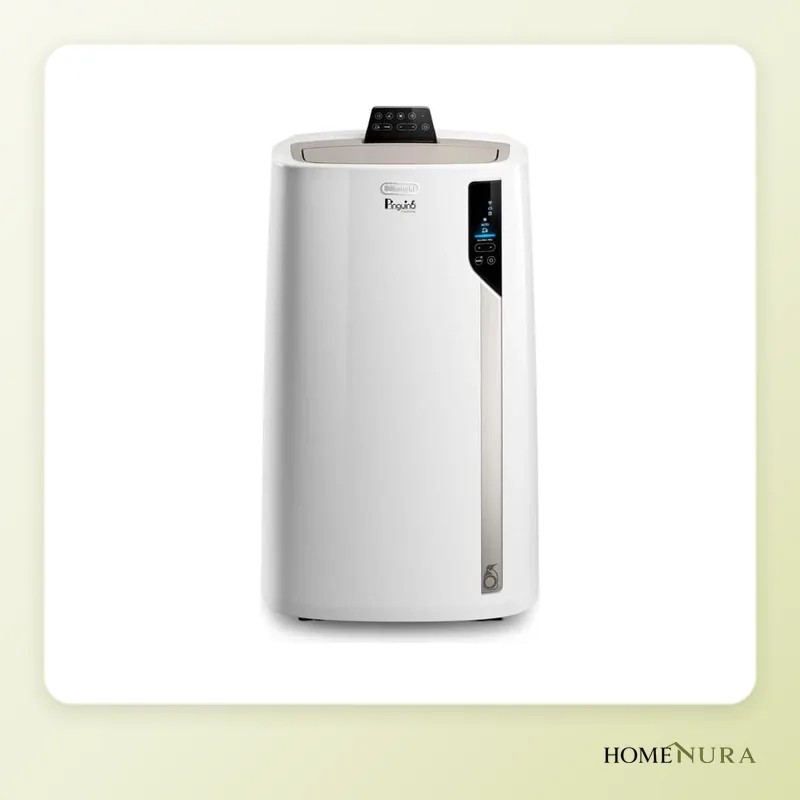
De'Longhi Pinguino PAC EL112 CST WiFi
Only an air conditioner actually brings the temperature down: this 11,000 BTU/h single-unit portable, rated A+ on the EU label, runs from an app, Alexa or Google.
Photo: © De'Longhi
- View on Amazon →
Best value
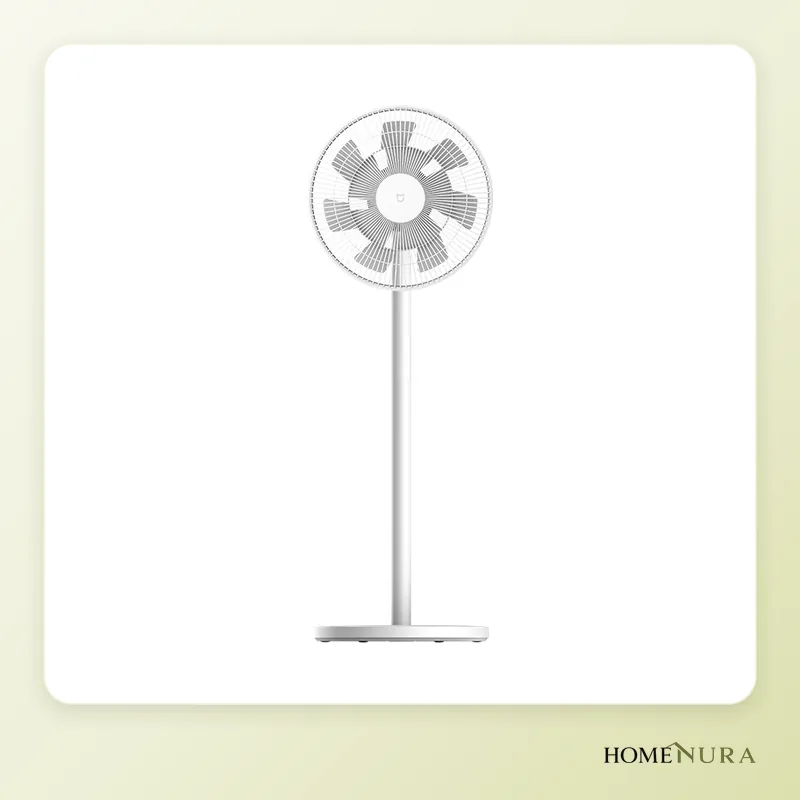
Xiaomi Smart Standing Fan 2 Pro
For milder summers, this 24 W DC-motor pedestal fan stays quiet, uses very little power and runs from an app, with no installation needed.
Photo: © Xiaomi
- View on Amazon →
Quietest for bedrooms
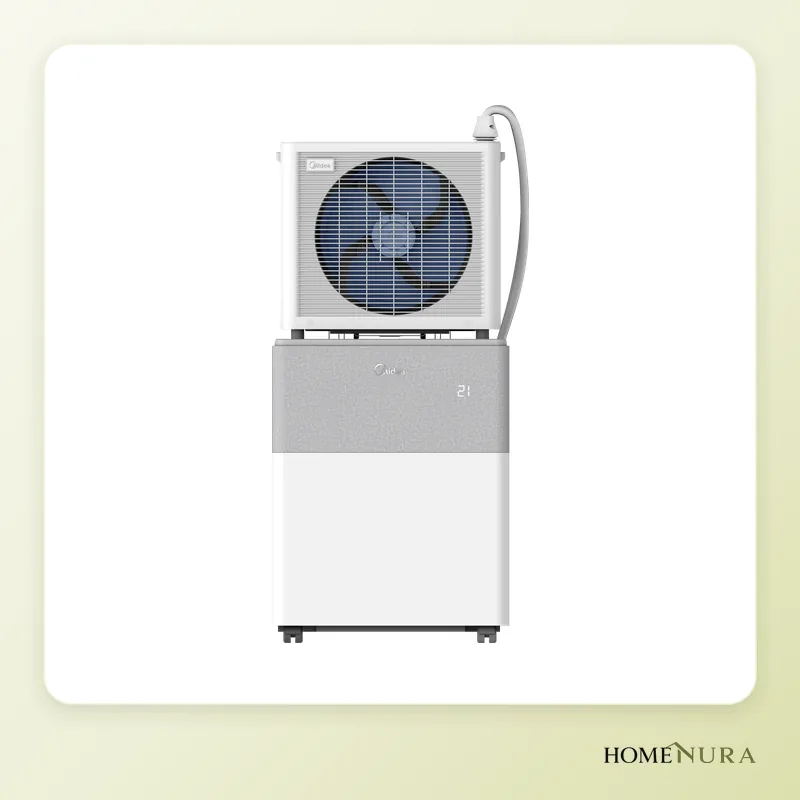
Midea PortaSplit
Its compressor stays outside, so it really cools (12,000 BTU/h) with indoor noise rated from as low as 39 dB(A), and it installs without drilling.
Photo: © Midea


As an Amazon Associate I earn from qualifying purchases. Amazon affiliate links: we earn a commission at no extra cost to you.
A portable air conditioner is the only one of the two that actually lowers a room's temperature; a fan just moves air around to make you feel cooler. If the heat stays moderate (up to roughly 86 to 90°F, or 30 to 32°C, indoors), a good fan is enough and uses very little power; during heat waves or in an attic bedroom, only a portable air conditioner brings real relief.
This comparison is based on manufacturer specs, independent reviews and verified owner reviews. It explains how each device works, what to check before you buy, and five current models sold in Europe. For more options, see our portable air conditioner picks and our fan picks.
How each device works
The portable air conditioner
A single-unit portable air conditioner works like a refrigerator: a compressor circulates refrigerant that absorbs heat from the room and pushes it outside through an exhaust hose run out a window. It cools the air, dehumidifies it along the way and lets you set a target temperature. The trade-offs: high power use, compressor noise and a hose to install.
There are also portable "split" air conditioners (such as the Midea PortaSplit): the compressor sits in an outdoor unit on the balcony or windowsill, which makes them much quieter inside the room.
The fan
A fan doesn't change the air temperature. The airflow speeds up the evaporation of sweat on your skin, which feels cooler. That works as long as the room air is clearly cooler than your body. When it's very hot, above roughly 95°F (35°C), it simply pushes hot air around. Recent DC-motor (direct current) models are especially energy-efficient and quiet.
The evaporative cooler
Somewhere in between, an evaporative cooler (often called a swamp cooler) blows air through a wet pad. Evaporation slightly lowers the temperature of the air it blows out, but raises the humidity in the room. It works well in dry climates and well-ventilated rooms, much less in humid ones. It's no substitute for an air conditioner during a heat wave.
Models mentioned in this guide
- Rowenta Turbo Silence Extreme+View on Amazon →

Photos: © De'Longhi, © Xiaomi, © Midea, © Duux
As an Amazon Associate I earn from qualifying purchases. Amazon affiliate links: we earn a commission at no extra cost to you.
Comparison table: portable AC, fan, evaporative cooler
| Criterion | Portable AC | Fan | Evaporative cooler |
|---|---|---|---|
| Actually lowers the temperature | Yes | No (only feels cooler) | Slightly, mostly in dry air |
| Typical power draw | About 800 to 1,400 W | About 2 to 80 W | About 60 to 150 W |
| Noise | High (except split models) | Low to moderate | Moderate |
| Installation | Window hose (or outdoor unit) | None | None, water tank to refill |
| Effect on humidity | Dehumidifies | None | Adds humidity |
| Useful in a heat wave | Yes | Limited | Limited, especially in humid air |
| Weight | Heavy (often over 55 lb, or 25 kg) | Light | Medium |
How to choose
1. How much heat you need to fight
This is the deciding factor. In a home that stays below 86°F (30°C), a well-placed fan is often enough, especially at night. In a top-floor apartment, a west-facing bedroom or during back-to-back heat waves, only an air conditioner truly brings the temperature down and lets you sleep properly.
2. Room size and cooling capacity
Air conditioner capacity is listed in BTU/h or kW. Typical guidance used by manufacturers:
| Room size | Suggested capacity |
|---|---|
| Up to 160 sq ft (15 m²) | 7,000 to 9,000 BTU/h |
| 160 to 270 sq ft (15 to 25 m²) | 9,000 to 12,000 BTU/h |
| 270 to 430 sq ft (25 to 40 m²) | 12,000 to 14,000 BTU/h |
A room with lots of glass, right under the roof or in full sun needs extra headroom. An undersized unit runs nonstop without reaching the set temperature.
3. Energy use
The gap is huge. A 1,000 W portable air conditioner running for 8 hours uses about 8 kWh a day. A 24 W DC fan over the same period uses about 0.2 kWh, roughly 40 times less. At an example rate of 20 cents per kWh, that's about $1.60 versus about 4 cents a day (check the rate on your utility bill). For an air conditioner, check the energy class and the stated hourly consumption; for a fan, go for a DC motor.
4. Noise
A single-unit portable is noisy because its compressor sits in the room. For a bedroom, compare the stated sound pressure in night mode, or consider a split model with the compressor outside. The best DC fans are almost silent at their lowest setting.
5. Your home and window
A portable air conditioner needs an opening for its hose. Check your window type (casement, sliding or double-hung, skylight) and whether a sealing kit is included. Renters who can't drill should pick a no-drill kit. A fan just plugs in anywhere.
6. Smart features
App control lets you start the air conditioner before you get home and schedule it to switch off automatically at night. App control and Alexa or Google Assistant support are now common on fans too, even entry-level ones.
Models worth considering in 2026
De'Longhi Pinguino PAC EL112 CST WiFi: the versatile portable AC
This single-unit air conditioner is rated at 11,000 BTU/h and energy class A+ on the EU label, and it uses R290 refrigerant. It can be controlled from the De'Longhi app and works with Alexa and Google Assistant. It also has dehumidify and fan-only modes.
- Pros: good efficiency for a single-unit model, remote control, a full set of settings.
- Cons: hose to install, about 73 lb (33 kg), compressor noise like any single-unit portable.
- Best for: cooling a midsize room during heat waves, with remote control from your phone.
Midea PortaSplit: the quietest option for a bedroom
The PortaSplit separates the indoor unit from the compressor, which sits outside. Midea quotes 12,000 BTU/h (3.5 kW), A++ cooling efficiency, a heating mode and indoor noise from 39 dB(A) in silent mode. The refrigerant circuit is sealed at the factory, so you don't need an HVAC technician; it fits through a sliding window, a skylight or a balcony door without drilling.
- Pros: much quieter than a single-unit portable, efficient, heats as well as cools.
- Cons: bulkier setup, outdoor unit to place, premium tier.
- Best for: a bedroom where a standard air conditioner would be too noisy to sleep.
Xiaomi Smart Standing Fan 2 Pro: the smart, energy-sipping fan
This 24 W DC-motor pedestal fan offers a very wide range of speeds, 140° side-to-side oscillation, the Xiaomi Home app and Alexa and Google Assistant support. Xiaomi also lists a built-in battery for a few hours of cordless use.
- Pros: very low power use, very quiet at low speed, easy to move.
- Cons: doesn't cool the air, louder at full speed.
- Best for: mild summers, tight budgets and renters who can't run a hose out a window.
Rowenta Turbo Silence Extreme+: the classic, powerful pedestal fan
This pedestal fan is all about airflow, with five speeds, a remote control, a timer and a night mode that gradually lowers the speed. Rowenta quotes 35 dB(A) at the lowest speed.
- Pros: strong airflow, simple to use, widely available in Europe.
- Cons: conventional motor that uses more power than a DC model, no app.
- Best for: a living room or large room that needs plenty of air without smart features.
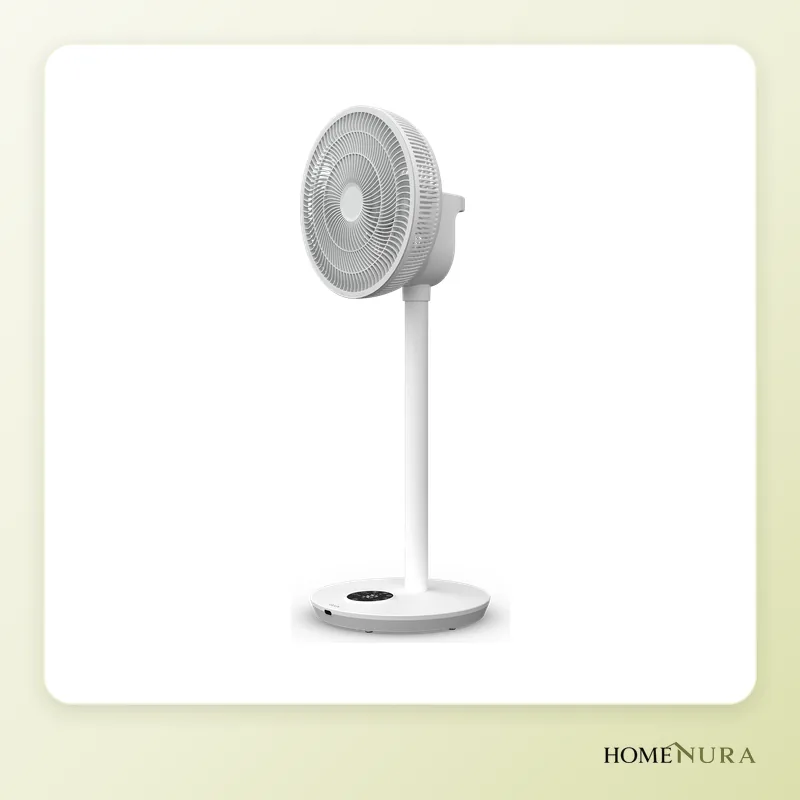
Duux Whisper Flex 2 Smart: the premium smart fan
This convertible DC fan (floor-standing or tabletop) offers many speeds, side-to-side and up-and-down oscillation, the Duux app and Alexa and Google Assistant support. An optional battery lets you use it cordless.
- Pros: very quiet at low speed, fine control, well designed.
- Cons: pricier than a basic fan, battery sold separately.
- Best for: bedrooms and home offices, where quiet and ease of use come first.
Model table
| Model | Type | Key spec | Smart features | Best for |
|---|---|---|---|---|
| De'Longhi Pinguino PAC EL112 CST WiFi | Single-unit portable AC | 11,000 BTU/h, class A+ | Wi-Fi, Alexa, Google | Heat waves, midsize room |
| Midea PortaSplit | Portable split AC | 12,000 BTU/h, from 39 dB(A) indoors | Wi-Fi | Bedroom, low noise |
| Xiaomi Smart Standing Fan 2 Pro | DC pedestal fan | 24 W, built-in battery | Wi-Fi, Alexa, Google | Mild summers, tight budget |
| Rowenta Turbo Silence Extreme+ | Pedestal fan | 5 speeds, 35 dB(A) minimum | Remote control | High airflow |
| Duux Whisper Flex 2 Smart | Convertible DC fan | 2-axis oscillation | Wi-Fi, Alexa, Google | Bedroom, office |
Mistakes to avoid
- Running an air conditioner without venting the hot air: without a hose to the outside, the heat goes straight back into the room.
- Leaving the window wide open around the hose: hot air flows right back in. Use a sealing kit.
- Undersizing the unit: it runs constantly without reaching the target temperature.
- Setting the temperature too low: a few degrees below the outdoor temperature is enough for comfort and keeps energy use down.
- Relying on an evaporative cooler in a humid climate: it adds moisture and quickly gets uncomfortable.
- Pointing a fan at your face all night: it can dry out your eyes and throat. Use oscillation and a low speed.
Installation, use and safety
- Plug an air conditioner directly into a suitable wall outlet, not into a power strip or a light-duty extension cord. Models sold in Europe are built for 230 V; check that the version on your Amazon store is rated for 120 V.
- Leave the clearance the manufacturer recommends around the unit and empty the condensate tank if it has one.
- Close doors, curtains and blinds on the sunny side during the day: it reduces the load on the air conditioner and the heat you feel with a fan.
- For R290 (propane) models, follow the minimum room size stated in the manual.
- Clean the air conditioner's filters and the fan's blades and grilles regularly.
To compare more app-controlled units, read our smart portable air conditioner comparison. For fans, see our smart fan comparison.
The bottom line
To get through heat waves: the De'Longhi Pinguino PAC EL112 CST WiFi is a complete, efficient single-unit air conditioner you can control remotely.
For a tight budget and mild summers: the Xiaomi Smart Standing Fan 2 Pro keeps you feeling cool on very little power and needs no installation.
For a bedroom where noise matters: the Midea PortaSplit genuinely cools while keeping the compressor outside.
The smartest setup is often a good fan for most days and a portable air conditioner saved for the hottest stretches.
Frequently asked questions
Can a fan replace a portable air conditioner?
How much electricity does a portable AC use compared with a fan?
Can you use a portable AC without an exhaust hose?
What's the quietest way to stay cool while you sleep?
Is an evaporative (swamp) cooler a good alternative?
What size AC do I need for a 160 sq ft bedroom?
From our complete guide
Comfort & Air Quality →Our recommendations
- Rowenta Turbo Silence Extreme+View on Amazon →
Photos: © De'Longhi, © Xiaomi, © Midea, © Duux
As an Amazon Associate I earn from qualifying purchases. Amazon affiliate links: we earn a commission at no extra cost to you.

