Portable Air Conditioner Without a Hose (2026): Truth, Limits and What to Buy
The truth about portable air conditioners without a hose: evaporative coolers vs. real air conditioning, who each one suits, power use, common formats and a full comparison table.

Portable air conditioner without a hose: the truth before you buy
If you've searched for a portable air conditioner without a hose, you've probably seen dozens of devices promising instant cold air with no installation. Before you spend a dollar, here's an uncomfortable truth: a real air conditioner — one that actually cools a room the way a mini-split does — has to push hot air outside. That's physics, not marketing. That's why almost everything sold as a "ventless" or "hoseless" air conditioner isn't an air conditioner at all. It's an evaporative cooler, often called a swamp cooler.
This guide explains honestly what to expect from each type of device, who each one suits and where it falls short, so you don't buy what you think is a budget mini-split and end up with a fan that uses water. For the bigger picture, read our portable AC vs. fan vs. evaporative cooler comparison.
Models mentioned in this guide
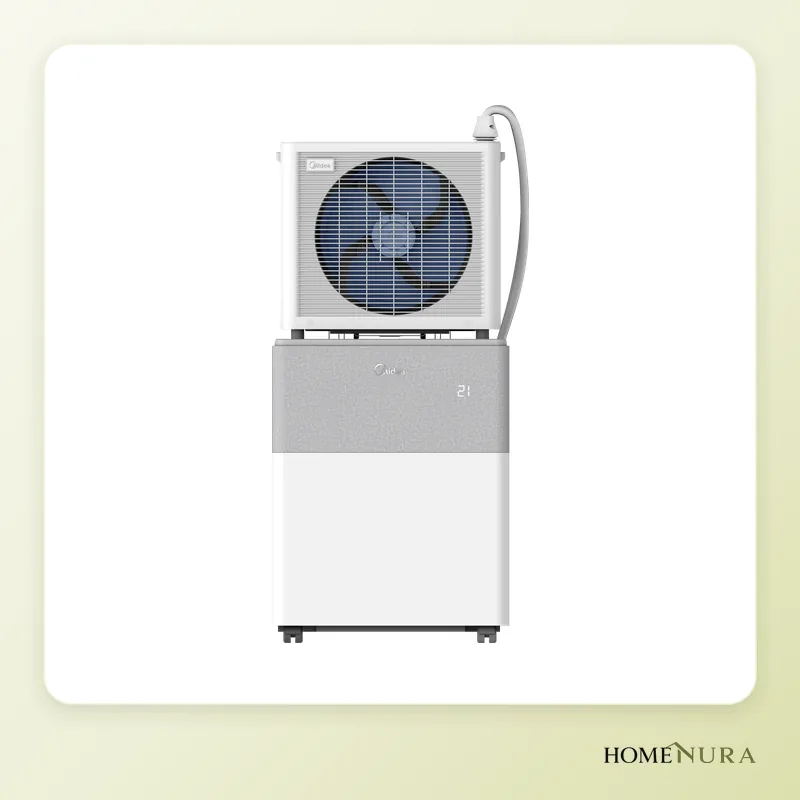
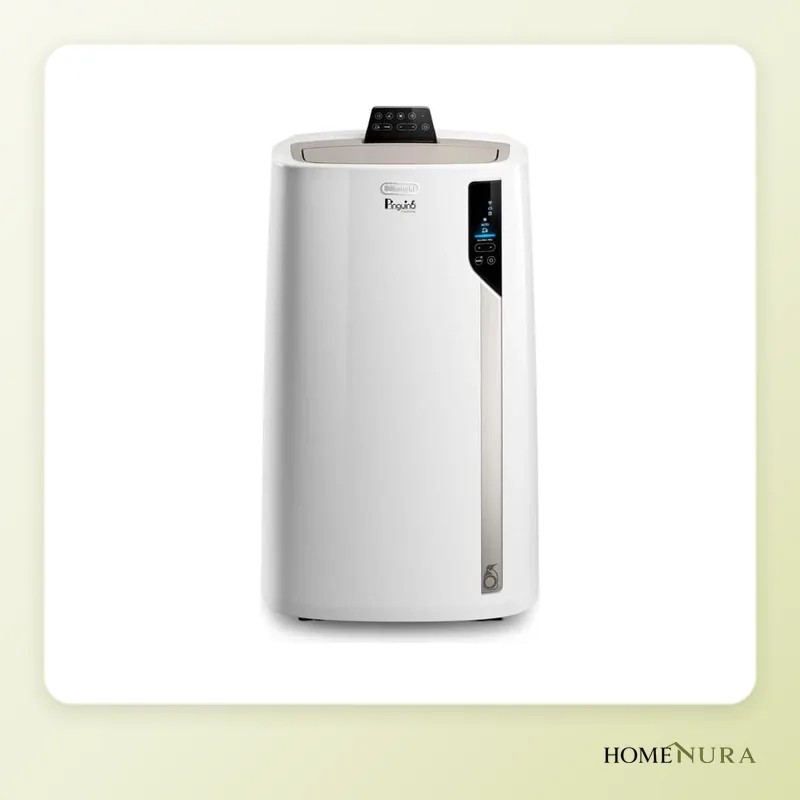
- Cecotec EnergySilence 1040 SmartExtremeView on Amazon →
- Rowenta Turbo Silence Extreme+View on Amazon →
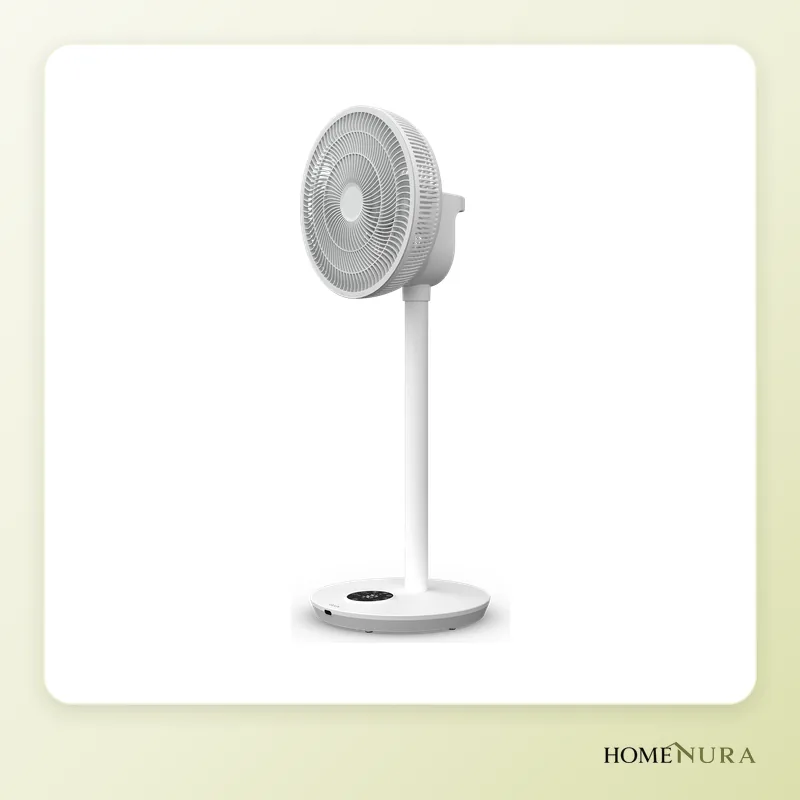


Photos: © Midea, © De'Longhi, © Duux
As an Amazon Associate I earn from qualifying purchases. Amazon affiliate links: we earn a commission at no extra cost to you.
Why a real air conditioner always has to vent
A compressor-based AC doesn't "make" cold; it moves heat from one place to another. It pulls heat out of the air in your room and dumps it outdoors. That heat has to go somewhere: outside, through the exhaust hose of a portable unit or the outdoor unit of a mini-split.
Without a hose, the heat it removes stays in the same room. The temperature doesn't drop; it can even creep up, because the compressor draws electricity that also ends up as heat. So any promise of a "real hose-free portable AC that cools like a mini-split" is simply false.
That doesn't make hose-free devices a scam: they do something different, and it's useful as long as you understand the limits.
Another common mix-up: tower fans with a mister and little USB desk gadgets aren't air conditioners either. They cool you with air moving across your skin or a fine water mist, but they don't lower the actual air temperature in the room. If the thermometer hasn't moved after an hour, you're getting a feeling of freshness, not real cooling.
What an evaporative cooler really is
The evaporative cooler is the device that genuinely works without a hose and without installation. The principle is a natural one: water absorbs heat as it evaporates.
Inside, there's a water tank and a wet honeycomb pad. A fan pushes hot, dry air through the pad. Some of the water evaporates and cools the air, typically by 5 to 11°F (3 to 6°C) in good conditions.
- No installation: plug it in, add water, done. No hose, no hole in the wall.
- Low power draw: 60–150 W, versus 800–1,400 W for a real portable AC.
- Truly portable: 13–26 lb (6–12 kg), usually on casters.
- Adds moisture to the air: pleasant in very dry climates.
Its big limitation: humidity
An evaporative cooler only works well in dry air. The drier the air, the more water it can evaporate and the more it cools. Above 60–70% humidity, the air is close to saturated and cooling falls off sharply, while the device keeps adding moisture and makes the room feel even muggier. It's ideal in dry climates and disappointing in humid coastal areas.
A simple rule of thumb: check the average relative humidity on summer afternoons where you live. Below 45%, a cooler works well; between 45% and 60%, it gives moderate relief; above 60%, you'll barely notice a difference.
Single-unit portable ACs: how they handle hot air
Another category is sometimes confusingly marketed as "hose-free": the single-unit portable AC. It does have a compressor and it does cool, but it still has to vent hot air. The difference is in how:
- Single-hose portable AC: one flexible hose vents hot air through a slightly open window fitted with a window kit. This is the truly portable option that actually cools.
- Dual-hose models: more efficient because they pull in outside air to cool the compressor, but they still need a window outlet.
- Mislabeled "hose-free" models: often evaporative coolers in disguise. Check the spec sheet: no compressor, no refrigerant and no BTU rating means it's a cooler.
The most reliable clue is the BTU rating. A real room AC usually lists 7,000 to 12,000 BTU and draws several hundred watts. A cooler never lists BTU, because it has no compressor.
Comparison table: evaporative cooler vs. portable AC vs. fan
| Criterion | Evaporative cooler | Portable AC (with hose) | Fan |
|---|---|---|---|
| Real cooling | Yes, in dry air (5–11°F cooler) | Yes, always (9–22°F cooler) | No (only feels cooler) |
| Hose / installation | No | Yes (window vent) | No |
| Power | 60–150 W | 800–1,400 W | 30–75 W |
| Daily use (8 hr)* | 0.5–1.2 kWh | 6–11 kWh | 0.2–0.6 kWh |
| Noise | 40–55 dB | 50–65 dB | 30–55 dB |
| Weight | 13–26 lb (on casters) | 55–88 lb | 4–13 lb |
| Humidity | Adds moisture | Dehumidifies | No effect |
| Heat wave, 104°F+ | Only if the air is dry | Yes | Not enough |
*Calculated at rated power for 8 hours. A compressor that cycles on and off uses somewhat less; figures vary by model and hours of use.
Who each option suits
- Evaporative cooler: dry climates, homes where you can't install anything (rentals, strict condo or HOA rules), the lowest running costs, cooling one specific spot.
- Portable AC with hose: guaranteed cooling even in a heat wave, humid regions, a window you can vent through, a need to dehumidify.
- Fan: moderate heat (rarely above about 90°F, or 32–33°C), maximum portability, minimal power use. See our smart fan comparison.
Common formats
- Compact desktop cooler: creates a personal bubble of cool air, not a cool room.
- Tower cooler with a large tank: a 1.6- to 2.6-gallon (6–10 L) tank, several fan speeds, often a timer and remote. The most balanced format for dry climates.
- Cooler with ice packs: boosts the effect for a few hours, but still depends on dry air.
- Single-unit portable AC (with hose): the only one that truly cools without any construction work, in exchange for a hose out the window and high power use.
On an evaporative cooler's spec sheet, look at three things: tank capacity (1.6 gallons, or 6 L, or more for a bedroom), airflow in CFM or m³/h and a timer, which lets you cool the bedroom before bed without running the unit all night. Be wary of tiny devices that claim to cool an entire room.
Tips to get the most from a hose-free device
- Fill the tank with cold water or add ice.
- Keep blinds closed during the day and open the windows at night.
- Place the device close to you and aim the airflow where you sit.
- Clean the filter and tank to prevent mold and odors; empty the tank when you're not using it.
- Track temperature and humidity with an indoor air quality monitor.
The bottom line
No hose-free portable air conditioner cools like a mini-split — physics won't allow it. But an evaporative cooler is a no-installation, low-power option that genuinely cools the air when it's dry. In humid regions, or if you need guaranteed cooling, choose a portable AC with a hose or a powerful fan.
Frequently asked questions
Are there truly hose-free portable air conditioners?
What's the difference between an evaporative cooler and an air conditioner?
Does an evaporative cooler work in my climate?
How much power does an evaporative cooler use compared with an air conditioner?
Can I use a portable AC without venting the hose out a window?
From our complete guide
Comfort & Air Quality →Our recommendations
- Cecotec EnergySilence 1040 SmartExtremeView on Amazon →
- Rowenta Turbo Silence Extreme+View on Amazon →
Photos: © Midea, © De'Longhi, © Duux
As an Amazon Associate I earn from qualifying purchases. Amazon affiliate links: we earn a commission at no extra cost to you.

