Best Smart Washers of 2026: 6 Models Compared (Bosch, Miele, Samsung…)
Which smart washer should you buy in 2026? Bosch Series 8, Siemens iQ700, Miele W1, Samsung Bespoke AI, LG and Haier compared on the EU A–G energy label, capacity, spin, noise, auto-dosing, steam, apps and washer-dryer combos.

Quick answer
What is the best smart washer in 2026?
- View on Amazon →
Best overall
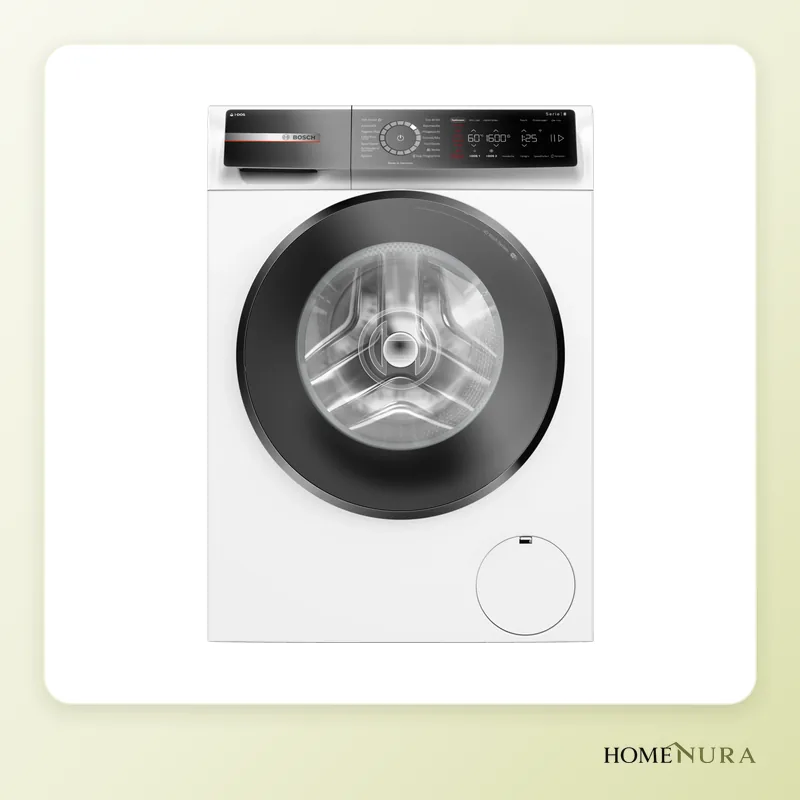
Bosch Serie 8 WGB256A40
10 kg (22 lb), EU energy class A, 1,600 rpm spin, i-DOS automatic detergent dosing and a full-featured Home Connect app.
Photo: © Bosch
- View on Amazon →
Best value
Haier I-Pro Series 7 HW100-B14979
A smart 10 kg (22 lb), EU energy class A washer with the hOn app, a quiet Direct Motion motor and a Refresh steam program.
- View on Amazon →
Best washer-dryer combo
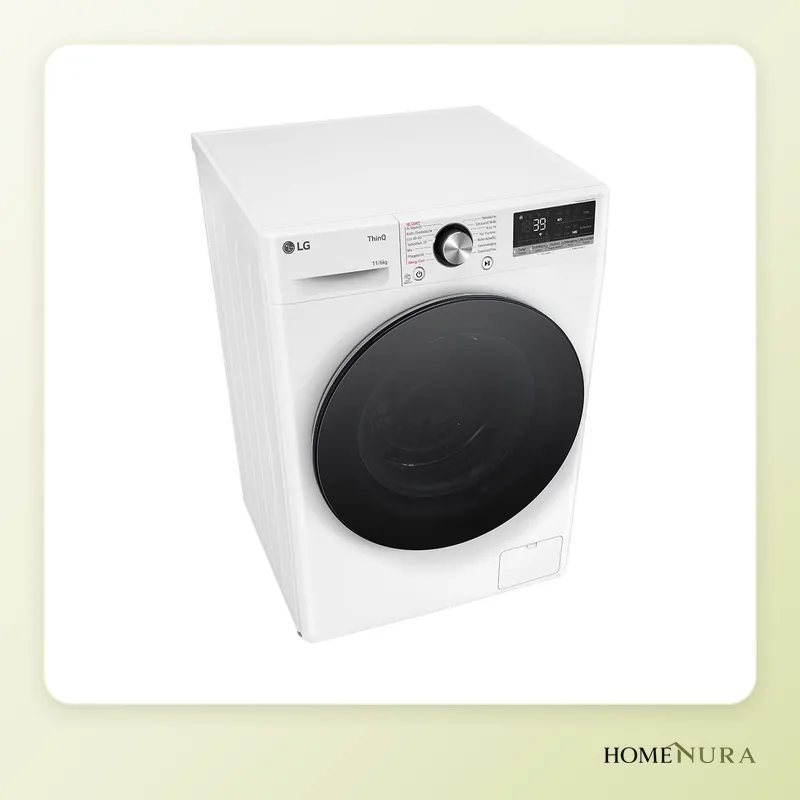
LG W4WR70E6Y
Washes 11 kg (24 lb) and dries 6 kg (13 lb) in a single footprint, with an AI DD motor, steam and the LG ThinQ app.
Photo: © LG


As an Amazon Associate I earn from qualifying purchases. Amazon affiliate links: we earn a commission at no extra cost to you.
For most households, the best smart washer in 2026 is the Bosch Series 8 WGB256A40: a 10 kg (22 lb) capacity, energy class A, a 1,600 rpm spin, i-DOS automatic dosing and a full-featured Home Connect app. On a tighter budget, the Haier I-Pro Series 7 HW100-B14979 delivers 10 kg (22 lb), class A and the hOn app, and if you have no room for a separate dryer, the LG W4WR70E6Y washer-dryer combo (11 kg wash / 6 kg dry) is the most sensible pick.
This comparison is based on manufacturer spec sheets, the EU energy label and verified owner feedback. It covers six models sold in Europe from Bosch, Siemens, Miele, Samsung, LG and Haier, and helps you decide between a washer-dryer combo and a washer paired with a separate dryer. You'll find all the models in our smart washers section.
The criteria that really matter
The EU energy label (A to G)
Since March 2021, washing machines sold in the EU have been rated on an A to G scale, without the old "A+++" grades. The class is based on the Eco 40-60 program, and the label shows weighted consumption in kWh per 100 cycles, water per cycle, rated capacity, Eco program duration, spin-drying efficiency class and noise level. Every model here is class A for washing, but the gap is still real: from 32 kWh per 100 cycles for the Samsung to 51 kWh for the Bosch. Brands often write this as "A -20%" or "A -40%" to mean 20% or 40% below the class A threshold. In the US, look for the yellow EnergyGuide label or Energy Star certification instead; the two systems can't be compared directly.
A washer-dryer combo's label shows two classes: one for washing only and one for the full wash-and-dry cycle. The second is almost always much weaker (often D or E).
Capacity in kg
Rated capacity (9, 10 or 11 kg, about 20 to 24 lb) applies to cotton on the standard cycle. European washers are rated by the weight of dry laundry they take, not by drum volume in cubic feet like US models, so one figure doesn't convert into the other. One or two people will manage with 8 to 9 kg (18 to 20 lb); for a family of four or more, 10 to 11 kg (22 to 24 lb) lets you wash a comforter or combine loads. Synthetic and delicate cycles take far less than the headline figure.
Spin speed and spin class
A 1,400 rpm spin is enough in most cases. The 1,600 rpm of the Bosch and Miele leaves a little less water in the laundry, which shortens drying time, mainly useful if you use a dryer afterward. The spin-drying efficiency class (A to G) on the label tells you more than the rpm figure alone.
Noise
The label gives spin noise in dB(A), with a class from A to D. Between 69 and 74 dB the difference looks small, but the scale is logarithmic: 3 dB more is roughly twice the sound energy. If the machine sits in an open-concept kitchen or near a bedroom, aim for noise class A.
Auto-dosing and steam
Automatic dosing (i-DOS at Bosch, i-Dos at Siemens, TwinDos at Miele, Auto Dose at Samsung) draws from a liquid detergent reservoir and doses according to the load and, on some models, how dirty it is. In practice, you top up the reservoir every few weeks and avoid overdosing, which wastes detergent and leaves residue. Steam is mostly for reducing wrinkles, refreshing lightly worn clothes and running hygiene cycles for allergy sufferers. It's a bonus, not a deal-breaker.
What is the app actually useful for?
The app doesn't wash any better, but it does a few genuinely useful things:
- End-of-cycle notification: the most used feature, so damp laundry doesn't sit in the drum.
- Delay start and remote start: handy for running the machine during off-peak hours on a time-of-use rate plan or when your solar panels are producing. The laundry must be loaded beforehand.
- Extra downloadable cycles (down jackets, shirts, activewear, depending on the brand).
- Water and energy tracking, plus detergent level alerts on auto-dosing models.
- Diagnostics: error codes explained and maintenance tips (filter and drum cleaning).
Ecosystems differ: Home Connect for Bosch and Siemens, the Miele app, SmartThings for Samsung, LG ThinQ and hOn for Haier. If you already own other appliances from one brand, staying in the same ecosystem makes life easier.
Models mentioned in this guide
- Haier I-Pro Series 7 HW100-B14979View on Amazon →
- Siemens iQ700 WG44B2A40View on Amazon →
- Miele WWR 860 WPSView on Amazon →
Photos: © Bosch, © LG
As an Amazon Associate I earn from qualifying purchases. Amazon affiliate links: we earn a commission at no extra cost to you.
The 6 best smart washers in 2026
1. Bosch Series 8 WGB256A40: best overall
The Bosch Series 8 WGB256A40 is a 10 kg (22 lb) front-loader with a spin of up to 1,600 rpm, energy class A (51 kWh per 100 cycles) and spin class A. Its i-DOS with detergent scan doses water and detergent automatically, and the Home Connect app makes the initial dosing setup simple. Iron Assist uses steam to cut wrinkles by up to 50% according to Bosch, and Home Connect adds extra cycles such as down and shirts.
Pros: large capacity, very efficient spin, precise auto-dosing, mature app.
Cons: 74 dB(A) on spin (noise class B), louder than the Siemens or Samsung; slightly higher energy use than the best class A machines.
Best for: families who want a complete, dependable appliance that fits neatly into a smart home.
2. Siemens iQ700 WG44B2A40: the most frugal BSH model
A technical sibling of the Bosch, the Siemens iQ700 WG44B2A40 offers 9 kg (20 lb), 1,400 rpm and an A -20% rating (40 kWh per 100 cycles). It includes i-Dos with detergent scan, speedPack XL to speed up cycles (down to a 15-minute wash) and smartFinish, which reduces wrinkles by up to 50% according to Siemens. At 70 dB(A), it's in noise class A.
Pros: quieter and more economical than the Bosch, same Home Connect app.
Cons: 1 kg (2.2 lb) less capacity, spin limited to 1,400 rpm (spin class B).
Best for: couples and small families, especially when the machine is close to living areas.
3. Miele WWR 860 WPS: the long-lasting premium choice
The Miele WWR 860 WPS (W1 line) offers 9 kg (20 lb), 1,600 rpm and class A (49 kWh per 100 cycles). Its TwinDos system is designed for Miele UltraPhase 1 and 2 cartridges, a two-part detergent released at different stages of the cycle. You also get QuickPowerWash (up to 4 kg, about 9 lb, in 49 minutes), the honeycomb drum that's gentle on fabrics, the WaterProof leak protection system and a Wi-Fi connection to the Miele app.
Pros: the brand's reputation for longevity, excellent fabric care, built-in leak protection.
Cons: a premium model, and TwinDos works best with Miele's own cartridges, which raises the cost per load.
Best for: buyers who want a machine for the long haul and often wash delicate fabrics.
4. Samsung WW11DB8B95GB Bespoke AI: the most energy-efficient
The Samsung WW11DB8B95GB from the Bespoke AI Series 8 line combines 11 kg (24 lb), 1,400 rpm and an A -40% rating: 32 kWh per 100 cycles, the lowest energy use in this comparison. AI Ecobubble mixes air, water and detergent to clean effectively at low temperatures, AI Wash estimates load weight and soil level, Auto Dose handles the detergent and Hygiene Steam treats laundry with steam. At 72 dB(A), it stays in noise class A, and QuickDrive shortens cycles.
Pros: record-low energy use, large capacity, very complete SmartThings app (energy tracking, diagnostics).
Cons: lots of functions and menus; SmartThings pays off most if you own other Samsung devices.
Best for: large families who do a lot of laundry and want to cut their energy bill.
5. LG W4WR70E6Y: the best washer-dryer combo
The LG W4WR70E6Y is a washer-dryer combo with 11 kg wash / 6 kg dry capacity (about 24 lb / 13 lb), a 1,360 rpm spin, rated A for washing and D for wash and dry. Its AI DD motor detects load size and fabric type to adapt the drum's movements, TurboWash 360° shortens cycles, the Steam function treats laundry with steam and the ThinQ app lets you monitor and control the machine. Spin noise: 71 dB(A).
Pros: two appliances in one footprint, large wash capacity, steam.
Cons: condenser drying (no heat pump), only 6 kg (13 lb) can be dried at once, no auto-dosing.
Best for: apartments with room for just one machine.
6. Haier I-Pro Series 7 HW100-B14979: best value
The Haier I-Pro Series 7 HW100-B14979 offers 10 kg (22 lb), 1,400 rpm, class A (46 kWh per 100 cycles), a brushless Direct Motion motor and 69 dB(A) on spin. The Refresh cycle uses micro-steam to freshen clothes, and the hOn app unlocks dozens of extra cycles plus energy tracking.
Pros: the quietest in this selection, good efficiency, entry-level pricing for a 10 kg smart washer.
Cons: no auto-dosing, spin class B, a thinner service network than the German brands.
Best for: families who want a large smart drum without paying for premium extras.
Comparison table
| Model | Capacity | Spin | Energy | Noise | Auto-dosing | App | Best for |
|---|---|---|---|---|---|---|---|
| Bosch Series 8 WGB256A40 | 10 kg (22 lb) | 1,600 rpm | A (51 kWh) | 74 dB (B) | i-DOS | Home Connect | Best overall |
| Siemens iQ700 WG44B2A40 | 9 kg (20 lb) | 1,400 rpm | A -20% (40 kWh) | 70 dB (A) | i-Dos | Home Connect | Quiet and frugal |
| Miele WWR 860 WPS | 9 kg (20 lb) | 1,600 rpm | A (49 kWh) | n/a | TwinDos | Miele app | Longevity, delicates |
| Samsung WW11DB8B95GB | 11 kg (24 lb) | 1,400 rpm | A -40% (32 kWh) | 72 dB (A) | Auto Dose | SmartThings | Large families |
| LG W4WR70E6Y | 11 / 6 kg (24 / 13 lb) | 1,360 rpm | A / D (wash + dry) | 71 dB | No | LG ThinQ | Small spaces |
| Haier HW100-B14979 | 10 kg (22 lb) | 1,400 rpm | A (46 kWh) | 69 dB | No | hOn | Best value |
Energy use shown in kWh per 100 cycles of the Eco 40-60 program, from manufacturer spec sheets.
Washer-dryer combo or a separate heat pump dryer?
A washer-dryer combo saves space, but it has three drawbacks: it dries less than it washes (6 kg out of 11 for the LG), it usually relies on condenser drying (more energy-hungry and, on many models, using water to cool the air), and its wash-and-dry class generally tops out around D. A handful of premium heat pump washer-dryers exist, but they remain the exception.
A washer paired with a heat pump dryer uses far less energy to dry, lets you wash and dry at the same time, and can be stacked with a stacking kit if floor space is tight. If you have the height, it's the better long-term option. To choose the dryer, see our heat pump dryer comparison. A washer-dryer combo still makes sense for a studio apartment, a narrow laundry closet or occasional use.
Mistakes to avoid
- Choosing on spin speed alone: check the spin class and noise level on the label.
- Overloading the drum: rated capacity applies to cotton; an overstuffed machine washes and rinses less well.
- Thinking remote start means no prep: laundry and detergent must be in place before you leave.
- Forgetting the dimensions: depth varies, from about 23 in (59 cm) for the Bosch to 25 in (64 cm) for the Miele; also measure the doorway into the room.
- Putting the wrong detergent in the reservoir: auto-dosing systems are designed for liquid detergent; follow the manufacturer's instructions.
- Neglecting maintenance: clean the drain pump filter and door gasket regularly, and run a drum-clean cycle from time to time.
Installation, use and safety
Plug the machine into a dedicated grounded outlet, with no extension cord or power strip: these European machines draw over 2,000 W when they heat water. Models sold in Europe are built for 230 V, so check that the version on your Amazon store is rated for 120 V. For any new circuit or change to your electrical panel, call a licensed electrician. Level the appliance carefully and remove the shipping bolts before first use, or you risk vibration and damage.
If you run cycles while you're out, choose a model with leak protection (aquaStop at Bosch and Siemens, WaterProof at Miele) and add a smart water leak detector on the floor. For connectivity, most home appliances connect over 2.4 GHz Wi-Fi: check that the signal reaches your laundry room before you buy.
The bottom line
For most households, the Bosch Series 8 WGB256A40 is the most balanced choice: 10 kg (22 lb), a 1,600 rpm spin, i-DOS dosing and an app that adds real value. The Siemens iQ700 WG44B2A40 is better if quiet operation and low energy use come first, the Samsung WW11DB8B95GB if you do a lot of laundry and want the lowest energy use, and the Miele WWR 860 WPS if you want a premium machine built to last. On a budget, the Haier I-Pro Series 7 HW100-B14979 covers the smart essentials without frills. Finally, if only one machine fits in your home, the LG W4WR70E6Y is the washer-dryer combo to go for; otherwise, pair a washer with a heat pump dryer.
Frequently asked questions
Does a smart washer use more electricity?
Is automatic detergent dosing worth it?
Washer-dryer combo or separate washer and dryer: which should I choose?
Is it safe to start a smart washer remotely?
What washer capacity does a family need?
What happens if the Wi-Fi or the app stops working?
From our complete guide
Cleaning & Home Care →Our recommendations
- Haier I-Pro Series 7 HW100-B14979View on Amazon →
- Siemens iQ700 WG44B2A40View on Amazon →
- Miele WWR 860 WPSView on Amazon →
Photos: © Bosch, © LG
As an Amazon Associate I earn from qualifying purchases. Amazon affiliate links: we earn a commission at no extra cost to you.


