Best Smart Smoke Detectors of 2026: 6 Models Compared
Netatmo, X-Sense, Bosch Twinguard, Aqara, Somfy and a smart CO detector: our 2026 comparison of smart smoke detectors sold in Europe, covering certification, interconnection, hubs and smart home support.

Quick answer
What is the best smart smoke detector in 2026?
- View on Amazon →
Best overall
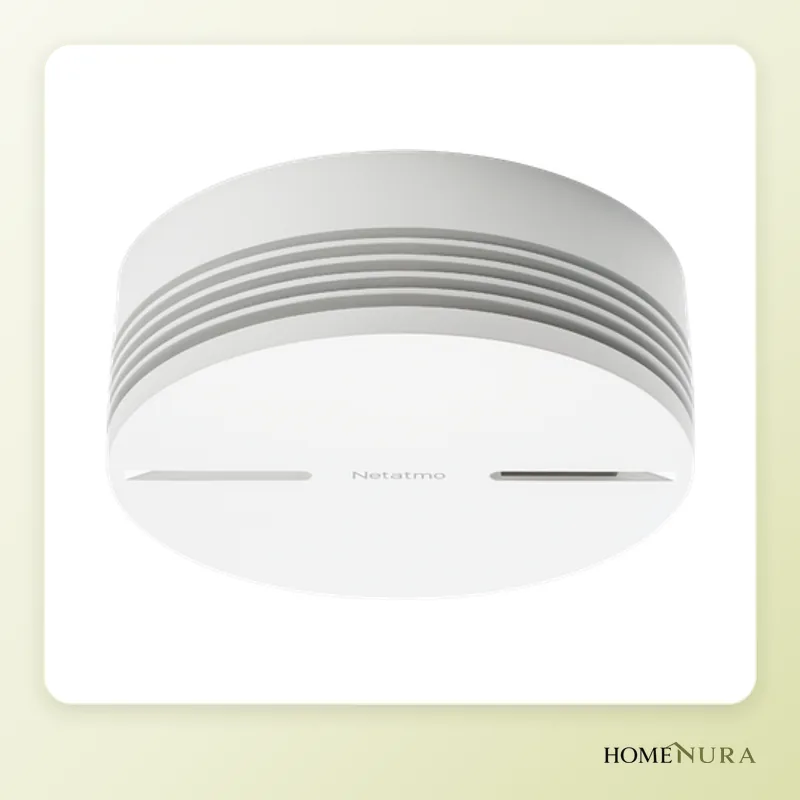
Netatmo Smart Smoke Alarm
Certified to the European EN 14604 standard, hub-free and powered by a 10-year battery, it still sounds when your internet is down and works with Apple Home and Google Home.
Photo: © Netatmo
- View on Amazon →
Best value
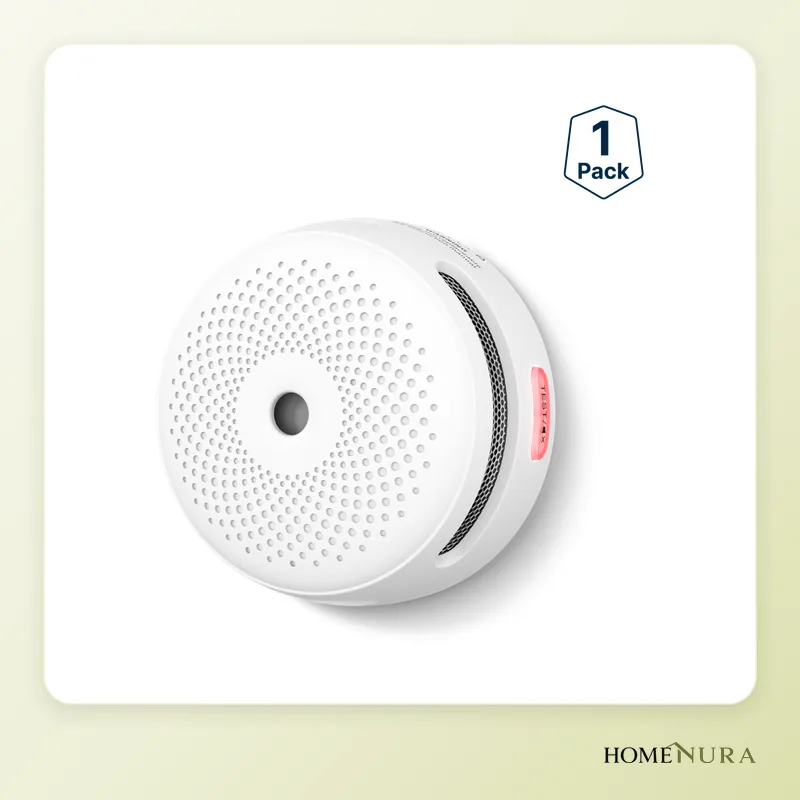
X-Sense XS01-WX
An entry-level Wi-Fi alarm certified to EN 14604 that sends phone alerts with no hub, ideal for covering several rooms.
Photo: © X-Sense
- View on Amazon →
Best for carbon monoxide
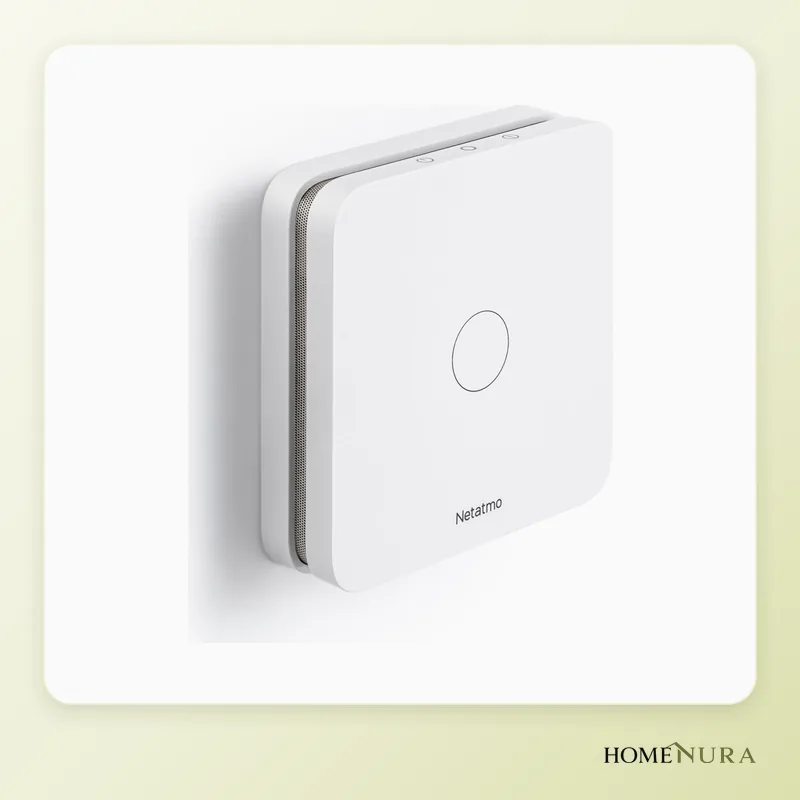
Netatmo Smart Carbon Monoxide Alarm
Certified to the European EN 50291 standard, it monitors CO on a 10-year battery and alerts your phone: the essential add-on if you have a fuel-burning furnace, boiler or wood stove.
Photo: © Netatmo


As an Amazon Associate I earn from qualifying purchases. Amazon affiliate links: we earn a commission at no extra cost to you.
The best smart smoke detector of 2026 for most homes is the Netatmo Smart Smoke Alarm: it’s certified to the European EN 14604 standard, sounds even when the internet is down, alerts your phone and needs no hub. If you want an entry-level option, the X-Sense XS01-WX covers the essentials over Wi-Fi, and if you have a furnace or boiler, a wood stove or a fireplace, add a smart carbon monoxide detector such as the Netatmo Smart Carbon Monoxide Alarm.
This comparison is based on manufacturer specs, published certifications, independent reviews and verified owner reviews. It only includes models currently sold in Europe. You’ll find the full lineup on our smoke and CO detectors page.
Smoke alarm rules and certifications
Smoke alarm requirements vary from one country, and one local code, to the next. In France, for example, every home has had to have at least one smoke alarm since March 2015. Whatever applies where you live, the certification is what counts: in Europe, the reference standard for smoke alarms is EN 14604, while in the US smoke alarms are listed to UL 217 and CO alarms to UL 2034. Check the listing of the version sold in your country.
You don’t need a smart model to meet those requirements, but it adds two things a basic alarm can’t: an alert on your phone when you’re away, and battery and device status in an app. Carbon monoxide needs a different sensor and, in Europe, a different standard, EN 50291: a smoke alarm on its own doesn’t protect you from CO.
Models mentioned in this guide
- Bosch Smart Home TwinguardView on Amazon →
- Aqara Smoke DetectorView on Amazon →
Photos: © Netatmo, © X-Sense
As an Amazon Associate I earn from qualifying purchases. Amazon affiliate links: we earn a commission at no extra cost to you.
How to choose
- Certification: every smoke alarm here is certified to EN 14604, the European baseline. US alarms are listed to UL 217 instead, so make sure the version you buy carries the certification that applies where you live.
- Connectivity: Wi-Fi, Zigbee or a proprietary radio. A Wi-Fi model works on its own with your router. A Zigbee or radio model needs a hub or an alarm panel, but it uses less power and fits better into an existing smart home.
- Interconnection: when one alarm goes off, do the others sound too? This matters in a multistory home. Not every smart alarm does it, even if they all show up in the same app.
- Battery life: a sealed 10-year battery means no battery changes for the alarm’s whole life; replaceable batteries need more regular checks.
- Ecosystem: Apple Home, Google Home, Alexa, Matter through a bridge, or a closed system (Bosch Smart Home, Somfy). Choose based on what you already own.
- Smoke and/or CO: if you have a fuel-burning appliance, you also need a CO detector certified to EN 50291 (or listed to UL 2034 in the US).
The 6 best smart detectors of 2026
1. Netatmo Smart Smoke Alarm — best overall
Netatmo’s smart smoke alarm (Netatmo is part of the Legrand group) is still the easiest one to recommend. It uses a photoelectric sensor, an 85 dB siren and a built-in 10-year battery that lasts the device’s whole life. It connects over Wi-Fi and Bluetooth, with no hub or subscription, and sends a notification to your phone when it detects smoke.
Pros: detection and the siren keep working if your internet goes down; works with Apple Home and Google Home; wire-free installation in minutes; EN 14604 certified.
Cons: Netatmo alarms are not interconnected. Each one sounds on its own, even if they’re all in the app. Your phone gets the alert, but an alarm downstairs won’t set off the one upstairs. No CO detection.
Best for: apartments and single-story homes, and Apple or Google users who want a reliable alarm with no battery changes.
2. X-Sense XS01-WX — best value
The XS01-WX is an EN 14604-certified photoelectric smoke alarm with 2.4 GHz Wi-Fi and an 85 dB siren. It’s managed in the X-Sense Home Security app, which can handle lots of devices and be shared across several family accounts.
Pros: entry-level model, no hub needed, phone alerts, compact design.
Cons: according to the manufacturer, XS01-WX units don’t link to each other wirelessly; if your Wi-Fi goes down they still sound, but you won’t get notifications. No native Apple Home support and no CO detection.
Best for: covering several rooms on a tight budget while keeping remote alerts.
3. Bosch Smart Home Twinguard — best for indoor air monitoring
The Twinguard combines a dual optical (Dual-Ray) smoke detector with an air quality sensor that measures temperature, humidity and volatile organic compounds (VOCs). It can give a discreet pre-alarm and offers sensitivity settings for each room to cut down on false alarms.
Pros: indoor air tracking and ventilation tips in the Bosch Smart Home app; integration with the whole Bosch ecosystem (lighting, security system); air quality can be shown through compatible smart bulbs.
Cons: it doesn’t detect carbon monoxide; it needs the Bosch Smart Home Controller for its smart features; and it runs on six replaceable AA batteries rather than a sealed 10-year battery.
Best for: homes already using Bosch Smart Home, or anyone who wants to keep an eye on humidity and air quality in a bedroom or living room.
4. Netatmo Smart Carbon Monoxide Alarm — the must-have CO add-on
This isn’t a smoke alarm but a carbon monoxide detector certified to EN 50291. It monitors CO continuously, sounds an 85 dB siren and alerts your phone. Its battery lasts 10 years, and a self-test feature regularly confirms that it works.
Pros: no hub, works with Apple Home, same app as the Netatmo smoke alarm, simple wall mounting.
Cons: it doesn’t detect smoke, so it complements a smoke alarm rather than replacing one.
Best for: any home with a gas or oil furnace or boiler, a wood or pellet stove, an open fireplace or a fuel-burning water heater.
5. Aqara Smoke Detector — best for a Zigbee home
Aqara’s smoke detector (model SD-S01D) is a Zigbee 3.0 alarm that complies with EN 14604, with an 85 dB siren and a battery rated for up to 10 years. It works through a compatible Aqara hub, which brings it into Apple Home, Google Home and Alexa, and into Matter through the hub’s bridge function.
Pros: excellent for automations (turning on the lights, shutting off ventilation), remote silencing from the app, low power use.
Cons: useless without an Aqara hub; no CO detection.
Best for: homes that already have an Aqara hub or a Zigbee setup.
6. Somfy Protect Smoke Detector — best with a Somfy security system
The Somfy Protect smoke detector uses 868 MHz radio to talk to the Somfy Home Alarm, Home Alarm Advanced, Somfy One and One+ systems. It’s managed in the Somfy Protect app, has an 85 dB siren and runs on alkaline batteries.
Pros: the detectors are interconnected and sound together; alerts tie into the home security system; wire-free ceiling mounting.
Cons: designed for the Somfy ecosystem and of little use without a Somfy panel; no CO detection.
Best for: homes that already have a Somfy security system. To compare systems, read our guide to home security systems with no monthly fee.
What about the Google Nest Protect?
The Nest Protect was the benchmark smart alarm for years, but Google stopped making it in 2025 and no longer sells it. Google points owners to a First Alert replacement, which isn’t distributed in Europe and so isn’t part of our selection. If you already own a Nest Protect, it keeps working until its expiration date (about 10 years after it was made); after that, replace it with a current certified model.
Comparison table
| Model | Detects | Connectivity | Hub required | Interconnection | Best for |
|---|---|---|---|---|---|
| Netatmo Smart Smoke Alarm | Smoke | Wi-Fi + Bluetooth | No | No | Most homes |
| X-Sense XS01-WX | Smoke | 2.4 GHz Wi-Fi | No | No | Tight budgets |
| Bosch Smart Home Twinguard | Smoke + air quality | Bosch Smart Home | Yes (Controller) | Through the Bosch system | Indoor air monitoring |
| Netatmo Smart Carbon Monoxide Alarm | CO | Wi-Fi | No | No | Fuel-burning appliances |
| Aqara Smoke Detector | Smoke | Zigbee 3.0 | Yes (Aqara hub) | Through automations | Zigbee / Matter homes |
| Somfy Protect Smoke Detector | Smoke | 868 MHz radio | Yes (Somfy panel) | Yes | Somfy system owners |
Mistakes to avoid
- Buying an alarm without the right certification for where you live, such as a European EN 14604 model in a place that expects a UL 217 listing, or the other way around.
- Assuming that all the alarms in one app are interconnected. Check for this feature if your home has more than one floor.
- Forgetting about CO when you have a furnace or boiler, a wood stove or a fireplace: a smoke alarm doesn’t detect it.
- Installing the alarm in the kitchen or bathroom: steam and cooking fumes cause false alarms.
- Buying a Zigbee or radio model without its hub: without the Bosch Controller, an Aqara hub or a Somfy panel, you lose the smart features.
Installation and maintenance
Install at least one smoke alarm in the hallway outside the bedrooms, and ideally one on every floor and one in each bedroom. Mount it on the ceiling, preferably near the center of the room and away from walls, air vents and light fixtures. Put the CO detector in the room with the fuel-burning appliance and in bedrooms, following the manufacturer’s instructions.
Press the test button once a month, vacuum the alarm gently on a low setting to clear dust, and replace the batteries as soon as the low-battery warning appears. Smoke alarms are usually replaced after 10 years, so write down the installation date. For more, see our smart home security guide.
The bottom line
For most homes, the Netatmo Smart Smoke Alarm is the simplest choice: certified, no hub, no battery changes for 10 years, and compatible with Apple Home and Google Home. The X-Sense XS01-WX is the budget pick for covering several rooms. If you have a fuel-burning appliance, add the Netatmo Smart Carbon Monoxide Alarm. And if you already use Bosch, Aqara or Somfy, stay in your ecosystem with the Twinguard, the Aqara detector or the Somfy Protect detector.
Frequently asked questions
Is a smart smoke alarm enough to meet legal requirements?
Does a smoke alarm also detect carbon monoxide?
Do Netatmo smoke alarms all sound together?
Can you still buy a Google Nest Protect?
Do you need a hub for a smart smoke alarm?
Does a smart smoke alarm work if the internet goes down?
From our complete guide
Home Security →Our recommendations
- Bosch Smart Home TwinguardView on Amazon →
- Aqara Smoke DetectorView on Amazon →
Photos: © Netatmo, © X-Sense
As an Amazon Associate I earn from qualifying purchases. Amazon affiliate links: we earn a commission at no extra cost to you.


