Home Security Systems With No Monthly Fee (2026): Ajax, Somfy, Ring and eufy Compared
Which DIY home security system with no monthly fee should you choose in 2026? Ajax StarterKit 4G, Somfy Home Alarm Advanced, Ring Alarm and eufy HomeBase S380 compared on backup connection, battery, siren, pets and installation.

Quick answer
What is the best home security system with no monthly fee in 2026?
- View on Amazon →
Best overall
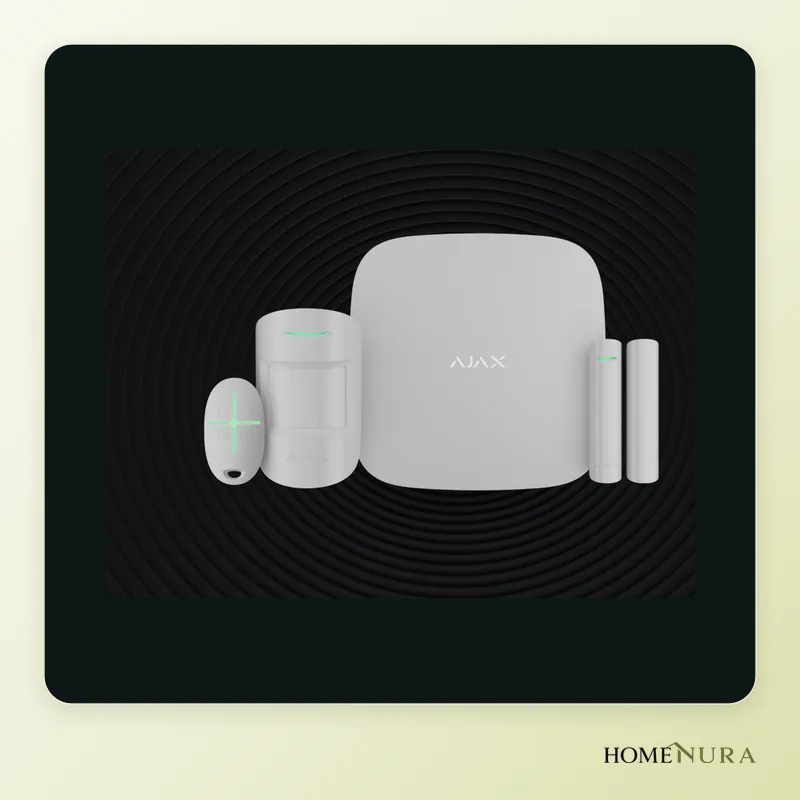
Ajax StarterKit 4G
An Ethernet and 4G hub (two SIM slots), up to 16 hours of backup battery, long Jeweller radio range and Grade 2 certification.
Photo: © Ajax Systems
- View on Amazon →
Best break-in detection
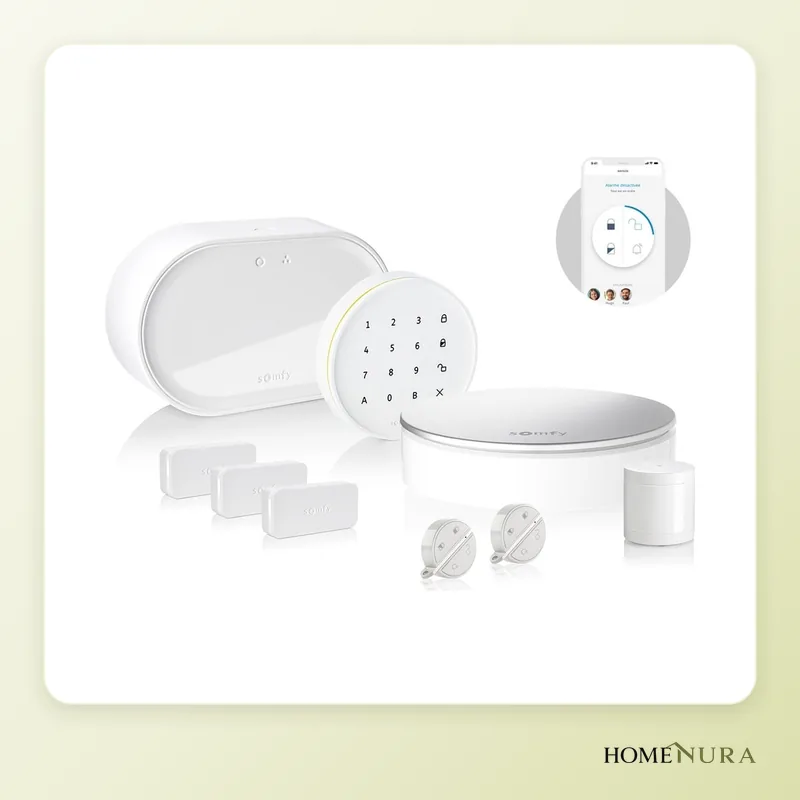
Somfy Home Alarm Advanced
IntelliTAG sensors pick up vibrations before a door or window even opens, with a 110 dB siren and five years of cellular (GSM) backup included.
Photo: © Somfy
- View on Amazon →
Best value for Alexa users
Ring Alarm Pack M (Gen 2)
A simple entry-level kit: built-in 104 dB siren, 24-hour backup battery and Alexa integration. Cellular backup requires a Ring Protect plan.


As an Amazon Associate I earn from qualifying purchases. Amazon affiliate links: we earn a commission at no extra cost to you.
For most homes, the best DIY home security system with no monthly fee in 2026 is the Ajax StarterKit 4G: its hub runs on Ethernet and 4G, lasts up to 16 hours on battery and is Grade 2 certified under European standards. If you want a system that detects break-in attempts before a door or window even opens, the Somfy Home Alarm Advanced is the most complete alternative, while Ring Alarm is still the simplest entry-level choice for Alexa households.
This comparison is based on manufacturer specs, independent reviews and verified owner feedback. It only includes systems sold in Europe in 2026. You'll find the full lineup on our home security systems page, and a broader overview in our 2026 guide to smart home security.
Self-monitoring vs. professional monitoring: what "no subscription" means
A system with no subscription relies on self-monitoring: when a sensor is triggered, the siren goes off and you get a notification on your phone. It's up to you to check what's going on, alert a neighbor or call 911. There's no monitoring center and no contract.
Professional monitoring adds an operator who verifies alarms around the clock and can dispatch a security officer. That's worth it if you're often hard to reach, travel for long stretches or if your insurance company requires it. For a primary residence you live in day to day, self-monitoring covers the essentials: the siren deters, and the alert reaches you within seconds.
One catch, though: "no subscription" doesn't always mean "no costs at all." Cellular backup, video history or some advanced services can be paid extras depending on the brand. We flag this for each model.
Models mentioned in this guide
- Ring Alarm Pack M (Gen 2)View on Amazon →
- eufy HomeBase S380View on Amazon →
Photos: © Ajax Systems, © Somfy
As an Amazon Associate I earn from qualifying purchases. Amazon affiliate links: we earn a commission at no extra cost to you.
How to choose
- Backup connection: if a burglar cuts your internet, the system must still be able to send alerts over the cellular network. This is the most important factor.
- Hub battery: during a power outage, the hub should stay up for several hours.
- Radio protocol: a long-range proprietary protocol (Ajax Jeweller, Somfy) is more robust than Wi-Fi sensors. Ring's Z-Wave is reliable in a typical home, with a range extender if needed.
- Perimeter protection: contact and vibration sensors on doors and windows let you arm the system at night and still move around the house freely.
- Pets: if you have a dog or a cat, choose pet-immune motion detectors or rely on door and window protection.
- Siren: an indoor siren of at least 100 dB is the bare minimum. An outdoor siren adds a stronger deterrent.
- Ecosystem: compatibility with your cameras, voice assistant or smart home hub.
The 4 best home security systems with no monthly fee in 2026
Ajax StarterKit 4G: the most robust
The kit includes the Hub 2 (4G) control panel, a MotionProtect motion detector, a DoorProtect contact sensor and a SpaceControl key fob. The detectors use the Jeweller radio protocol, with a claimed range of up to about 1.2 miles (2,000 m) in open space. That's plenty for a house with a garage, shed or outbuilding.
Pros: the hub connects via Ethernet and takes two SIM cards, giving it genuine backup connectivity; its battery lasts up to 16 hours; and the system is Grade 2 certified under the European EN 50131 standard. MotionProtect is pet-immune up to 44 lb (20 kg) and 20 in (50 cm) tall, and the detectors run for several years on battery power. The Ajax app has a reputation for being clear, with scenarios, groups and per-user permissions. The system supports up to 100 devices, including detectors with photo verification (the MotionCam line).
Cons: Hub 2 has no Wi-Fi, so you need an Ethernet cable to your router or a SIM card. You supply the SIM yourself: it isn't an Ajax subscription but a cellular plan (a basic data plan is enough). The ecosystem is closed, so only Ajax accessories work with it.
Best for: single-family homes, properties with outbuildings and anyone who wants reliability close to a professional installation, with no contract.
Somfy Home Alarm Advanced: detection before the break-in
The kit includes the Link Advanced hub, a 110 dB indoor siren, three IntelliTAG sensors, a motion detector, a keypad and two key tags. What sets it apart are the IntelliTAG sensors: mounted on doors and windows, they pick up the vibrations of a forced-entry attempt before the door or window even moves, so the siren goes off sooner.
Pros: during a power outage, the Link Advanced switches to the GSM cellular network, which is included for the first five years in the European Union. Somfy claims 12 hours on the built-in battery, then up to 14 days on disposable batteries. IntelliTAG sensors are rated IP54 and can also protect a gate or shed. The key tags disarm the system automatically when you get home. The system works with Google Assistant, Alexa and the Somfy TaHoma hub, as well as Somfy cameras.
Cons: after five years, the GSM backup becomes a paid option. The hub runs on Wi-Fi, and the ecosystem is Somfy-only.
Best for: homes with lots of doors and windows, and pet owners who can arm perimeter protection with IntelliTAG without leaving a motion detector active in living areas.
Ring Alarm Pack M (2nd Gen): the entry-level pick for Alexa users
The M pack includes a base station, a keypad, contact sensors, motion detectors and a range extender. The sensors use Z-Wave, and the base station connects over Wi-Fi or Ethernet.
Pros: the base station has a built-in 104 dB siren and a battery rated for 24 hours. Without a subscription, you still get notifications plus arming and disarming in the Ring app. The motion detectors offer several sensitivity levels, including a low setting designed for pets up to about 50 lb (23 kg). Integration with Alexa and with Ring cameras and doorbells is the smoothest in this comparison.
Cons: cellular backup is only available with a Ring Protect subscription. Without one, an internet outage stops alerts from going out, even though the local siren still works. Google Home and Apple Home integration is limited.
Best for: apartments and small houses, and households already using Ring products or Echo speakers.
eufy HomeBase S380: for eufy camera owners
The HomeBase S380 (also called HomeBase 3) isn't a complete alarm kit but the hub of the eufy ecosystem. It manages up to 16 eufy cameras plus the brand's entry sensors, motion sensors and keypad, sold separately. It has a built-in 100 dB siren and Home and Away modes.
Pros: storage is local, with 16 GB built in and a bay for a 2.5-inch drive of up to 16 TB. You don't need the cloud to keep your footage, and facial recognition runs locally across all connected cameras.
Cons: no cellular backup and no alarm certification. The HomeBase connects via Ethernet. That makes it better suited as an add-on to a camera system than as the main alarm for an isolated house.
Best for: households already using eufy cameras that want to add a simple alarm layer with no monthly fees.
Comparison table
| System | Hub and connection | Backup during outages | Key strength | Best for |
|---|---|---|---|---|
| Ajax StarterKit 4G | Hub 2 (4G), Ethernet + 2 SIMs | 4G (your SIM), battery up to 16 hr | Long-range Jeweller, Grade 2 | Houses, outbuildings |
| Somfy Home Alarm Advanced | Link Advanced, Wi-Fi | GSM included for 5 years (EU), 12 hr + 14 days on batteries | IntelliTAG break-in detection | Lots of doors and windows, pets |
| Ring Alarm Pack M (2nd Gen) | Base station, Wi-Fi/Ethernet, Z-Wave | 24-hr battery, cellular with Ring Protect | Built-in siren, Alexa | Apartments, Ring users |
| eufy HomeBase S380 | HomeBase 3, Ethernet | No backup network | Local video storage | eufy camera owners |
Mistakes to avoid
- Ignoring the backup connection: a system that relies only on your router loses its notifications if the line is cut.
- Putting the hub in plain sight: install it out of view of the entrance so an intruder can't unplug it in seconds.
- Pointing a detector at a window, radiator or heating vent: changes in heat and light are the leading cause of false alarms with infrared detectors.
- Skipping the trial period: spend a few days in test mode to fine-tune sensitivity, especially if you have pets.
- Sharing a single code: set up a separate code for each person, so you can see who disarmed the system and revoke access without reconfiguring everything.
Installation and best practices
All four systems install without any electrical wiring: the hub plugs into an outlet, and the sensors attach with double-sided tape or screws. Start by protecting the front door and the easy-to-reach first-floor windows, then add a motion detector in the main hallway. An outdoor siren that's visible from the street adds to the deterrent.
Let your insurance company know: some policies require a specific level of protection or offer a discount for an alarm system, so it's worth checking whether a self-monitored system qualifies. If you add cameras, point them only at your own property, without recording the street or your neighbors' yards. To secure the way into your home, see our smart lock guide, and to fine-tune detection, our smart motion sensor comparison.
The bottom line
The Ajax StarterKit 4G is our top pick: an Ethernet and 4G hub, up to 16 hours of battery backup, very long radio range and Grade 2 certification. It's the no-subscription system that comes closest to a professional installation, as long as you add a SIM card.
The Somfy Home Alarm Advanced is the best option for catching a break-in attempt at the very first vibrations, with GSM backup included for five years in the EU. The Ring Alarm Pack M is the simplest entry-level choice for an apartment or an Alexa household, keeping in mind that cellular backup requires a subscription. Finally, the eufy HomeBase S380 makes sense if you already own eufy cameras and want to add a secondary alarm with local storage.
Frequently asked questions
Is a home security system with no monthly fee really effective?
What happens if a burglar cuts the internet or the power?
Does the Ajax StarterKit 4G need a SIM card?
Which security system should I choose if I have a dog or a cat?
Can I install a security system with no monthly fee myself?
Will my insurance company accept a security system with no monthly fee?
From our complete guide
Home Security →Our recommendations
- Ring Alarm Pack M (Gen 2)View on Amazon →
- eufy HomeBase S380View on Amazon →
Photos: © Ajax Systems, © Somfy
As an Amazon Associate I earn from qualifying purchases. Amazon affiliate links: we earn a commission at no extra cost to you.


