Best Smart Dehumidifiers of 2026: Buying Guide and Picks
When you need a smart dehumidifier, what size to buy, compressor vs. desiccant, and the Wi-Fi models that stand out in 2026: Meaco, Comfee, Xiaomi, De’Longhi and Inventor.

Quick answer
What is the best smart dehumidifier in 2026?
- View on Amazon →
Best overall
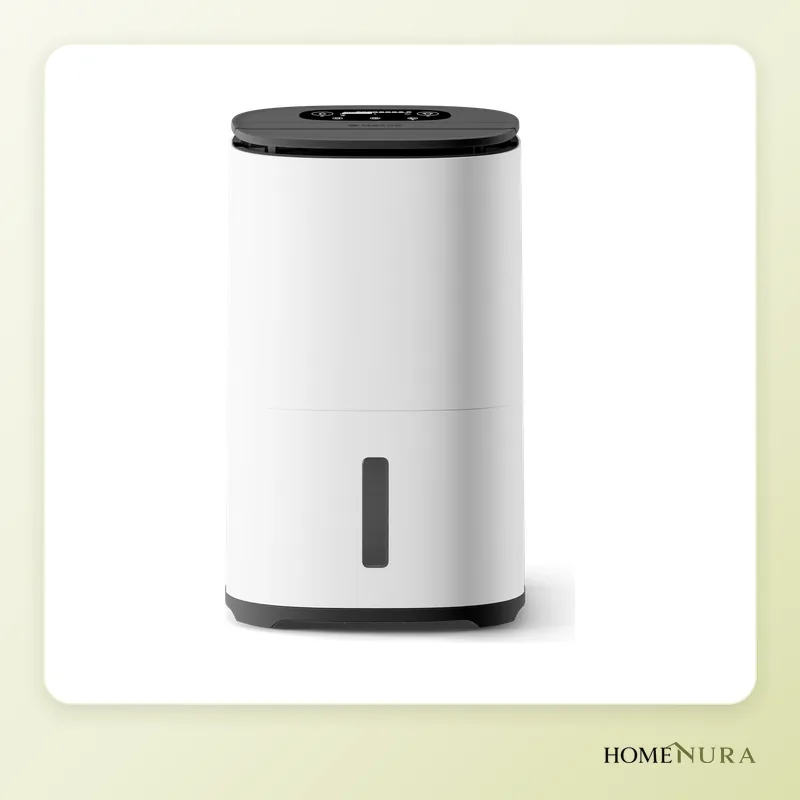
Meaco Arete Two 20L
Rated at 42 pints (20 L) a day, with a 10-pint (4.8 L) tank, a HEPA filter, Wi-Fi with Alexa and Google Home, and a reputation for low energy use and quiet running.
Photo: © Meaco
- View on Amazon →
Best value
Comfee MDDF-16DEN7-WF
Rated at 34 pints (16 L) a day, with Wi-Fi and Alexa support, a laundry mode and continuous drainage in a compact entry-level body.
- View on Amazon →
Best for bedrooms
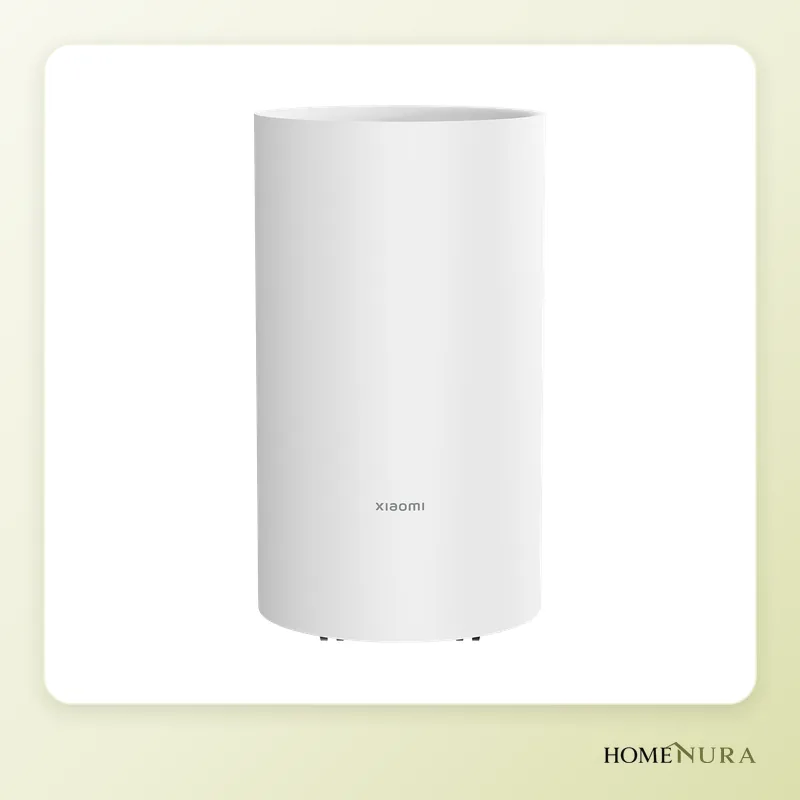
Xiaomi Smart Dehumidifier Lite
A small unit rated at 27 pints (13 L) a day, with a quiet sleep mode and Xiaomi Home app control, ideal for a bedroom or bathroom.
Photo: © Xiaomi


As an Amazon Associate I earn from qualifying purchases. Amazon affiliate links: we earn a commission at no extra cost to you.
A smart dehumidifier starts to pay off as soon as your home regularly sits above 60% humidity: it brings the air back to around 45 to 55%, pauses itself once it hits the target and pings your phone when the tank is full. For most homes, our pick is the Meaco Arete Two 20L; the Comfee MDDF-16DEN7-WF is the most sensible entry-level option, and the Xiaomi Smart Dehumidifier Lite suits a bedroom or small room.
This guide is based on manufacturer specs, independent reviews and verified owner reviews, and it only covers models sold in Europe. You can browse the full lineup on our smart dehumidifiers page.
When do you need a dehumidifier?
Ideal indoor relative humidity is generally between 40 and 60%. When it stays above 60%, dust mites multiply and mold thrives, especially on cold walls. The World Health Organization considers indoor dampness and mold a risk factor for respiratory health, particularly for people with asthma or allergies.
Warning signs
- Condensation on the windows in the morning, especially in fall and winter;
- black or gray patches in corners, behind furniture or on the bathroom ceiling;
- a musty smell that keeps coming back even after you air out the room;
- laundry that takes forever to dry indoors;
- blistering paint or peeling wallpaper.
Measure before you buy: a basic hygrometer or a smart sensor is all you need. Our guide to indoor air quality and sensors explains how to track humidity room by room. If readings stay above 60% for several days, a dehumidifier is justified. If the air is too dry in winter, you need a humidifier instead (see our smart humidifier comparison).
A dehumidifier treats the symptom, not the cause: leaks, water seeping through walls or rising from the ground, and missing ventilation should be fixed by a professional. Still, it’s the fastest way to make a room healthier in the meantime, or to deal with a home that’s simply poorly ventilated.
Models mentioned in this guide
- Comfee MDDF-16DEN7-WFView on Amazon →
- De'Longhi Tasciugo AriaDry Multi DDSX220WFView on Amazon →
- Inventor EVA II PRO WiFi 20LView on Amazon →
Photos: © Meaco, © Xiaomi
As an Amazon Associate I earn from qualifying purchases. Amazon affiliate links: we earn a commission at no extra cost to you.
Compressor or desiccant: two technologies
Compressor dehumidifiers
This is the most common type. A fan pulls air over a cold coil, moisture condenses and drips into the tank, and the air is warmed slightly before it leaves. It’s the most efficient option in a heated room, but performance drops off noticeably below roughly 59°F (15°C).
Desiccant dehumidifiers
These capture moisture with an absorbent material (often a zeolite wheel) that a heater dries out again. They work well in the cold, which makes them the right choice for a garage, basement, sunroom or boat. The trade-off: they use more electricity and warm the air a bit more.
In short: heated room = compressor; cold, unheated space = desiccant.
What to look for
- Capacity (pints per day): usually quoted at 86°F (30°C) and 80% humidity, far more humid than an ordinary home. US ratings use different, cooler test conditions, so the figures aren’t directly comparable. Use this number to compare models rather than as a real-world figure. As a rule of thumb: 21 to 27 pints a day for a bedroom or bathroom, 34 to 42 pints for an apartment, and 42 pints or more for a house, a basement or drying laundry.
- Humidistat and auto mode: the unit measures humidity and pauses once it reaches the target. This is the feature that saves the most energy.
- App and integrations: remote target setting, schedules, tank-full alerts, humidity history and, depending on the model, Alexa or Google Home support.
- Noise: for a bedroom, look for a true night mode and compare the manufacturers’ decibel figures.
- Tank and continuous drainage: a 6-pint (3 L) tank can fill up within a day in a very humid room. A hose outlet lets water drain continuously into a sink or floor drain.
- Laundry mode: handy if you dry clothes indoors; the unit runs at full power for a set time.
- Filtration: some models add a HEPA or activated carbon filter. It’s a bonus, but no substitute for a real air purifier.
The best smart dehumidifiers of 2026
1. Meaco Arete Two 20L: best overall
The Meaco Arete Two is the smart version of the Arete range from British specialist Meaco. This compressor model removes up to 42 pints (20 liters) a day and has a 10-pint (4.8 L) tank with a continuous drain outlet, a laundry mode and a HEPA filter. It connects over Wi-Fi to the Meaco app and works with Amazon Alexa and Google Home.
Pros: DC fan motor, a reputation for low energy use and quiet running, a clear display that shows measured and target humidity, and consistently positive long-term owner reviews.
Cons: fairly tall and heavy (around 33 lb, or 15 kg), and positioned at the premium end.
Best for: apartments and houses with recurring condensation, drying laundry indoors, and anyone who wants a complete, durable unit.
2. Comfee MDDF-16DEN7-WF: best value
Comfee, part of the Midea group, offers a 34-pint (16 L) per day compressor dehumidifier here, designed for rooms of about 325 sq ft (30 m²). It has a 6-pint (3 L) tank, a continuous drain outlet, a laundry mode and Wi-Fi control through the NetHome Plus app, with Alexa support.
Pros: a widely sold entry-level model, compact and on casters, with the core smart features (target humidity, timer, tank-full alert).
Cons: small tank, a more basic app than Meaco’s, and louder than premium models, according to owner reviews.
Best for: a studio, a midsize apartment or a single humid room on a sensible budget.
3. Xiaomi Smart Dehumidifier Lite: best for bedrooms
This small cylindrical model removes up to 27 pints (13 liters) a day and is aimed at bedrooms, bathrooms and laundry rooms. It has a 6-pint (3 L) tank, a drain hose and three modes (smart, laundry, sleep), and it’s controlled from the Xiaomi Home app.
Pros: small footprint, a very quiet sleep mode according to Xiaomi, and a natural fit if you already own Xiaomi devices.
Cons: limited capacity for a large home or a basement, and a less open ecosystem than some other apps.
Best for: a bedroom, small room or bathroom, and existing Xiaomi users.
4. De’Longhi Tasciugo AriaDry Multi DDSX220WF: most versatile
The Tasciugo AriaDry Multi is a compressor dehumidifier in the 42-pint (20-liter) per day class, with a large 11-pint (5 L) tank, filtration that combines an E12 filter and activated carbon, a laundry mode and Wi-Fi control through the De’Longhi app. It uses R290 refrigerant, which has a low climate impact.
Pros: large tank, more thorough filtration than average, well finished.
Cons: bulky, filters need replacing, premium positioning.
Best for: homes that want to dry the air and filter out dust and odors at the same time.
5. Inventor EVA II PRO WiFi 20L: the well-equipped alternative
Greek manufacturer Inventor offers a 42-pint (20 L) per day model with a 6-pint (3 L) tank, an ionizer, HEPA and activated carbon filters, a laundry mode and control through the INVmate II app. It’s widely sold in southern Europe.
Pros: generous features for its class, compact for a unit this size.
Cons: small tank for this capacity, and an app that’s less polished than the big brands’.
Best for: humid apartments, especially in warm climates, where you need power in a compact body.
6. Meaco DD8L Zambezi: for cold spaces (no Wi-Fi)
This desiccant dehumidifier works from 34 to 99°F (1 to 37°C), according to Meaco, removes about 17 pints (8 liters) a day and has a 6-pint (3 L) tank with a continuous drain option. It has no Wi-Fi, but it keeps its settings after a power outage, so you can control it with a smart plug.
Pros: effective in the cold, lightweight, ideal for a garage, basement, RV or boat.
Cons: uses more power than a compressor unit, no app.
Best for: spaces that go unheated in winter.
Comparison table
| Model | Technology | Rated capacity | Tank | Connectivity | Best for |
|---|---|---|---|---|---|
| Meaco Arete Two 20L | Compressor | 42 pints/day (20 L) | 10 pints (4.8 L) | Wi-Fi, Alexa, Google Home | Apartment, house, laundry |
| Comfee MDDF-16DEN7-WF | Compressor | 34 pints/day (16 L) | 6 pints (3 L) | Wi-Fi, Alexa | Studio, humid room |
| Xiaomi Smart Dehumidifier Lite | Compressor | 27 pints/day (13 L) | 6 pints (3 L) | Wi-Fi (Xiaomi Home) | Bedroom, bathroom |
| De’Longhi Tasciugo AriaDry Multi DDSX220WF | Compressor | About 42 pints/day (20 L) | 11 pints (5 L) | Wi-Fi | Humidity plus filtration |
| Inventor EVA II PRO WiFi 20L | Compressor | 42 pints/day (20 L) | 6 pints (3 L) | Wi-Fi (INVmate II) | Humid apartment |
| Meaco DD8L Zambezi | Desiccant | 17 pints/day (8 L) | 6 pints (3 L) | None | Garage, basement, boat |
Mistakes to avoid
- Setting the target too low: going below 40% dries out the air and keeps the unit running for nothing. A 50% target suits most rooms.
- Pushing it against a wall: leave space around the air intake and outlet so it works properly.
- Putting a compressor unit in a freezing garage: below roughly 59°F (15°C), a desiccant model is the better fit.
- Leaving doors and windows open: the unit would be drying outdoor air nonstop.
- Ignoring the cause: a leak or water seeping through a wall has to be repaired; the dehumidifier only limits the damage.
Use, maintenance and safety
- Filter: dust it regularly, following the manufacturer’s instructions.
- Tank: empty and rinse it often to prevent odors; the water it collects isn’t safe to drink.
- Moving it: if you’ve laid a compressor unit on its side, let it stand upright for a while before you turn it on, as most manuals advise.
- Electrical: plug it straight into a wall outlet rather than an overloaded extension cord, and keep the drain hose away from outlets. Models sold in Europe are built for 230 V, so check that the version on your Amazon store is rated for 120 V.
- Energy use: auto mode, which shuts the unit off once it hits the target, is still the best way to keep running costs down.
The bottom line
Best overall: the Meaco Arete Two 20L, a complete smart unit known for low energy use and quiet running.
Best value: the Comfee MDDF-16DEN7-WF, which delivers the core smart features in a compact body.
Best for bedrooms: the Xiaomi Smart Dehumidifier Lite, small and with a quiet sleep mode.
For an unheated garage or basement, choose a desiccant model such as the Meaco DD8L Zambezi.
Frequently asked questions
What humidity level should I aim for at home?
What size dehumidifier do I need?
Compressor or desiccant dehumidifier: which should I choose?
What does a smart dehumidifier add?
Can I run a dehumidifier overnight?
Does a dehumidifier replace an air purifier?
From our complete guide
Comfort & Air Quality →Our recommendations
- Comfee MDDF-16DEN7-WFView on Amazon →
- De'Longhi Tasciugo AriaDry Multi DDSX220WFView on Amazon →
- Inventor EVA II PRO WiFi 20LView on Amazon →
Photos: © Meaco, © Xiaomi
As an Amazon Associate I earn from qualifying purchases. Amazon affiliate links: we earn a commission at no extra cost to you.


