Best Smart Humidifiers of 2026: 5 Top Models Compared
Boneco H700 Smart, Levoit Classic 300S, Dyson PH04, Levoit OasisMist 1000S and Xiaomi Smart Humidifier 2 compared: evaporative vs. ultrasonic, white dust, hygiene, room size and noise, so you can pick the right smart humidifier.

Quick answer
What is the best smart humidifier in 2026?
- View on Amazon →
Best overall
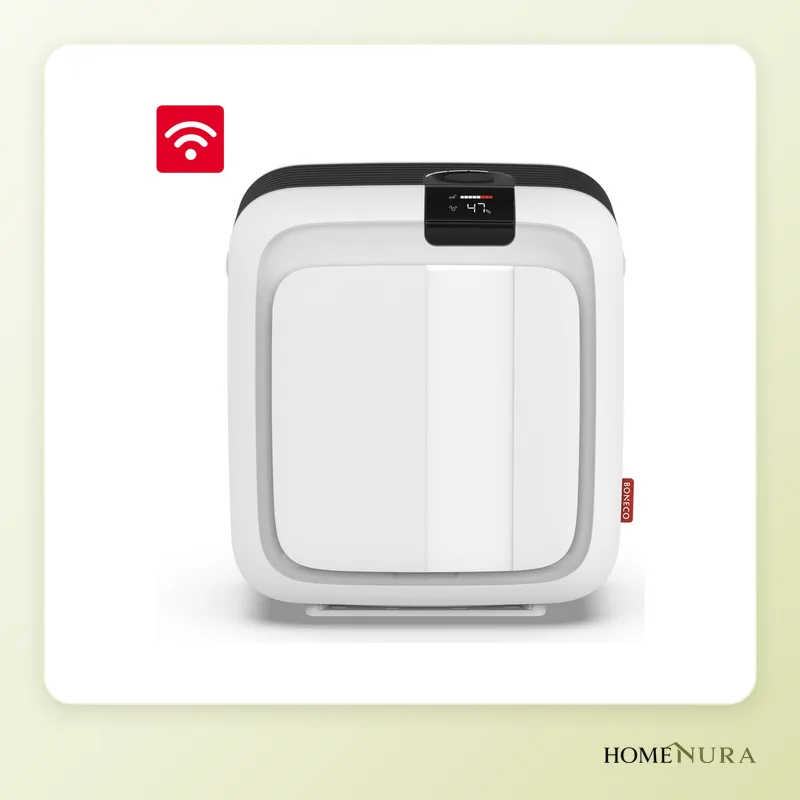
BONECO H700 SMART
Evaporative humidification with no white dust, built-in HEPA purification and Wi-Fi control for large rooms.
Photo: © BONECO (Plaston)
- View on Amazon →
Best value
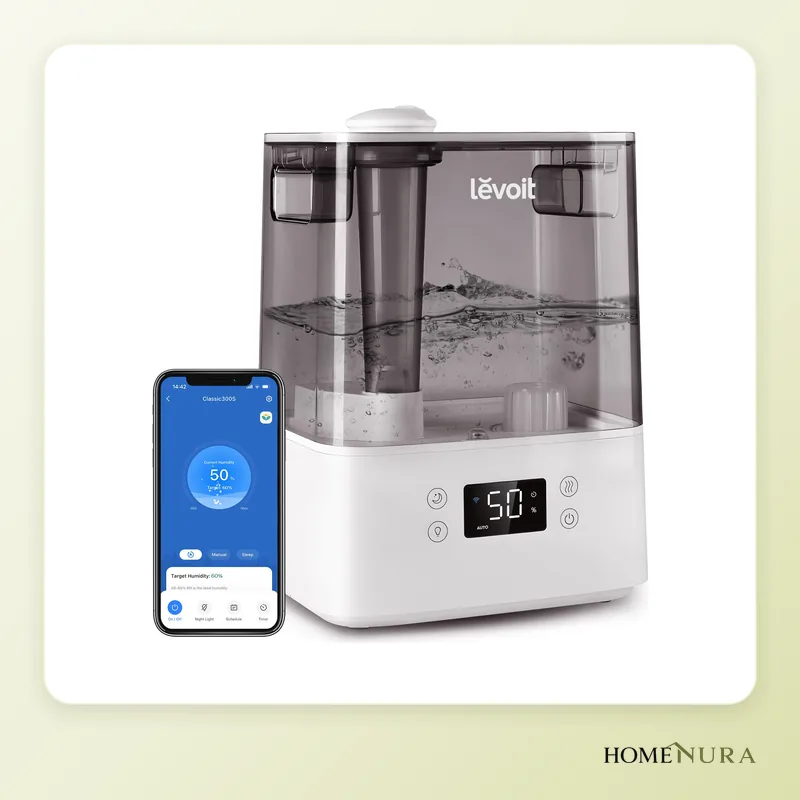
Levoit Classic 300S
A 1.6 gal (6 L) top-fill ultrasonic humidifier with auto mode, the VeSync app and Alexa and Google support, at an entry-level price point.
Photo: © Levoit (VeSync)
- View on Amazon →
Best for allergy sufferers
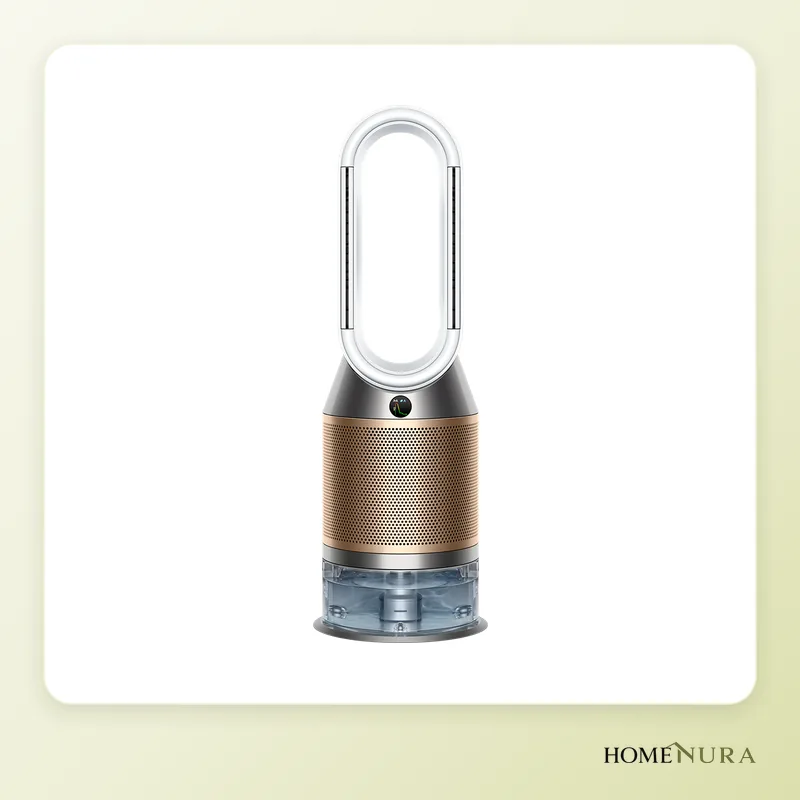
Dyson Purifier Humidify+Cool Formaldehyde PH04
A HEPA H13 purifier, an evaporative humidifier with UV-C-treated water and a fan, all in one smart device.
Photo: © Dyson


As an Amazon Associate I earn from qualifying purchases. Amazon affiliate links: we earn a commission at no extra cost to you.
For most homes, the best smart humidifier in 2026 is the Boneco H700 Smart: it humidifies by evaporation (so no white dust), covers large rooms, purifies the air at the same time and is fully controllable over Wi-Fi. If you mainly want an affordable smart model for a bedroom or a midsize living room, the Levoit Classic 300S is the most sensible pick, as long as you fill it with soft or distilled water.
A humidifier raises the relative humidity of indoor air when it drops below 40%, which happens a lot in winter once the heat is running. Chapped lips, a dry throat in the morning, static shocks, struggling houseplants and gaps opening up between hardwood floorboards are the classic signs of air that's too dry. A smart model adds a built-in humidistat, an auto mode, an app and schedules, which helps you avoid the most common trap: over-humidifying. This comparison is based on manufacturer specifications, published independent reviews and verified owner feedback.
What humidity should you aim for? The 40–60% rule
Comfort and health sit within a fairly narrow band. Below 40% relative humidity, the lining of your nose and throat dries out, skin feels tight and eyes sting. Above 60%, the problem flips: condensation on windows, mold in corners and thriving dust mites. The goal is to stay between 40 and 60%, ideally around 45 to 50% in living spaces during winter.
This is exactly where a smart model earns its keep: you set a target (say, 50%), the device measures continuously and shuts off on its own once it gets there. For a reliable reading, it's worth adding a separate hygrometer at the other end of the room, because the built-in sensor measures the air right next to the mist outlet. Our guide to indoor air quality sensors explains where to place them. And if your home has the opposite problem, too much moisture, you need a smart dehumidifier, not a humidifier.
Models mentioned in this guide
- Levoit OasisMist 1000SView on Amazon →
- Xiaomi Smart Humidifier 2View on Amazon →
Photos: © BONECO (Plaston), © Levoit (VeSync), © Dyson
As an Amazon Associate I earn from qualifying purchases. Amazon affiliate links: we earn a commission at no extra cost to you.
Evaporative or ultrasonic: the real decision
Ultrasonic humidifiers
A plate vibrates at a very high frequency and turns water into a visible cool mist. It's the most common technology: quiet, energy-efficient, compact and affordable. Its main weakness is hard water. Everything dissolved in tap water (calcium, magnesium) gets thrown into the air with the mist and then settles as white dust on furniture and screens. If you have hard water, use distilled or filtered water, or a demineralization cartridge if the manufacturer offers one.
Evaporative humidifiers
A fan pushes air through a wet wick or filter. Moisture goes into the room as invisible water vapor, with no droplets. The upside: no white dust (minerals stay trapped in the wick) and self-regulating operation, since evaporation naturally slows down when the air is already humid. The trade-offs: the fan makes a gentle whoosh, wicks and pads are consumables that need descaling and replacing, and the units tend to be bulkier.
What about warm mist?
Warm-mist humidifiers boil the water, which limits microbial growth, but they use considerably more electricity and pose a burn risk around children. None of the smart models picked here uses this technology.
What to look for
- Room size: go by the manufacturer's recommended area and the humidification output (listed in ml/h or gallons per day). An undersized unit runs flat out all the time, which also makes it louder.
- Tank capacity: 1.1 to 2.6 gallons (4 to 10 L) in our selection. A bigger tank means fewer refills but more work to clean.
- Top filling: a real everyday convenience that also makes cleaning easier.
- Humidistat and auto mode: essential to avoid going over 60%.
- Noise: for a bedroom, look for a sleep mode rated at around 30 dB or less and a display that turns off.
- Hygiene: UV-C water treatment, antibacterial materials, parts that come apart and rinse easily.
- Connectivity: a stable app, 2.4 GHz Wi-Fi, Alexa or Google Home support, alerts for an empty tank or a filter change.
- Consumables: wicks, HEPA filters, demineralization cartridges. Whether you can still buy them years from now matters as much as the device itself.
The 5 best smart humidifiers of 2026
1. Boneco H700 Smart: best overall
The H700 Smart is a hybrid unit: it humidifies by evaporation through humidifier mats and cleans the air with a combined HEPA and activated carbon filter. It can run as a humidifier only, a purifier only, or both at once. Boneco recommends it for spaces up to 1,600 sq ft (150 m²), with a 2.6-gallon (10 L) tank and a high output of roughly a quart (1 liter) per hour at maximum, according to the manufacturer. The Smart version connects over Wi-Fi to the Boneco app, shows humidity, temperature and air quality, supports schedules and takes voice commands through Amazon Alexa and Google Home.
Pros: evaporative with no white dust, very large coverage, built-in air purification, dedicated profiles (sleep, baby), full remote control.
Cons: bulky and heavy, premium tier, mats and filters need regular replacement, audible airflow at full power.
Best for: large living rooms, open-concept spaces and allergy-prone households that want one device for humidity and air purification.
2. Levoit Classic 300S: best value
The Classic 300S is a 1.6-gallon (6 L) top-fill ultrasonic humidifier designed for midsize rooms. It has a built-in humidity sensor with auto mode, an adjustable night light and an essential oil pad. You control it through the VeSync app (schedules, humidity target, sleep mode), and it works with Alexa and Google Assistant.
Pros: very easy to fill and clean, effective auto mode, full-featured app, compact footprint.
Cons: ultrasonic technology is sensitive to hard water (white dust), the onboard sensor sits close to the mist and can overestimate room humidity, needs frequent cleaning.
Best for: a midsize bedroom or living room, a first smart purchase, homes with soft water or owners willing to use distilled water.
3. Dyson Purifier Humidify+Cool Formaldehyde PH04: the 3-in-1 for allergy sufferers
The PH04 combines a purifier, humidifier and fan. It humidifies by evaporation: water first passes a UV-C light that, according to Dyson, kills 99.9% of bacteria in the water, then evaporates through a 3D mesh woven with silver threads. The HEPA H13 filter captures fine particles, and the Formaldehyde version detects and breaks down formaldehyde. You control it through the MyDyson app, which shows real-time air quality and offers a deep-clean cycle for the water system.
Pros: no mist and no white dust, UV-C water treatment, very thorough air purification, a cooling fan for summer, polished design.
Cons: the most premium model here, lower humidification output than a dedicated large-room humidifier, expensive replacement filters.
Best for: people with allergies or a sensitivity to indoor pollution who want a single year-round device.
4. Levoit OasisMist 1000S: long runtime for large rooms
This ultrasonic tower holds 2.6 gallons (10 L), good for up to 100 hours on the low setting according to Levoit, and is designed for rooms up to about 590 sq ft (55 m²). It fills from the top, sends the mist up high for better dispersion, and its sleep mode is rated below 28 dB. The VeSync app handles the humidity target, schedules and auto mode, with Alexa and Google Assistant support.
Pros: outstanding runtime, covers large rooms, very quiet at night, slim tower footprint.
Cons: ultrasonic, so white dust with hard water; the large tank takes longer to clean and is heavy when full.
Best for: spacious living rooms and bedrooms, and anyone who doesn't want to refill it every day.
5. Xiaomi Smart Humidifier 2: compact and smart, with UV-C
The Smart Humidifier 2 is a 1.2-gallon (4.5 L) ultrasonic humidifier with an output of 350 ml/h (about 12 fl oz an hour) and a rated noise level of 38 dB. It has UV-C water sterilization, an aroma drawer and 360° mist output. You control it from the Xiaomi Home app, with a humidity target and schedules.
Pros: UV-C at this price tier, compact size, a natural fit if you already own other Xiaomi devices.
Cons: louder than the Levoit models in sleep mode, possible white dust with tap water, Xiaomi Home is a less universal ecosystem.
Best for: bedrooms and home offices, existing Xiaomi users.
Good to know: Philips Series 2000 and 3000 evaporative humidifiers and the Stadler Form Oskar Big have a solid reputation for hygiene and no white dust, but they don't offer app control. They're still good options if smart features aren't a priority. See the full lineup on our humidifiers page.
Comparison table
| Model | Technology | Recommended room size (manufacturer) | Connectivity | Best for |
|---|---|---|---|---|
| Boneco H700 Smart | Evaporative + HEPA purification | Up to 1,600 sq ft (150 m²) | Wi-Fi, Boneco app, Alexa, Google Home | Large spaces, allergies |
| Levoit Classic 300S | Ultrasonic, 1.6 gal (6 L) | Midsize room | Wi-Fi, VeSync, Alexa, Google | Best value |
| Dyson PH04 | Evaporative + UV-C + HEPA H13 | Living spaces | Wi-Fi, MyDyson | Year-round 3-in-1 |
| Levoit OasisMist 1000S | Ultrasonic, 2.6 gal (10 L) | Up to about 590 sq ft (55 m²) | Wi-Fi, VeSync, Alexa, Google | Long runtime, large bedroom |
| Xiaomi Smart Humidifier 2 | Ultrasonic + UV-C, 1.2 gal (4.5 L) | Bedroom, office | Wi-Fi, Xiaomi Home | Xiaomi ecosystem |
Hygiene and maintenance: the part people neglect
A poorly maintained humidifier can send whatever grows in its tank into the air you breathe. Standing water is an ideal breeding ground for bacteria and mold, whatever the technology. A few simple rules:
- Empty the tank every day and let it dry when the unit isn't in use; never leave water sitting for days.
- Descale at least once a week with white vinegar or citric acid, following the manufacturer's instructions, then rinse thoroughly.
- Replace wicks, pads and filters at the recommended intervals, or sooner if they harden or smell.
- Use distilled or filtered water in an ultrasonic model if your water is hard.
- Always unplug the device before cleaning or refilling it.
Mistakes to avoid
- Running it nonstop with no target: above 60% you encourage mold and dust mites. Always use auto mode.
- Pouring essential oils into the tank: they can damage the plastics and the ultrasonic plate. Use only the dedicated pad or drawer, and be careful around children, pregnant women and pets.
- Setting it on the floor or against a wall: put it on a stable, raised surface, away from walls, wood furniture, curtains and electrical outlets.
- Aiming the mist at the bed or electronics: local condensation can damage fabrics and devices.
- Buying too small: an overworked unit runs at full speed, gets louder and never reaches its target.
- Forgetting to air out the room: you still need to open a window for a few minutes a day to bring in fresh air.
Setup and safety
A smart humidifier simply plugs into an outlet and pairs with its app in a few minutes; check that your router broadcasts a 2.4 GHz Wi-Fi network, which most of these devices use. Models sold in Europe are built for 230 V, so check that the version on your Amazon store is rated for 120 V. In a nursery, keep the unit and its cord out of reach and choose cool mist. If you have asthma or another respiratory condition, ask your health care provider what humidity level is right for you.
The bottom line
For most households that want a complete solution with no white dust, the Boneco H700 Smart is the one to beat: evaporative humidification, large coverage and air purification in a single smart unit. The Levoit Classic 300S is the best entry point, simple and well designed, as long as you deal with hard water. Allergy sufferers who want to purify, humidify and cool year-round should look at the Dyson PH04. Whichever you choose, set a target between 40 and 60%, clean it regularly and check the real humidity with a separate sensor.
Frequently asked questions
What humidity level should I set on a smart humidifier?
Why does my humidifier leave white dust?
How often should you clean a humidifier?
Can I use a humidifier in a baby's room?
Can I put essential oils in a humidifier?
Evaporative or ultrasonic humidifier: which is quieter?
From our complete guide
Comfort & Air Quality →Our recommendations
- Levoit OasisMist 1000SView on Amazon →
- Xiaomi Smart Humidifier 2View on Amazon →
Photos: © BONECO (Plaston), © Levoit (VeSync), © Dyson
As an Amazon Associate I earn from qualifying purchases. Amazon affiliate links: we earn a commission at no extra cost to you.


