Air Purifier Buying Guide 2026: Indoor Air Quality & Allergies
Everything you need to know about air purifiers in 2026: HEPA H13/H14 filters, activated carbon, UV-C, CADR ratings, noise levels, filter maintenance, top brands and a buying guide by price range to fight allergies and indoor air pollution.

Quick answer
What is the best air purifier in 2026?
- View on Amazon →
Best value
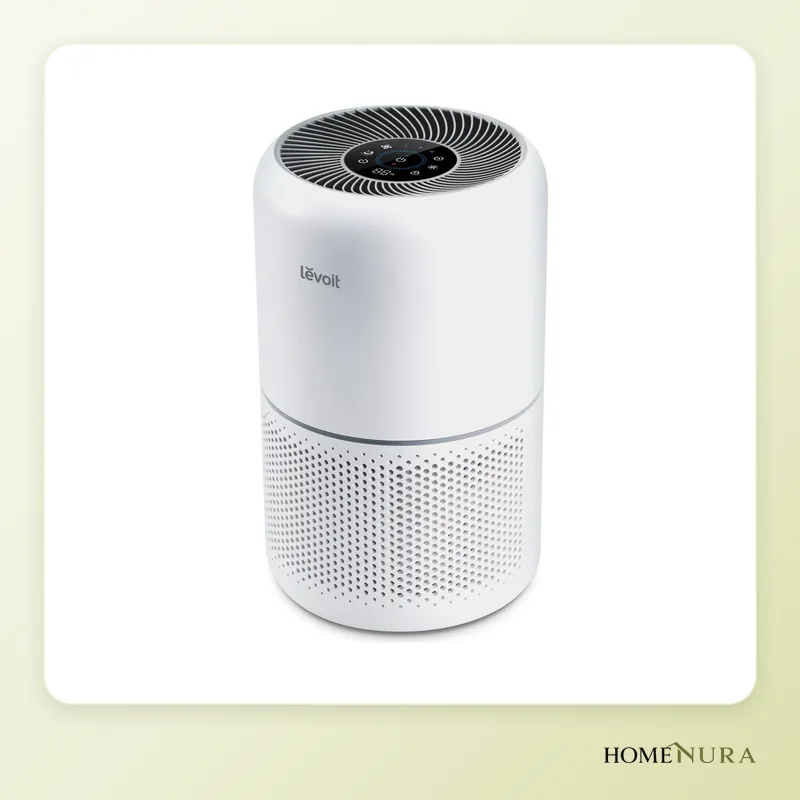
Levoit Core 300S
H13 HEPA filter, a CADR of around 141 CFM (240 m³/h), Wi-Fi and Alexa and Google support, with affordable replacement filters: ideal for a bedroom.
Photo: © Levoit
- View on Amazon →
Best smart midrange pick
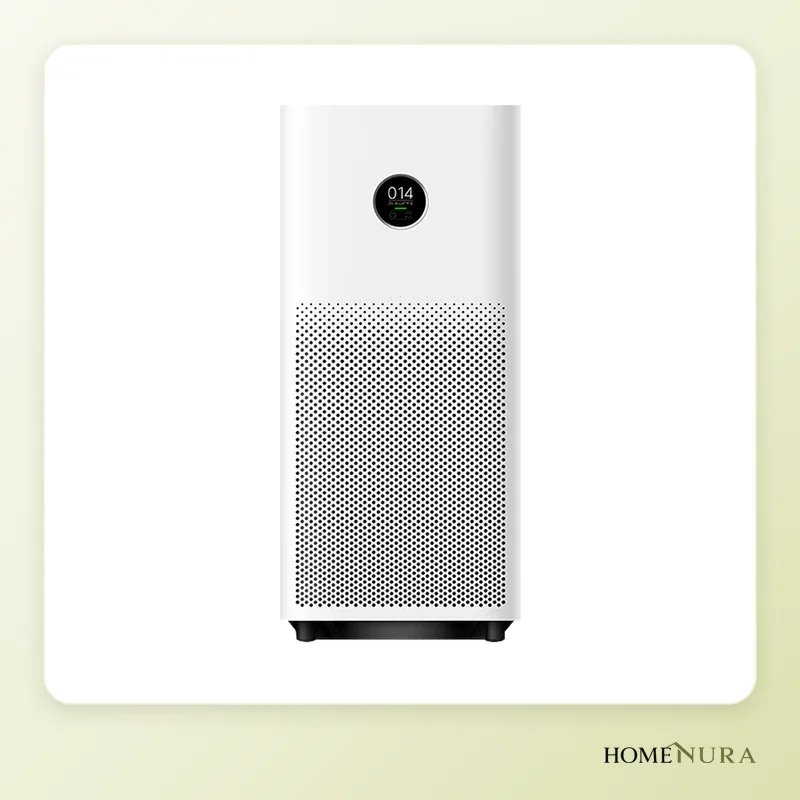
Xiaomi Smart Air Purifier 4
A CADR of 235 CFM (400 m³/h), a laser PM2.5 sensor and an OLED display, with the Mi Home app and Alexa and Google support.
Photo: © Xiaomi
- View on Amazon →
Best for large rooms
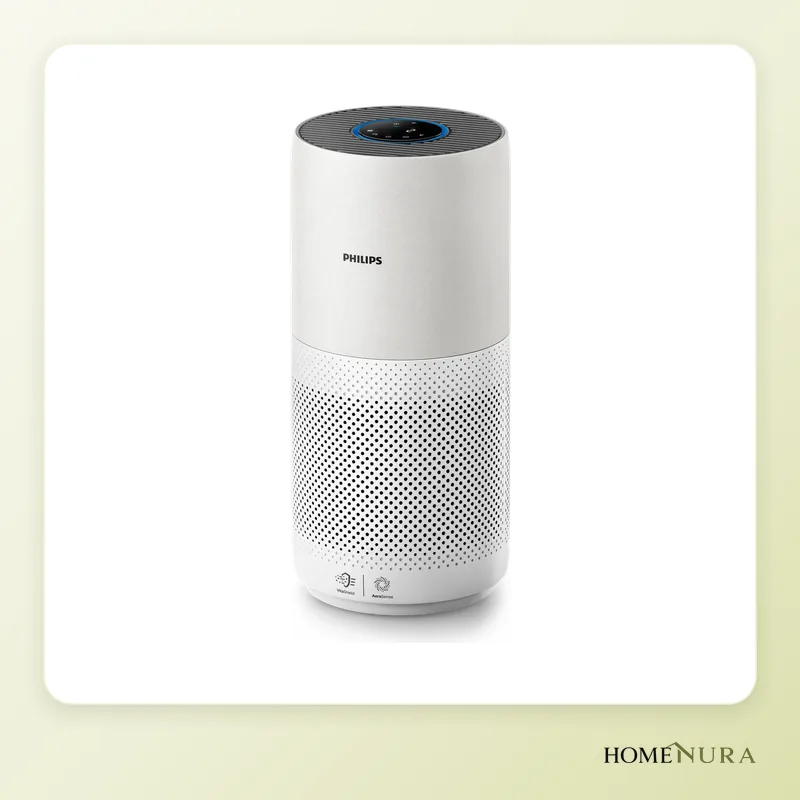
Philips AC2939/10
Rated for rooms up to 1,055 sq ft (98 m²) with a CADR of 224 CFM (380 m³/h), it adjusts its speed with the AeraSense sensor and drops to 15 dB in sleep mode.
Photo: © Philips


As an Amazon Associate I earn from qualifying purchases. Amazon affiliate links: we earn a commission at no extra cost to you.
Why indoor air quality is a health issue in 2026
We spend most of our lives indoors, yet the air at home is often more polluted than the air outside: the US Environmental Protection Agency (EPA) reports indoor concentrations of some pollutants 2 to 5 times higher than outdoor levels. Fine particles (PM2.5), volatile organic compounds (VOCs), allergens (pollen, dust mites, pet dander), mold spores, formaldehyde off-gassing from new furniture: the sources of indoor pollution are many, and most of them are invisible.
In France, the national health-safety agency ANSES flagged the heavy health and economic cost of indoor air pollution as early as 2014, and respiratory allergies affect a large and growing share of Europe's population. That's why the air purifier has gone from a comfort gadget to a genuinely useful everyday appliance, working alongside good ventilation rather than replacing it.
This complete guide explains how air purifiers work, which specs matter most, which brands to look at and which tier to aim for in 2026. It's based on manufacturer specifications, independent reviews and verified owner feedback. You'll also find our comparison of the best air purifiers for allergies and our portable air conditioner vs. fan breakdown to round out your indoor comfort setup.
Models mentioned in this guide


Photos: © Levoit, © Xiaomi, © Philips, © Blueair
As an Amazon Associate I earn from qualifying purchases. Amazon affiliate links: we earn a commission at no extra cost to you.
How does an air purifier work?
HEPA filters: the gold standard
The HEPA (High Efficiency Particulate Air) filter is the most effective and best-proven filtration technology. Under the European EN 1822 standard, an H13 HEPA filter captures at least 99.95% of particles at the most penetrating particle size (around 0.1 to 0.3 µm), and an H14 filter reaches 99.995%. Those are the hardest particles to catch, so the filter does even better on larger and smaller ones. On US product listings, you'll often see "True HEPA," which typically means the filter captures at least 99.97% of particles at 0.3 microns.
A true HEPA filter is a pleated mat of ultra-fine glass fibers folded in a zigzag to maximize the filtering surface. It traps particles three ways: interception, impaction and diffusion. Watch out for labels like "HEPA-like" or "HEPA-type," which don't guarantee H13 or H14 performance.
Activated carbon filters: for gases and odors
Activated carbon is carbon processed to be extremely porous (several hundred to more than a thousand square meters of surface area per gram). It adsorbs volatile organic compounds (VOCs), formaldehyde, cooking odors, cigarette smoke and some gases. Most purifiers combine a pre-filter, an activated carbon filter and a HEPA filter in a single replaceable cartridge.
UV-C light: neutralizing microorganisms
Some purifiers include a UV-C lamp that emits ultraviolet light at around 254 nm. That wavelength damages the DNA of bacteria, viruses and mold, leaving them unable to reproduce. How well it works depends on exposure time: the air has to move past the lamp slowly enough. In practice, UV-C is an add-on, not a substitute for a HEPA filter.
Ionizers: a mixed record
An ionizer releases negative ions that cling to airborne particles, weighing them down so they drop onto the floor and other surfaces. Pros: silent, with no filter to replace. Cons: the particles aren't removed (they settle and can be stirred up again), and some ionizers produce ozone, a lung irritant. An ionizer on its own isn't recommended for people with allergies.
What to look for in an air purifier
CADR (Clean Air Delivery Rate)
CADR is the single most important spec. It tells you how much filtered air the purifier delivers: European spec sheets give it in cubic meters per hour (m³/h), US boxes in cubic feet per minute (CFM), often as an AHAM Verified rating (check whether the model sold in your country carries it). The higher the CADR, the faster the purifier cleans a room. It can be rated separately for smoke, dust and pollen.
| Room size | Minimum recommended CADR | Ideal CADR |
|---|---|---|
| 110–160 sq ft (10–15 m²) | 59 CFM (100 m³/h) | 88 CFM (150 m³/h) |
| 160–270 sq ft (15–25 m²) | 88 CFM (150 m³/h) | 147 CFM (250 m³/h) |
| 270–430 sq ft (25–40 m²) | 147 CFM (250 m³/h) | 235 CFM (400 m³/h) |
| 430–645 sq ft (40–60 m²) | 235 CFM (400 m³/h) | 353 CFM (600 m³/h) |
| 645+ sq ft (60+ m²) | 353 CFM (600 m³/h) | 471+ CFM (800+ m³/h) |
Rule of thumb: the CADR should give the room at least 4 to 5 air changes per hour. For a 215 sq ft (20 m²) bedroom with 8 ft ceilings (about 1,750 cu ft, or 50 m³, of air), aim for a CADR of at least 118 CFM (200 m³/h).
Room coverage and sizing
Manufacturers list a maximum room size, but it's often based on just 1 to 2 air changes per hour. If you have allergies, cut that figure roughly in half to get the area a purifier really covers at 4 to 5 air changes. A slightly oversized purifier running on a quiet setting beats an undersized one running flat out on turbo.
Noise level (dB)
Noise matters a lot, especially in a bedroom. Here's a quick reference:
| Noise level | Sounds like | Best for |
|---|---|---|
| 20 – 25 dB | A whisper | Bedroom, overnight, nursery |
| 25 – 35 dB | A library | Home office, quiet living room |
| 35 – 50 dB | Light rain | Living room, kitchen |
| 50 – 65 dB | Normal conversation | Short bursts on turbo |
Tip: check the noise level on night mode or the lowest fan speed. A purifier rated at 50 dB on max can drop below 25 dB in sleep mode, which is ideal for a bedroom.
Replacement filter cost and frequency
This is the hidden cost of owning an air purifier. A combined HEPA and activated carbon filter needs replacing every 6 to 12 months, depending on use. Over several years, you can spend more on filters than on the purifier itself, so check the price and availability of genuine replacement filters before you buy.
| Brand / model | Typical replacement interval | Filter cost |
|---|---|---|
| Levoit Core 300S | 6 to 8 months | Moderate |
| Coway Airmega 250 | Up to 12 months | Average |
| Blueair Blue Pure 411i Max | About 6 months | Average |
| Philips AC2939/10 | About 12 months | Average to high |
| Dyson TP09 | About 12 months | High |
| Xiaomi Smart Air Purifier 4 | 6 to 12 months | Moderate |
Smart features and sensors
In 2026, many purifiers have laser PM2.5 sensors that track fine-particle levels in real time. The most complete models add VOC/HCHO (formaldehyde) and humidity sensors. The companion app shows your air quality history, lets you set schedules and reminds you when a filter is due. Google Home and Amazon Alexa support is common; Apple HomeKit and Matter are still rarer, so check model by model.
Power consumption
An air purifier draws anywhere from a few watts in sleep mode to about 60 W on turbo. Left running in auto mode (the recommended setting), expect an average of 15 to 25 W, or roughly 130 to 220 kWh a year: about $26 to $44 a year at an example rate of 20 cents per kWh (check the rate on your utility bill). That's far less than a portable air conditioner (800 to 1,400 W). Some models, like Coway's Airmega line, have an Eco mode that slows or stops the fan once the air is clean.
The best air purifier brands in 2026
Levoit: best value
This American brand (part of the VeSync group) has become a go-to name thanks to affordable purifiers that perform well. The Core 300S (a CADR of about 141 CFM, or 240 m³/h, according to the manufacturer) is one of the best-selling models around. The Core 400S tops 235 CFM (400 m³/h) for larger rooms. H13 HEPA filters, the VeSync app, Alexa and Google Home support. Pros: low price, affordable filters. Cons: the smallest model, the Core 200S, has no PM2.5 sensor.
Coway: the Korean benchmark
Coway is one of South Korea's leading air treatment brands. The Airmega 250, sold in Europe, pairs HEPA and activated carbon filtration with a minimalist design that blends into any room. Pros: filtration quality, a smart Eco mode, a solid reputation for durability among owners. Cons: filters cost more than Levoit's or Xiaomi's.
Blueair: Scandinavian design
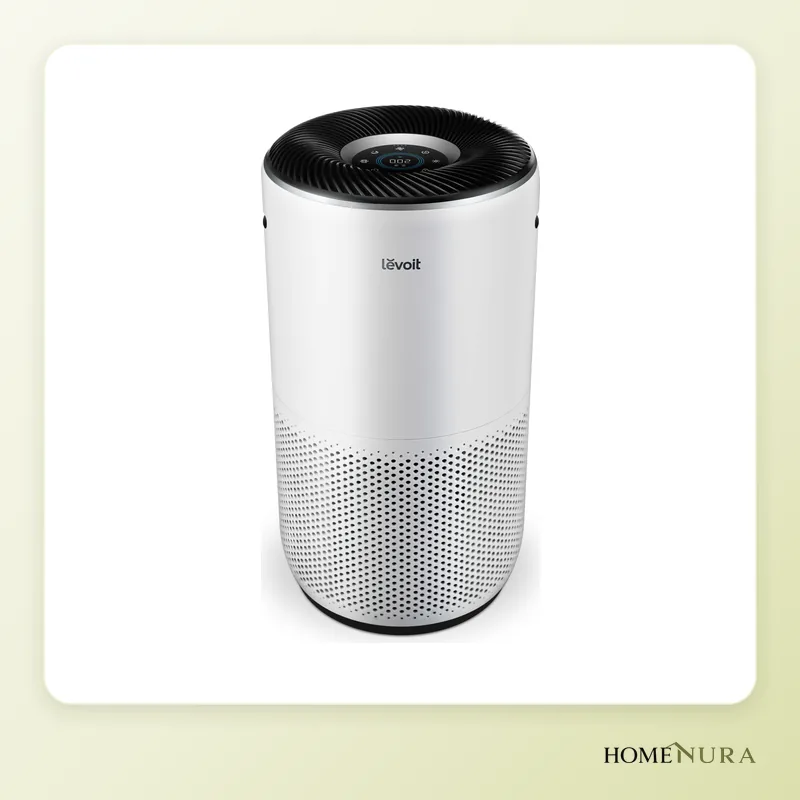
A Swedish brand now owned by Unilever, Blueair is known for clean-lined designs and strong filtration. Its HEPASilent technology combines mechanical and electrostatic filtration to move a lot of air with little noise. The Blue Pure 411i Max is a compact model that's well suited to bedrooms. Pros: quiet, good-looking. Cons: pricey proprietary filters.
Philips: a trusted European name
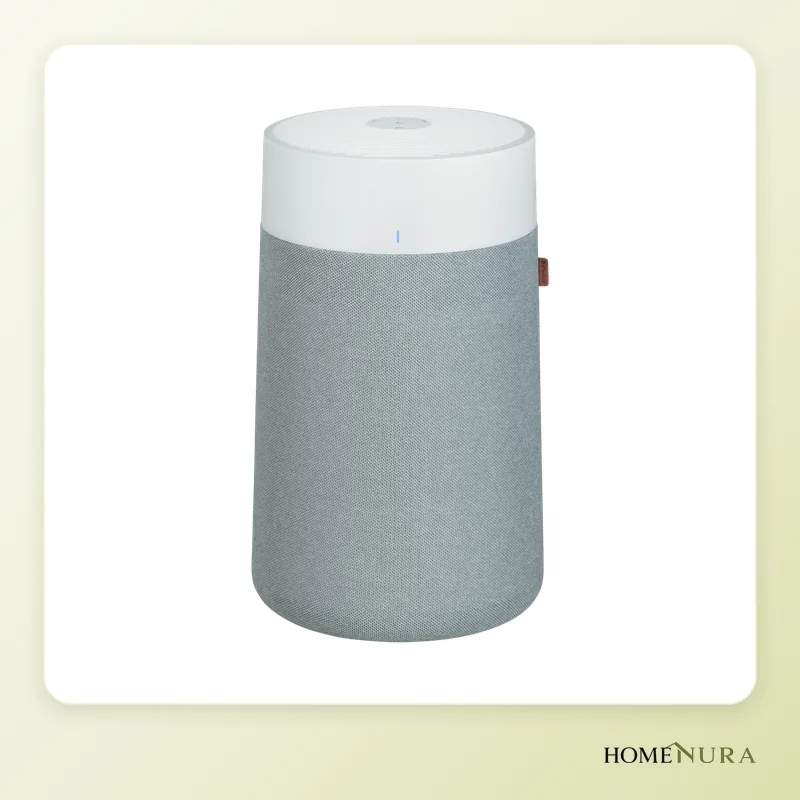
Philips purifiers use an AeraSense sensor that adjusts fan speed automatically to the air quality. The AC2939/10 (2000i Series) is rated for rooms up to 1,055 sq ft (98 m²) with a CADR of 224 CFM (380 m³/h), and Philips quotes 15 dB in sleep mode. HEPA and activated carbon filters built in. Pros: accurate sensor, covers large rooms, after-sales support across Europe. Cons: the design looks dated next to rivals.
Dyson: the multitasker
Dyson combines purification and a fan (or a heater) in one appliance. The Purifier Cool Formaldehyde TP09 has an H13 HEPA filter and a catalytic filter that continuously breaks down formaldehyde. LCD screen, full-featured MyDyson app. Pros: two appliances in one, sensors, iconic design. Cons: very expensive, with modest purifying output for the money.
Xiaomi: affordable smart tech
Xiaomi sticks to its usual formula: solid technology at a sharp price. The Smart Air Purifier 4 offers a CADR of 235 CFM (400 m³/h), an OLED touchscreen, a laser PM2.5 sensor and Mi Home, Google Home and Alexa support. The Smart Air Purifier 4 Pro goes up to 294 CFM (500 m³/h) for large spaces. Pros: a lot of capacity for the price, connectivity, the Xiaomi ecosystem. Cons: filters need replacing fairly often with heavy use.
Buying guide by tier
Budget: the essentials for a small room
In this tier, you'll find purifiers with H13 HEPA filters and a CADR of 88 to 212 CFM (150 to 360 m³/h), suited to rooms of 110 to 270 sq ft (10 to 25 m²). The sensors are more basic, but filtration still handles the main allergens well.
- Levoit Core 300S: CADR of about 141 CFM (240 m³/h), H13 HEPA filter, Wi-Fi, Alexa and Google. One of the safest bets out there.
- Levoit Core 200S: compact, ideal for a 110–160 sq ft (10–15 m²) bedroom.
- Xiaomi Smart Air Purifier 4 Lite: CADR of 212 CFM (360 m³/h), PM2.5 sensor, very capable for its tier.
Midrange: the sweet spot
The right tier for most households: built-in PM2.5 sensors, a CADR of 177 to 265 CFM (300 to 450 m³/h), a smart auto mode and full connectivity.
- Xiaomi Smart Air Purifier 4: CADR of 235 CFM (400 m³/h), laser PM2.5 sensor, OLED display.
- Levoit Core 400S: CADR above 235 CFM (400 m³/h), full-featured app, accurate auto mode.
- Coway Airmega 250: HEPA and carbon filtration, Eco mode, polished design.
- Philips AC1715/10 (1000i Series): CADR of 177 CFM (300 m³/h), rooms up to 840 sq ft (78 m²), AeraSense sensor, Air+ app.
Premium: no compromises
Purifiers for large spaces of 430 to 1,075 sq ft (40 to 100 m²), with multiple sensors (PM2.5, VOC, HCHO), a high CADR, premium design and extra functions (fan, heater).
- Philips AC2939/10 (2000i Series): CADR of 224 CFM (380 m³/h), rooms up to 1,055 sq ft (98 m²), AeraSense sensor.
- Dyson Purifier Cool Formaldehyde TP09: H13 HEPA plus a catalytic formaldehyde filter, built-in fan.
- Blueair HealthProtect 7440i: CADR of 268 CFM (455 m³/h, smoke), HEPASilent Ultra, GermShield.
- Coway Airmega 400: dual filters, built for very large open-concept spaces.
Maintenance: a filter replacement schedule
Pre-filter: washable, clean it monthly
The pre-filter catches large particles (hair, lint, visible dust). It's usually washable or can be vacuumed, and should be cleaned every 2 to 4 weeks. A clogged pre-filter cuts airflow and puts extra strain on the HEPA filter.
HEPA filter: replace every 6 to 12 months
A HEPA filter is not washable (water ruins the fibers). Replace it when the purifier's indicator says so, or every 6 months (heavy use, pets, a polluted city) to 12 months (moderate use, a rural area). Tip: write the replacement date on the filter with a marker.
Activated carbon filter: replace every 3 to 6 months
Activated carbon saturates faster than HEPA media, especially with strong odors or high VOC levels. On combination cartridges (HEPA and carbon in one unit), you replace both at once. On models with separate filters, change the carbon filter more often.
UV-C lamp: replace every 12 to 24 months
UV-C lamps gradually lose their germicidal strength. Check the hours-of-use counter if your purifier has one.
Allergy seasons in Europe by country: when to run your purifier
| Country | Tree pollen | Grass pollen | Weeds / ragweed | Dust mites (peak) |
|---|---|---|---|---|
| France | Feb – May | May – Jul | Aug – Oct | Oct – Mar |
| Germany | Mar – May | May – Aug | Jul – Sep | Oct – Mar |
| United Kingdom | Feb – May | May – Jul | Jun – Sep | Oct – Mar |
| Spain | Jan – Apr | Apr – Jun | Aug – Oct | Oct – Feb |
| Italy | Feb – Apr | Apr – Jun | Jul – Oct | Oct – Mar |
| Netherlands | Mar – May | May – Aug | Jul – Sep | Oct – Mar |
Tip: if you have allergies, run your purifier around the clock during pollen season, in auto mode. Outside peak periods, a few hours a day is enough. Dust mites are around all year but thrive in fall and winter in warm, humid homes. These windows are only a guide: they shift with the region and each year's weather, so check the local pollen forecast where you live.
Frequently asked questions
HEPA filter or ionizer: which is better?
How often should you replace a HEPA filter?
Do air purifiers really help with allergies?
How much electricity does an air purifier use?
Are air purifiers loud at night?
Can an air purifier remove viruses (COVID, flu)?
What's the best air purifier for seasonal allergies?
From our complete guide
Comfort & Air Quality →Our recommendations
Photos: © Levoit, © Xiaomi, © Philips, © Blueair
As an Amazon Associate I earn from qualifying purchases. Amazon affiliate links: we earn a commission at no extra cost to you.
