Best Smart and Biometric Safes of 2026: Fingerprint, Keypad or App
Burg-Wächter Combi-Line, Yale Smart Safe, PointSafe, Master Lock and Phoenix Next compared on European burglary ratings (EN 14450, EN 1143-1), fire ratings, anchoring, insurance, backup keys and batteries.

Quick answer
What is the best smart safe in 2026?
- View on Amazon →
Best overall
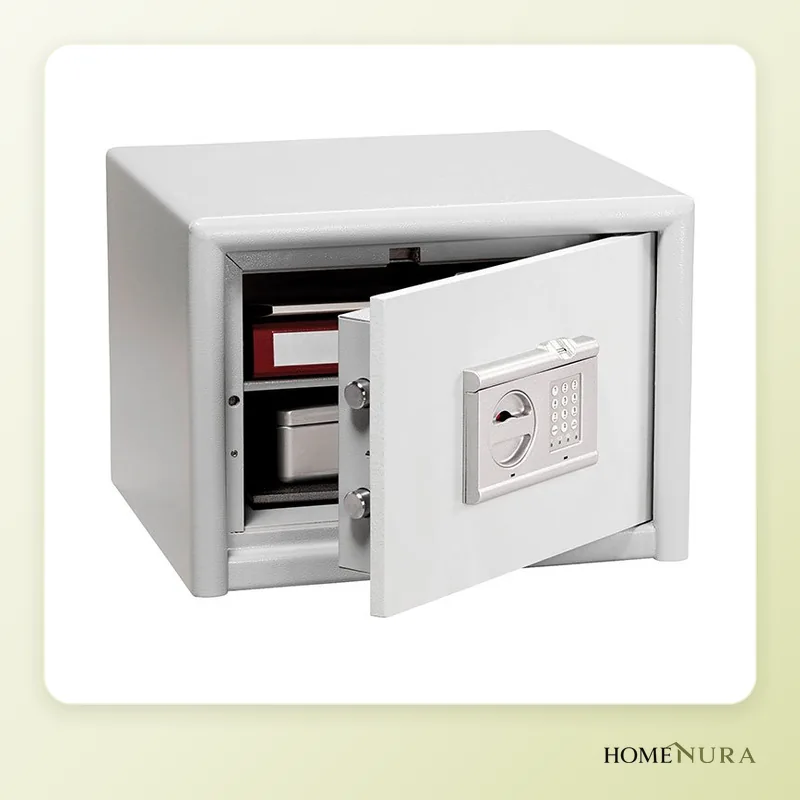
Burg-Wächter Combi-Line CL 20 E FS
Fingerprint access, a European EN 14450 S2 burglary rating and 30 minutes of fire protection for paper (LFS 30 P).
Photo: © Burg-Wächter
- View on Amazon →
Best value
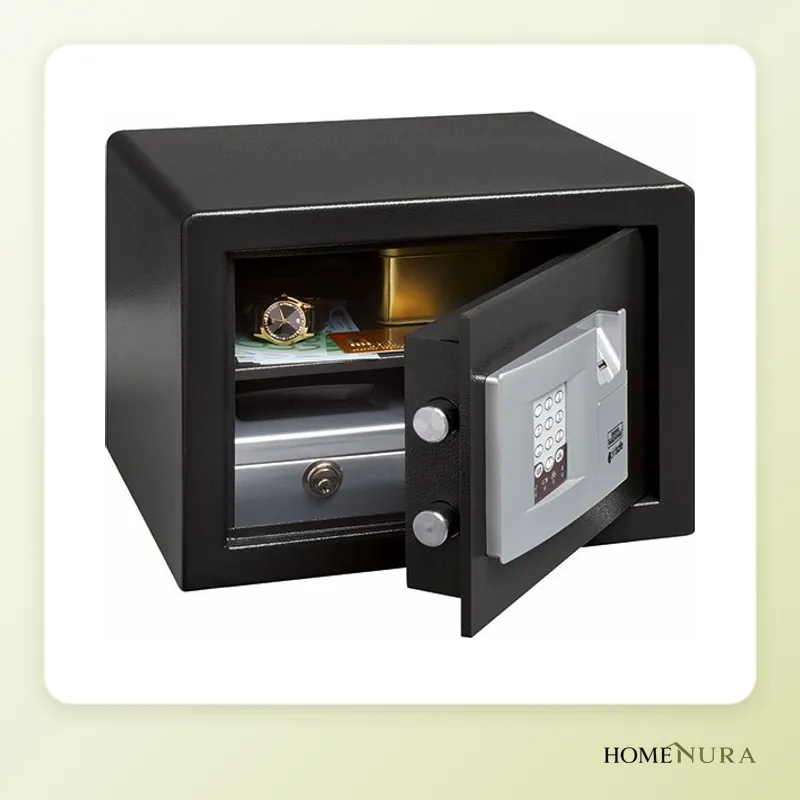
Burg-Wächter PointSafe P 2 E FS
Compact 0.7 cu ft (21 L) safe with a keypad, fingerprint reader and backup key, ready to bolt to a wall or floor.
Photo: © Burg-Wächter
- View on Amazon →
Best for smartphone alerts
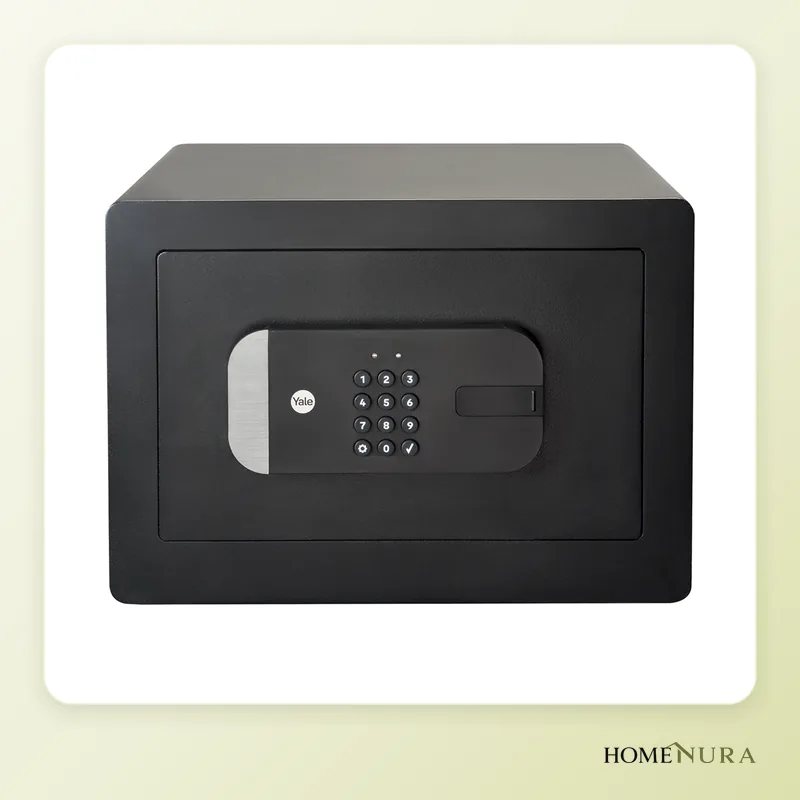
Yale Smart Safe YSS/250/EB1
Yale Home app with a notification every time the safe opens, temporary codes and remote access through the Wi-Fi bridge.
Photo: © ASSA ABLOY / Yale


As an Amazon Associate I earn from qualifying purchases. Amazon affiliate links: we earn a commission at no extra cost to you.
For most households, the best smart or biometric home safe of 2026 is the Burg-Wächter Combi-Line CL 20 E FS: it combines a fingerprint reader, EN 14450 level S2 burglary certification and 30 minutes of fire protection for paper. If what you want most is a phone alert every time the door opens, the Yale Smart Safe is the most complete smart option, as long as you accept that it holds up less well against a burglar with tools.
This comparison is based on manufacturer specs, published certifications and verified owner reviews. It covers five models sold in Europe, explains what the EN 14450, EN 1143-1 and fire ratings really mean, and walks through the points people tend to overlook: anchoring, insurance, the backup key and power. You can also browse our full lineup of smart safes.
How to choose a smart safe
1. Burglary certification: EN 14450 or EN 1143-1
This is the most important criterion, and the one product pages mention least. Two European standards grade how well a safe resists a break-in:
- EN 14450: covers entry-level and midrange safes, with two levels, S1 and S2 (S2 is the stronger one). It's the typical level for a good home safe.
- EN 1143-1: the standard for "professional" safes, with grades from 0 to XIII. Grade 0 or I already sits above EN 14450 S2 and suits homeowners who keep valuable jewelry or larger amounts of cash.
A certified safe has been attack-tested by an independent body (such as ECB·S or VdS). An uncertified safe may be well built, but there's no objective way to measure how much it can take. The "insurance rating" figures some UK retailers show are sales guidance, not a European certification. Safes made for the US market are more often rated by UL instead, so check which ratings the version sold in your country actually carries.
2. Fire resistance: a separate question
A burglary-resistant safe isn't automatically fire-resistant, and a fire safe isn't necessarily hard to break into. Fire ratings are separate:
- EN 15659: classes LFS 30 P and LFS 60 P, meaning 30 or 60 minutes of protection for paper documents.
- EN 1047-1: a tougher standard, with classes for paper (P) and for data media (D, DIS).
- NT Fire 017: a widely used Nordic test, with classes such as "60 Paper" or "120 Paper."
Note that "Paper" or "P" means the inside stays cool enough for paper, not for a USB flash drive, a hard drive or film negatives, which tolerate far less heat. For those you need a "Data" or "DIS" rating.
3. How it opens
Fingerprint, PIN, app or key: most models combine several methods. A fingerprint reader is fast and saves you from remembering a code, but you should enroll several fingers (an injured or very dry finger may not read well). An app adds an access log and alerts, but it depends on Bluetooth or Wi-Fi and an online account.
4. Power and emergency access
Electronic locks run on batteries. Check how you open the safe when they die: a mechanical override key, external contacts for an emergency battery, or an emergency code. Each has its merits, but a poorly hidden override key becomes the weak point of the whole system.
5. Anchoring, weight and capacity
A small 33 lb (15 kg) safe that isn't bolted down can be carried off under one arm. Weight and the ability to bolt the safe to a wall or floor matter as much as door thickness. For capacity, measure what you want to store: a passport and some jewelry fit in 0.7 cu ft (20 L), while a laptop or full-size file folders need more room.
Models mentioned in this guide
- Master Lock LX110BEURHROView on Amazon →
- Phoenix Next LS7001FBView on Amazon →
Photos: © Burg-Wächter, © ASSA ABLOY / Yale
As an Amazon Associate I earn from qualifying purchases. Amazon affiliate links: we earn a commission at no extra cost to you.
The 5 best smart and biometric safes of 2026
Burg-Wächter Combi-Line CL 20 E FS: best overall
German maker Burg-Wächter's Combi-Line is one of the few home safe lines to combine a fingerprint lock, burglary certification and fire protection. The CL 20 E FS is certified EN 14450 level S2 and rated LFS 30 P under EN 15659, which means 30 minutes of fire protection for paper.
- Pros: SecuTronic electronic lock with a fingerprint module (up to 20 fingerprints, according to the manufacturer), double-walled construction, 1 in (25 mm) round bolts, two anchor holes in the back and two in the base, and a weight of about 120 lb (55 kg) that makes it hard to carry off.
- Cons: no app or phone alerts; midsize interior (about 1 cu ft, or 27 L); you'll need two people to install it.
- Best for: households that want a genuinely certified safe for jewelry, IDs and important papers, with quick fingerprint access. The line also includes the CL 10, CL 40 and CL 60 E FS.
Yale Smart Safe: best for app control and alerts
The Yale Smart Safe (model YSS/250/EB1) goes furthest on smart features in this lineup. It's controlled through the Yale Home app over Bluetooth and becomes accessible remotely if you add the Yale Connect Wi-Fi Bridge, sold separately.
- Pros: a notification every time it's opened, access history, shareable and temporary codes, voice assistant support (including Apple HomeKit and Google Assistant), two 0.8 in (20 mm) bolts, interior light, two override keys included, four anchor holes in the back and base.
- Cons: no fingerprint reader, no EN burglary certification highlighted in its specs, no fire protection; remote access requires the extra Wi-Fi bridge.
- Best for: people who want to know when the safe is opened (kids, roommates, caregivers) and store items of moderate value, ideally with the safe bolted down firmly.
Burg-Wächter PointSafe P 2 E FS: best value
The PointSafe P 2 E FS is a compact 0.7 cu ft (21 L) furniture safe with an electronic keypad lock plus a fingerprint reader.
- Pros: opens by code or fingerprint, mechanical override key, 0.7 in (18 mm) bolts, a 0.16 in (4 mm) steel door, concealed hinges, anchor holes in the back and base with hardware included, and a compact size (about 31 lb, or 14 kg) that fits easily in a closet or cabinet.
- Cons: no EN 14450 certification, no fire protection, no app. Its 0.08 in (2 mm) steel body makes it a deterrent rather than a real barrier against a well-equipped burglar.
- Best for: a first biometric safe for passports, some cash and everyday jewelry, as long as you bolt it to a wall or floor.
Master Lock LX110BEURHRO: the roomiest entry-level biometric safe
Master Lock's large biometric safe offers 0.9 cu ft (25.4 L) in a flat shape that holds a laptop or full-size (A4) documents.
- Pros: stores 30 fingerprints, two motorized steel bolts, concealed hinge, interior light, a lined floor to prevent scratches, two override keys and a jump-start kit for dead batteries, mounting hardware included.
- Cons: no EN burglary certification or fire rating mentioned by the manufacturer, no app; runs on four AA batteries, not included.
- Best for: people who mainly need space for a laptop, tablet and paperwork, with simple fingerprint access for the whole family.
Phoenix Next LS7001FB: the premium pick for fire protection
British maker Phoenix designed its Next series as high-end safes for jewelry and documents. The LS7001FB (black finish) is rated 60 Paper under NT Fire 017, which means 60 minutes of fire protection for paper.
- Pros: up to 128 fingerprints or code entry, anti-tamper lockout and internal alarm, three-sided locking, 1.7 cu ft (47 L) with a felt-lined drawer and removable shelf, and a weight of about 235 lb (107 kg).
- Cons: the specs highlight fire protection rather than an EN burglary certification; it's bulky and heavy, so the floor has to handle the load and installation takes care.
- Best for: households whose main concern is protecting documents and a jewelry collection from fire, in a safe that looks like furniture.
Comparison table
| Model | Unlock method | Burglary rating | Fire rating | Smart features | Best for |
|---|---|---|---|---|---|
| Burg-Wächter Combi-Line CL 20 E FS | Fingerprint + code | EN 14450 S2 | LFS 30 P (EN 15659) | None | Certified all-around protection |
| Yale Smart Safe | Code, app, key | No EN certification | No | Bluetooth, Wi-Fi via bridge | Alerts and access tracking |
| Burg-Wächter PointSafe P 2 E FS | Fingerprint, code, key | No EN certification | No | None | Compact first safe |
| Master Lock LX110BEURHRO | Fingerprint, key | No EN certification | No | None | Laptop and full-size documents |
| Phoenix Next LS7001FB | Fingerprint + code | No EN certification | 60 Paper (NT Fire 017) | None | Jewelry and documents, fire risk |
Bolting it to a wall or floor: the step not to skip
A safe that isn't bolted down can be carried away and opened at leisure somewhere else. EN 14450 and EN 1143-1 require safes under 1 metric ton (about 2,200 lb) to have an anchoring provision, and insurers generally expect it to actually be used.
- The right surface: a load-bearing concrete or solid masonry wall, or a concrete slab. A drywall partition or a lightweight wood-framed floor won't hold a safe against a pry bar.
- The right hardware: use the anchors supplied or anchors suited to the material, following the manufacturer's instructions. Certified safes often specify the anchoring required.
- The right spot: avoid the primary bedroom and the hall closet, the first places burglars search. A discreet corner that's awkward to reach with tools is better.
- Weight: a heavy model such as the Phoenix Next (about 235 lb, or 107 kg) means checking that the floor can take the load, especially upstairs.
Insurance: what a safe can change, and what it doesn't guarantee
Owning a safe doesn't automatically raise your coverage limits. Every insurer sets its own rules, but a few principles come up often:
- Home insurance policies usually cap coverage for jewelry, valuables and cash. Some insurers accept higher amounts if these items are kept in a certified safe (EN 14450 or EN 1143-1) that's properly anchored.
- An uncertified safe is rarely taken into account, however solid it looks.
- Keep the receipt, the certificate of conformity and a photo of the installation: that's what you'll be asked for after a claim.
- Before you buy, ask your insurer in writing which certification level it requires and for what amounts. That's the only answer that counts for your policy.
Backup key and power: plan for failure
Every electronic lock in this lineup runs on batteries. Most models warn you when they run low: replace them right away and note the date on your calendar. If the batteries die completely, your options depend on the model: a mechanical override key (Yale Smart Safe, PointSafe, Master Lock), a jump-start kit that powers the lock from outside (Master Lock) or an emergency code.
The override key is handy, but it bypasses both the fingerprint reader and the code. Never keep it next to the safe or in a drawer in the same room. Leave it with someone you trust or store it outside your home. With a smart safe, remember that the app doesn't replace opening it on the spot: if the network or server is down, the keypad and key are what count.
Mistakes to avoid
- Confusing fire-resistant with burglary-resistant: a fire-rated safe can be easy to force open, and vice versa.
- Storing USB flash drives in a "Paper" rated safe: digital media need a "Data" or "DIS" rating.
- Not bolting the safe down: the most common and most costly mistake.
- Enrolling just one finger: register at least two fingers per person, on both hands.
- Keeping the factory code: change default codes immediately and delete unused temporary codes in the app.
- Relying on a retailer's "insurance rating": only a European certification and your insurer's written agreement count.
The bottom line
To truly protect valuables, the Burg-Wächter Combi-Line CL 20 E FS is the most balanced choice: fingerprint access, EN 14450 S2 certification and 30 minutes of fire protection for paper. On a tighter budget, the PointSafe P 2 E FS gives you biometric access in a compact size that you must bolt down. To get an alert every time the door opens, the Yale Smart Safe is still the smart-safe benchmark, while the Master Lock LX110BEURHRO suits people who need space and the Phoenix Next LS7001FB those most worried about fire.
A safe is only one layer of protection: pair it with a security system and a solid, well-secured door. To learn more, read our smart home security guide and our article on home security systems with no monthly fee.
Frequently asked questions
Are fingerprint safes reliable?
How do you open an electronic safe if the batteries are dead?
Do you have to bolt a safe to the wall or floor?
Does a fireproof safe protect USB flash drives and hard drives?
Can a hacker open a smart safe remotely?
Will a safe get you better insurance coverage?
From our complete guide
Home Security →Our recommendations
- Master Lock LX110BEURHROView on Amazon →
- Phoenix Next LS7001FBView on Amazon →
Photos: © Burg-Wächter, © ASSA ABLOY / Yale
As an Amazon Associate I earn from qualifying purchases. Amazon affiliate links: we earn a commission at no extra cost to you.


