Portable AC Not Cooling? 8 Causes and Fixes (2026)
Portable air conditioner not cooling, or not cooling enough? A full diagnosis: exhaust hose, clogged filter, too few BTU, wrong setting, refrigerant leak. Step-by-step fixes and a troubleshooting table.

Portable air conditioner not cooling? Start here
It's one of summer's most frustrating problems: you plug in the unit, set it to 64°F, let it run for hours, and the room stays just as hot. The good news: in the vast majority of cases, when a portable air conditioner isn't cooling, the problem isn't a serious breakdown. It's an installation, maintenance or sizing issue you can fix yourself in a few minutes.
Before you call for repair or buy a new unit, work through a methodical diagnosis. In this guide we go through the real causes, from the most common to the most serious, with concrete step-by-step fixes. If you're still deciding which kind of cooling suits you, see our portable AC vs. fan comparison.
Keep one thing in mind: a single-hose portable AC doesn't work like a wall-mounted ductless mini-split. It's far more sensitive to how it's installed, the size of the room and the temperature outside. Often, when the unit isn't cooling enough, nothing is broken: it's fighting conditions you can easily improve. Let's go through them one by one, starting with the one-minute checks and saving the problems that need a pro for last.
Models mentioned in this guide
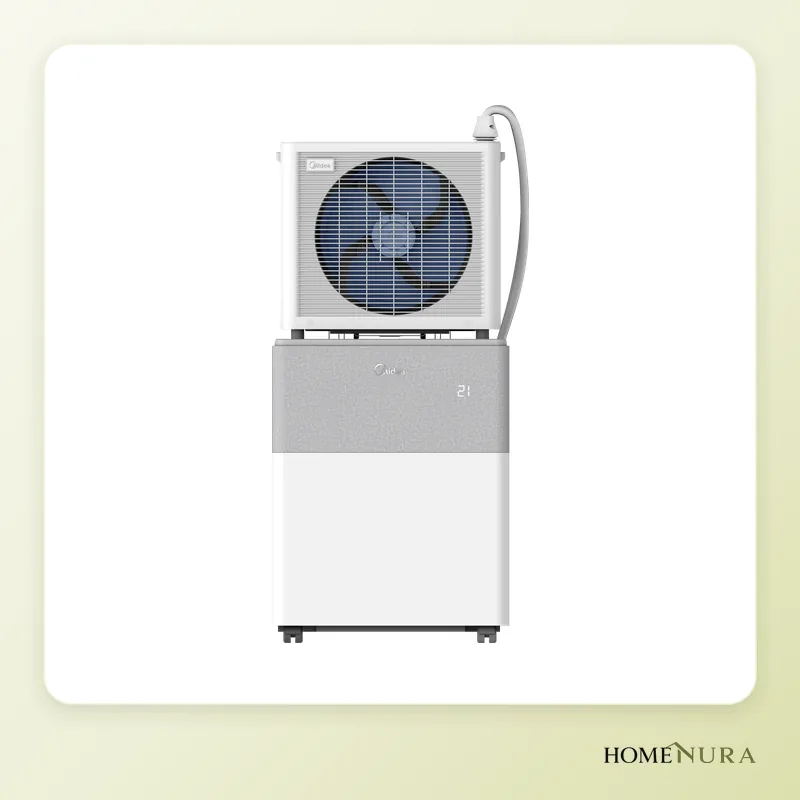
- Midea Silent Cool 26 Pro WFView on Amazon →
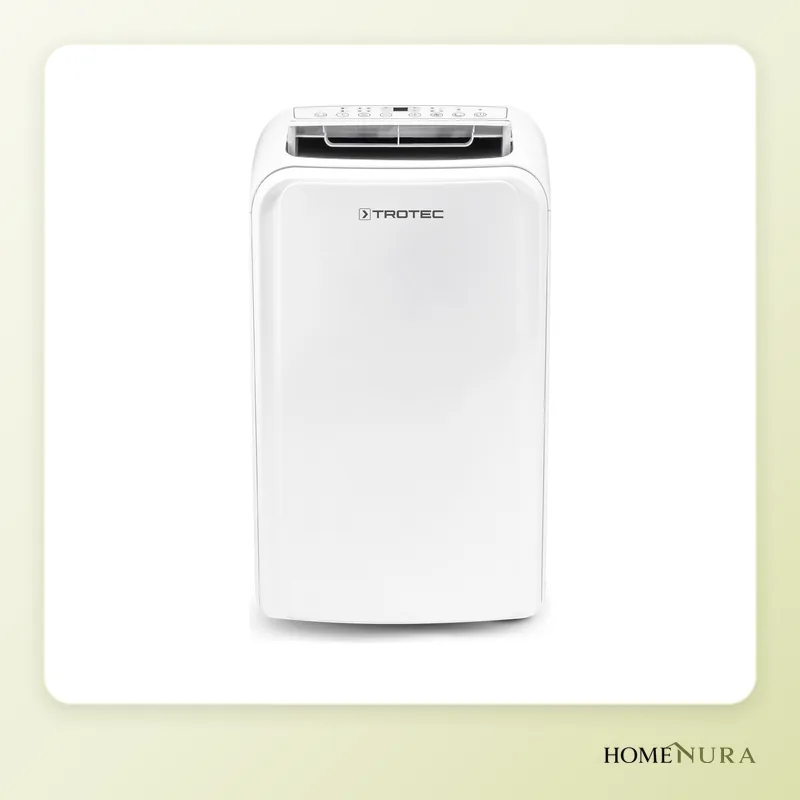
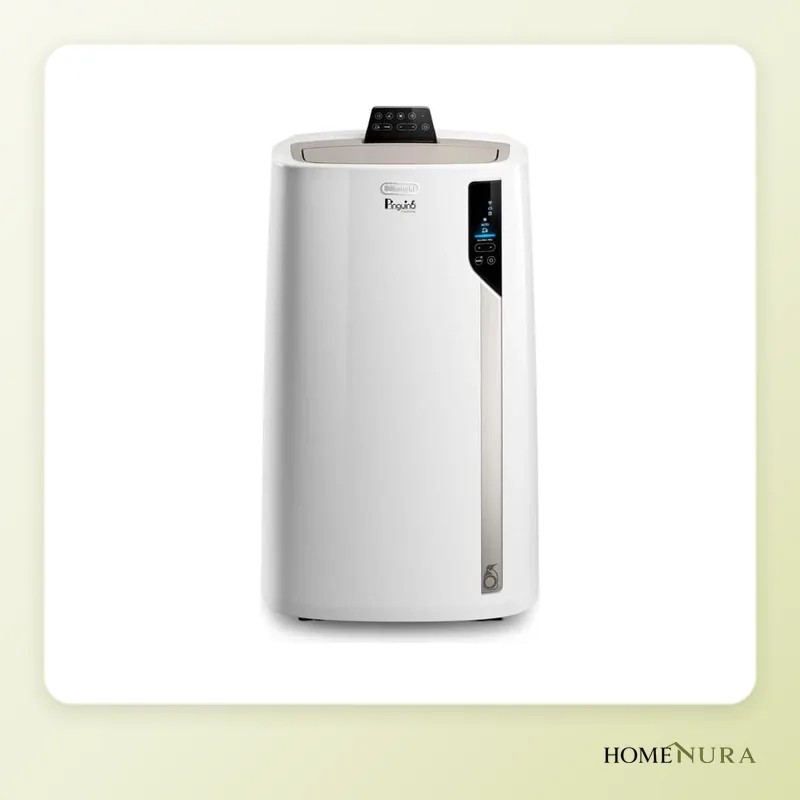
- Olimpia Splendid Dolceclima Air Pro 14 HP WiFiView on Amazon →


Photos: © Midea, © Trotec, © De'Longhi
As an Amazon Associate I earn from qualifying purchases. Amazon affiliate links: we earn a commission at no extra cost to you.
Quick troubleshooting table
| Symptom | Likely cause | Fix |
|---|---|---|
| Air blows but it's neither cold nor warm | Fan mode instead of Cool | Switch to Cool mode (snowflake icon) |
| Barely cools and the hose gets hot | Exhaust hose badly routed or kinked | Straighten the hose and run it out the window |
| Very weak airflow | Clogged filter | Clean or replace the filter |
| Shuts off on its own after a few minutes | Full condensate tank | Empty the water tank |
| Runs, but the room doesn't get cooler | Not enough BTU for the room | Cool a smaller area or size up |
| Cools much less than it used to | Possible refrigerant leak | Call a certified HVAC technician |
Cause 1: the wrong mode is selected
It sounds trivial, but it's the number one cause of breakdowns that aren't really breakdowns. Many units default to Fan mode or Dry (dehumidify) mode, which move air or pull out moisture without really lowering the temperature. If the compressor never kicks on, the unit will never truly cool.
- Press the Mode button until you see the snowflake icon or the word Cool.
- Set the target temperature several degrees below the current room temperature.
- Listen for the compressor to start (a low hum) after a minute or two.
- Turn off the timer and Eco mode while you test, to rule out any power limiting.
Cause 2: the exhaust hose isn't installed correctly
This is by far the most common cause. A portable AC pulls heat out of the room and pushes it outside through the exhaust hose. If that hot air doesn't actually leave the room, it comes right back in and cancels out the cooling. It's the most widespread mistake, and also the easiest to fix without spending a dime.
A detail many people miss: the longer and twistier the hose, the hotter its own surface gets and the more heat it radiates back into the room. The hose itself is a good clue: if the last section feels very hot after a while, the run is probably too long or has too many bends.
How to check and fix the hose
- Run the hose straight to a window or an outside vent; never let it loop around the room.
- Keep it as short and straight as possible: every bend and every extra foot of hose cuts performance.
- Avoid kinks, crushed sections and U-shaped sags: hot air builds up there and flows back inside.
- Make sure the hose is firmly connected to the outlet on the back of the unit and hasn't worked loose.
- Don't extend the hose with DIY parts or swap in a longer one: its length is matched to the unit's airflow.
Cause 3: the window isn't sealed
There's no point pushing hot air out if outside air leaks back in around the hose. Most units come with a window kit for exactly this reason.
- Install the window kit that came with the unit; if it's missing, inexpensive universal panels are available.
- Seal the gaps around the hose with tape or foam weatherstripping.
- Keep doors and windows closed and lower the blinds during the hottest hours.
- On a casement or tilt-and-turn window, get a kit made for that window type: the wedge-shaped gaps left by a cranked-out or tilted sash let in a huge amount of heat.
A simple test: with the unit running, hold your hand near the window frame and the hose seal. If you feel a stream of warm air coming in, you've found a leak that's undoing the unit's work.
Cause 4: the filter is clogged
The filter traps dust. When it clogs, the unit pulls in less air, airflow drops and cooling capacity falls off a cliff. It's basic maintenance, and it's often forgotten.
- Find the filter (usually behind a grille on the back or side) and pull it out.
- Wash it in lukewarm water with mild soap, or gently vacuum off the dust.
- Let it dry completely before putting it back: a damp filter invites mold.
- Repeat every two to three weeks during heavy use.
Cause 5: the condensate tank is full
As it cools, the unit produces water through condensation. Some models evaporate it; others collect it in an internal tank. When the tank fills up, a safety sensor shuts off the compressor: the fan keeps blowing but stops cooling, sometimes with an "FL" or "Full" code on the display.
- Empty the water tank as described in the manual.
- If your model supports it, connect a drain hose for continuous drainage so you don't have to empty it by hand.
- Make sure the drain plug is closed tight after emptying.
Cause 6: the room is too big (not enough BTU)
If the unit runs fine but the room doesn't cool down enough, it's probably underpowered. Cooling capacity is measured in BTU per hour. A small unit in a big living room can run flat out and never reach the set temperature, like a small car loaded to the roof struggling up a hill.
This is a key point when you buy, and a common source of disappointment: many people choose on price and end up with a unit that's too small for their living room. Getting the BTU rating right is what separates a unit that really cools from one that just makes noise.
How many BTU for your room size
| Room size | Recommended BTU |
|---|---|
| Up to 160 sq ft (15 m²) | 7,000–9,000 BTU |
| 160–270 sq ft (15–25 m²) | 9,000–12,000 BTU |
| 270–375 sq ft (25–35 m²) | 12,000–14,000 BTU |
| 375–485 sq ft (35–45 m²) | 14,000–18,000 BTU |
These are guideline figures for a typical room. Strong sun, a top-floor room, high ceilings or lots of heat-producing appliances mean stepping up a size. An undersized unit will never reach the set temperature, and it will use more power trying. To compare power and energy use, see our comparison by room size.
Cause 7: extreme heat outside
In a heat wave, with 104°F (40°C) outside, even a correctly sized unit loses performance: it has to dump heat into air that's already very hot. That's not a defect, it's a physical limit.
- Close blinds and curtains during the hottest hours.
- Turn the unit on before the room turns into an oven.
- Don't chase 64°F: a realistic 9 to 14°F (5 to 8°C) drop below the outdoor temperature already makes a big difference in comfort.
Cause 8: a possible refrigerant leak
If you've ruled out everything else and the unit used to cool well but barely does now, it may have a refrigerant leak. Without the right refrigerant charge, the compressor runs but no longer moves heat.
Be careful: refrigerant is under pressure, and handling it is regulated. Never try to recharge it or open the sealed system yourself. This job always belongs to an HVAC technician certified to handle refrigerants. Working on a refrigerant circuit without training isn't just against the rules: it can cause cold burns and permanently damage the compressor.
Keep in mind that a leak isn't normal on a new unit that's been used properly. If yours is only a few months old and already seems to be losing refrigerant, file a warranty claim through the seller instead of opening anything yourself.
When to call for repair
You've checked the mode, hose, window seal, filter and tank, the unit is correctly sized, and it still won't cool. Time to contact the manufacturer's service team or a repair technician, especially if you notice:
- A burning smell, sparks or a tripped breaker.
- Unusual metallic noises from the compressor.
- Error codes the manual doesn't help you clear.
- A suspected refrigerant leak (cooling that fades over time).
If the unit is under warranty, don't open it. To stay comfortable year-round, also see our smart dehumidifier guide.
Good habits for better cooling every summer
Beyond a one-time diagnosis, a few simple habits help your portable AC perform at its best and last longer. The idea: don't make it start from an already overheated room, and let it breathe freely.
- Turn it on early on days when heat is in the forecast, instead of waiting for the room to turn into an oven.
- Keep the air intake and outlet grilles clear: don't push the unit against a wall or cover it.
- Clean the filter regularly, and at the end of the season store the unit clean and dry to avoid musty odors next summer.
- Pair the AC with good heat protection: awnings, closed blinds and open windows at night once it cools off outside.
- If needed, add a fan to spread the cool air around the room for very little extra power.
With these habits, the unit works less for the same comfort, and you'll notice it in both the room temperature and your electric bill.
The bottom line
A portable air conditioner that isn't cooling can almost always be saved. In order, check the mode, the exhaust hose, the window seal, the filter and the condensate tank, and make sure the BTU rating matches the room size. Those steps solve the vast majority of cases. Only after that do a refrigerant leak and a certified technician come into the picture.
Frequently asked questions
Why is my portable air conditioner not cooling?
How many BTU do I need for my room?
Could the exhaust hose be causing the problem?
How often should I clean the filter?
When should I call a technician instead of fixing it myself?
From our complete guide
Comfort & Air Quality →Our recommendations
- Midea Silent Cool 26 Pro WFView on Amazon →
- Olimpia Splendid Dolceclima Air Pro 14 HP WiFiView on Amazon →
Photos: © Midea, © Trotec, © De'Longhi
As an Amazon Associate I earn from qualifying purchases. Amazon affiliate links: we earn a commission at no extra cost to you.

