Best Robot Mowers Without Boundary Wire (2026): Top 5
ECOVACS GOAT A1600 RTK, Segway Navimow i105E, Mammotion LUBA 2 AWD, Husqvarna 310E NERA and Worx Landroid Vision: our 2026 comparison of robot lawn mowers that need no boundary wire, from RTK to LiDAR and camera navigation.

Quick answer
What is the best robot lawn mower without a boundary wire in 2026?
- View on Amazon →
Best overall
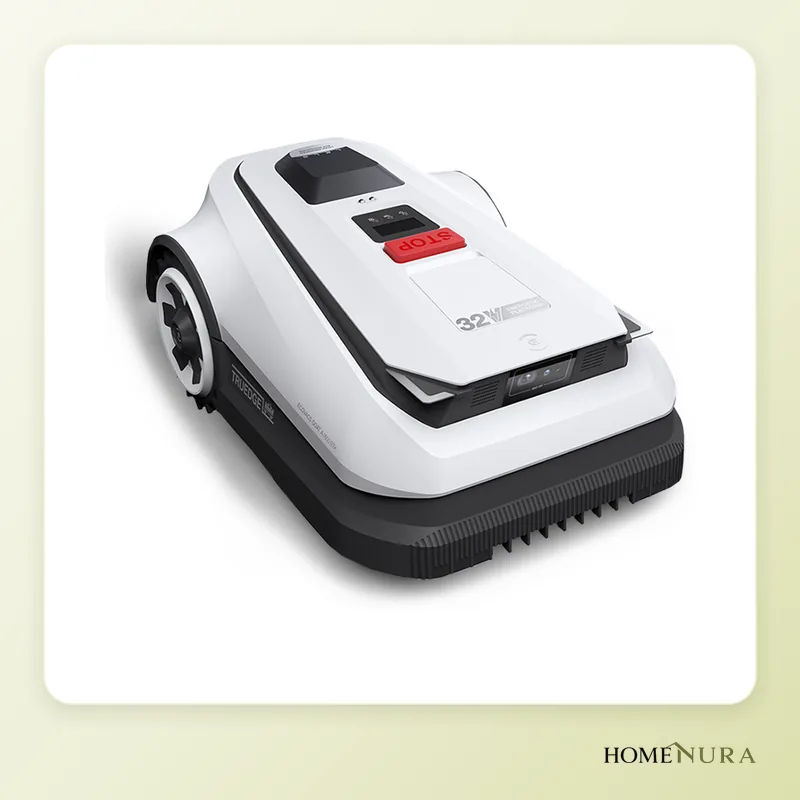
ECOVACS GOAT A1600 RTK
RTK and LiDAR combined to stay accurate near trees, lawns up to 0.4 acre (1,600 m²), a 13 in (33 cm) cutting width and slopes up to 50%, according to ECOVACS.
Photo: © ECOVACS
- View on Amazon →
Best value
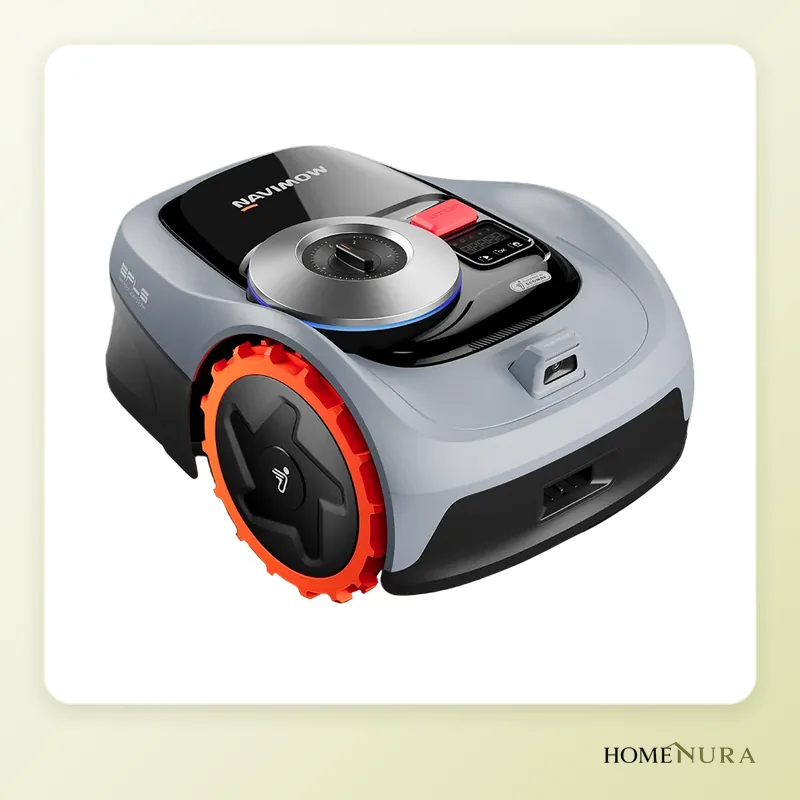
Segway Navimow i105E
Wire-free RTK plus a VisionFence camera for lawns up to 5,400 sq ft (500 m²), with a simple guided setup in the app.
Photo: © Segway-Ninebot
- View on Amazon →
Best for large, sloped yards
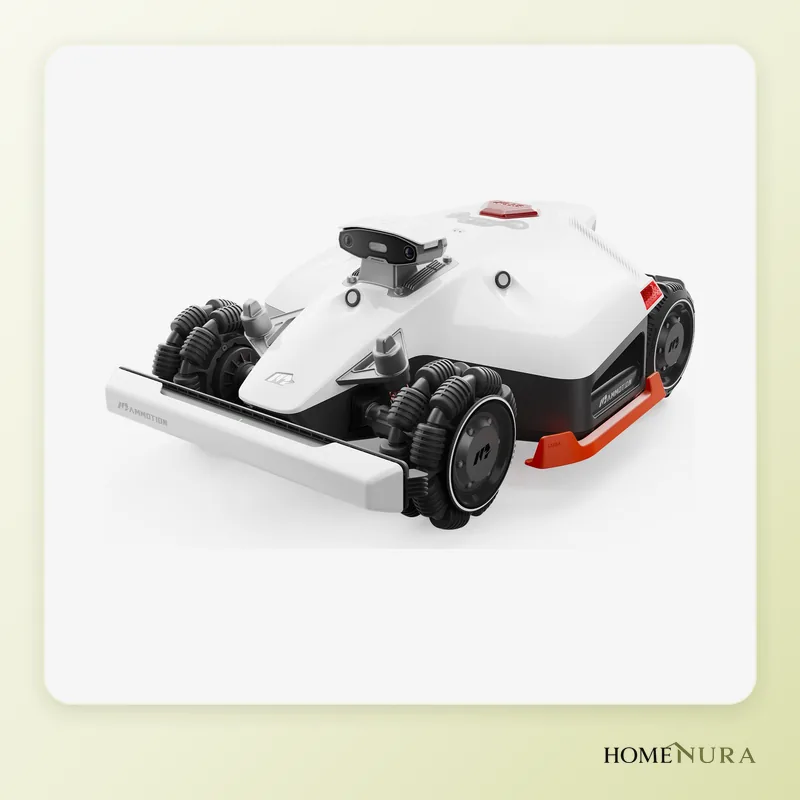
Mammotion LUBA 2 AWD 3000X
All-wheel drive, slopes rated up to 80%, a 16 in (40 cm) cutting width and RTK plus AI vision for yards up to 0.7 acre (3,000 m²).
Photo: © Mammotion


As an Amazon Associate I earn from qualifying purchases. Amazon affiliate links: we earn a commission at no extra cost to you.
For most yards, the best robot lawn mower without a boundary wire in 2026 is the ECOVACS GOAT A1600 RTK: it combines RTK positioning with LiDAR, covers up to 0.4 acre (1,600 m²) and climbs slopes of up to 50%, according to the manufacturer. For a small lawn on an entry-level budget, the Segway Navimow i105E is the easiest to live with; for a big, sloping lot, the all-wheel-drive Mammotion LUBA 2 AWD 3000X is the one to get.
This comparison draws on manufacturer specs, published independent reviews and verified owner feedback. It only includes models sold in Europe in 2026. You’ll find our full lineup on our robot lawn mowers page.
No boundary wire: how these robots know where to mow
A traditional robot mower stays on the lawn thanks to a wire buried or staked along the edges. Wire-free models replace that wire with a virtual map you draw in the app, usually by steering the robot around the edges with your phone. Three technologies are in play:
- RTK (corrected satellite positioning): a fixed reference antenna corrects the GNSS signal in real time, for accuracy down to about a centimeter (under half an inch). It needs a clear view of the sky; dense trees and tall walls weaken the signal.
- Camera and AI vision: the camera recognizes grass, edges and obstacles. On its own, it needs no antenna, but it depends on clear contrast between the lawn and whatever surrounds it.
- LiDAR: a laser sensor builds a 3D map of the surroundings. Paired with RTK, it helps the robot keep track of where it is near the house or under trees, where the satellite signal fades.
Most recent models combine two of these technologies. That’s the first thing to decide, even before lawn size.
Models mentioned in this guide
- Husqvarna Automower 310E NERAView on Amazon →
- Worx Landroid Vision M600View on Amazon →
Photos: © ECOVACS, © Segway-Ninebot, © Mammotion
As an Amazon Associate I earn from qualifying purchases. Amazon affiliate links: we earn a commission at no extra cost to you.
How to choose
- Actual lawn area: pick a model rated for at least 20 to 30% more than your lawn, so it keeps up in years when the grass grows fast.
- Open sky: in an open yard, RTK alone is enough. With trees or high walls, go for RTK + LiDAR or RTK + camera.
- Maximum slope: measure your steepest section. Beyond 30 to 35%, only a few models, including all-wheel-drive versions, handle it comfortably.
- Cutting width: from 7 in (18 cm) on small models to 16 in (40 cm) on big ones. A wider cut shortens mowing time considerably on large lawns.
- Narrow passages and multiple zones: if your lawn is split up (front yard and backyard, say), check that the app handles several zones and the paths between them.
- Anti-theft and safety: a PIN code, a lift alarm and, on some models, location tracking. A lift sensor that stops the blades is a must.
- Edge cutting: no robot cuts perfectly flush against a wall. Some get within an inch or two, but plan on a quick pass with a string trimmer.
The 5 best robot mowers without a boundary wire in 2026
1. ECOVACS GOAT A1600 RTK — best overall
The GOAT A1600 RTK pairs an RTK station with LiDAR for positioning, plus 3D vision to recognize obstacles. ECOVACS rates it for lawns up to 0.4 acre (1,600 m²), with two cutting discs across a 13-inch (33 cm) width, a cutting height you adjust electronically from 1.2 to 3.5 in (30 to 90 mm), and slopes of up to 50%.
Pros: steadier positioning than RTK alone near trees and buildings, a generous cutting width, edges trimmed to within about 2 in (5 cm) according to the brand, and an ECOVACS Home app that owners rate well.
Cons: the RTK antenna needs a clear view of the sky, and the robot is bulkier than an entry-level model.
Best for: yards from about 5,400 sq ft to 0.4 acre (500 to 1,500 m²), with trees or gentle slopes, for anyone who wants a wire-free setup with no compromises.
2. Segway Navimow i105E — best value
The Navimow i105E uses Segway’s EFLS 2.0 system: RTK with a reference antenna, backed up by the VisionFence camera for obstacle detection. It’s built for small yards up to 5,400 sq ft (500 m²), with a 7-inch (18 cm) cut, a cutting height of 0.8 to 2.4 in (20 to 60 mm) and slopes of up to 30%. The nearly identical i108E stretches to 8,600 sq ft (800 m²) thanks to a bigger battery.
Pros: guided setup in the app, mapping by walking the edge of the lawn, quiet operation and neat, parallel mowing lines.
Cons: a narrow cutting width, limited slope handling and a small rated area. Like any RTK model, its antenna needs to see the sky.
Best for: a first wire-free robot mower for a city or suburban lawn.
3. Mammotion LUBA 2 AWD 3000X — for big, sloping lots
The LUBA 2 AWD 3000X is built for tough terrain: all-wheel drive, slopes rated up to 80% (about 38°), a 16-inch (40 cm) cutting width and a height range of 1 to 2.8 in (25 to 70 mm). It combines RTK with Mammotion’s UltraSense AI vision and is rated for 0.75 acre (3,000 m²).
Pros: the best climbing ability in this comparison, high output on large lawns and full multi-zone management in the app.
Cons: a heavy, bulky robot, louder than a small model, and overkill for a lawn of a few thousand square feet.
Best for: large, hilly or uneven properties. There are also 1000 and 5000 versions for different lawn sizes.
4. Husqvarna Automower 310E NERA — the trusted, upgradable pick
The 310E NERA can be installed with a traditional boundary wire or, with the EPOS Plug-in kit and an EPOS reference station sold separately, with no wire at all. Husqvarna rates it for about 0.25 acre (1,000 m²), with an 8.7-inch (22 cm) cut and slopes of up to 30% inside the work area. You control it through the Automower Connect app.
Pros: a very dense dealer and service network across Europe, the Automower line’s well-earned reputation for durability, and temporary and stay-out zones that are easy to set up.
Cons: going wire-free means buying the EPOS kit and station on top of the robot, and there’s no LiDAR or vision for navigation.
Best for: buyers who want a long-established brand and local service, and don’t mind paying for the EPOS add-on.
5. Worx Landroid Vision M600 — camera only, no antenna
The Landroid Vision M600 (WR206E) needs neither a wire nor an antenna: a wide-angle HDR camera and a neural network recognize grass and obstacles. Worx rates it for lawns up to 6,500 sq ft (600 m²), with a 7-inch (18 cm) cut and a cutting height of 1.2 to 2.4 in (30 to 60 mm).
Pros: the easiest setup in this comparison (set down the base and start mowing) and no satellite reception problems under trees.
Cons: the robot mows wherever it “sees” grass, so if your lawn runs into a field or a low-contrast flower bed, you need clearly defined edges. Owners also report less methodical mowing than with an RTK model.
Best for: small yards with clear borders (edging, paths, patios), especially shady ones.
Comparison table
| Model | Navigation | Rated area | Max slope (manufacturer) | Cutting width | Best for |
|---|---|---|---|---|---|
| ECOVACS GOAT A1600 RTK | RTK + LiDAR + 3D vision | 0.4 acre (1,600 m²) | 50% | 13 in (33 cm) | Midsize yards with trees |
| Segway Navimow i105E | RTK + VisionFence camera | 5,400 sq ft (500 m²) | 30% | 7 in (18 cm) | Small lawns, first robot mower |
| Mammotion LUBA 2 AWD 3000X | RTK + AI vision | 0.75 acre (3,000 m²) | 80% | 16 in (40 cm) | Big, sloping lots |
| Husqvarna Automower 310E NERA | Optional EPOS (RTK) or wire | 0.25 acre (1,000 m²) | 30% | 8.7 in (22 cm) | Established brand, local service |
| Worx Landroid Vision M600 | AI camera only | 6,500 sq ft (600 m²) | Not listed here | 7 in (18 cm) | Small, shady, well-edged yards |
Installation: the key steps
- Prep the lawn: give it one last mow at your target height, and clear away branches, toys and hoses.
- Place the base: on level ground, near a weatherproof, covered outdoor outlet. If you need a new outlet, have a licensed electrician install it.
- Install the RTK antenna (on models that use one): mounted high, away from walls and trees, with the widest possible view of the sky. A pole or wall mount is often sold as an accessory.
- Map the lawn: in the app, steer the robot along the edges, then draw no-go zones (flower beds, vegetable garden, pool) and the paths between zones.
- Watch the first run: see how it handles the edges and narrow passages, then fine-tune the map.
Mistakes to avoid
- Buying an RTK-only model for a heavily wooded yard: without LiDAR or a backup camera, the robot will regularly lose track of where it is.
- Choosing a rated area that’s too tight: in spring, the robot won’t be able to keep up with the growth.
- Ignoring the real slope: a 30% slope rating assumes dry grass; on wet grass, the margin shrinks.
- Scheduling mowing at night: many wildlife groups in Europe recommend mowing during the day to protect hedgehogs and other small animals that come out after dark.
- Letting kids and pets near a running robot: sensors reduce the risk; they don’t eliminate it.
Maintenance and safety
Clean the underside regularly and check the blades: dull blades tear the grass instead of cutting it. Replace them as often as the manufacturer recommends. Turn on the PIN code and the anti-theft alarm. In winter, store the robot clean and charged in a dry place, as most manuals advise. To round out your yard setup, see our smart irrigation guide.
The bottom line
For most midsize yards, the ECOVACS GOAT A1600 RTK offers the best balance of accuracy, coverage and climbing ability, thanks to its RTK + LiDAR combo. On a small, open lawn, the Segway Navimow i105E covers the basics on a tighter budget. For a big, hilly lot, nothing else in this lineup matches the Mammotion LUBA 2 AWD 3000X. The Husqvarna 310E NERA will reassure buyers who value a strong service network, and the Worx Landroid Vision M600 suits small, shady yards with clear edges. To go further, read our 2026 smart yard and garden guide.
Frequently asked questions
Does a wire-free robot mower really need no installation at all?
RTK, camera or LiDAR: which navigation should I choose?
Which wire-free robot mower is best for a sloped yard?
Can a Husqvarna Automower be made wire-free?
How do I protect a robot mower from theft?
Can the robot mow at night or in the rain?
From our complete guide
Smart Yard & Outdoor →Our recommendations
- Husqvarna Automower 310E NERAView on Amazon →
- Worx Landroid Vision M600View on Amazon →
Photos: © ECOVACS, © Segway-Ninebot, © Mammotion
As an Amazon Associate I earn from qualifying purchases. Amazon affiliate links: we earn a commission at no extra cost to you.


