Best Smart Light Switches of 2026: 6 Top Models Compared
Aqara H2, Legrand Céliane, BTicino Living Now, Shelly 1PM Gen4, Hue Tap Dial and IKEA RODRET compared: which smart switch to buy, with or without a neutral wire, on Zigbee, Wi-Fi or Matter.

Quick answer
What is the best smart light switch in 2026?
- View on Amazon →
Best overall
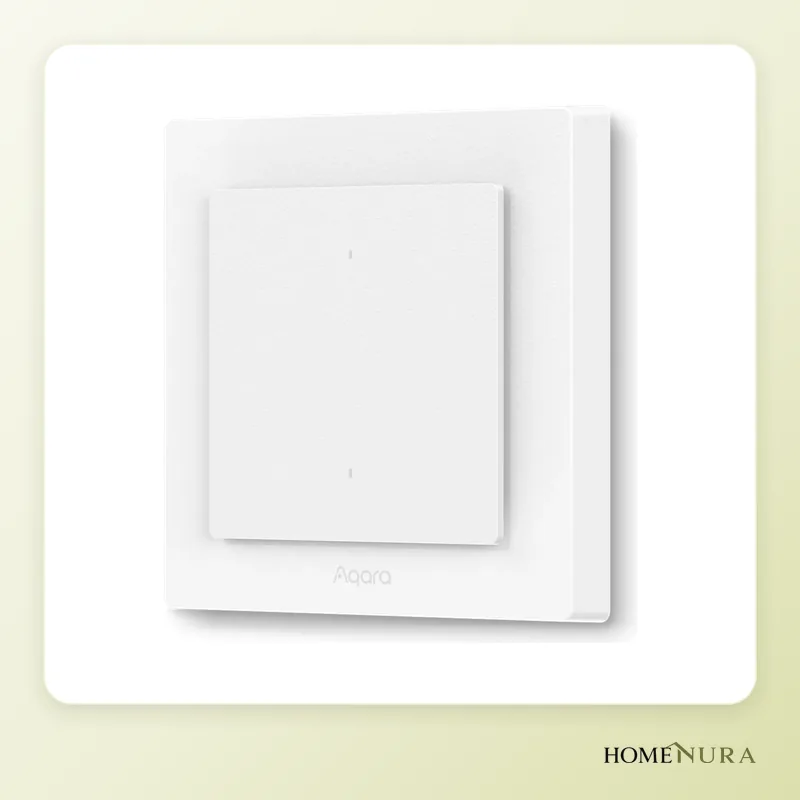
Aqara Light Switch H2 EU
Works with or without a neutral, supports Zigbee and Matter over Thread, and joins Apple Home, Google Home, Alexa and Home Assistant.
Photo: © Aqara
- View on Amazon →
Best value
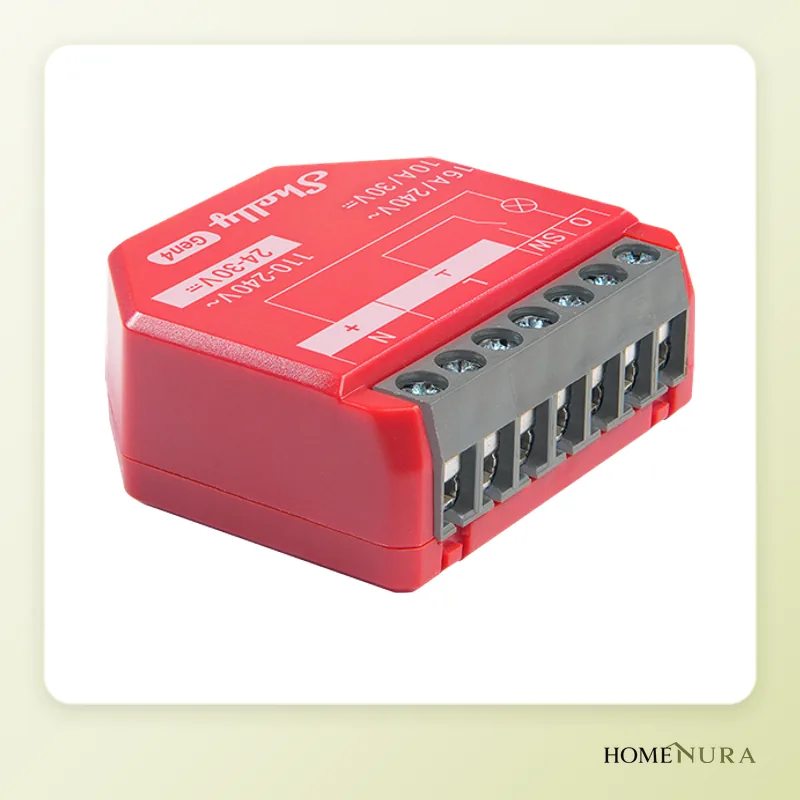
Shelly 1PM Gen4
A 16 A relay that hides behind your existing switches, with energy monitoring, Wi-Fi, Zigbee and Matter, no hub needed (requires a neutral wire).
Photo: © Shelly (Allterco Robotics)
- View on Amazon →
Best for smart bulbs
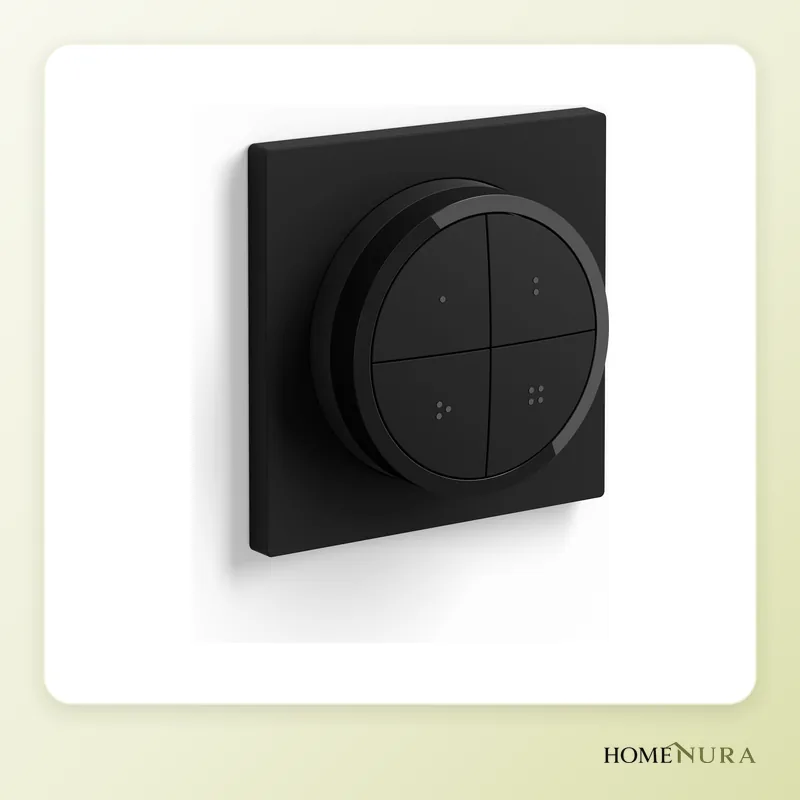
Philips Hue Tap Dial Switch
Battery-powered remote with no wiring, four scene buttons and a dimming dial to control your Hue bulbs.
Photo: © Philips Hue


As an Amazon Associate I earn from qualifying purchases. Amazon affiliate links: we earn a commission at no extra cost to you.
In 2026, the best smart light switch in our roundup of European-format models is the Aqara Light Switch H2 EU: it works with or without a neutral wire, speaks both Zigbee and Matter over Thread, and connects to Apple Home, Google Home, Alexa and Home Assistant. If you'd rather keep your existing switches, a Shelly 1PM Gen4 relay hidden behind them is the most versatile option, and if your bulbs are already smart, a battery-powered wall remote such as the Philips Hue Tap Dial Switch needs no wiring at all.
This comparison is based on manufacturer specs, published independent reviews and feedback from verified buyers. It covers the three main types: smart wall switches, in-wall relay modules and wireless remotes. To browse every model, visit our smart light switches section.
How to choose a smart light switch
Before you compare brands, five questions will rule out most bad buys.
- Is there a neutral wire in the switch box? This is the number one question. Many older homes only run the hot wire and the switch leg (the wire that goes up to the light) to the switch. In that case, you need a "no-neutral" model.
- Which wireless protocol? Zigbee, Wi-Fi, Thread and Matter have different requirements (hub, border router, power draw).
- Are your bulbs regular or smart? With regular bulbs, the switch has to cut the power. With smart bulbs, it should never leave them without power.
- What's the load? No-neutral models have a minimum load: below it, some LEDs flicker or glow faintly. A bypass (also called a compensator) often fixes this.
- Which ecosystem? Apple Home, Google Home, Alexa, Home Assistant or the manufacturer's app: check compatibility before you buy.
Models mentioned in this guide
- Legrand Céliane with NetatmoView on Amazon →
- BTicino Living Now with NetatmoView on Amazon →
Photos: © Aqara, © Shelly (Allterco Robotics), © Philips Hue
As an Amazon Associate I earn from qualifying purchases. Amazon affiliate links: we earn a commission at no extra cost to you.
Neutral or no neutral: what really changes
A smart switch has to stay powered at all times so it can listen for wireless commands. With a neutral, it draws power directly between the hot and neutral wires: it runs reliably, and features such as energy monitoring or overload protection become possible. Without a neutral, the module trickles a tiny current through the bulb itself. That works fine with a large enough load, but it can cause flickering or a faint glow with low-wattage LEDs.
To check, turn off the breaker, remove the switch and look at the wires: a neutral wire (blue in European wiring, usually white in North American homes) that's in the box but not connected to the switch is a good sign, although wire colors aren't always reliable in older homes. If in doubt, have an electrician take a look.
Zigbee, Wi-Fi, Thread or Matter: which protocol?
- Zigbee: a mature, low-power mesh protocol. It needs a hub (Aqara, Philips Hue, IKEA DIRIGERA, the Netatmo gateway, or Home Assistant with a Zigbee dongle). Devices that run on household power rather than batteries strengthen the network.
- Wi-Fi: no hub, and setup happens straight from your phone. The trade-off: higher power draw, and Wi-Fi modules generally need a neutral. A lot of Wi-Fi devices can also strain your router.
- Thread: a low-power mesh network like Zigbee, but IP-based. It needs a "Thread border router," which is built into some recent smart speakers and smart home hubs.
- Matter: not a radio but a shared standard that runs over Thread or Wi-Fi. A Matter device can join several ecosystems at once, which lowers the risk of getting locked into a single brand.
For more on these standards, read our guide to Matter and Thread in the smart home in 2026.
The 6 best smart light switches of 2026
1. Aqara Light Switch H2 EU — best overall
Launched in Europe in early 2025, the Aqara Light Switch H2 EU is a wall switch made for European wall boxes that supports wiring with and without a neutral. It combines Zigbee and Matter over Thread, so it can join Apple Home, Google Home, Amazon Alexa or Home Assistant. It comes in a 2-button (1-channel) or 4-button (2-channel) version.
Pros: both Zigbee and Matter, works without a neutral, energy monitoring plus overload and overheat protection when a neutral is connected, and spare buttons you can use for scenes.
Cons: Matter over Thread requires a Thread border router; on Zigbee, you need an Aqara or compatible hub. The design won't match the switch and outlet lines you may already have.
Best for: anyone who wants a modern switch that's open to every ecosystem, including in homes with no neutral.
2. Legrand Céliane with Netatmo — the most polished integration in France
The Céliane with Netatmo line uses the design of Legrand's Céliane switches and outlets, which are very common in France. The no-neutral smart switches come with a dimming option (5 to 125 W, according to Legrand) or as an On/Off version rated up to 200 W that ships with a bypass for small LED loads. They talk to the Netatmo gateway over Zigbee and are controlled through the Home + Control app, and they work with Alexa, Google Assistant and Apple HomeKit.
Pros: looks identical to the rest of a Céliane installation, no neutral required, bypass included, works with all three major voice assistants.
Cons: Netatmo gateway required, higher starting cost than generic options, less relevant if your home doesn't already have Céliane devices.
Best for: renovations and new construction using Céliane, and anyone who'd rather have an electrician install the system.
3. BTicino Living Now with Netatmo — the equivalent for the Italian market
Part of the same group as Legrand, BTicino offers the Living Now with Netatmo line, which is widely used in Italy. The no-neutral smart switch with a dimming option (model K4413CM2) handles loads from 5 to 125 W; a version that uses a neutral is also available. The radio is Zigbee 3.0, and it works with Apple HomeKit, Google Assistant and Amazon Alexa through the Home + Control app.
Pros: clean design, versions with or without a neutral, a consistent ecosystem with outlets and shutter controls from the same line.
Cons: designed for Italian wall boxes, gateway required, of little interest outside a Living Now installation.
Best for: homes that already have BTicino devices or are being renovated with this line.
4. Shelly 1PM Gen4 — best value for keeping your switches
The Shelly 1PM Gen4 isn't a switch but a relay module that slips in behind your existing switch. This 16 A relay measures energy use and runs Wi-Fi, Bluetooth, Zigbee and Matter at the same time, with no hub required. At about 1.5 × 1.7 × 0.6 in (37 × 42 × 16 mm), it fits in an electrical box that's deep enough.
Pros: you keep your existing switches and their look, very broad protocol support, a local web server, and a "detached" mode that lets the switch send a command without cutting power (ideal with smart bulbs).
Cons: neutral required (for no-neutral wiring, Shelly offers the Shelly 1L Gen4 with a bypass), more technical wiring, and sometimes not enough room in shallow boxes.
Best for: experienced DIYers and installers who want to make a whole home smart without replacing the switches.
5. Philips Hue Tap Dial Switch — best for smart bulbs
The Philips Hue Tap Dial Switch is a battery-powered wireless control with four programmable buttons and a dimming dial. It mounts on the wall with adhesive or sticks to any magnetic surface, and it lifts off to work as a remote. Paired with the Hue Bridge, which Philips lists as required, it can control up to three rooms or a zone, recall scenes by time of day or trigger automations.
Pros: no wiring, a satisfying dial for dimming, multiple scenes, ideal for renters.
Cons: Hue ecosystem only, battery to replace, doesn't replace a switch that cuts power to regular bulbs.
Best for: homes already using Hue bulbs. For simpler needs, the Hue Dimmer Switch is still a more basic alternative.
6. IKEA RODRET — the most affordable remote
The IKEA RODRET wireless dimmer turns up to ten IKEA light sources on and off at once, and dims them too. It pairs directly with the brand's smart bulbs and light fixtures over Zigbee, or you can manage it in the IKEA Home smart app through the DIRIGERA hub. For more buttons and color control, the IKEA STYRBAR is the step up.
Pros: very affordable, no wiring, works even without a hub.
Cons: designed for IKEA lighting, limited features without DIRIGERA, basic finish.
Best for: tight budgets and renters with IKEA smart bulbs.
Comparison table
| Model | Type | Neutral | Connectivity | Best for |
|---|---|---|---|---|
| Aqara Light Switch H2 EU | Wall switch | With or without | Zigbee, Matter over Thread | All-around, multi-ecosystem use |
| Legrand Céliane with Netatmo | Wall switch | Without (bypass included) | Zigbee + Netatmo gateway | Céliane installations |
| BTicino Living Now with Netatmo | Wall switch | With or without, depending on version | Zigbee 3.0 + gateway | BTicino installations |
| Shelly 1PM Gen4 | In-wall relay | Required | Wi-Fi, Bluetooth, Zigbee, Matter | Keeping existing switches |
| Philips Hue Tap Dial Switch | Battery remote | Not applicable | Zigbee (Hue Bridge) | Hue bulbs, renters |
| IKEA RODRET | Battery remote | Not applicable | Zigbee (DIRIGERA optional) | Tight budgets, IKEA lighting |
Keeping physical switches with smart bulbs
This is the most common trap: you install smart bulbs, someone flips the wall switch off, and the bulbs drop off the network. There are three fixes:
- Replace the switch with a wireless control (Hue Tap Dial, RODRET) and keep the circuit powered at all times, for example by bypassing the switch and covering the box with a blank wall plate, a job for an electrician.
- Install a relay in detached mode (Shelly 1PM Gen4): the switch sends a command instead of cutting power, and you still use it the way you always have.
- Choose a wall switch whose buttons can trigger scenes, such as some Aqara models, set up so they don't cut power.
On the other hand, if you keep regular bulbs, the smart switch has to control the load: if you plan to use a dimming function, make sure the bulbs are dimmable. To choose your bulbs, see our smart bulb comparison.
Mistakes to avoid
- Buying a model that needs a neutral without checking your switch box: the number one reason for returns.
- Ignoring the minimum load of no-neutral models: a single low-wattage LED bulb may flicker.
- Forgetting about 3-way circuits: a light controlled from two places needs specific wiring or a compatible companion switch.
- Overlooking box depth: a smart module or switch takes up more room than a standard one.
- Mixing ecosystems without a plan: pick your main app first, then choose compatible devices.
- Dimming non-dimmable bulbs: turn the dimming function off or switch to dimmable bulbs.
Installation and safety
Replacing a switch means working on your home's permanent wiring. A few basic rules apply:
- Turn off the circuit breaker at the electrical panel, not just the light switch, then confirm the power is off with a voltage tester.
- Follow the manufacturer's instructions: wiring diagram, wire gauge, maximum load.
- Never exceed the rated load, especially with dimmers, and check the voltage rating: models sold in Europe are built for 230 V, so make sure the version on your Amazon store is rated for 120 V.
- Call a licensed electrician if you're not sure how to identify the wires, if the wiring is old, or if you have any doubt at all. Follow your local building code, and check whether a permit is needed.
Battery-powered remotes need no electrical work at all: they're the safest option for renters.
The bottom line
Of the models compared here, the Aqara Light Switch H2 EU strikes the best balance: neutral or no neutral, Matter-compatible and open to every assistant. If you want to keep your current switches and you have a neutral, the Shelly 1PM Gen4 is the most economical and flexible choice. Homes with Hue bulbs should go for the Philips Hue Tap Dial Switch, while Céliane or Living Now installations are best kept within their Legrand or BTicino with Netatmo line. To cut your energy bill too, see our comparison of smart plugs with energy monitoring.
Frequently asked questions
Can you install a smart switch without a neutral wire?
Do you need a hub for a smart switch?
How do I keep using my wall switches with smart bulbs?
Matter or Zigbee: which is better for a smart switch?
Can I install a smart switch myself?
Why do my LED bulbs flicker with a smart switch?
From our complete guide
Energy & Smart Home →Our recommendations
- Legrand Céliane with NetatmoView on Amazon →
- BTicino Living Now with NetatmoView on Amazon →
Photos: © Aqara, © Shelly (Allterco Robotics), © Philips Hue
As an Amazon Associate I earn from qualifying purchases. Amazon affiliate links: we earn a commission at no extra cost to you.


