Best Home EV Chargers of 2026: 6 Smart Wall Chargers Compared
Wallbox Pulsar Max, Easee Charge Lite, Zaptec Go 2, Hager witty one, Schneider EVlink Pro AC and ABB Terra AC: home EV chargers from 7.4 to 22 kW compared on load balancing, solar charging, RFID and OCPP.

Quick answer
What is the best home EV charger in 2026?
- View on Amazon →
Best overall
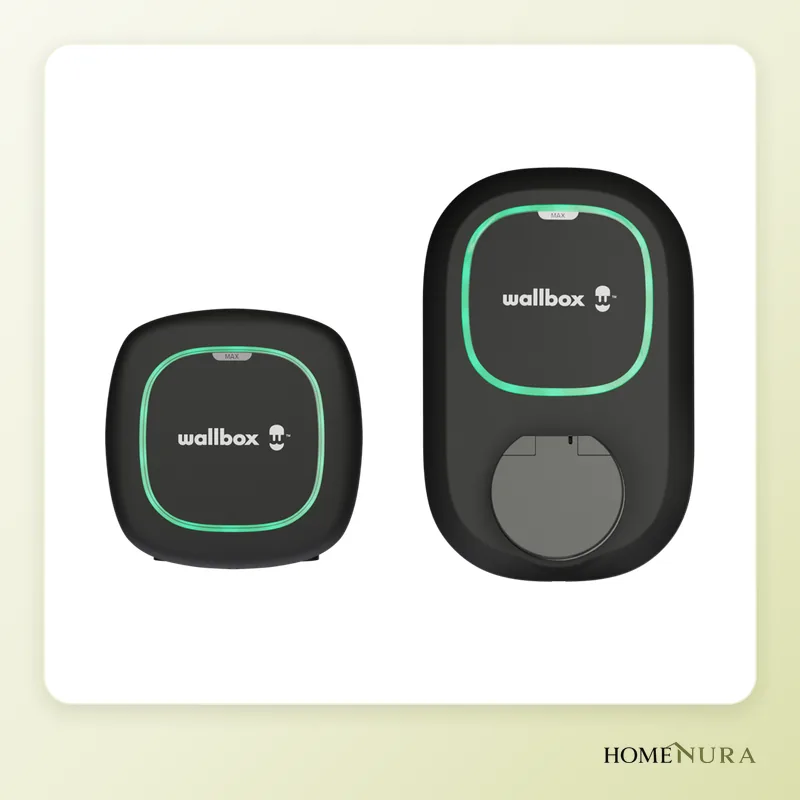
Wallbox Pulsar Max
Compact, in 7.4, 11 or 22 kW, with Wi-Fi, Bluetooth and OCPP, plus load balancing and solar charging via its dedicated meter.
Photo: © Wallbox
- View on Amazon →
Best value
Easee Charge Lite
Up to 11 kW with an RFID reader, Wi-Fi, built-in 4G and OCPP; load balancing and solar charging with the Easee Equalizer.
- View on Amazon →
Best for 22 kW with an MID-certified meter
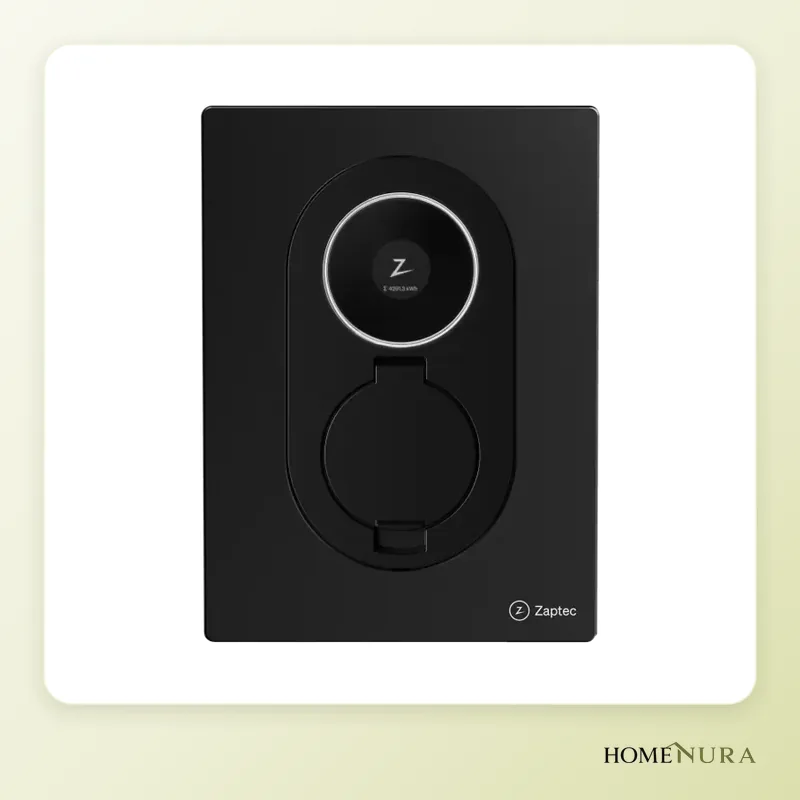
Zaptec Go 2
Up to 22 kW in a tiny housing, with a display, RFID, 4G, OCPP and a meter certified to the EU's MID standard for employer reimbursement.
Photo: © Zaptec


As an Amazon Associate I earn from qualifying purchases. Amazon affiliate links: we earn a commission at no extra cost to you.
Among the home chargers sold in Europe, the best smart EV charger in 2026 is the Wallbox Pulsar Max: it’s compact, comes in 7.4, 11 and 22 kW versions, runs over Wi-Fi and Bluetooth, supports OCPP, and can balance its load with the rest of the house or charge on solar power once you add its dedicated meter. If you want a more affordable model with an RFID reader and a built-in cellular connection, the Easee Charge Lite is the best value, while the Zaptec Go 2 suits drivers who want 22 kW, a display and an MID-certified meter in a tiny enclosure.
This comparison is based on manufacturer spec sheets, published independent reviews and verified owner feedback. It covers six chargers genuinely sold in Europe, most of them on Amazon. All six are European models built around the Type 2 connector. Most EVs in North America use a J1772 or NACS connector, with Level 1 charging on a 120 V outlet and Level 2 on a 240 V circuit, so check the connector and the version before you buy. You can browse the full selection in our home EV chargers category.
How to choose a home EV charger
7.4, 11 or 22 kW: how much power do you need?
The right power level depends first on your home’s electrical capacity and on your supply type:
- 7.4 kW (single-phase, 32 A): the most common setup for a house. It adds roughly 22 to 28 miles (35 to 45 km) of range per hour, depending on the car, which is more than enough for overnight charging.
- 11 kW (three-phase, 16 A): the sweet spot if your home has a three-phase supply. Most recent EVs accept 11 kW on AC.
- 22 kW (three-phase, 32 A): only useful if your car accepts 22 kW on AC, which is still uncommon, and if your electrical installation can handle it.
Here’s the point most buyers miss: the car’s on-board charger sets the limit. A 22 kW charger connected to a car limited to 11 kW will charge at 11 kW. Check your car’s maximum AC charging power before you buy.
Single-phase or three-phase
On a single-phase supply, there’s no point going above 7.4 kW. On three-phase, an 11 kW charger is usually the most sensible choice. Many models (Pulsar Max, Zaptec Go 2, ABB Terra AC) come in versatile versions that work on both supply types, which is useful if you plan to switch to three-phase later.
Load balancing
A charger drawing 32 A while the oven, cooktop and heat pump are running can trip your main breaker. Dynamic load balancing measures your home’s consumption in real time and lowers the charger’s output so you stay under your supply limit. Depending on the brand, it relies on a dedicated energy meter (Wallbox, Easee Equalizer), an energy-management accessory (Zaptec Sense) or, in France, the data output of the Linky smart meter (Hager).
Solar surplus charging
If you have solar panels, a charger that tracks production lets you charge the car with your own electricity instead of exporting it to the grid for very little. That’s what Wallbox’s Eco-Smart feature and solar charging with the Easee Equalizer do. A plug-in balcony solar kit can’t run a charger on its own, but a rooftop system can during the day.
RFID, app and OCPP
- RFID / NFC: a card or tag to start charging, essential if the charger can be reached from the street or is shared, in a condo building for example.
- App: off-peak scheduling, energy tracking, remote locking. Wi-Fi is standard; built-in 4G avoids dead spots at the back of a garage.
- OCPP: an open protocol that lets you connect the charger to software other than the manufacturer’s (a fleet manager, a home automation system, employer reimbursement). It’s your insurance for the long term.
Tethered cable or Type 2 socket
A tethered charger is more convenient day to day: unhook the cable and plug in. A Type 2 socket charger (in France, often a “T2S” socket with shutters) looks neater, lets you pick your cable length and avoids leaving a cable outdoors, but you have to get your own cable out every time. Some sockets can lock the cable in place, which makes them effectively tethered.
Models mentioned in this guide
- Easee Charge LiteView on Amazon →
- Hager witty oneView on Amazon →
- Schneider Electric EVlink Pro ACView on Amazon →
Photos: © Wallbox, © Zaptec
As an Amazon Associate I earn from qualifying purchases. Amazon affiliate links: we earn a commission at no extra cost to you.
The 6 best home EV chargers
1. Wallbox Pulsar Max: best overall
The successor to the hugely popular Pulsar Plus, the Wallbox Pulsar Max keeps the brand’s compact format in a tougher housing designed for indoor and outdoor use. It comes in 7.4, 11 and 22 kW versions, with a 16 or 23 ft (5 or 7 m) tethered Type 2 cable.
Pros: Wi-Fi and Bluetooth through the myWallbox app, OCPP compatibility, off-peak scheduling and voice assistant support. Add the separately sold Wallbox energy meter and it gains Power Boost (dynamic load balancing with the house) and Eco-Smart (100% solar or mixed charging). Power Sharing lets several chargers share one circuit.
Cons: no built-in RFID reader, no 4G, and the meter required for the advanced features costs extra.
Best for: houses with a garage or private driveway, on single- or three-phase, that want a simple smart charger they can build on later.
2. Easee Charge Lite: best value
With the Charge Lite, Norwegian brand Easee offers a Type 2 socket charger that’s very well equipped for the money: up to 7.4 kW on single-phase and 11 kW on three-phase.
Pros: Wi-Fi, Bluetooth and a built-in cellular eSIM, an RFID/NFC reader, OCPP 1.6. Paired with the Easee Equalizer, it handles dynamic load balancing and solar surplus charging.
Cons: capped at 11 kW; installation requires a suitable external residual current device (RCD), which your electrician has to plan for; no cable included.
Best for: homes on 11 kW three-phase or on single-phase that want RFID and 4G without paying for a premium model.
3. Zaptec Go 2: best-equipped compact charger
The Zaptec Go 2 follows the design-award-winning Zaptec Go. It delivers up to 22 kW on three-phase and 7.4 kW on single-phase, in a housing barely bigger than a tablet.
Pros: Wi-Fi, 4G and Bluetooth, an RFID reader, a backlit display, an MID Class B certified energy meter, OCPP support and hardware ready for ISO 15118 (Plug & Charge). Rated IP54 and IK10 for outdoor use. Home energy management runs through the Zaptec Sense accessory.
Cons: Type 2 socket with no cable included; premium price tier; availability varies by country and retailer.
Best for: drivers who want the most technically advanced charger, or who need a certified MID meter so their employer can reimburse home charging.
4. Hager witty one: best for French Linky meters
French manufacturer Hager knows residential electrical panels inside out, and its witty one shows it. It comes in 7.4 kW single-phase and 11 kW versions, with a T2S socket.
Pros: depending on the model number, a TIC card for dynamic load shedding based on the data output of France’s Linky smart meter, basic solar optimization, RFID access, a Bluetooth app, an OCPP communication card and an MID meter. Rated IP55.
Cons: features vary a lot from one model number to the next, so check exactly which one your installer is quoting. Designed mainly for the French market.
Best for: homes in France with a Linky meter that want simple load management with no extra meter.
5. Schneider Electric EVlink Pro AC: toughest for shared use
Built for demanding residential use as well as small businesses, the EVlink Pro AC ranges from 7.4 to 22 kW, with a T2S socket or a tethered cable.
Pros: RFID/NFC reader, OCPP 1.6J, Bluetooth, Ethernet and Modbus, 6 mA DC leakage detection on the relevant versions, IP54/IP55 and IK10 housing, versions with an MID meter.
Cons: the consumer app is less polished than Wallbox’s or Easee’s; setup is geared toward installers.
Best for: shared parking spaces, small condo buildings and self-employed users who want a professional-grade unit.
6. ABB Terra AC Wallbox: best for connectivity
The ABB Terra AC Wallbox comes in many versions: 7.4 kW single-phase or up to 22 kW three-phase, a Type 2 socket with shutter or a 16 ft (5 m) cable, with or without a display and 4G.
Pros: authentication by RFID card or the ChargerSync app, Wi-Fi, Ethernet, Bluetooth and 4G depending on the version, OCPP 1.6, built-in DC leakage detection, MID-certified versions. A wide operating temperature range.
Cons: a crowded lineup with many model numbers; a more utilitarian design.
Best for: buyers who want an established industrial brand and very complete connectivity.
Comparison table
| Model | Max power | Cable / socket | Connectivity | RFID | Best for |
|---|---|---|---|---|---|
| Wallbox Pulsar Max | 7.4 / 11 / 22 kW | Tethered, 16 or 23 ft (5 or 7 m) | Wi-Fi, Bluetooth, OCPP | No | Houses, solar |
| Easee Charge Lite | 11 kW | Type 2 socket | Wi-Fi, Bluetooth, 4G, OCPP | Yes | Best value |
| Zaptec Go 2 | 22 kW | Type 2 socket | Wi-Fi, Bluetooth, 4G, OCPP | Yes | 22 kW, MID meter |
| Hager witty one | 7.4 / 11 kW | T2S socket | Bluetooth, OCPP (optional) | Depends on version | Linky load shedding (France) |
| Schneider EVlink Pro AC | 7.4–22 kW | Socket or cable | Bluetooth, Ethernet, OCPP | Yes | Shared use |
| ABB Terra AC Wallbox | 7.4–22 kW | Socket or 16 ft (5 m) cable | Wi-Fi, Ethernet, Bluetooth, 4G (by version), OCPP | Yes | Full connectivity |
Mistakes to avoid
- Buying 22 kW on principle: it’s pointless if your car tops out at 11 kW or your home is on single-phase.
- Forgetting load balancing: without it, you often need more electrical capacity, which in France means a higher-power contract that costs more every month.
- Underestimating cable reach: a 16 ft (5 m) cable can come up short if you back in or have two parking spaces.
- Ignoring OCPP: a closed charger depends entirely on the manufacturer’s app.
- Relying on an ordinary household outlet for daily charging: standard outlets aren’t designed for long, high-current charging sessions.
Installation and safety
A home charger must be installed by a licensed electrician, on a dedicated circuit, with the right ground-fault protection and correctly sized wiring. In France, chargers above 3.7 kW must be installed by a professional holding the IRVE qualification, which is also a condition for several French public incentives. In other European countries, the grid operator may need to be notified. Wherever you live, check your local building code and whether a permit is needed; your installer will know the local rules.
Before you ask for a quote, note your supply type (single- or three-phase), your home’s electrical capacity and the distance between your electrical panel and the spot where the charger will go. To cut your bill, schedule charging for off-peak hours if you’re on a time-of-use rate plan, and combine it with the other measures in our smart home energy-saving guide.
The bottom line
The Wallbox Pulsar Max is the easiest charger to recommend: compact, available in every power rating, open thanks to OCPP and upgradable to load balancing and solar charging. The Easee Charge Lite packs the most equipment for the money, with RFID and 4G, as long as 11 kW is enough for you. The Zaptec Go 2 is the premium pick for 22 kW and an MID meter. In France, homes with a Linky meter should look at the Hager witty one, and shared setups at the Schneider EVlink Pro AC or the ABB Terra AC.
Frequently asked questions
Do I need a 7.4 kW, 11 kW or 22 kW charger?
Can I install a home EV charger myself?
What does dynamic load balancing do?
Can I charge my car with my solar panels?
Tethered cable or Type 2 socket: which is better?
Is OCPP really worth it for a home charger?
From our complete guide
Energy & Smart Home →Our recommendations
- Easee Charge LiteView on Amazon →
- Hager witty oneView on Amazon →
- Schneider Electric EVlink Pro ACView on Amazon →
Photos: © Wallbox, © Zaptec
As an Amazon Associate I earn from qualifying purchases. Amazon affiliate links: we earn a commission at no extra cost to you.


