Best Outdoor Motion Sensor Alarms and Sirens of 2026 for Yards and Driveways
Outdoor motion detectors, gate sensors and weatherproof sirens: a 2026 comparison of the Ajax MotionProtect Outdoor, Ajax StreetSiren, Ring Alarm accessories, Somfy Protect siren and Philips Hue Outdoor sensor, plus tips to avoid false alarms.

Quick answer
What is the best outdoor motion sensor alarm or siren for your yard in 2026?
- View on Amazon →
Best overall
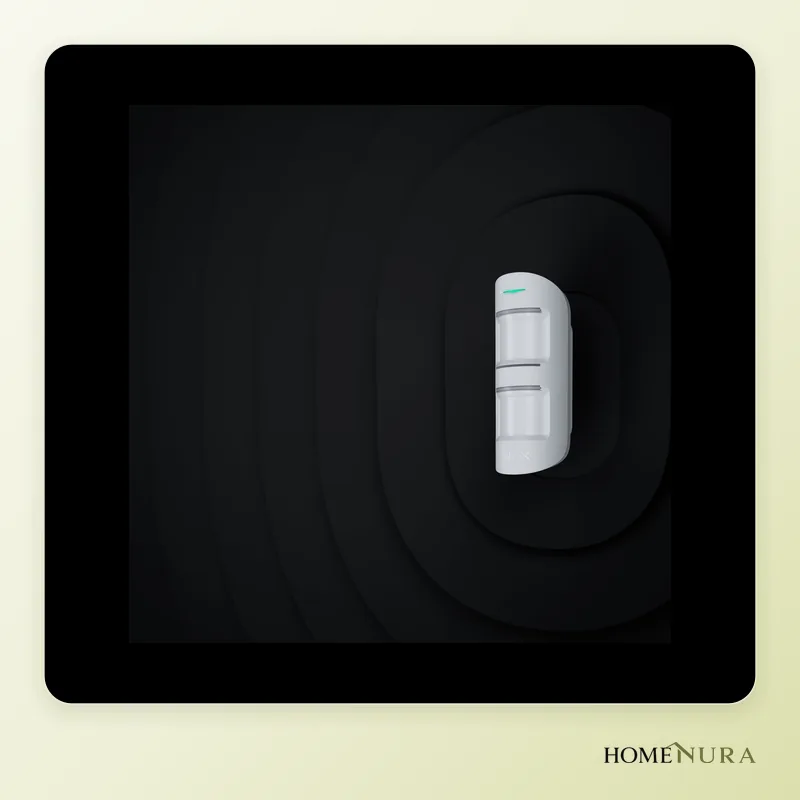
Ajax MotionProtect Outdoor
Dual PIR sensors, an adjustable range of 10 to 50 ft (3 to 15 m) and pet immunity up to 31 in (80 cm) to cut down on false alarms.
Photo: © Ajax Systems
- View on Amazon →
Best for Ring users
Ring Alarm Outdoor Siren
An IP66 siren that tops 100 dB, with a strobe light, adjustable volume and optional solar charging from the Ring Solar Panel.
- View on Amazon →
Best for automatic lighting
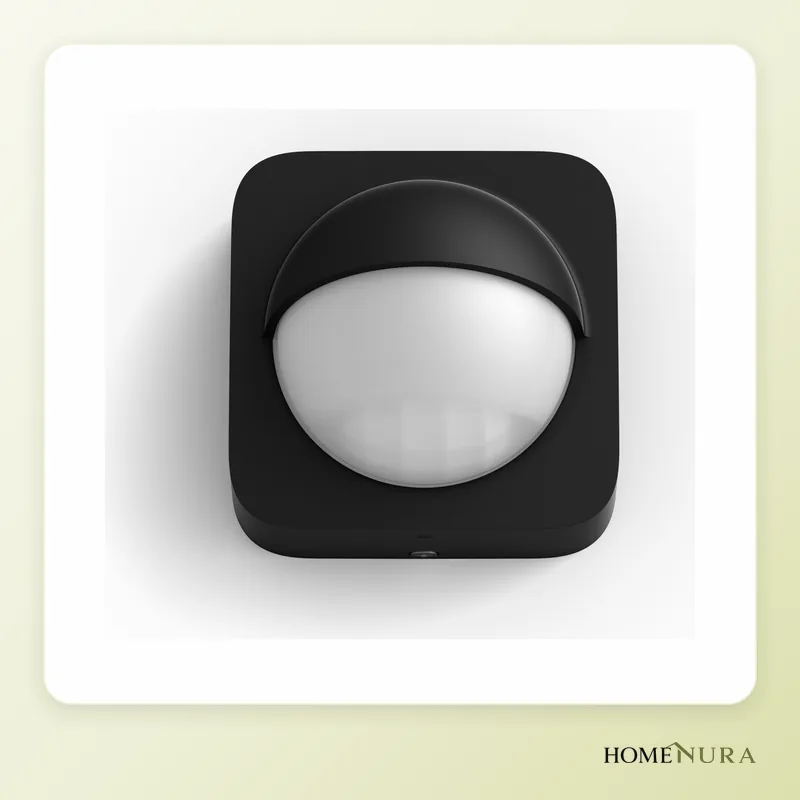
Philips Hue Outdoor Motion Sensor
Switches on your outdoor Hue lights when someone walks by: 40 ft (12 m) range over 160°, IP54, daylight sensor. An add-on, not an alarm.
Photo: © Philips Hue


As an Amazon Associate I earn from qualifying purchases. Amazon affiliate links: we earn a commission at no extra cost to you.
To protect a yard, driveway or property line in 2026, the most reliable setup is still an outdoor detector with dual infrared sensors, such as the Ajax MotionProtect Outdoor, paired with a weatherproof outdoor siren connected to your alarm hub. If you already own a Ring Alarm or Somfy system, add that brand's outdoor siren and sensors instead; if all you really want is to light up the path when someone walks by, a Philips Hue Outdoor sensor will do the job.
Outdoors is a much harsher environment than indoors: sun, wind, rain, cats, raccoons and swaying branches all cause false alarms. This comparison draws on manufacturer specs, published independent reviews and verified owner feedback to help you pick gear that actually catches an intruder without waking up the whole block over a fox.
How to choose an outdoor alarm
- Detection technology. A basic passive infrared (PIR) detector reacts to any change in heat. Serious outdoor models use two stacked PIR sensors: the alarm only triggers when both see the movement, which filters out many small animals and reflections.
- Pet immunity. It's given as a height, such as "up to 31 in (80 cm)," or as a weight. If a large dog has the run of the yard, no motion detector will ignore it completely: you'll need to work with the angle or the zones.
- IP rating. The first digit covers dust, the second water. IP54 or IP55 suits a sheltered wall; IP65 and IP66 handle driving rain better. IP43 means mounting it under the eaves.
- Siren volume. Measured in decibels at 1 meter (about 3 ft). Above 100 dB, a siren is clearly audible from the street. A flashing light helps neighbors and first responders find the house.
- Compatibility with your hub. This is the deciding factor. An Ajax siren only works with an Ajax hub, a Ring siren only with a Ring Alarm Base Station, and a Somfy siren only with a compatible Somfy alarm.
- Power and battery life. Long-life batteries, a rechargeable pack, a solar panel or hardwired power: the higher up and harder to reach the device, the more battery life matters.
Models mentioned in this guide
- Ring Alarm Outdoor SirenView on Amazon →
- Ajax StreetSirenView on Amazon →
- Ring Alarm Outdoor Contact SensorView on Amazon →
Photos: © Ajax Systems, © Philips Hue
As an Amazon Associate I earn from qualifying purchases. Amazon affiliate links: we earn a commission at no extra cost to you.
The best outdoor sensors and sirens of 2026
1. Ajax MotionProtect Outdoor: the benchmark perimeter detector
Ajax's MotionProtect Outdoor is a wireless detector built for outdoor use that communicates with an Ajax hub over the Jeweller radio protocol. It has two PIR sensors, an adjustable range of 10 to 50 ft (3 to 15 m), pet immunity up to 31 in (80 cm) tall and anti-masking that reports any attempt to cover the lens. The housing is rated IP55, and it runs on two CR123A batteries with a claimed battery life of up to five years.
Pros: dual sensor that cuts down on false alarms, adjustable range so it doesn't reach the street, very long open-air radio range (up to about 1 mile, or 1,700 m, claimed), anti-masking.
Cons: requires an Ajax hub; low recommended mounting height (2.6 to 4.3 ft, or 0.8 to 1.3 m), so it's easier to get at than a detector mounted high up.
Best for: homeowners with a yard who want real perimeter detection before an intruder even reaches a door.
2. Ajax StreetSiren: the most complete outdoor siren
The StreetSiren is Ajax's wireless outdoor siren. Volume is adjustable from 85 to 113 dB, alarm duration can be set from 3 seconds to 3 minutes, and an LED frame doubles as an alarm light and an arming indicator. It's rated IP54, runs on four CR123A batteries (up to five years claimed) and accepts optional 12 V power. Tamper protection alerts the hub if someone tries to remove it.
Pros: adjustable volume and duration, which makes it easier to be considerate of your neighbors; long battery life; visual arming status.
Cons: Ajax systems only; IP54 means a reasonably sheltered wall.
Best for: Ajax users, or anyone starting from scratch who wants a system they can expand.
3. Ring Alarm Outdoor Siren: the outdoor siren for the Ring ecosystem
The Ring Alarm Outdoor Siren pairs with a Ring Alarm Base Station (1st or 2nd generation). Ring claims over 100 dB at 1 meter on the loudest setting, with five volume levels, plus a red strobe light. The housing is rated IP66. It runs on Ring's removable Quick Release Battery Pack, which the Ring Solar Panel can charge (both sold separately), making it a practical solar-powered siren where there's no outdoor outlet nearby.
Pros: excellent weather resistance, adjustable volume, optional solar charging, managed in the same app as Ring cameras and doorbells.
Cons: needs the Ring Alarm hub; the battery and solar panel cost extra.
Best for: households already using Ring cameras or a Ring alarm.
4. Ring Alarm Outdoor Contact Sensor: for gates and sheds
Rather than a motion detector, the Ring Alarm Outdoor Contact Sensor is an open/close sensor designed for outdoor use: gates, side gates, sheds, garages and outbuildings. It's rated IP66, runs on two AA batteries with a claimed life of up to five years depending on use, and connects over Z-Wave to the Ring Alarm Base Station. It can send a notification when something opens, or set off the siren when the alarm is armed.
Pros: practically immune to animals and plants, since it only reacts to an opening; stands up well to the weather.
Cons: only watches one entry point; needs the Ring hub.
Best for: anyone who wants to know when the gate opens, or to protect a shed full of tools and bikes.
5. Somfy Protect Outdoor Siren: to round out a Somfy alarm
The Somfy Protect Outdoor Siren (model 2401491) puts out 112 dB with an orange flashing light and shuts off automatically after 3 minutes. It connects wirelessly to compatible Somfy alarms (Somfy Home Alarm, Somfy One and One+) with a claimed open-field radio range of about 650 ft (200 m), and its batteries last about two years. Its IP43 rating means it should be mounted under an overhang. Note that it doesn't work with the TaHoma smart home hub, which isn't an alarm panel.
Pros: loud output, deterrent flashing light, automatic shutoff.
Cons: limited to Somfy's alarm ecosystem; modest IP rating.
Best for: Somfy alarm owners who want a siren that's visible from the street.
6. Philips Hue Outdoor Motion Sensor: deterrent lighting, not an alarm
The Philips Hue Outdoor Motion Sensor isn't an intrusion detector in the strict sense: its main job is to turn on your outdoor Hue lights automatically. It covers 40 ft (12 m) over a 160° field, includes a daylight sensor, runs on two AA batteries and is rated IP54. It works best mounted 5 to 8 ft (1.5 to 2.5 m) high and requires a Hue Bridge.
Pros: instant lighting that deters intruders and makes walking around at night safer; sensitivity and schedules adjustable in the app.
Cons: no siren, no alarm hub; it complements an alarm but doesn't replace one.
Best for: anyone who wants automatic lighting on the driveway or patio alongside an alarm system.
Comparison table
| Model | Type | Key spec | IP rating | Required ecosystem | Best for |
|---|---|---|---|---|---|
| Ajax MotionProtect Outdoor | Motion detector | Dual PIR, 10–50 ft, 31 in pet immunity | IP55 | Ajax hub | Perimeter detection |
| Ajax StreetSiren | Siren | 85–113 dB adjustable, LED frame | IP54 | Ajax hub | Complete, expandable system |
| Ring Alarm Outdoor Siren | Siren | Over 100 dB, strobe, solar option | IP66 | Ring Alarm Base Station | Ring households |
| Ring Alarm Outdoor Contact Sensor | Open/close sensor | Gate, shed, garage | IP66 | Ring Alarm Base Station | Gates and outbuildings |
| Somfy Protect Outdoor Siren | Siren | 112 dB, flashing light, stops after 3 min | IP43 | Compatible Somfy alarm | Rounding out a Somfy alarm |
| Philips Hue Outdoor Motion Sensor | Lighting sensor | 40 ft, 160°, daylight sensor | IP54 | Hue Bridge | Automatic lighting |
False alarms: animals, plants and weather
The number one reason people give up on an outdoor alarm is nuisance alarms. A few rules cut the problem down dramatically:
- Aim at a clear area. A hedge, shrub or tall grass moving in the wind within the detector's field of view creates heat changes, especially in direct sun. Trim the plants or re-aim the device.
- Avoid direct sun and heat sources. Don't point a detector at a low eastern or western horizon, a heat pump's exhaust, a grill or a surface that gets very hot.
- Shorten the range. If the detector can see the sidewalk, every passerby sets it off. Set the distance so it stops at your fence.
- Stick to the specified height. Pet immunity only works at the mounting height the manufacturer specifies.
- Use contact sensors where you can. On a gate or shed, an open/close sensor won't be fooled by a cat.
Mounting height and installation
Every manufacturer specifies a mounting height, and it varies widely: 2.6 to 4.3 ft (0.8 to 1.3 m) for the Ajax MotionProtect Outdoor, 5 to 8 ft (1.5 to 2.5 m) for the Philips Hue Outdoor Motion Sensor. Follow the manual: that height determines the shape of the detection zone and how well it filters out pets. Sirens, on the other hand, go up high, out of reach and clearly visible from the street so they act as a deterrent.
Before you drill, check the radio signal at the spot you've picked: thick walls, metal siding or a long distance can weaken the link to the hub. Ajax and Ring both offer range extenders. If you go with hardwired power, have a licensed electrician make the connection.
Outdoor sirens and your neighbors
A siren above 100 dB carries a long way. To stay on good terms with your neighbors and follow local noise rules, limit how long it sounds (many models stop after 3 minutes or let you set the duration), turn off outdoor arming beeps where you can and let the neighbors closest to you know it's there. Noise rules and limits on siren duration vary from one city or county to the next, so check your local noise ordinance if in doubt. And a siren that keeps going off for no reason ends up being ignored: dial in your detectors first, then turn on the siren.
Adding outdoor protection to an existing alarm
The rule is simple: stick with your hub's brand. Wireless detectors and sirens use proprietary protocols (Jeweller for Ajax, Z-Wave managed by the Base Station for Ring, Somfy's own radio) and don't mix. If your indoor alarm works well, adding a compatible outdoor detector and siren is usually cheaper and more reliable than replacing everything. To compare the alarm hubs themselves, see our guide to home security systems with no monthly fee.
For a very long driveway or an access road far from the house, there are also standalone driveway alarm kits: a battery-powered outdoor sensor and an indoor receiver that chimes when a car or a person goes by. They don't set off a siren and don't integrate with an alarm system, but they're handy for knowing someone is pulling in. Claimed ranges are measured in ideal conditions and drop with obstacles.
Finally, a detector doesn't tell you what's going on. Pairing your outdoor alarm with a camera lets you check in seconds: see our outdoor security camera comparison and the full lineup in the outdoor alarms category.
Mistakes to avoid
- Buying a siren or detector without checking that it works with your hub.
- Pointing a detector at a hedge, the street or the setting sun.
- Ignoring the recommended mounting height, which cancels out pet immunity.
- Installing an IP43 siren where it takes wind and rain head-on.
- Mistaking a lighting sensor (such as the Hue Outdoor) for an alarm detector.
- Letting the siren sound for a long time and annoying the whole neighborhood.
The bottom line
For serious perimeter protection, the Ajax MotionProtect Outdoor and Ajax StreetSiren combo offers the best mix of false-alarm filtering, battery life and settings. If you're already on Ring, the Ring Alarm Outdoor Siren, highly weather-resistant and compatible with solar charging, is the most logical addition, with the Outdoor Contact Sensor on the gate. Somfy alarm owners should go with the Somfy Protect Outdoor Siren, mounted under cover. And to light the driveway automatically, the Philips Hue Outdoor Motion Sensor is an excellent complement, as long as you don't expect it to replace an alarm.
Frequently asked questions
Will a cat or dog set off an outdoor motion detector?
How high should an outdoor motion detector be mounted?
What IP rating do I need for an outdoor siren or sensor?
Can an outdoor siren cause problems with the neighbors?
Can I add an outdoor sensor to an existing alarm?
Can a Philips Hue Outdoor sensor replace an alarm?
From our complete guide
Smart Yard & Outdoor →Our recommendations
- Ring Alarm Outdoor SirenView on Amazon →
- Ajax StreetSirenView on Amazon →
- Ring Alarm Outdoor Contact SensorView on Amazon →
Photos: © Ajax Systems, © Philips Hue
As an Amazon Associate I earn from qualifying purchases. Amazon affiliate links: we earn a commission at no extra cost to you.


