Best Smart Weather Stations 2026: Netatmo vs. Ecowitt vs. Davis vs. Bresser
Which smart home weather station should you buy in 2026? The Ecowitt HP2551, Wittboy Pro, Netatmo, Bresser ClearView and Davis Vantage Vue compared on sensors, rain and wind, CO2, apps and smart home integration.

Quick answer
What is the best smart weather station in 2026?
- View on Amazon →
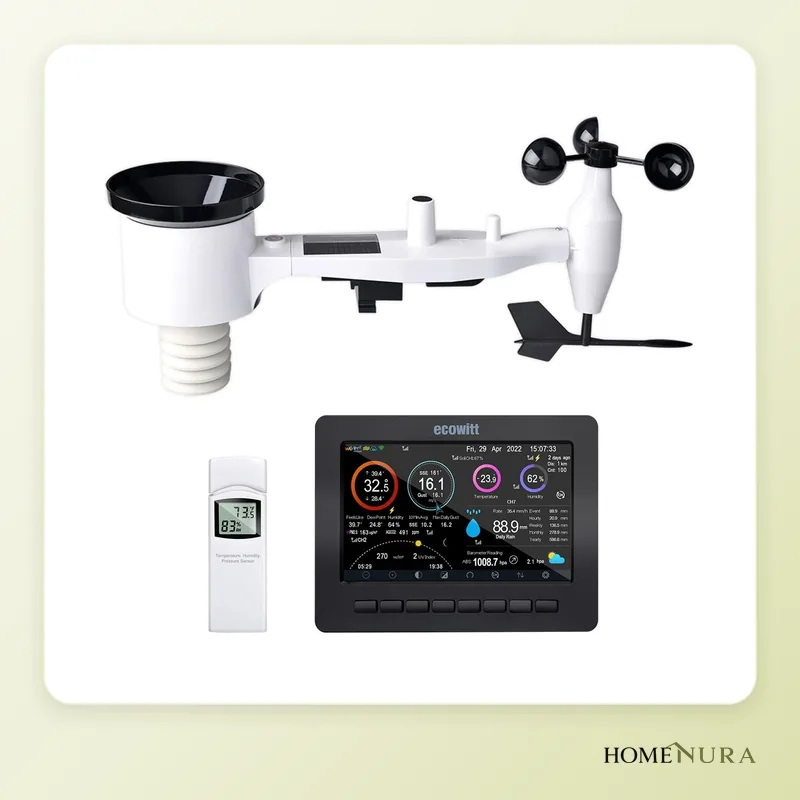
Best overall
Ecowitt HP2551
A 7-in-1 sensor with rain, wind, UV and light right out of the box, a large color screen and local Home Assistant integration.
Photo: © Ecowitt
- View on Amazon →
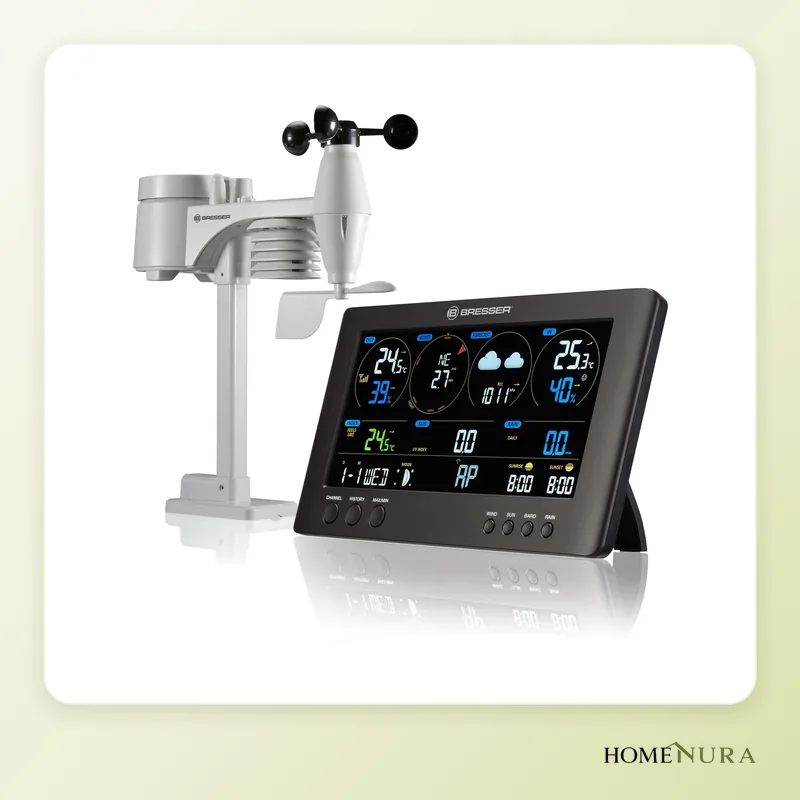
Best value
Bresser Wi-Fi ClearView Weather Station 7-in-1
A complete station with rain, wind, UV and light, readable on an 8.4 in (21.3 cm) color display without relying on your phone.
Photo: © Bresser
- View on Amazon →
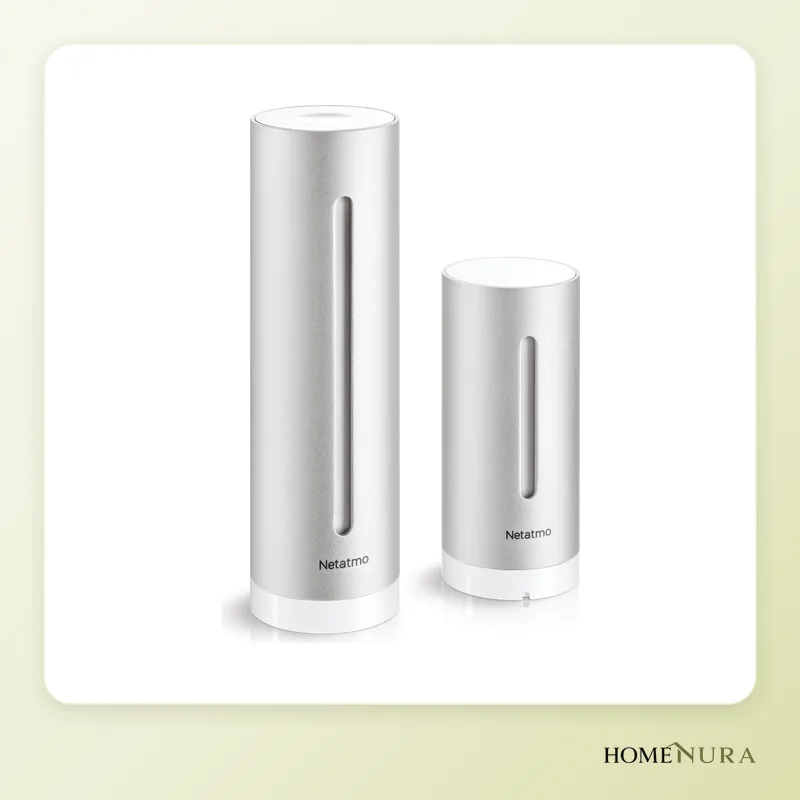
Best for indoor air and Apple Home
Netatmo Smart Weather Station
The only one here that measures indoor CO2, and it works with HomeKit, but the rain gauge and anemometer are sold separately.
Photo: © Netatmo


As an Amazon Associate I earn from qualifying purchases. Amazon affiliate links: we earn a commission at no extra cost to you.
The best smart weather station for most homes in 2026 is the Ecowitt HP2551. Its 7-in-1 outdoor sensor measures rain, wind, UV and light right out of the box, and it connects locally to Home Assistant. If you'd rather have a sleek device that also tracks CO2 levels in your living room and works with Apple Home, the Netatmo Smart Weather Station is still the one to beat, though you'll need optional add-on modules for rain and wind.
This comparison draws on manufacturer specs, independent reviews from the specialist press and verified owner feedback. You'll find every model in the category on our smart weather stations page.
What does a smart weather station do?
A smart weather station records conditions right where you live, not at the nearest official station, which can be several miles away. At minimum, it measures temperature, humidity and barometric pressure; more complete models add rainfall, wind speed and direction, UV index and sunlight. The data shows up on your phone, gets archived for years and can trigger automations.
Most people buy one for one of three reasons:
- The yard and garden: knowing how much rain fell this week, getting ahead of a frost or pausing your sprinklers. Our smart yard and garden guide covers these setups.
- The house: lowering the shades or retracting the awning when the wind picks up, and adjusting the heat to the actual outdoor temperature.
- The hobby: watching the pressure drop ahead of a storm and sharing your readings on networks such as Weather Underground or Weathercloud.
Models mentioned in this guide
- Davis Vantage VueView on Amazon →
- Ecowitt Wittboy Pro HP2564View on Amazon →
Photos: © Ecowitt, © Bresser, © Netatmo
As an Amazon Associate I earn from qualifying purchases. Amazon affiliate links: we earn a commission at no extra cost to you.
How to choose
What it measures
This is the first thing to narrow down. A "7-in-1" sensor puts temperature, humidity, rain, wind speed, wind direction, UV and light on a single mast. A modular system like Netatmo starts with temperature, humidity and pressure, then grows with a rain gauge and an anemometer sold separately. If rain and wind matter to you, compare the cost of the complete kit, not just the base unit.
Indoor air quality
Only the Netatmo in this roundup has a CO2 sensor built into its indoor module. Ecowitt sells particulate and CO2 sensors as add-ons. To dig deeper, see our guide to indoor air quality monitors.
Connectivity and smart home support
Look at the manufacturer's app, compatibility with Apple Home, Alexa or Google, and above all Home Assistant integration if that's your platform. A local integration (no round trip to the cloud) responds faster and keeps working when your internet goes down.
Wireless range and power
The outdoor sensor talks to the indoor console over radio (868 MHz on the European versions of Ecowitt, Bresser and Davis; other regions use a different band). Advertised range is measured in open air, and walls, hedges and roofs cut it down significantly. On the power side, a solar sensor with backup batteries means fewer battery swaps; the Netatmo outdoor module runs on two AAA batteries.
The display
Ecowitt, Bresser and Davis include a console with a screen, so you can check the weather at a glance without reaching for your phone. Netatmo has no screen: everything happens in the app.
The 5 best smart weather stations of 2026
1. Ecowitt HP2551: the most complete for the money
The Ecowitt HP2551 kit pairs an HP2550 Wi-Fi console with a large color TFT screen, an indoor sensor (temperature, humidity, pressure) and the WS69 7-in-1 outdoor sensor: temperature, humidity, tipping-bucket rain gauge, wind speed and direction, light and UV. The outdoor array runs on solar power, with two AA batteries as backup.
- Pros: every essential reading in the box, an easy-to-read color screen, uploads to Ecowitt, Weather Underground, Weathercloud or WOW, an official local Ecowitt integration in Home Assistant, and a huge range of add-on sensors (soil moisture, pool, particulates, lightning, water leak).
- Cons: the app works but is less polished than Netatmo's, there's no native Apple Home support, and the moving parts (wind cups, rain bucket) need a cleaning now and then.
- Best for: gardeners, Home Assistant users and anyone who wants a complete station without buying extras.
2. Netatmo Smart Weather Station: the sleekest, with CO2
The Netatmo Smart Weather Station consists of two aluminum cylinders. The indoor module measures temperature, humidity, pressure, noise level and CO2 (0 to 5,000 ppm, according to the manufacturer); the outdoor module records temperature and humidity, with a stated accuracy of ±0.5°F (±0.3°C). Readings refresh every 5 minutes.
- Pros: low-key design, a clear app with history and alerts, Apple HomeKit and Amazon Alexa support, an official Netatmo integration in Home Assistant (via the cloud), extra indoor modules for other rooms, and no subscription.
- Cons: no rain or wind data without the Netatmo Smart Rain Gauge and Netatmo Smart Anemometer, sold separately; no UV or light sensor; no screen; a battery-powered outdoor module (up to two years, according to Netatmo).
- Best for: people who mostly want to track indoor air and outdoor temperature in an Apple Home household.
3. Bresser Wi-Fi ClearView 7-in-1: an all-in-one display at a fair price
The Bresser Wi-Fi ClearView with its 7-in-1 sensor covers wind speed and direction, humidity, temperature, rain, UV and light, transmitted at 868 MHz up to 490 ft (150 m) in open air. Its 8.4-inch (21.3 cm) color console shows current conditions, history and a local 12- to 24-hour weather trend.
- Pros: everything is readable on the screen without a phone, programmable high/low alarms and a frost alert, uploads to Weather Underground, Weathercloud and AWEKAS, and a German brand with a strong presence across Europe.
- Cons: no official smart home integration (Apple Home, Home Assistant) and a smaller lineup of add-on sensors than Ecowitt.
- Best for: people who want a complete station for the living room and mostly read it on its screen.
4. Davis Vantage Vue: built to last, for enthusiasts
The Davis Vantage Vue has long been a go-to for amateur weather watchers. Its integrated sensor suite measures temperature, humidity, rain, and wind speed and direction; the console adds barometric pressure. Davis rates its wireless range at up to about 1,000 ft (300 m) in open air, with updates every 2.5 seconds and outdoor temperature accuracy of ±0.9°F (±0.5°C).
- Pros: rugged construction designed for the long haul, some of the best wireless range in the category, solar power with battery backup, and a large community with plenty of compatible software.
- Cons: the basic console isn't connected, so you need a WeatherLink Live gateway or a WeatherLink Console (often sold as a bundle) to see your data on your phone; no UV or solar radiation sensor on the Vue (those belong to the Vantage Pro2 Plus line); and a noticeably higher price tier.
- Best for: serious hobbyists, farms and exposed sites where durability comes first.
5. Ecowitt Wittboy Pro HP2564: no moving parts
The Ecowitt Wittboy Pro HP2564 pairs the HP2560 Wi-Fi console with the WS90 outdoor sensor, which measures wind ultrasonically and rain with a piezoelectric sensor, plus temperature, humidity, light and UV. With no wind cups or tipping bucket, there's nothing to seize up and no bugs to clog the rain gauge.
- Pros: low maintenance, plus the same add-on sensor lineup and Home Assistant integration as other Ecowitt stations, and uploads to Weather Underground and Weathercloud.
- Cons: pricier than the HP2551, the console needs USB power, and impact-based rain measurement is generally considered less accurate than a well-installed tipping bucket.
- Best for: people who want to mount the sensor on the roof and forget about it.
Comparison table
| Model | Outdoor readings | Connectivity | Key strength | Best for |
|---|---|---|---|---|
| Ecowitt HP2551 | Temp., humidity, rain, wind, UV, light | Wi-Fi, Ecowitt app, local Home Assistant | Complete and highly expandable | Yard and garden, smart home |
| Netatmo Smart Weather Station | Temp., humidity (rain and wind optional) | Wi-Fi, HomeKit, Alexa, Home Assistant | Indoor CO2, design, app | Indoor air, Apple Home |
| Bresser Wi-Fi ClearView 7-in-1 | Temp., humidity, rain, wind, UV, light | Wi-Fi, Weather Underground, AWEKAS | Large color screen | Living room display |
| Davis Vantage Vue | Temp., humidity, rain, wind | 1,000 ft (300 m) radio, Wi-Fi via WeatherLink | Durability, range | Enthusiasts, farms |
| Ecowitt Wittboy Pro HP2564 | Temp., humidity, rain, wind, UV, light | Wi-Fi, Ecowitt app, local Home Assistant | No moving parts | Roof mounting |
Mistakes to avoid
- Mounting the sensor against a wall or in direct sun: a south-facing wall radiates heat and can throw off the temperature by several degrees. Pick an open spot, shaded if possible, about 5 ft (1.5 m) off the ground for temperature.
- Setting the anemometer too low: at hedge height, the wind is slowed down. The higher and more open the sensor, the more accurate the reading.
- Comparing only the base price: a modular station can cost far more once you add the rain gauge and anemometer.
- Overestimating wireless range: advertised range is measured in open air. A thick wall or a metal roof can cut it sharply.
- Skipping maintenance: leaves and bugs clog tipping-bucket rain gauges. A cleaning in spring and fall is usually enough.
Installation and calibration
Mount the outdoor sensor on a sturdy, level pole and point it north if the manufacturer requires it for wind direction. For high installs on a roof or chimney, work safely and hire a pro if access is tricky. Once the station is up, set the relative pressure to your elevation or to the reading from a nearby official station: skip this step and the displayed pressure will be off. Finally, put the indoor console away from heat sources and within range of your 2.4 GHz Wi-Fi.
The bottom line
For most homes, the Ecowitt HP2551 strikes the best balance: every useful reading from day one, an easy-to-read screen and local smart home integration. The Bresser Wi-Fi ClearView 7-in-1 is the most affordable alternative if you mainly read the screen. The Netatmo Smart Weather Station wins if indoor CO2 and Apple Home matter more to you than rain and wind. Serious hobbyists will want the Davis Vantage Vue, and anyone after a maintenance-free sensor should look at the Ecowitt Wittboy Pro HP2564. The full lineup is on our smart weather stations page.
Frequently asked questions
Which smart weather station is best for gardening?
Do you need a subscription for a smart weather station?
Can you connect a weather station to Home Assistant?
Where should you put the outdoor sensor?
How long do outdoor sensor batteries last?
Why doesn't my station's pressure match the official forecast?
From our complete guide
Comfort & Air Quality →Our recommendations
- Davis Vantage VueView on Amazon →
- Ecowitt Wittboy Pro HP2564View on Amazon →
Photos: © Ecowitt, © Bresser, © Netatmo
As an Amazon Associate I earn from qualifying purchases. Amazon affiliate links: we earn a commission at no extra cost to you.


