Best Sunrise Alarm Clocks 2026: Wake-Up Lights and Light Therapy Lamps Compared
Philips SmartSleep HF3650 and HF3520, Lumie Bodyclock Shine 300, Beurer WL 50 and WL 75: which sunrise alarm clock should you buy in 2026? Sunrise length, lux, sunset mode, sounds, app control and how they differ from a 10,000-lux light therapy lamp.

Quick answer
What is the best sunrise alarm clock in 2026?
- View on Amazon →
Best overall
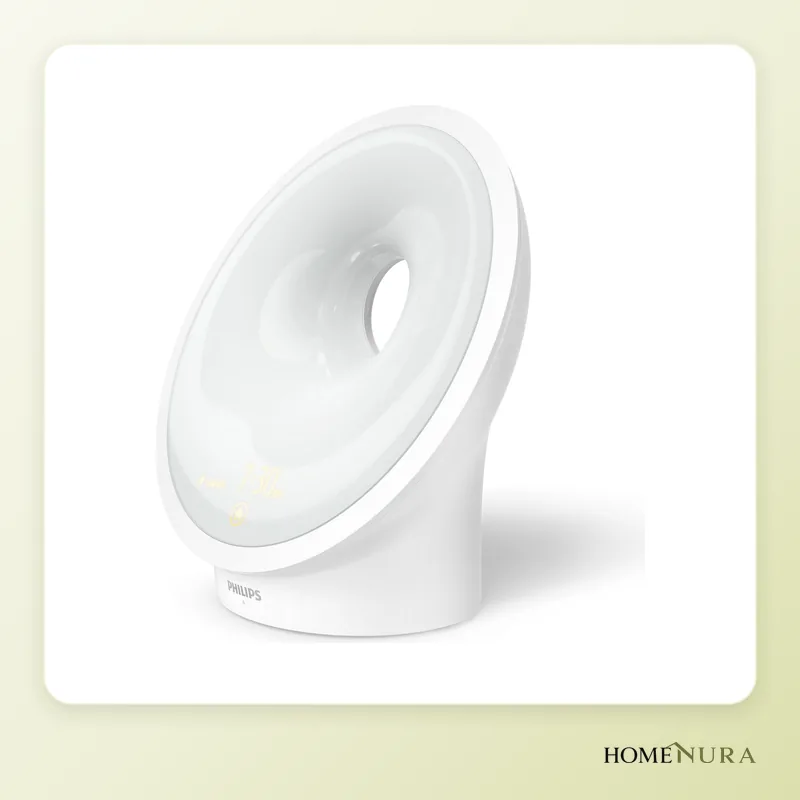
Philips SmartSleep Sleep & Wake-up Light HF3650/01
Colored sunrise up to 310 lux, sunset mode, RelaxBreathe guided breathing, 10 sounds and FM radio.
Photo: © Philips
- View on Amazon →
Best value
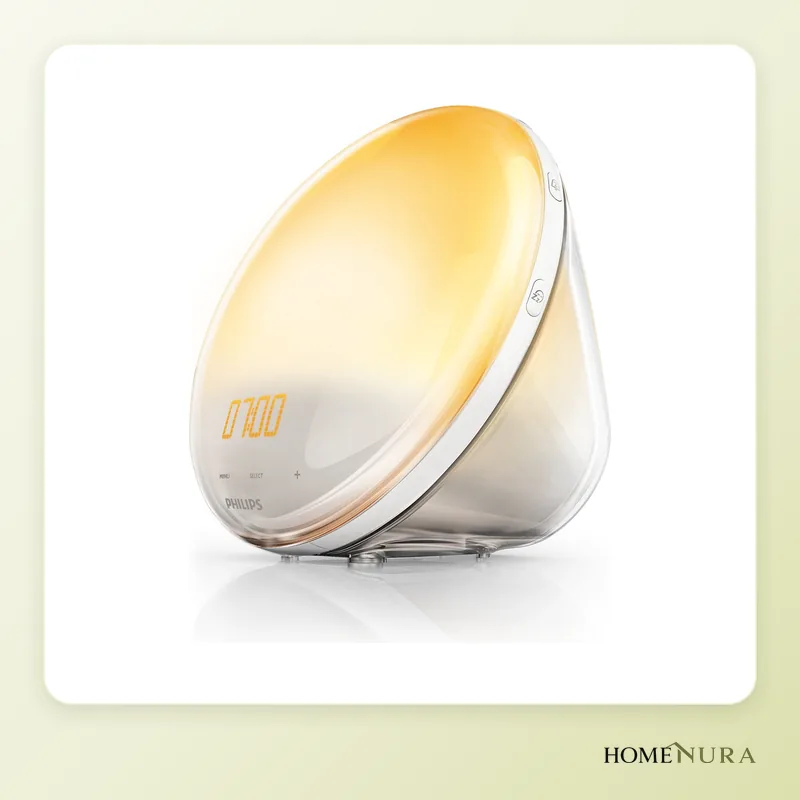
Philips Wake-up Light HF3520/01
The essentials of the HF3650: a 20- to 40-minute colored sunrise, 300 lux, sunset mode, 5 sounds and FM radio.
Photo: © Philips
- View on Amazon →
Best for heavy sleepers
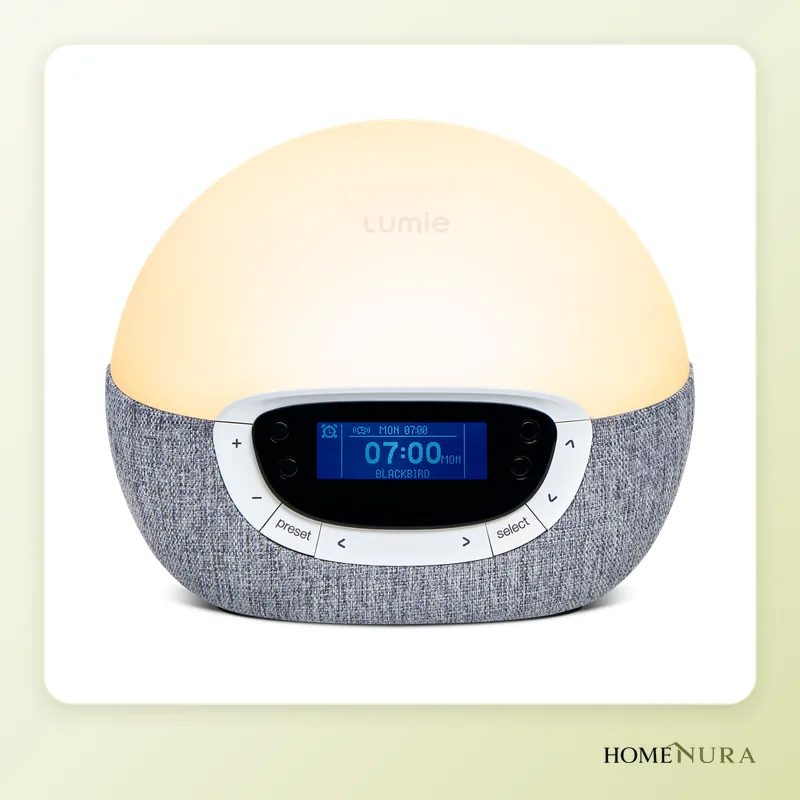
Lumie Bodyclock Shine 300
Sunrise and sunset adjustable from 15 to 90 minutes, 15 sounds, FM radio and an auto-dimming display.
Photo: © Lumie


As an Amazon Associate I earn from qualifying purchases. Amazon affiliate links: we earn a commission at no extra cost to you.
The best sunrise alarm clock in 2026 for most bedrooms is the Philips SmartSleep Sleep & Wake-up Light HF3650, which pairs a gradual colored sunrise with a sunset mode, RelaxBreathe guided breathing and up to 310 lux. If you want the essentials for less, the Philips Wake-up Light HF3520 keeps the colored sunrise and FM radio, while the Lumie Bodyclock Shine 300 stands out with sunrise and sunset lengths you can set anywhere from 15 to 90 minutes. One caveat: a sunrise alarm clock is not a 10,000-lux light therapy lamp, and the two devices do different jobs.
This comparison draws on manufacturer specs, independent reviews from specialist outlets and verified owner reviews. You’ll also find every model in this category on our sunrise alarm clocks and light therapy lamps page.
Sunrise alarm clock, wake-up light, light therapy lamp: what’s the difference?
A sunrise alarm clock (also called a wake-up light or dawn simulator) gradually brightens over the 20 to 40 minutes, sometimes longer, before your alarm goes off. The light usually shifts from deep red through orange to a warm yellow, like a real sunrise. The goal is a gentler start than a jarring alarm in the dark, especially in winter, when it’s still dark out when you get up.
A light therapy lamp works very differently: it puts out very intense white light, typically 10,000 lux at close range, for a session of roughly 20 to 30 minutes while you sit in front of it, usually in the morning. It doesn’t wake you up; you use it once you’re out of bed. Sunrise alarm clocks top out at a few hundred lux at about 12 inches (30 cm), enough to light a bedroom but far below a dedicated lamp.
Good to know: if you notice a marked, lasting drop in mood in the fall or winter, talk to your doctor. Neither a sunrise alarm clock nor a light therapy lamp is a substitute for medical advice.
Models mentioned in this guide
- Beurer WL 75View on Amazon →
- Beurer WL 50View on Amazon →
Photos: © Philips, © Lumie
As an Amazon Associate I earn from qualifying purchases. Amazon affiliate links: we earn a commission at no extra cost to you.
How to choose a sunrise alarm clock
Sunrise length
This is the setting that matters most. A very short sunrise (10 minutes) feels like someone flipping on a lamp; an adjustable 20- to 40-minute sunrise suits most sleepers. Premium models such as the Lumie Bodyclock Shine 300 go up to 90 minutes, which helps people who have a hard time waking up.
Maximum brightness (lux)
Manufacturers quote figures measured at different distances: 300 lux for the Philips HF3520, 310 lux for the HF3650, 800 lux at about 4 inches (10 cm) for the Beurer WL 50 and 2,000 lux at 6 inches (15 cm) for the Beurer WL 75. So these numbers aren’t directly comparable. What matters more is a wide range of brightness steps, so you can match the sunrise to the size of the room and your own sensitivity to light.
Sunset mode
Sunset does the reverse of the sunrise: the light fades gradually in the evening, with or without sound. It makes a nice stand-in for a bedside lamp when you read before falling asleep. Both Philips models, the Lumie Shine 300 and the Beurer WL 75 offer it.
Sounds and radio
Light alone doesn’t always wake heavy sleepers. Check how many nature sounds you get, whether there’s an FM radio and whether you can play your own music (an AUX input, or a Bluetooth speaker on the Beurer WL 75).
App control
Most sunrise alarm clocks are set with buttons, which keeps your phone out of bed. In this lineup, only the Beurer WL 75 offers an app (beurer LightUp, over Bluetooth) to schedule alarms, colors and sounds. Note that Philips’ former smart model has been discontinued, and the Hatch Restore, popular in the US, isn’t officially distributed in Europe, so it isn’t part of this selection.
Display and nighttime
An overly bright display can keep you awake. Look for a dimmable or auto-dimming screen, like the one on the Lumie Shine 300, and a soft night light if you get up during the night.
The best sunrise alarm clocks and light therapy lamps in 2026
1. Philips SmartSleep Sleep & Wake-up Light HF3650: best overall
The HF3650 is the most complete model in Philips’ current lineup. Its colored sunrise starts with a soft red and ends in bright yellow, lasting 30 minutes by default (you can change the length in the alarm menu), with up to 310 lux and 25 brightness settings. It adds a sunset mode, 7 wake-up sounds, 3 relaxation sounds, FM radio and an AUX input.
Its signature feature is RelaxBreathe: a slowly pulsing light that paces calm breathing before sleep. Owner reviews praise the quality of the light and how smooth the sunrise is; complaints mostly focus on the number of menus you have to work through during the first setup.
Pros: high-quality colored sunrise, sunset mode, RelaxBreathe, plenty of sounds. Cons: no app, bulky on a small nightstand. Best for: anyone who wants a full-featured sunrise alarm clock that doesn’t need a phone.
2. Philips Wake-up Light HF3520: best value
The HF3520 keeps the core of the HF3650 in a simpler package: a colored sunrise adjustable from 20 to 40 minutes, 300 lux, 20 brightness settings, sunset mode, 5 nature sounds and FM radio. It’s one of the most widely sold wake-up lights in Europe, which makes manuals and reviews easy to find.
Pros: colored sunrise, sunset mode, quick to set up. Cons: fewer sounds, no guided relaxation. Best for: a dependable first sunrise alarm clock, without paying for advanced features.
3. Lumie Bodyclock Shine 300: the most customizable sunrise
British light specialist Lumie gives the Bodyclock Shine 300 sunrise and sunset lengths adjustable from 15 to 90 minutes, with a choice of final brightness. You get 15 sleep and wake-up sounds, FM radio, a night light and a display that dims automatically with the ambient light. The light blends warm white, orange and red tones, and Lumie markets it as a Class I medical device.
Pros: very wide range of durations, discreet display, specialist manufacturer. Cons: no app, and Lumie doesn’t publish a lux figure. Best for: people who struggle to wake up and need a very slow build of light, and sleepers bothered by bright displays.
4. Beurer WL 75: the app-controlled sunrise alarm clock
The WL 75 is the smartest model here. The free beurer LightUp app (Bluetooth) lets you set alarms, brightness and mood lighting from 256 colors or 10 presets. Beurer lists 2,000 lux at 6 inches (15 cm) in 3,000 K white light, 6 wake-up melodies, 4 sleep melodies, FM radio, a Bluetooth speaker for your own music, 2 alarm times, a snooze you can set from 1 to 30 minutes and a USB port for charging your phone.
Pros: app, Bluetooth speaker, colored mood lighting. Cons: you need the app to get the most out of it. Best for: people who like to control everything from their phone and also want a bedside speaker.
5. Beurer WL 50: the simple, versatile option
The WL 50 offers a 10-, 20- or 30-minute sunrise, about 800 lux at 4 inches (10 cm), 5 mood-light colors, 2 wake-up melodies, 1 sleep melody, 2 alarm times and FM radio with 30 station presets. Everything is set with buttons.
Pros: straightforward controls, colored mood light, two alarms. Cons: sunrise capped at 30 minutes, few sounds. Best for: a teenager’s room, a guest room or a first try at waking up with light.
6. Beurer TL 50: a true 10,000-lux light therapy lamp
To go with a sunrise alarm clock, the Beurer TL 50 is a light therapy lamp classified as a medical device: 10,000 lux at about 6 inches (15 cm), 5,300 K white light that’s UV-free and flicker-free, a light panel about 9.7 inches (24.6 cm) across and one-button operation. You use it sitting down, at breakfast or at your desk, following the manufacturer’s instructions.
Pros: therapy-level brightness, simplicity, compact size. Cons: not an alarm clock (no alarm, no sunrise). Best for: people who get little daylight in winter, after checking with a doctor if they have any health concerns.
Comparison table
| Model | Type | Sunrise length | Max brightness (manufacturer) | Sunset | Sounds / radio | App | Best for |
|---|---|---|---|---|---|---|---|
| Philips HF3650 | Sunrise alarm clock | Adjustable (30 min default) | 310 lux | Yes | 10 sounds, FM, AUX | No | Best overall |
| Philips HF3520 | Sunrise alarm clock | 20–40 min | 300 lux | Yes | 5 sounds, FM | No | Best value |
| Lumie Bodyclock Shine 300 | Sunrise alarm clock | 15–90 min | Not published | Yes (15–90 min) | 15 sounds, FM | No | Very gradual sunrise |
| Beurer WL 75 | Sunrise alarm clock | Not specified | 2,000 lux at 6 in (15 cm) | Yes | 10 melodies, FM, Bluetooth | Yes (beurer LightUp) | Phone control |
| Beurer WL 50 | Sunrise alarm clock | 10, 20 or 30 min | 800 lux at 4 in (10 cm) | Sleep melody | 3 melodies, FM | No | Simple use |
| Beurer TL 50 | Light therapy lamp | Not applicable | 10,000 lux at 6 in (15 cm) | No | No | No | Winter light sessions |
Mistakes to avoid
- Comparing lux without checking the distance. 2,000 lux at 6 inches and 300 lux from farther away don’t mean the same thing. Look instead at the number of brightness steps and the quality of the sunrise.
- Buying a sunrise alarm clock for light therapy. No sunrise alarm clock reaches 10,000 lux at reading distance. If that’s what you’re after, you need a dedicated lamp.
- Choosing a sunrise that’s too short. Under 20 minutes, the sunrise effect is barely noticeable.
- Placing it too far away. The light needs to reach your face: put it on your nightstand, about 16 to 20 inches (40 to 50 cm) from your head, facing you.
- Buying a model built for another market. A unit sold only in one region may need a plug adapter and may not be covered by the warranty where you live. Models sold in Europe are built for 230 V; check that the version on your Amazon store is rated for 120 V.
- Ignoring display brightness. A glaring display can get in the way of sleep; make sure it can be dimmed or turned off.
Getting the most from your sunrise alarm clock and light therapy lamp
For the sunrise to work, the bedroom should be fairly dark: with blackout shades or curtains, the sunrise alarm clock takes the place of daylight. Start with a 30-minute sunrise at medium brightness and fine-tune it over a week or two. Keep a sound alarm as a backup for the first few days, until you know the light alone wakes you up.
With a light therapy lamp, follow the distance and session length in the manual, use it preferably in the morning and avoid staring straight into the light. Check with a doctor or eye doctor before using one if you have an eye condition, take photosensitizing medication or have a mood disorder. For a bedroom that feels good in the morning, think about the air, too: our guide to indoor air quality monitors helps you keep an eye on CO2 and humidity, and our smart lighting comparison covers bulbs that can simulate a sunrise.
The bottom line
The Philips SmartSleep HF3650 is still the most well-rounded sunrise alarm clock: a high-quality colored sunrise, sunset mode, RelaxBreathe and plenty of sounds. The Philips HF3520 covers the essentials on a tighter budget. The Lumie Bodyclock Shine 300 suits people who struggle to wake up, thanks to its sunrise of up to 90 minutes, and the Beurer WL 75 will appeal to app fans. Finally, if you want real light therapy sessions in winter, pair your sunrise alarm clock with a light therapy lamp such as the Beurer TL 50, and see a doctor if a low mood persists.
Frequently asked questions
Can a sunrise alarm clock replace a light therapy lamp?
How long should the sunrise last?
Will a sunrise alarm clock wake a heavy sleeper?
Is there a sunrise alarm clock with an app?
How do you use a 10,000-lux light therapy lamp?
Is the Hatch Restore available in Europe?
From our complete guide
Comfort & Air Quality →Our recommendations
- Beurer WL 75View on Amazon →
- Beurer WL 50View on Amazon →
Photos: © Philips, © Lumie
As an Amazon Associate I earn from qualifying purchases. Amazon affiliate links: we earn a commission at no extra cost to you.


