Smart Wine Fridges 2026: Buying Guide and Best Models
Serving, aging or multipurpose: how to choose a smart wine fridge in 2026. We compare the La Sommelière ECELLAR185, Haier Wine Bank 50 and Liebherr GrandCru Selection using manufacturer specs and owner feedback.

Quick answer
What is the best smart wine fridge in 2026?
- View on Amazon →
Best overall
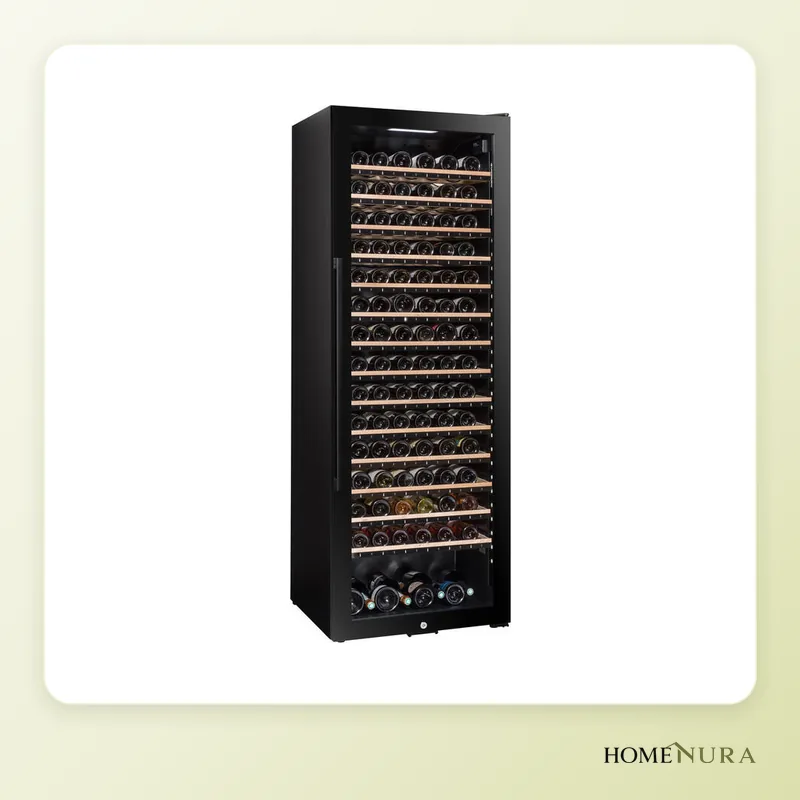
La Sommelière ECELLAR185
185 bottles, two zones and 14 smart shelves that detect every bottle, with automatic inventory in the Vinotag app.
Photo: © La Sommelière
- View on Amazon →
Best value
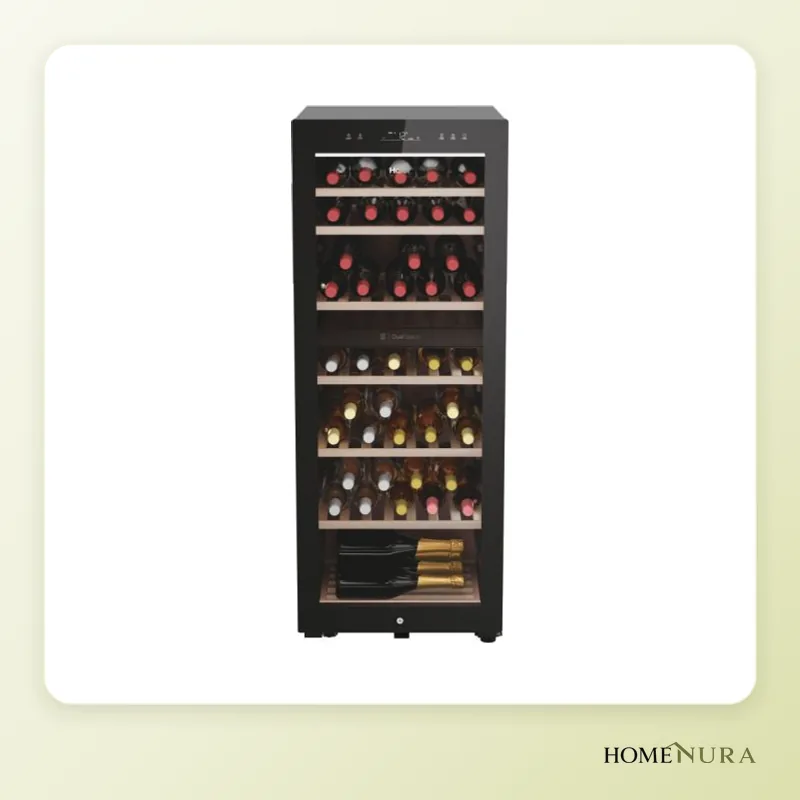
Haier Wine Bank 50 HWS77GDAU1
77 bottles in two zones (41–50°F and 50–64°F), humidity control, 37 dB and the hOn app with Vivino label scanning.
Photo: © Haier Europe
- View on Amazon →
Best for aging a large collection
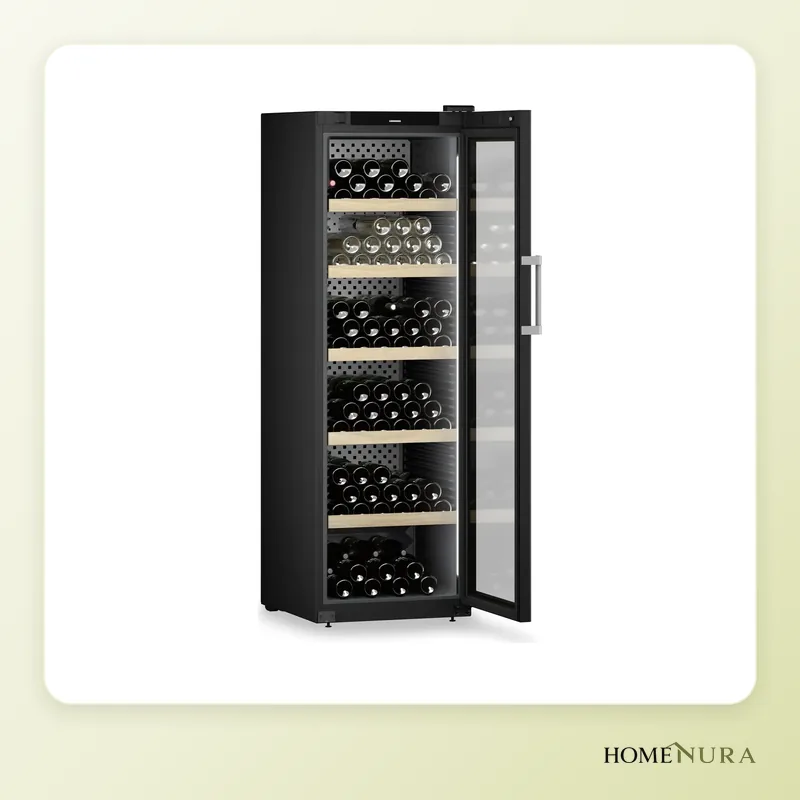
Liebherr WPbli 5231 GrandCru Selection
229 bottles at a single temperature, VibrateSafe, HumidityControl and a full set of alarms (door, temperature, power outage) through the SmartDevice app.
Photo: © Liebherr


As an Amazon Associate I earn from qualifying purchases. Amazon affiliate links: we earn a commission at no extra cost to you.
For most wine lovers, the best smart wine fridge of 2026 is the La Sommelière ECELLAR185: 185 bottles, two zones and, above all, smart shelves that know which bottles are inside and exactly where each one sits. On a tighter budget, the Haier Wine Bank 50 HWS77GDAU1 gives you two zones, humidity control and the hOn app in a 77-bottle size, while the Liebherr WPbli 5231 GrandCru Selection is built for large collections you plan to age.
This guide compares the models using manufacturer specs, independent reviews and verified owner reviews. It will help you pick the right type of wine fridge, understand what Wi-Fi actually adds and avoid the most common installation mistakes. To see how a wine fridge fits in with the rest of your kitchen, read our 2026 smart kitchen guide and browse the smart kitchen section.
Serving, aging or dual-purpose: figure out what you need
Before you compare apps, decide what the wine fridge has to do. There are three main types.
The serving cabinet
It keeps bottles at drinking temperature, often with several zones (cooler for whites and sparkling wines, warmer for reds). It’s the right fit for wines you’ll open within weeks or months of buying them. Small two-zone units such as the Haier HWS42GDAU1 fall into this category.
The aging (storage) cabinet
It recreates the conditions of an underground cellar: one steady temperature, usually around 54°F (12°C), enough humidity, darkness and as little vibration as possible. This is the one to buy if you collect wines to cellar for years. The single-zone Liebherr WPbli 5231 is a good example.
The dual-purpose cabinet
It combines a storage zone and a serving zone, or lets you switch between modes. It’s the most flexible option for a household that lays down a few bottles to age but always wants one ready to pour. The La Sommelière ECELLAR185, which runs in single- or multi-temperature mode, and the two-zone Haier HWS77GDAU1 take this approach.
Models mentioned in this guide
- Haier Wine Bank 50 HWS42GDAU1View on Amazon →
Photos: © La Sommelière, © Haier Europe, © Liebherr
As an Amazon Associate I earn from qualifying purchases. Amazon affiliate links: we earn a commission at no extra cost to you.
How to choose a smart wine fridge
Temperature stability
For long-term storage, stability matters more than the exact number. Repeated swings work the cork and speed up the wine’s development. Check the adjustable range (41 to 68°F, or 5 to 20°C, on most models in this guide) and, above all, make sure the unit suits the room it will live in: a wine fridge in a garage that freezes in winter or bakes in summer will struggle to hold steady, however premium it is.
Vibration
Every compressor produces micro-vibrations. Manufacturers reduce them with compressors on rubber anti-vibration mounts or with dedicated designs (VibrateSafe at Liebherr, rubber mounts at Haier and La Sommelière). Also avoid pushing the wine fridge right up against a washer or dishwasher.
Humidity
Relative humidity of roughly 50 to 70% keeps corks from drying out. The wine fridges in this guide manage humidity passively: Haier’s Natural Airflow system with a water reservoir, Liebherr’s water tray and HumidityControl function, and controlled cooling cycles at La Sommelière. None of them replaces an active humidifier, but all of them aim for that range.
Protection from light
UV light damages wine. Every model here has a UV-treated glass door; if the unit will sit in direct sunlight, a solid door is still the safer choice.
Real capacity
Capacity ratings assume standard 750 ml Bordeaux-style bottles. Wider Burgundy bottles, tall Alsace flutes and Champagne bottles cut the real count considerably. Plan on at least 20 to 30% more space than your current stock.
What the smart features really add
Depending on the model, the app lets you check and adjust the temperature remotely, get an alert if the door is left open or the temperature drifts, and keep an inventory of your bottles. Inventory is where the differences are biggest: most wine fridges rely on a list you enter by hand or by scanning labels, while the ECELLAR185 physically detects bottles placed on or removed from its shelves.
Noise and energy use
Noise ranges from about 37 dB (Haier) to 41 dB (ECELLAR185): barely noticeable in a kitchen or laundry room, more audible in an open-plan living area. Wine fridges often land in the lower classes of the current EU energy label (class G for both Haier models and the ECELLAR185), so compare the annual kWh figure on the spec sheet instead.
The best smart wine fridges of 2026
La Sommelière ECELLAR185: the most complete collection management
The ECELLAR185 from French maker La Sommelière is a 185-bottle aging cabinet with two zones that can run in single- or multi-temperature mode, adjustable from 41 to 68°F (5 to 20°C). What sets it apart are its 14 smart shelves, each with 12 sensors, for a total of 168 positions that automatically detect bottles going in or coming out. LED indicators show where the bottle you’re looking for is stored.
The Vinotag app keeps the inventory up to date in real time, scans labels to identify a wine and suggests a slot based on the type of wine and how long it should be kept. Over Wi-Fi you can also adjust the temperature and lighting remotely. On the storage side, you get an activated carbon filter, rubber anti-vibration mounts, a triple-pane, UV-protected tempered glass door, a lock, and visual and audible alarms.
Pros: automatic inventory (unique in this lineup), large capacity, two zones, full-featured app.
Cons: bulky (more than 6.5 ft tall and 28 in wide, or 2 m by 72 cm), 41 dB, higher energy use than smaller models.
Best for: collectors who want to know what’s in their wine fridge at any moment without keeping a spreadsheet.
Haier Wine Bank 50 HWS77GDAU1: the most features for the money
The HWS77GDAU1 belongs to the Wine Bank 50 Series 7 line. It holds 77 bottles across two independent zones: 41 to 50°F (5 to 10°C) for whites and sparkling wines, 50 to 64°F (10 to 18°C) for reds. The Natural Airflow system, paired with a water reservoir, targets 50 to 70% humidity, and an activated carbon filter keeps the air clean.
With Wi-Fi and Bluetooth built in, it’s controlled through Haier’s hOn app, which can also hold an inventory; the Find Your Wine feature, developed with Vivino, identifies a wine when you scan its label. The Four Seasons function adjusts operation to the room temperature. A locking UV-protected glass door, beech shelves, a compressor on rubber mounts and a 37 dB noise level round out the package.
Pros: two clearly separated zones, humidity control, quiet, compact (50 in, or 1.27 m, tall).
Cons: inventory is manual or by label scan, capacity is limited for serious aging, class G on the EU energy label.
Best for: regular wine drinkers who want to serve and store without giving a whole room over to it.
Liebherr WPbli 5231 GrandCru Selection: storage on a large scale
The WPbli 5231 from the GrandCru Selection line is a single-zone, 229-bottle aging cabinet adjustable from 41 to 68°F (5 to 20°C). It draws on Liebherr’s refrigeration know-how: a quiet compressor with VibrateSafe technology, a FreshAir activated charcoal filter, HumidityControl with a water tray for dry rooms, solid beech shelves and a glass door with triple UV protection.
It works with Liebherr’s SmartDevice app, so you can view and change settings remotely and get safety notifications: a door alarm, a dual-sensor temperature alarm (TempProtect Plus) and a power-outage alert. The door closes by itself and stays open past 90° to make loading easier.
Pros: large capacity, designed for long-term aging, very complete safety alarms.
Cons: one zone only, so no two-temperature serving; no automatic inventory; large footprint (74 in tall and 30 in deep, or 188 by 76 cm).
Best for: collectors who mainly store wines for aging and value reliability above everything else.
Haier Wine Bank 50 HWS42GDAU1: the compact smart option
The smaller sibling of the HWS77GDAU1, the HWS42GDAU1 offers the same strengths in a 42-bottle size: two independent zones, the Natural Airflow system (50 to 70% humidity), an activated carbon filter, a locking UV-protected door, a compressor on rubber mounts, 37 dB and the hOn app with Find Your Wine.
Pros: small footprint, two zones, the same smart features as the larger models in the line.
Cons: fills up fast, more of a serving cabinet than an aging one.
Best for: apartments, and wine lovers who keep about 30 bottles close at hand.
Worth knowing: EuroCave, another respected French brand, offers its EuroCave Connect app on the Harmonie wine credenza, a two-compartment sideboard that’s more about interior design than big capacity.
Comparison table
| Model | Type | Capacity | Zones and range | App | Best for |
|---|---|---|---|---|---|
| La Sommelière ECELLAR185 | Aging / dual-purpose | 185 bottles | 2 zones, 41–68°F (5–20°C) | Vinotag (automatic inventory) | Tracking a collection bottle by bottle |
| Haier HWS77GDAU1 | Dual-purpose | 77 bottles | 2 zones: 41–50°F and 50–64°F | hOn (Wi-Fi + Bluetooth, Vivino scan) | Serving and storing in a midsize unit |
| Liebherr WPbli 5231 | Aging | 229 bottles | 1 zone, 41–68°F (5–20°C) | SmartDevice (alarms, settings) | A large aging collection |
| Haier HWS42GDAU1 | Serving / dual-purpose | 42 bottles | 2 zones | hOn (Wi-Fi + Bluetooth, Vivino scan) | Small spaces |
Mistakes to avoid
- Using a serving cabinet to age wine: to keep bottles for several years, choose a zone set around 54°F (12°C) with some humidity control.
- Underestimating capacity: non-Bordeaux bottles take up more room, and collections grow fast.
- Buying for the app alone: a poorly insulated or noisy cabinet is still a poor cabinet, smart or not. Storage basics come first.
- Ignoring Wi-Fi coverage: a wine fridge in a basement or at the back of a garage may be out of your router’s range. Check the signal before you install it, or remote alerts won’t work.
- Forgetting the room temperature: each unit is designed for a specific ambient range. Read the manual before you install it in an unheated space.
Installation and everyday use
Set the wine fridge on a flat, stable floor, away from heat sources (oven, heater or radiator, south-facing window), and leave the ventilation clearances the manufacturer specifies: this matters especially for freestanding models like the ones in this guide, which aren’t designed to be built in. After delivery, let the unit stand upright for the time the manual recommends before you plug it in.
Plug it into a grounded outlet and skip extension cords and power strips, as refrigeration manufacturers generally advise. Models sold in Europe are built for 230 V; check that the version on your Amazon store is rated for 120 V. Let the temperature settle before you load bottles, then fill it gradually. In the app, turn on at least the temperature and door alerts: they’re what make the smart features worthwhile, especially while you’re away. Finally, replace the charcoal filter at the recommended interval (about every six months on the Liebherr) and top off the water reservoir on models that have one.
The bottom line
If you want a wine fridge that actually manages your collection, the La Sommelière ECELLAR185 stands out with its smart shelves and Vinotag app: it’s the model in this lineup that gets the most out of being connected. For a mix of serving and storage at a more accessible tier, the Haier HWS77GDAU1 is the most balanced choice, and its little sibling, the HWS42GDAU1, suits small spaces. For a large single-temperature aging cabinet, the Liebherr WPbli 5231 GrandCru Selection offers the capacity and the most complete safety alarms. Whichever you choose, check real capacity, available space and room temperature first: the app only adds to good storage conditions, it can’t replace them.
Frequently asked questions
What’s the difference between a serving cabinet and an aging cabinet?
Is a smart wine fridge really worth it?
What temperature should a wine fridge be set to?
What size wine fridge should I buy?
Where should you put a smart wine fridge?
Do you need a subscription to use a smart wine fridge’s app?
From our complete guide
Smart Kitchen →Our recommendations
- Haier Wine Bank 50 HWS42GDAU1View on Amazon →
Photos: © La Sommelière, © Haier Europe, © Liebherr
As an Amazon Associate I earn from qualifying purchases. Amazon affiliate links: we earn a commission at no extra cost to you.


